CARACAS, VENEZUELA — Tension reached a boiling point outside Venezuela’s most notorious military prison this week, as a group of 27 detained service members—including two women—entered their third consecutive day of a high-stakes hunger strike. Confined within the mountainous facility of Ramo Verde on the outskirts of Caracas, the protesters are demanding immediate release through a comprehensive amnesty, bringing renewed international attention to the lingering crisis of political prisoners in the South American nation.
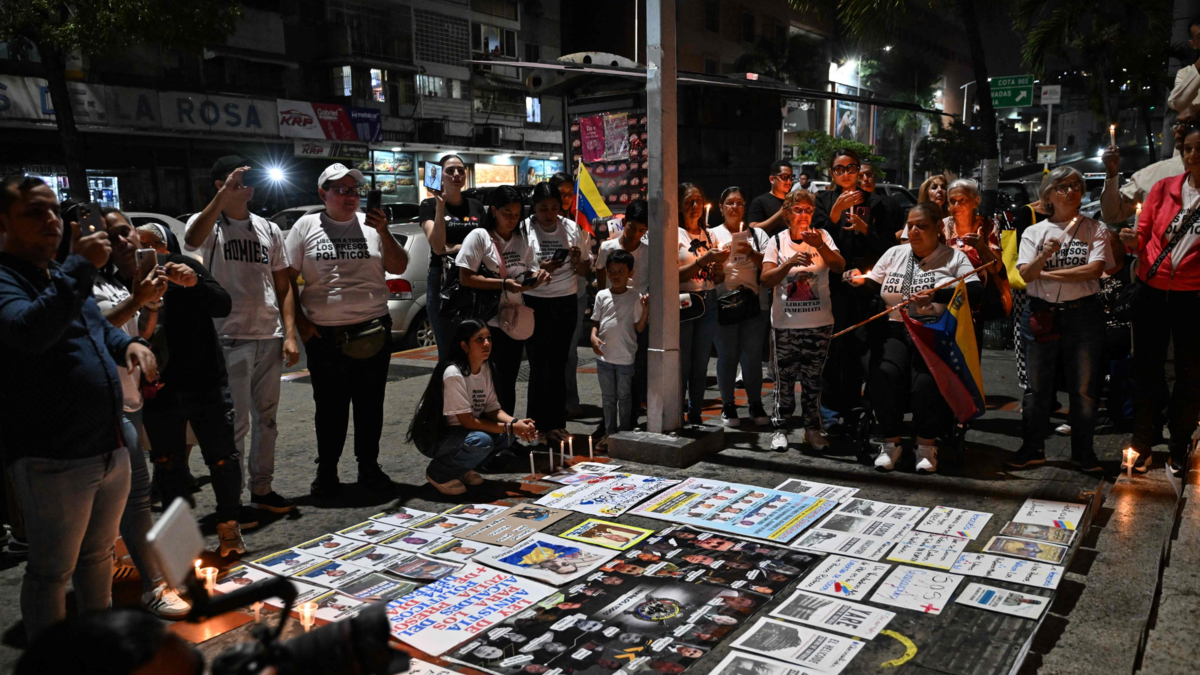
The demonstration spilled beyond the prison’s concrete walls and steel fences as family members, legal representatives, and activists gathered outside the perimeter to voice their support. In a dramatic display of solidarity, several of the incarcerated soldiers climbed a perimeter fence to chant slogans, waving handmade blue banners bearing the words "¡Libertad ya!" (Freedom now!) and "Presos políticos" (Political prisoners).
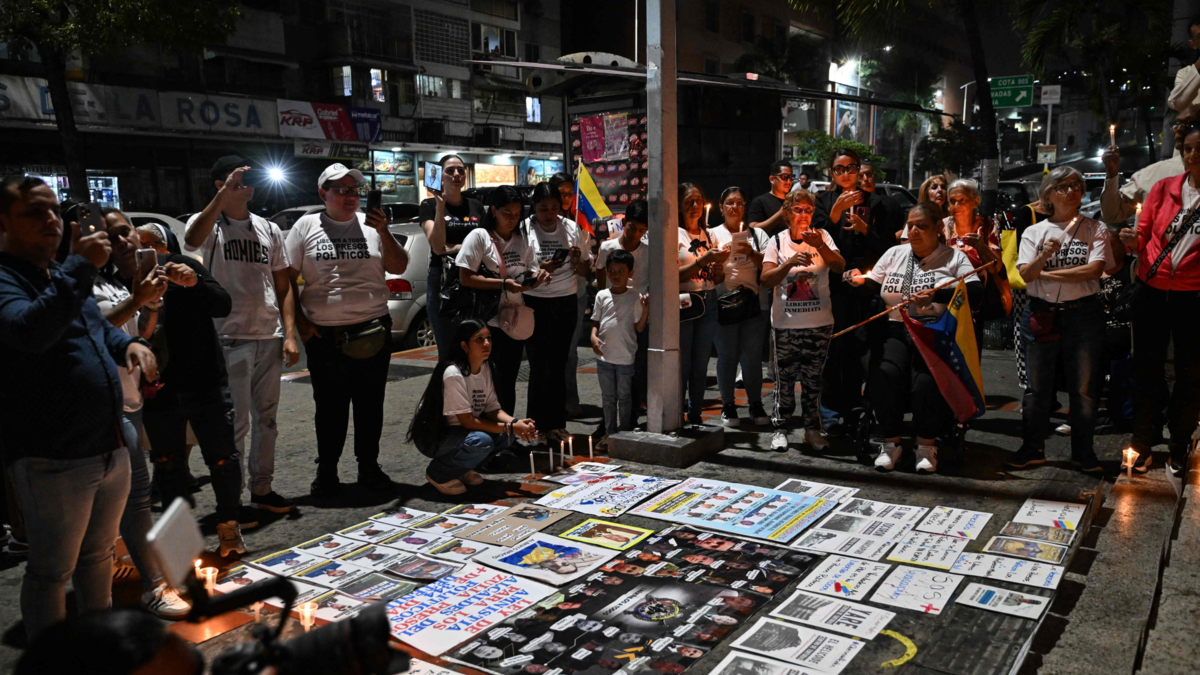
"We are not afraid, no more tortures!" and "Freedom!" echoed across the hillsides from an isolated sports court inside the penal facility where the strikers are being held.
Main Facts of the Protest
The ongoing protest at the Ramo Verde military prison highlights the precarious human rights landscape in post-Maduro Venezuela. The core facts of the situation include:

- The Strikers: A collective of 27 military personnel, including two female officers, are participating in the hunger strike, which commenced on Monday morning.
- The Demands: The group is demanding their immediate excarceration via a broad amnesty framework, citing prolonged arbitrary detention and severe due process violations.
- Conditions of Confinement: Relatives have denounced severe punitive measures by prison authorities, including the restriction of access to sanitation facilities (specifically restrooms and washing areas) and potable water. Strikers have reportedly been forced to rely on water typically reserved for garden irrigation.
- Public Demonstration: Family members and supporters mobilized outside the prison gates, staging continuous protests and demanding transparent legal reviews.
- Broader Context: The protest unfolds against a shifting political backdrop in Venezuela, marked by the interim government’s ongoing, albeit scrutinized, release of political prisoners under domestic and international pressure.
Chronology of Events: From 2019 Insurrection to Current Despair
To understand the roots of the current hunger strike, it is necessary to examine the timeline of events that led these service members behind bars:
2018–2019: The Seeds of Rebellion
The genesis of the primary group’s imprisonment dates back to the political upheaval triggered by Nicolás Maduro’s disputed 2018 presidential reelection—a contest widely denounced as fraudulent by the democratic opposition and multiple international bodies. In the years that followed, dissent within the National Armed Forces (FANB) began to crystallize as rank-and-file soldiers and mid-ranking officers grew increasingly disillusioned with the administration’s economic mismanagement and authoritarian drift.
The 2019 Barracks Uprising
The primary contingent of the hunger strikers—numbering approximately 20 individuals—originates from a group of 24 uniform-bearing personnel who executed a daring operation in 2019. During this incident, the soldiers successfully extracted weapons from a military outpost and subsequently barricaded themselves inside a military barracks in Caracas, calling openly for an uprising against Maduro’s regime. The rebellion was ultimately suppressed, leading to mass arrests, clandestine interrogations, and military tribunal trials characterized by human rights organizations as lacking fundamental judicial guarantees.
January 2026: A Regime Shift
The geopolitical landscape shifted dramatically in January 2026, when U.S. special forces executed a high-profile operation that captured Nicolás Maduro, subsequently removing him to the United States to face federal criminal charges. The sudden vacuum propelled an interim administration—led by Delcy Rodríguez—into power, operating under intense diplomatic and economic leverage from Washington.

February–November 2026: The Slow Pace of Justice
Following the regime transition, the interim government initiated a phased prisoner release program in February 2026. According to figures compiled by the prominent Venezuelan NGO Foro Penal, more than 1,000 political prisoners have tasted freedom under this amnesty framework. However, military detainees—frequently viewed by hardline factions within the security apparatus as a sensitive or volatile demographic—have experienced slower, more obstructed paths to liberation. Frustrated by bureaucratic inertia and perceived exclusions from the amnesty decrees, the Ramo Verde inmates resolved to put their bodies on the line starting Monday morning.
Supporting Data and Prison Conditions
The physical and psychological toll on the 27 hunger strikers has intensified alarm among human rights defenders and family members. According to testimonies gathered outside Ramo Verde, prison administrators have systematically eroded basic living conditions in an attempt to break the protest.

Sandra Hernández, wife of detained Sergeant Luis Bandres, offered a harrowing account of the conditions inside the facility during an interview with AFP. Hernández noted that the initial group of 20 soldiers—implicated in the 2019 barracks takeover—was soon joined by fellow inmates facing separate conspiracy charges against the former regime.
"They have limited access to the tower, which is where the bathrooms are located, and it is where they can clean themselves and tend to their physiological needs," Hernández stated. She added that the denial of potable water forces the men and women to hydrate using water meant exclusively for facility landscaping.

Milagros Astudillos, wife of another imprisoned sergeant, corroborated these claims, characterizing the deprivation of water and medical oversight as a deliberate punitive strategy. "It is a way of pressuring them to lift the strike," Astudillos asserted. Prolonged abstention from food combined with dehydration places the strikers at immediate risk of irreversible organ damage, metabolic collapse, or death, prompting urgent calls for humanitarian intervention from independent medical associations.
Official Responses and the National Human Rights Landscape
The response from official state organs and military leadership to the Ramo Verde hunger strike has been muted, reflecting the inherent complexities of transitional justice in Venezuela. While the interim administration of President Delcy Rodríguez has touted the release of over a thousand political detainees as proof of a democratic opening, critics argue that the process remains opaque, partial, and politically selective.

Human rights NGOs, international monitors, and legal defense teams maintain that hundreds of political prisoners remain behind bars without proper sentencing or substantive judicial reviews. Foro Penal, which closely tracks arbitrary detentions in the country, estimates that more than 300 political prisoners—including active and retired military personnel—continue to languish in facilities like Ramo Verde, El Helicoide, and various directorates of military counterintelligence (DGCIM).
The government has faced mounting pressure from foreign embassies and multilateral organizations to standardize the amnesty process, ensuring that military personnel accused of political offenses receive the same legal consideration as civilian dissidents. Yet, deep-seated institutional paranoia regarding loyalty within the armed forces has historically made the regime—past and present—hesitant to grant mass clemency to uniformed rebels.

Implications for Venezuela’s Fragile Transition
The hunger strike at Ramo Verde carries profound implications for the trajectory of Venezuela’s fragile political transition.
- Military Discontent: The protest serves as a stark reminder that grievances within the National Armed Forces have not evaporated with the removal of Nicolás Maduro. The mistreatment or tragic death of hunger-strikers in state custody could ignite broader unrest within military ranks, complicating efforts to professionalize and depoliticize the security forces.
- Credibility of the Interim Government: The administration under Delcy Rodríguez is caught between the demands of Washington and the international community to restore the rule of law, and the internal resistance of entrenched state actors who oppose sweeping accountability or restorative justice. How the state handles the Ramo Verde crisis will serve as a litmus test for its democratic credentials.
- Human Rights and International Scrutiny: With global human rights organizations closely monitoring the situation, any deterioration in the health of the 27 strikers risks inviting renewed diplomatic isolation, sanctions, or stalled normalization talks.
As the hunger strike enters its fourth day, families continue to maintain an anxious vigil outside the gates of Ramo Verde, sustained by the hope that international visibility and domestic pressure will finally unlock the prison doors and secure the amnesty long denied to their loved ones.