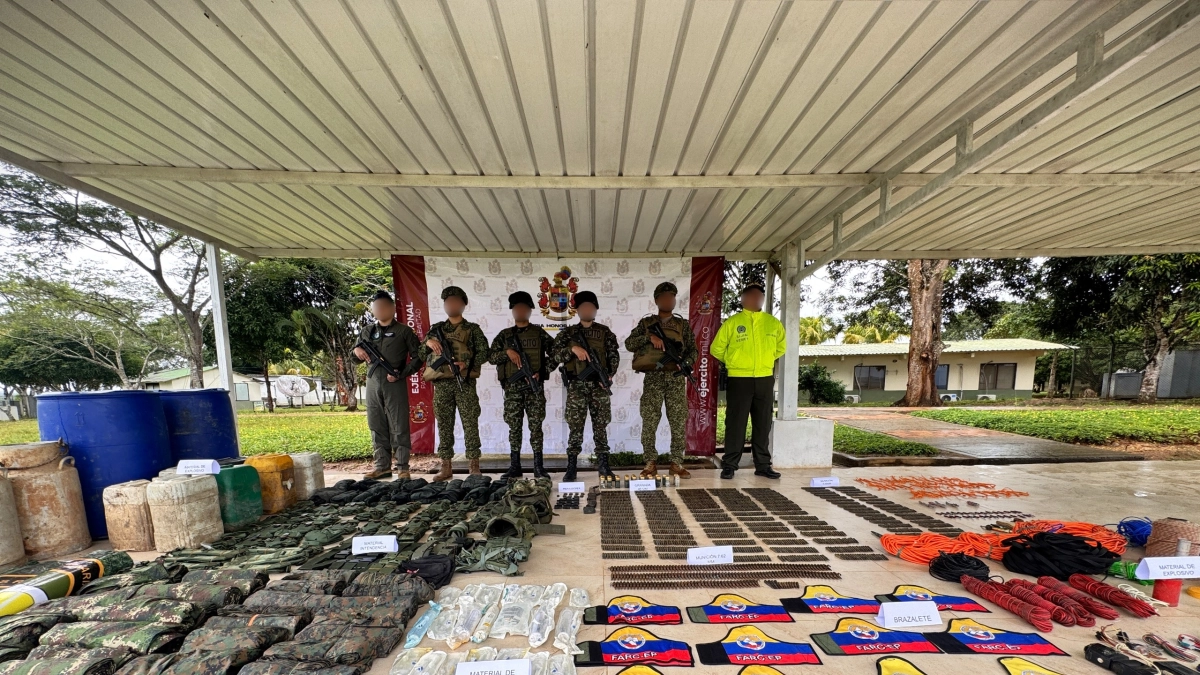
In a significant blow to the operational capabilities of dissident groups operating in the Colombian Amazon, a joint task force of the Colombian Military and National Police successfully uncovered and neutralized a massive illicit arms cache. The depot, discovered in the remote region of Puerto Cachicamo, within the rural jurisdiction of San José del Guaviare, belonged to the "Jhon Linares" structure—a faction operating under the "Jorge Suárez Briceño" bloc, which serves as a key branch of the "Calarcá" dissident group.
The discovery is being hailed by military analysts as one of the most critical logistical setbacks for non-state armed actors in the region this year. By seizing hundreds of antipersonnel mines and a substantial volume of high-grade explosives, the Colombian Armed Forces have effectively disrupted a planned campaign of terror intended to target both state security forces and the civilian population of the Guaviare and Yari regions.
The Scale of the Seizure: A Detailed Inventory
The sheer volume of war materiel recovered from the hidden bunker suggests that the "Jhon Linares" group was preparing for a prolonged and high-intensity conflict. The site, strategically concealed deep within the jungle, functioned as a central distribution hub for the group’s offensive operations.
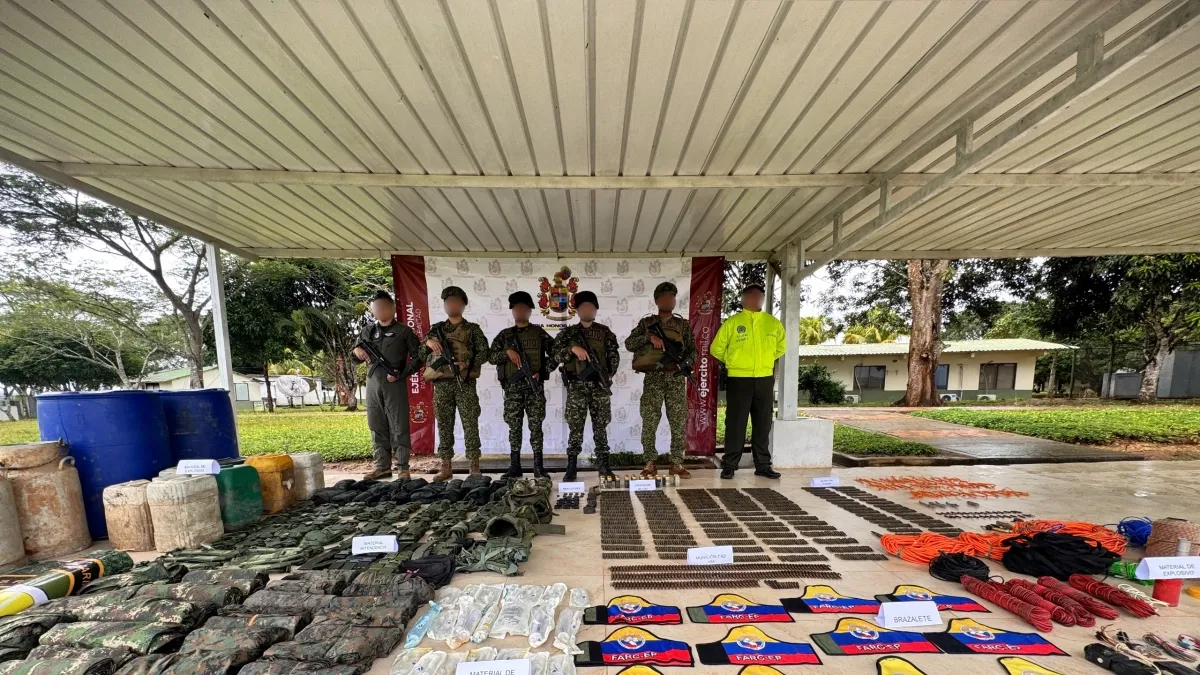
According to the official report released by the Colombian Ministry of Defense, the inventory of the seized items includes:

- Antipersonnel Mines: Approximately 500 improvised explosive devices (IEDs), designed for indiscriminate harm.
- Bulk Explosives: 200 kilograms of ANFO (Ammonium Nitrate/Fuel Oil), a powerful industrial-grade explosive mixture.
- Ordnance: 17 artisanal 60mm grenades and 20 standard 40mm grenades.
- Heavy Explosives: A large-scale cylinder-type improvised explosive device.
- Initiation Systems: 82 electric detonators, four advanced initiation systems, 2,500 meters of detonating cord, and 500 meters of safety fuse.
- Ammunition: 2,521 rounds of various calibers, along with rifle magazines.
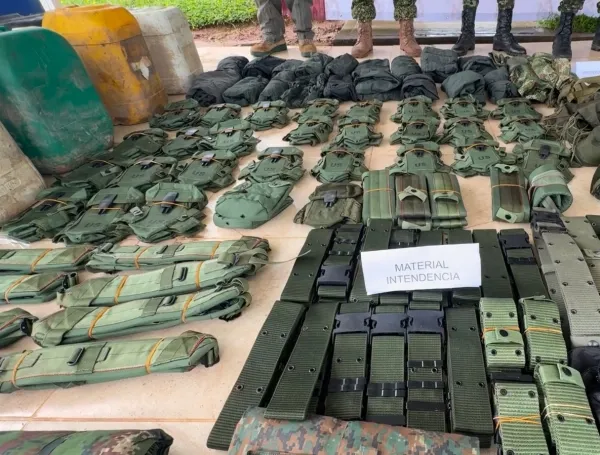
- Logistics & Propaganda: Communication radios, military-grade camouflage uniforms, tactical harnesses, and a disturbing collection of indoctrination manuals and propaganda banners bearing the symbols of the defunct FARC-EP.
Chronology of the Operation
The intelligence-led operation, codenamed "Operación Resguardo," was the result of months of persistent surveillance and signal intelligence gathering.
Early May 2026: Initial intelligence reports indicate an increase in the movement of logistical supplies toward the Puerto Cachicamo corridor. Military analysts identify a pattern of activity linking these movements to the "Jhon Linares" structure.
Mid-July 2026: The Joint Command of the Armed Forces authorizes a precision reconnaissance mission. Using satellite imagery and drone surveillance, the military narrows down the location of the cache to a dense, heavily forested area difficult to access by ground.
July 22, 2026: Elements of the Battalion for Direct Action and Reconnaissance No. 1, supported by the Amazon Naval Force and the 32nd Marine Infantry Battalion, move into the designated area under the cover of darkness.
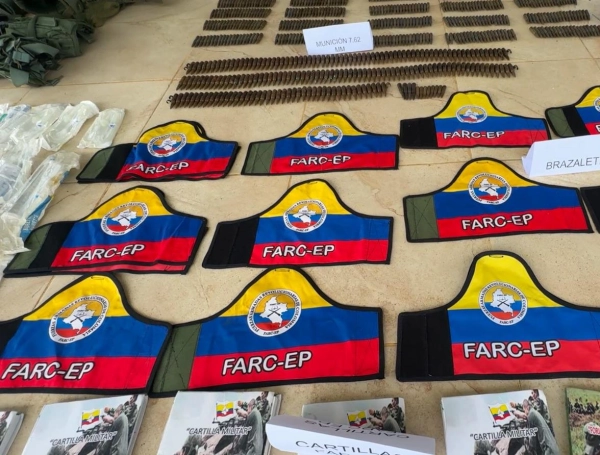
July 23, 2026: At dawn, the tactical units secure the site, discovering the hidden entrance to the depot. After verifying the area for secondary booby traps, the troops proceed to extract the inventory. By late afternoon, the material is cataloged and transported for secure disposal, marking the conclusion of the immediate tactical phase.
Strategic Implications: A Blow to the "Calarcá" Dissidents
The Guaviare region has long been a strategic chessboard for various armed groups due to its complex network of riverine and terrestrial corridors. By controlling these routes, dissident groups facilitate the movement of illicit goods, narcotics, and arms between the departments of Meta, Guaviare, and Caquetá.

Disrupting the "Plan of Terror"
Military intelligence suggests that the recovered arsenal was not merely for storage; it was destined for immediate deployment. Intelligence reports indicate that the dissident structure had planned a series of attacks targeting critical infrastructure, including regional bridges and primary rural access roads. The intent was to isolate local communities, intimidate the civilian population, and force the retreat of state security units from the region.
Degrading Logistical Capacity
Beyond the explosives, the recovery of propaganda materials, radio equipment, and uniforms highlights the group’s attempt to maintain a semblance of organized, quasi-military governance. The seizure of "indoctrination manuals" suggests an active effort by the dissidents to recruit local youth and maintain ideological cohesion among their ranks. By removing these, the state has diminished the group’s ability to wage "information warfare" and maintain its logistical footprint in the jungle.

Official Responses and Security Outlook
In a statement following the successful operation, a spokesperson for the Colombian Military underscored the importance of the win for regional stability. "This operation is a direct intervention against the criminal intent of the Jorge Suárez Briceño bloc. We have not only removed a significant amount of explosives from the hands of criminals, but we have also saved countless lives—both those of our soldiers and the innocent peasants who travel these roads daily," the spokesperson noted.
The Ministry of Defense has reaffirmed its commitment to the "Plan Ayacucho," the current overarching security strategy aimed at protecting the Colombian population through the dismantling of illegal armed groups’ financial and military foundations.

The Humanitarian Aspect
The presence of 500 antipersonnel mines is perhaps the most harrowing aspect of the discovery. Colombia remains one of the countries most affected by landmine contamination globally. The use of these devices by non-state actors is widely regarded as a war crime under international humanitarian law. The removal of this stockpile prevents a potential humanitarian catastrophe, as these devices would have likely remained in the soil for decades, posing a lethal threat to generations of rural inhabitants.
Conclusion: The Path Forward
The success of the operation in Puerto Cachicamo serves as a testament to the effectiveness of inter-service cooperation. The synergy between the Army’s ground units, the Naval Force’s riverine expertise, and the intelligence capabilities of the Air Force and National Police demonstrates a unified state front against persistent threats.

However, security experts warn that the vacuum left by such seizures is often quickly targeted by competing criminal factions. As the government continues its efforts to restore state authority in remote jungle regions, the challenge remains to consolidate these military gains with sustained social and economic development. The people of Guaviare, long caught in the crossfire of these illegal structures, look toward the state not only for military protection but for the long-term infrastructure and security that will allow them to live free from the fear of the next hidden cache or the next cycle of violence.
For now, the "Jhon Linares" structure has been forced to retreat and regroup, suffering a loss that will significantly impact its tactical freedom in the coming months. The Colombian government continues to monitor the region, signaling that operations to clear illegal war materiel will remain a top priority in the national security agenda.