By Sergio Gómez Maseri Washington Correspondent for EL TIEMPO
Introduction: A Geopolitical Paradox
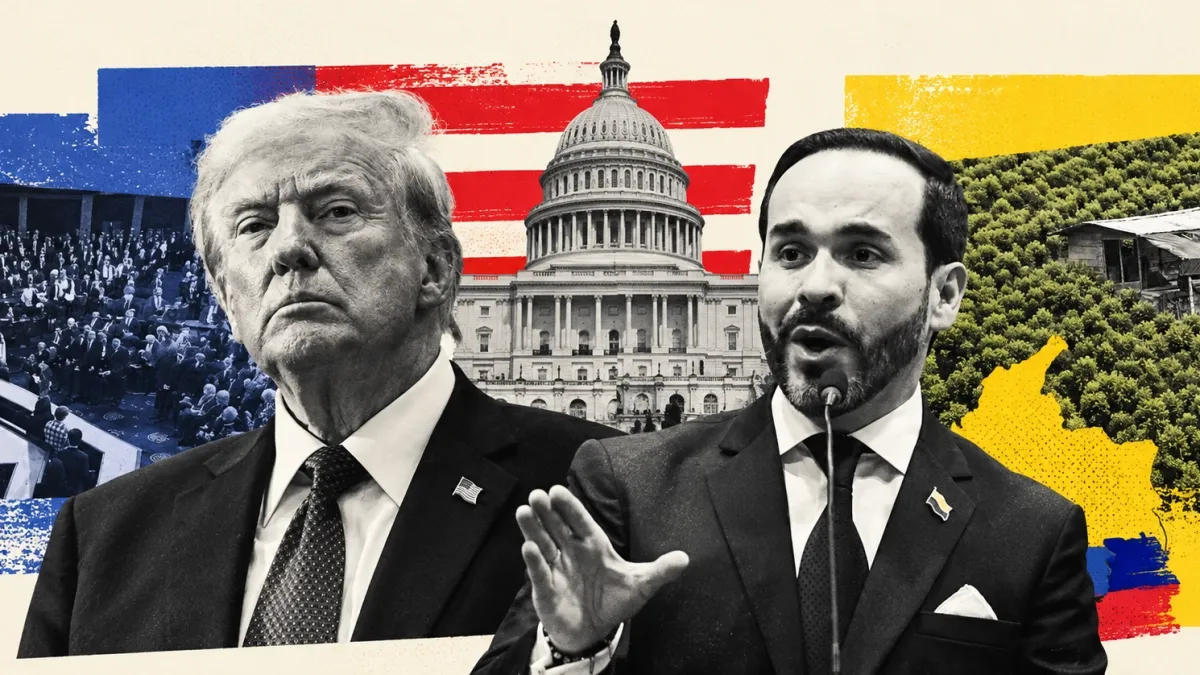
The decision by United States President Donald Trump to maintain Colombia’s descertification in the global war against drugs presents a striking geopolitical paradox. On one hand, Washington has placed the South American nation among an isolated group of only four countries globally deemed to have "failed demonstrably" in honoring their international antidrug commitments over the preceding twelve months. On the other hand, the White House has delivered an unprecedented level of political endorsement to Colombia’s newly inaugurated president, Abelardo De La Espriella, completely absolving his nascent administration of the policy failure while explicitly laying the blame on his predecessor, Gustavo Petro.
Furthermore, despite the punitive label, President Trump exercised a national interest waiver, ensuring that vital financial and security assistance to Bogotá remains entirely uninterrupted. He has also established a clear, explicit roadmap for Colombia to exit the descertification category in the next evaluation cycle.
This analytical report delves into the mechanics of Washington’s annual drug review, dissecting the political dynamics between the Trump and De La Espriella administrations, historical precedents, and the stark contrasts drawn with other regional actors such as Venezuela.
Main Facts: The 2026 Antinarcotics Determination
According to the official presidential determination transmitted to the United States Congress, Colombia remains tightly bound to a restrictive tier alongside Afghanistan, Bolivia, and Burma. Washington maintains that these nations failed to enact substantial, meaningful measures to curb illicit crop cultivation and dismantle transnational trafficking cartels during the 12-month evaluation window.
However, the designation carries built-in diplomatic relief. Invoking a national security waiver, President Trump determined that preserving aid to Colombia is vital to the national interests of the United States. Consequently, the formal descertification does not trigger an automatic freeze on military cooperation, intelligence sharing, or joint operations.
The rationale behind the continuity of the sanction lies in the timeline of the evaluation itself. Because the review strictly examines the prior 12 months, the vast majority of the assessed period occurred under the administration of left-wing leader Gustavo Petro, whereas President De La Espriella had assumed office barely a month prior to the finalization of the report.
Despite the technicality of the sanction, Trump utilized the formal document to heap praise on Bogotá’s new political direction, signaling a dramatic realignment in bilateral relations.
Chronology of Context: From Past Turbulence to Present Realignment
To fully understand the gravity of the 2026 determination, it is necessary to examine the historical trajectory of U.S.-Colombia drug certifications, the legacy of previous administrations, and the rapid diplomatic shifts that have characterized recent years.
The Petro Era and the Accumulation of Crises
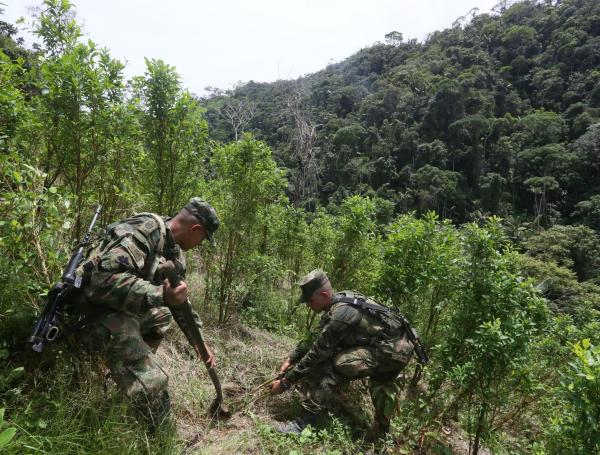
During Gustavo Petro’s tenure, Bogotá’s drug policy diverged significantly from the traditional Washington-backed security paradigm. Emphasizing substitution over eradication and softening the state’s military footprint against drug trafficking networks, Colombia saw a massive expansion in its cocaine production capacities. By 2024, remote and fertile regions harbored over 261,000 hectares of coca crops. This policy divergence steadily eroded trust within the halls of the U.S. Congress and the executive branch, eventually leading to the country’s initial descertification and laying the groundwork for the repeat sanction issued in late 2025 and reaffirmed in 2026.
The Rise of Abelardo De La Espriella and the Trump Reconnection
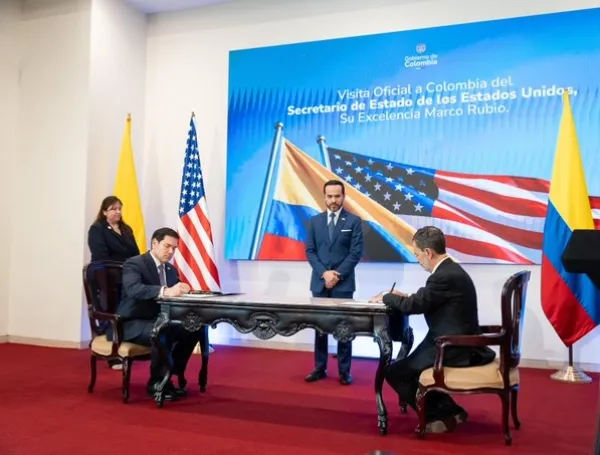
Following the democratic election of conservative firebrand Abelardo De La Espriella, bilateral ties experienced an immediate and aggressive recalibration. High-level delegations, including U.S. Secretary of State Marco Rubio, traveled swiftly to Colombian coastal hubs like Barranquilla to sign new memoranda of understanding, signaling Washington’s eagerness to partner with a like-minded administration committed to an uncompromising security agenda. Yet, as former U.S. Ambassador to Colombia Kevin Whitaker noted, the retrospective nature of the statutory review meant that political affinity could not single-handedly override a year’s worth of negative statistical indicators left behind by the prior government.
Supporting Data and Comparative Analysis: Colombia vs. Venezuela
A closer examination of the 2026 presidential determination reveals the non-mathematical, deeply political nature of Washington’s drug certification process. While metrics certainly matter, the strategic posture, ideological alignment, and recent policy corrections of foreign governments carry immense weight in the eyes of the White House.
The Venezuelan Contrast
Perhaps the most jarring contrast in the 2026 document is the treatment of Venezuela. Just one year prior, the Maduro regime was severely chastised and kept firmly on the "failed demonstrably" list, with Washington accusing Caracas of orchestrating transnational cocaine pipelines.
However, following the dramatic political transition in January—which saw Nicolás Maduro removed from power—the interim government led by Delcy Rodríguez aggressively pursued dismantling domestic cartel networks, highlighted by the neutralization of high-profile criminals like "Niño Guerrero," leader of the transnational gang Tren de Aragua. Citing these post-January developments, President Trump officially removed Venezuela from the descertification list.
The paradox is stark: Venezuela’s cooperation covered only a fraction of the 12-month evaluation window, yet it was deemed sufficient for rehabilitation. Conversely, Colombia remained sanctioned because the prior leftist administration occupied the bulk of the review period, despite the current government having already pivoted toward aggressive law enforcement.
Historical Precedents in Colombia
Colombia’s own history with the certification process demonstrates that raw numbers do not dictate outcomes in a vacuum:
2017 (Juan Manuel Santos / First Trump Administration): Facing record-breaking spikes in coca cultivation and cocaine output inherited from previous years, Washington openly admitted it considered "seriously" declaring Colombia a failure. Ultimately, President Trump withheld the sanction, validating the strong interdiction efforts and close institutional partnership maintained by the Colombian Military Forces and National Police.
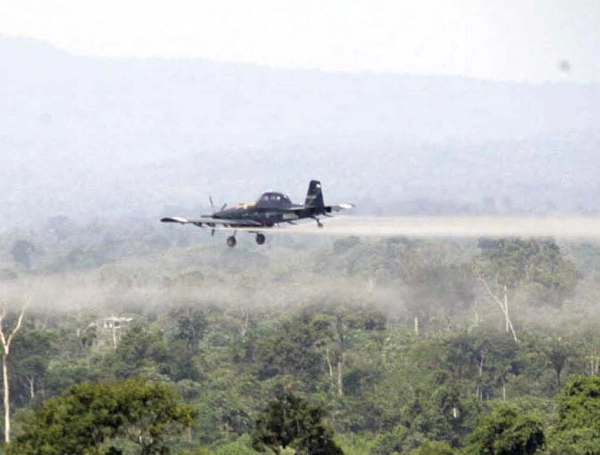
2019 (Iván Duque / First Trump Administration): Despite lingering record levels of coca, Duque’s early maneuvers—including efforts to revive aerial eradication—spared the country from descertification, proving that political goodwill and earnest policy pivots can successfully mitigate poor statistical baselines.
Reflecting on these nuances, former Ambassador Kevin Whitaker remarked:
"For me, it was a surprise. Obviously, Secretary Rubio noted clearly that this is retrospective… Given the nature of the relationship between the Trump administration and De La Espriella, I supposed there would be more flexibility, but there wasn’t."
Official Responses and Strategic Implications
The dual nature of the 2026 determination—punitive in its technical classification yet effusive in its political praise—has elicited diverse reactions from diplomats, analysts, and administration officials.
The White House Perspective
President Trump did not mince words when assigning responsibility for the ongoing sanction:
"The status remains [certified as failed] solely due to the incompetence and chaos produced by the previous far-left government," Trump stated in the congressional document.
At the same time, he showered praise on Colombia’s democratic choice:
"The people of Colombia made the courageous decision to elect Abelardo De La Espriella as president… Colombia is ready to resume its place as our primary security partner in the hemisphere. The military, police, prosecutors, and courts finally have a worthy defender in President De La Espriella."
Crucially, the White House laid out the terms for future clemency:
"If, as expected, Colombia achieves progress in the aggressive eradication of coca and the dismantling of its narcoterrorist networks over the coming year, I will consider lifting the country’s ‘demonstrable failure’ status."
Implications for the De La Espriella Administration
For Bogotá, the decision is a bitter pill wrapped in diplomatic honey. While the national interest waiver ensures that vital defense funding and equipment remain untouched—preventing any immediate operational crisis for the armed forces—remaining descertified for a second consecutive year is an undeniable political setback for an administration that staked its early momentum on seamlessly repairing relations with Washington.
Nevertheless, the roadmap is exceptionally clear. The pressure is now squarely on President De La Espriella’s shoulders. Over the next twelve months, the metrics evaluated by Washington will reflect his administration’s independent performance. If aggressive eradication campaigns, forced fumigation strategies (should they be reintroduced), and the systemic dismantling of drug laboratories deliver tangible statistical drops in cocaine production, Washington has formally promised to wipe the slate clean in 2027.
Conclusion
The 2026 U.S. antinarcotics determination regarding Colombia is a masterclass in pragmatic diplomacy. It reconciles past policy failures with future strategic ambitions. By legally preserving the sanction while shielding the current conservative leadership from blame, Washington has managed to penalize the structural shortcomings of the Petro era while offering an enthusiastic vote of confidence to Abelardo De La Espriella.
As bilateral cooperation deepens through new security frameworks and joint interdiction efforts, the countdown has begun. The coming year will test whether the potent chemistry between Donald Trump and Abelardo De La Espriella can translate political alignment into hard statistical success, ultimately restoring Colombia to full certification status in the ongoing war against transnational drug cartels.
By International News Desk Updated: July 24, 2026 – 05:01 AM France is currently embroiled in a catastrophic battle against nature as 32 active wildfires ravage the country’s landscape. The situation, fueled by a relentless…
LOS ANGELES — In a high-profile legal case that has deeply shaken Hollywood and communities across the United States, the District Attorney of Los Angeles County, Nathan Hochman, has officially announced that his office will…
NEW YORK — In a move balancing diplomatic obligations with acute geopolitical hostility, the administration of United States President Donald Trump announced on Thursday that it has authorized the Iranian delegation to travel to New…