By Investigative Desk
November 21, 2026
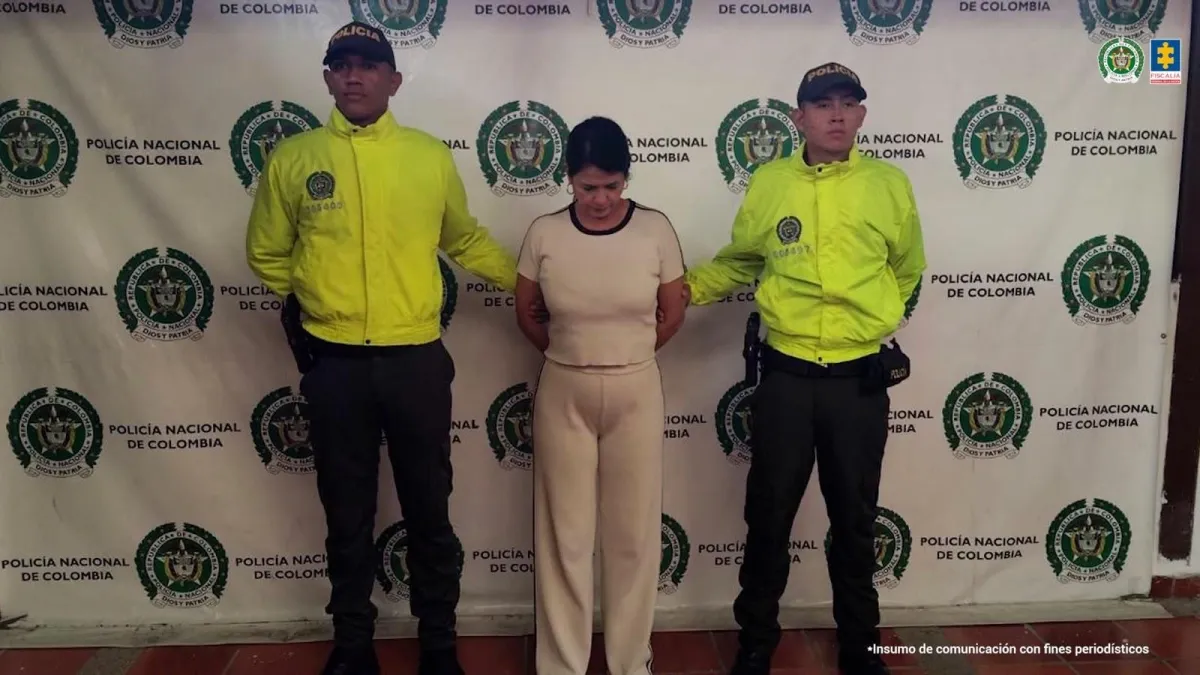
In a significant blow to the operational capacity of the "Clan del Golfo," one of Colombia’s most potent criminal syndicates, authorities have successfully captured David Alexander Uribe Puerta, known in the criminal underworld as "Chamorro." As the alleged financial mastermind behind the "Carlos Vásquez" sub-structure, Uribe Puerta is accused of orchestrating a massive money-laundering network that funneled over 3 billion pesos monthly through illegal mining, extortion, and international drug trafficking.

His arrest, conducted in the remote corregimiento of Piedras Blancas, in the municipality of Carepa, Antioquia, marks the culmination of an intensive multi-agency intelligence operation led by the Colombian National Police and the Attorney General’s Office.
The Architect of Illicit Wealth: Who is ‘Chamorro’?
For nearly a decade, David Alexander Uribe Puerta operated from the shadows, systematically climbing the hierarchy of the Clan del Golfo. At 39 years old, he had become an indispensable asset to the organization’s leadership. Since 2022, he served as the primary financial coordinator for the Carlos Vásquez sub-structure, a unit that commands significant territorial influence across the departments of Antioquia, Chocó, and Córdoba.

Investigators describe "Chamorro" not as a combatant in the traditional sense, but as a "corporate criminal." His role was to ensure the liquidity of a sprawling paramilitary-style organization. His responsibilities included the collection of "war taxes" (extortion), the management of illicit gold mining operations that devastate the Colombian landscape, and the sophisticated laundering of drug proceeds.
By utilizing a complex web of front companies and straw men (testaferros), Uribe Puerta successfully integrated blood-stained money into the legal economy. This financial insulation allowed the Clan del Golfo to maintain a standing force of approximately 346 armed combatants, providing them with the necessary resources for weapons procurement, advanced communications equipment, and logistical support for their trans-continental cocaine shipping operations targeting Central America and Europe.

Chronology of a Criminal Downfall
The investigation into Uribe Puerta was a painstaking process that spanned years of surveillance, wiretaps, and human intelligence gathering. The following timeline outlines the key moments leading to his capture:
- 2016 – 2021: Uribe Puerta solidifies his position within the organization, transitioning from lower-level tasks to managing regional logistics.
- 2022: Promoted to the lead financial coordinator of the Carlos Vásquez sub-structure. He begins implementing sophisticated money-laundering protocols.
- May 30, 2025: A pivotal breakthrough occurs when authorities raid two properties linked to Uribe in Piedras Blancas. The seizure of 20 million pesos in cash, gold jewelry valued at 300 million pesos, and, most importantly, a detailed accounting ledger containing records of over 681 million pesos in illicit transactions, provided the "smoking gun" needed for his prosecution.
- Late 2025 – 2026: Intelligence teams track his movements through the Urabá region, narrowing the net as he attempts to remain mobile to avoid detection.
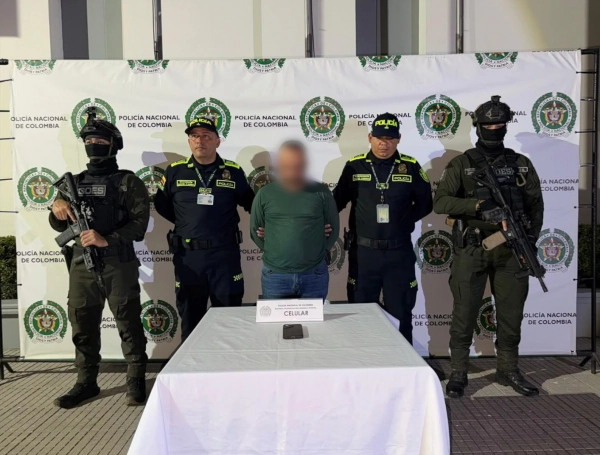
- November 21, 2026: Acting on a judicial warrant, elite units of the National Police successfully apprehend Uribe Puerta in a high-precision operation in Carepa, Antioquia.
The Financial Web: How the Clan Sustains Its Power
The sheer scale of the operation managed by "Chamorro" highlights the economic resilience of the Clan del Golfo. Experts in organized crime note that the group functions more like a multi-national conglomerate than a traditional gang.
Illicit Mining: The "Green" Gold
The sub-structure’s involvement in illegal mining is particularly destructive. By controlling territories rich in mineral deposits, the group forces local miners to pay protection fees or directly extracts gold using heavy machinery, causing irreversible environmental damage to rivers and forests. The proceeds are then laundered through legitimate gold-buying businesses, making the trail difficult for authorities to track.
Extortion: The Tax on the Innocent
The 3-billion-peso monthly figure is largely comprised of extortion payments. Local businesses, farmers, and even public transportation operators are forced to pay "vaccines" (vacunas) to the group. Failure to pay often results in violence or death, creating a climate of terror that allows the group to exert de facto control over entire municipalities.

Logistics and International Trafficking
The financial resources managed by Uribe Puerta were the lifeblood of the group’s cocaine export machine. Money was allocated for:
- Corridor Security: Bribes to facilitate the transit of drug shipments toward the Pacific and Caribbean coasts.
- Procurement: Acquisition of sophisticated firearms and night-vision equipment.
- Human Capital: Payroll for hundreds of fighters and support staff, ensuring loyalty through monthly payments.
Official Response and Legal Implications
Following his capture, Uribe Puerta was immediately transported to a high-security facility and presented before a judge of control of guarantees. The Attorney General’s Office has been aggressive in its indictment, charging him with aggravated conspiracy to commit a crime and illicit enrichment.

"The capture of alias ‘Chamorro’ is a strategic blow to the financial heart of the Clan del Golfo," stated a high-ranking official from the National Police. "We are not just taking a man off the streets; we are dismantling the accounting system that keeps these criminal groups operational. By hitting their finances, we effectively reduce their ability to arm themselves and terrorize our communities."
Legal experts anticipate a lengthy trial, given the volume of evidence recovered during the May 2025 raids. The prosecution is expected to utilize the seized accounting ledgers to trace the flow of funds to other high-ranking members of the Clan del Golfo, potentially leading to a wider crackdown on the organization’s leadership.

Broader Implications for Colombian Security
The arrest of "Chamorro" comes during a period of heightened activity by the Colombian government against the Clan del Golfo. Across the country, several high-value targets have been captured in recent weeks, including those in the Magdalena Medio and Santander regions. These coordinated strikes signal a shift in state strategy: moving away from solely focusing on combatants in the field and toward a "follow-the-money" approach.
The Challenge of Replacement
Despite these successes, the structure of the Clan del Golfo is notoriously resilient. History has shown that when one financial operator is captured, the organization often promotes another from within its ranks. However, the loss of someone with Uribe Puerta’s specific knowledge of the "Carlos Vásquez" accounts and his network of front companies creates a significant, albeit temporary, vacuum in the organization’s financial management.

Impact on the Urabá Region
For the residents of the Urabá antioqueño, the capture provides a glimmer of hope. By disrupting the financial flow, authorities hope to weaken the group’s grip on local governance and reduce the pervasive threat of extortion. However, peace in the region remains fragile as the vacuum left by key leaders often triggers internal power struggles, which can lead to spikes in violence.
Conclusion
The arrest of David Alexander Uribe Puerta, alias "Chamorro," serves as a stark reminder of the sophisticated nature of modern criminal syndicates in Colombia. As the legal proceedings move forward, the focus will remain on whether this arrest acts as a permanent dismantling of the financial network or merely a temporary setback for a group that has demonstrated a remarkable ability to adapt to state pressure.

For now, the authorities have achieved a victory that transcends the capture of a single man. By exposing the financial ledger of the Clan del Golfo, the state has provided the public and the judicial system with a roadmap of the criminal enterprise—one that may well lead to further arrests in the coming months.
Stay informed with our justice desk coverage. For the latest updates, follow our social media channels or subscribe to our weekly newsletter.