By Economic News Desk
Updated: November 6, 2026
In a critical effort to fortify the nation’s energy security, the Colombian government has signaled a strategic shift toward regional integration and infrastructure expansion. As the country faces a looming energy crunch exacerbated by climatic variability, the Minister of Mines and Energy, María Nohemí Arboleda, has outlined a roadmap that balances short-term emergency imports with the long-term necessity of domestic production.

The cornerstone of this plan is the reactivation of the Antonio Ricaurte gas pipeline, a vital artery connecting Colombia to Venezuela, which is now positioned as a primary short-term solution to bridge the domestic supply gap. However, the path forward is fraught with regulatory hurdles, geopolitical complexities, and infrastructure setbacks, including the delayed launch of the Pacific Regasification Terminal.
1. Main Facts: The Strategic Pivot to External Supply
The energy landscape in Colombia is undergoing a structural transformation. With local production showing signs of strain, the Ministry of Mines and Energy has confirmed that the reactivation of the Antonio Ricaurte pipeline is currently in the planning stages. According to Minister Arboleda, fieldwork for the rehabilitation of the 224-kilometer corridor is set to commence in the final quarter of 2026, with full operations targeted for mid-2027.

The rationale for selecting this existing infrastructure is grounded in economic efficiency. Rehabilitating the existing pipeline offers a significantly lower cost, a shorter execution timeline, and a reduced environmental footprint compared to the construction of a greenfield energy transport project.
However, this project is not merely an engineering challenge; it is a diplomatic and regulatory one. The execution of the project is strictly contingent upon obtaining necessary regulatory approvals and, most crucially, securing an exemption or license from the United States Office of Foreign Assets Control (OFAC). Given the current geopolitical environment, the government is navigating a delicate balance to ensure that energy security does not compromise international compliance.

2. Chronology: A Timeline of Infrastructure Challenges
The timeline for Colombia’s energy infrastructure has been a moving target. The Ministry’s recent updates highlight a series of delays that underscore the volatility of large-scale energy projects:
- Mid-2025: Initial assessments regarding the sustainability of domestic gas production indicate a growing dependency on imports.
- Late 2025 – Early 2026: Discussions regarding the reactivation of the Antonio Ricaurte pipeline gain momentum as a fallback measure to support the grid during periods of low rainfall.
- November 2026: Originally slated for a November launch, the Pacific Regasification Terminal experiences a setback. The Minister confirms that operations are now pushed to the end of December 2026.
- Q4 2026: Commencement of preparatory works for the Antonio Ricaurte pipeline rehabilitation.
- Mid-2027: Targeted window for the commissioning of the Venezuela-Colombia gas corridor, aiming to inject 50 million cubic feet per day (mpcd) into the national grid.
The delay of the Pacific terminal is particularly sensitive, as its launch is timed to provide critical support during the ongoing "El Niño" weather phenomenon, which typically puts immense pressure on hydroelectric capacity, forcing thermal power plants to run at maximum output.

3. Supporting Data: The Magnitude of the Supply Gap
The numbers behind Colombia’s energy crisis are stark. As of October 2026, imports already accounted for 41% of the total gas demand in the country. A staggering 75% of this imported volume is directed toward powering thermal energy plants, which are currently serving as the backbone of the national electrical grid while water levels in reservoirs remain a primary concern.
The Antonio Ricaurte pipeline, once fully operational, is expected to provide 50 million cubic feet per day (mpcd). While this represents roughly 5% of the total demand reported in 2025, it is a vital injection that could prevent rationing or excessive price spikes for industrial and household consumers.

Furthermore, the government is diversifying its supply chain:
- Spec (Cartagena) Expansion: Recently completed, this facility added 58 mpcd, bringing its total capacity to 533 mpcd.
- Puerto Bahía Terminal: Expected to come online in early 2027, this facility is projected to contribute an additional 126 mpcd, further diversifying the sources of imported gas.
Minister Arboleda noted that if the current trend continues, Colombia may face a reality where 50% of its gas consumption is imported by 2030. This statistic serves as a wake-up call for the current administration to balance import reliance with renewed efforts in domestic exploration.

4. Official Responses: The Government’s Balancing Act
Minister María Nohemí Arboleda has been vocal about the necessity of a pragmatic approach. During the Ninth Oil, Gas, and Energy Summit, she emphasized the "all hands on deck" philosophy.
"In this moment, we need every bit of help we can get," the Minister stated. "We are advancing on multiple fronts. The gas becomes highly relevant for managing the demand because, under current conditions, water alone will not be sufficient to power the nation."

Despite the focus on imports, the Minister was careful to address concerns regarding the decline of local production. "This does not mean that our local refineries and extraction fields are no longer useful. We must maintain our self-sufficiency. The resource exists, and we have an obligation to extract it efficiently and responsibly."
This dual-track strategy—importing to manage immediate climate-induced risks while maintaining the regulatory environment for local production—is the core pillar of the government’s energy policy for the next 24 months.
5. Implications: What Lies Ahead for the Colombian Market
The implications of these developments are far-reaching for both the economy and the average citizen:
Industrial Stability
The manufacturing and industrial sectors, which are heavily dependent on reliable and affordable natural gas, are watching the timeline for the Pacific terminal and the Venezuela pipeline with keen interest. Any further delay in these projects could lead to increased energy costs, potentially impacting the national inflation rate.
Energy Transition and Climate Risks
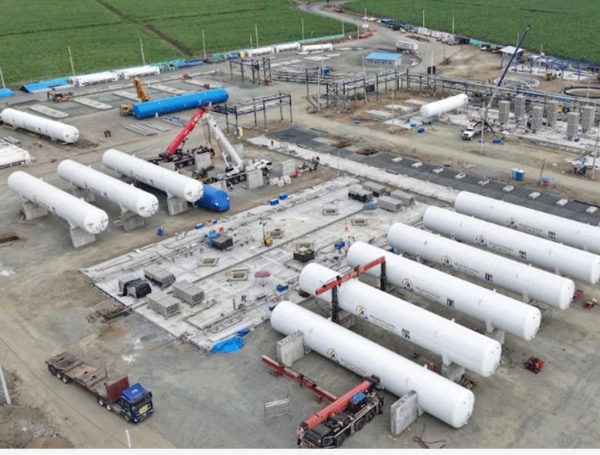
The reliance on thermal plants during El Niño underscores the fragility of the current energy mix. While the government aims for a green transition, the current reality forces a return to fossil-fuel-based security. The infrastructure being built today—such as the regasification terminals—will likely serve as a bridge for the next decade, providing the flexibility needed to integrate more renewable energy sources as they scale up.
Geopolitical Considerations
The reliance on the Venezuelan pipeline brings the "Antonio Ricaurte" back into the spotlight of regional diplomacy. The necessity of OFAC licenses highlights that Colombia’s energy security is inextricably linked to its foreign policy. The government is treading carefully to ensure that it meets its internal needs without violating international sanctions regimes, a tightrope walk that will define the success of this project.
The Outlook for 2027
By the middle of 2027, Colombia hopes to have a diversified energy portfolio that includes:
- Increased LNG import capacity through the expanded Cartagena terminal and the new Puerto Bahía site.
- Regional gas integration via the rehabilitated Venezuela-Colombia corridor.
- Improved reservoir levels following the conclusion of the peak El Niño cycle, provided the government’s water management strategies hold.
As the country approaches the end of 2026, the focus remains on the "last mile" of these projects. The successful delivery of the Pacific Regasification Terminal in December will be the first test of whether the Ministry can deliver on its adjusted timeline. If successful, it will provide a much-needed buffer; if delayed further, the pressure on the national energy grid will intensify significantly.

The Minister’s final message remains clear: the focus is on stability. Whether through imports or local production, the goal is to ensure that the lights stay on and that the wheels of the Colombian economy continue to turn, even as the global energy landscape undergoes its most volatile shift in a generation.