In an unexpected move that has sent shockwaves through international diplomatic circles and human rights advocacy groups, the Colombian government announced its formal withdrawal from the Equal Rights Coalition (ERC), a prominent intergovernmental body dedicated to the protection and advancement of LGBTQ+ rights worldwide.
The decision, communicated on September 17, 2026, marks a profound pivot in Colombia’s foreign policy agenda. The withdrawal is particularly notable given that Colombia had been serving as a co-chair of the coalition alongside the Kingdom of Spain, positioning the nation as a key leader in the global discourse on gender identity and sexual orientation rights.
The Core Facts: A Silent Exit
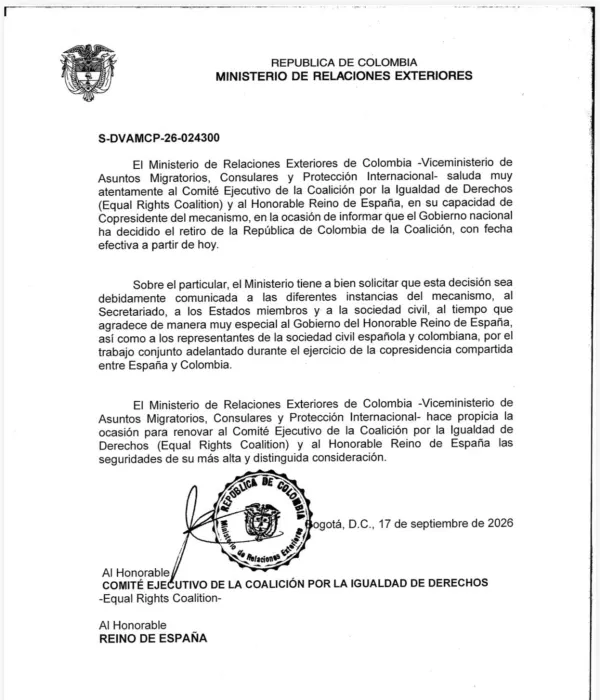
The notification of withdrawal was delivered by the Colombian Ministry of Foreign Affairs, specifically through the Vice Ministry of Migratory Affairs, Consular Affairs, and International Protection. The diplomatic note, addressed to the ERC’s Executive Committee and the Spanish government, provided no specific justification for the decision.
The document was stark in its brevity, simply stating: "The Government of the Republic of Colombia has decided to withdraw from the Coalition, effective as of today." By opting out of the organization, Colombia has effectively abandoned its leadership role in a forum that includes 43 other member states. The move caught both the international community and domestic civil society organizations by surprise, as no prior warning or consultation regarding such a drastic change in policy had been signaled by the administration.
Chronology of Colombia’s Engagement
To understand the magnitude of this decision, one must look at the trajectory of Colombia’s involvement in the ERC.
- 2024: The Ascendance. During a high-level meeting in Berlin, Colombia officially assumed the co-presidency of the Equal Rights Coalition. This was hailed as a milestone for the country, symbolizing its commitment to progressive human rights standards and its desire to lead by example in Latin America.
- 2024–2026: The Partnership. For nearly two years, Colombia and Spain worked in tandem to steer the coalition’s agenda, coordinating with various thematic working groups and maintaining a bridge between governmental bodies and civil society organizations.
- September 17, 2026: The Break. Without prior public debate or legislative consultation, the Ministry of Foreign Affairs issued the formal notice of withdrawal. The timing is particularly sensitive, as the country’s tenure as co-chair was scheduled to conclude in February 2027.
The Role of the Equal Rights Coalition
The Equal Rights Coalition is a multilateral, intergovernmental body established in 2016. Its primary mission is to promote the human rights of LGBTQ+ individuals and to advocate for inclusive policies on a global scale. The coalition operates through a unique structure where member states collaborate closely with civil society organizations—a design intended to ensure that policy decisions are informed by the lived realities of those the organization seeks to protect.

By participating in the ERC, member states commit to integrating LGBTQ+ rights into their foreign policy, development cooperation, and diplomatic advocacy. For Colombia, being a member—and specifically a co-chair—meant playing an active role in shaping the global agenda on equality.
Official Responses and Diplomatic Friction
While the Colombian government has remained tight-lipped regarding the underlying motivations for its departure, the diplomatic community has been left to parse the potential meanings of this silence.
In the official note, the Ministry of Foreign Affairs included a formal acknowledgment of the cooperation received during the co-presidency: "The Government of Colombia extends its gratitude in a very special way to the Government of the Honorable Kingdom of Spain, as well as to the representatives of the Spanish and Colombian civil society, for the joint work carried out during the exercise of the shared co-presidency."
Despite these polite diplomatic formalities, the lack of explanation has fueled intense speculation. Analysts are questioning whether this move represents a broader shift in the current administration’s foreign policy, potentially signaling a move toward more conservative stances or a de-prioritization of international human rights commitments in favor of other geopolitical interests.
Domestic Backlash: The Voice of Civil Society
Perhaps the most vocal critic of the decision has been Wilson Castañeda, the director of Caribe Afirmativo and a key representative of civil society within the ERC. Castañeda, who served alongside the government as a leader of the coalition, did not mince words when addressing the move.
"This is an unfortunate decision," Castañeda stated in an interview following the announcement. "Of the days this government has been in power, this is arguably the clearest action taken against the rights of the LGBTQ+ community. It carries the aggravating factor of having a significant international impact, as Colombia is abandoning a mechanism it was currently leading."
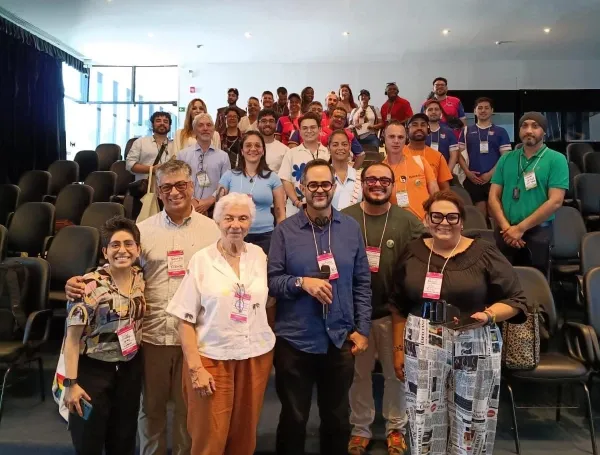
Castañeda noted that the decision was communicated to the 44 member states by Vice Minister of Foreign Affairs Pedro Roa during a meeting that was meant to be routine. According to his account, the government offered no space for negotiation or dialogue before confirming the withdrawal.
"They leave us in a very poor position internationally," Castañeda added. "It sends a message to the world that there is a lack of recognition for the protection of the rights of LGBTQ+ people within the current government’s framework. It would have been far more professional and ‘healthy’ for the country to wait until February to finish the term they committed to."
Implications: What Does This Mean for Colombia?
The withdrawal has several layers of implications, ranging from diplomatic reputation to the actual status of human rights within the country.

1. Diplomatic Isolation and Credibility
By walking away from a co-presidency before its term expired, Colombia risks being perceived as an unreliable partner in the international arena. Leadership in multilateral organizations requires a level of consistency and commitment; abandoning a post halfway through can damage a nation’s soft power and its ability to influence future global policy discussions.
2. Impact on Domestic Human Rights
Advocates fear that this move is a "canary in the coal mine" for domestic policies. If the government is willing to sever ties with an international coalition dedicated to equality, what does this suggest about its future support for existing domestic protections for the LGBTQ+ community? The decision has reignited debates about the separation of church and state, as well as the government’s commitment to the progressive social agenda it once championed.
3. The Future of the Coalition
The ERC is now faced with the challenge of restructuring its leadership mid-stream. Spain, the remaining co-chair, will need to coordinate with the Executive Committee to find a replacement or adjust the management of the coalition’s agenda. While the coalition is resilient, the loss of a major Latin American voice like Colombia leaves a significant void in the organization’s regional representation.

Looking Forward: A Political Mystery
As of late September 2026, the silence from the Presidential Palace and the Ministry of Foreign Affairs remains the defining feature of this controversy. The lack of a clear, public justification for the withdrawal suggests that the decision was likely made within a very small circle of the administration’s inner cabinet.
For now, the international community waits to see if further explanations will be provided. Will this remain a singular, isolated act of diplomatic withdrawal, or is it the first step in a broader re-alignment of Colombia’s foreign policy? As the country navigates this transition, the voices of civil society, activists, and international observers will continue to demand transparency regarding the principles that guide Colombia’s role in the global community.
The departure from the Equal Rights Coalition is more than just an administrative change; it is a symbolic moment that tests the strength of Colombia’s dedication to human rights. For a country that has worked hard to build a reputation as a beacon of progress and reform in the region, this sudden pivot creates a dissonance that may take years of diplomatic effort to resolve.

As the dust settles, the focus of both the public and the political opposition will remain fixed on the government’s next moves. Whether the administration chooses to clarify its stance or continues its current course of silence, one thing is clear: the relationship between the Colombian government and the international human rights architecture has undergone a fundamental, and potentially irreversible, change.