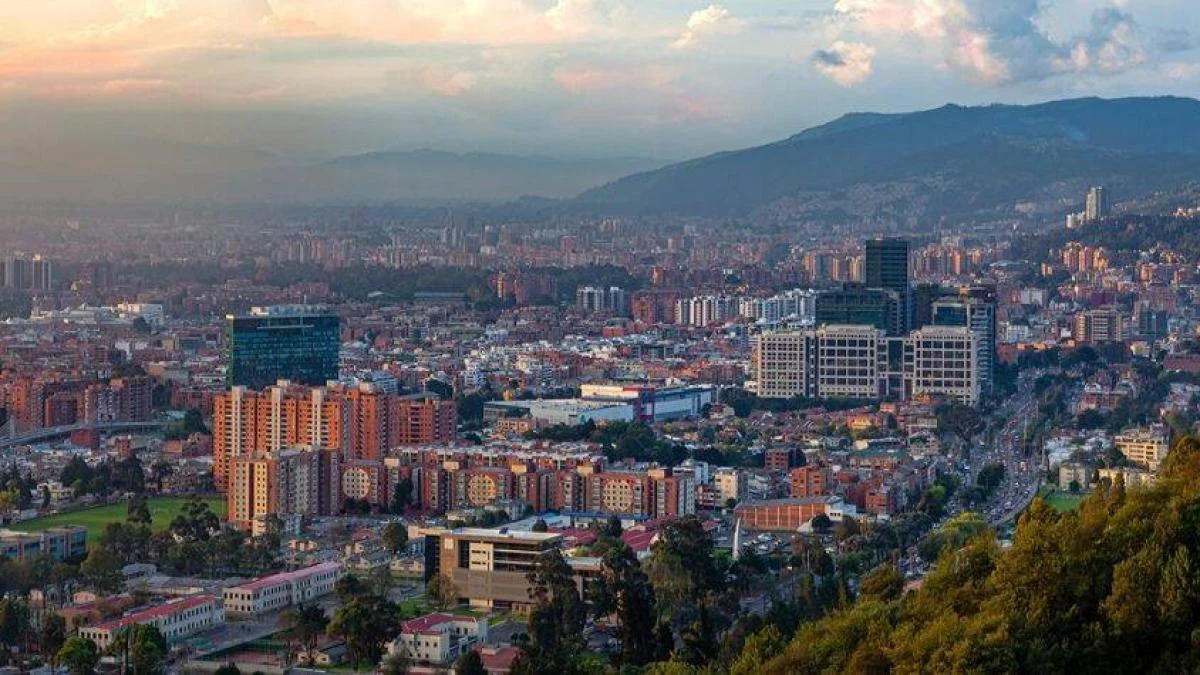
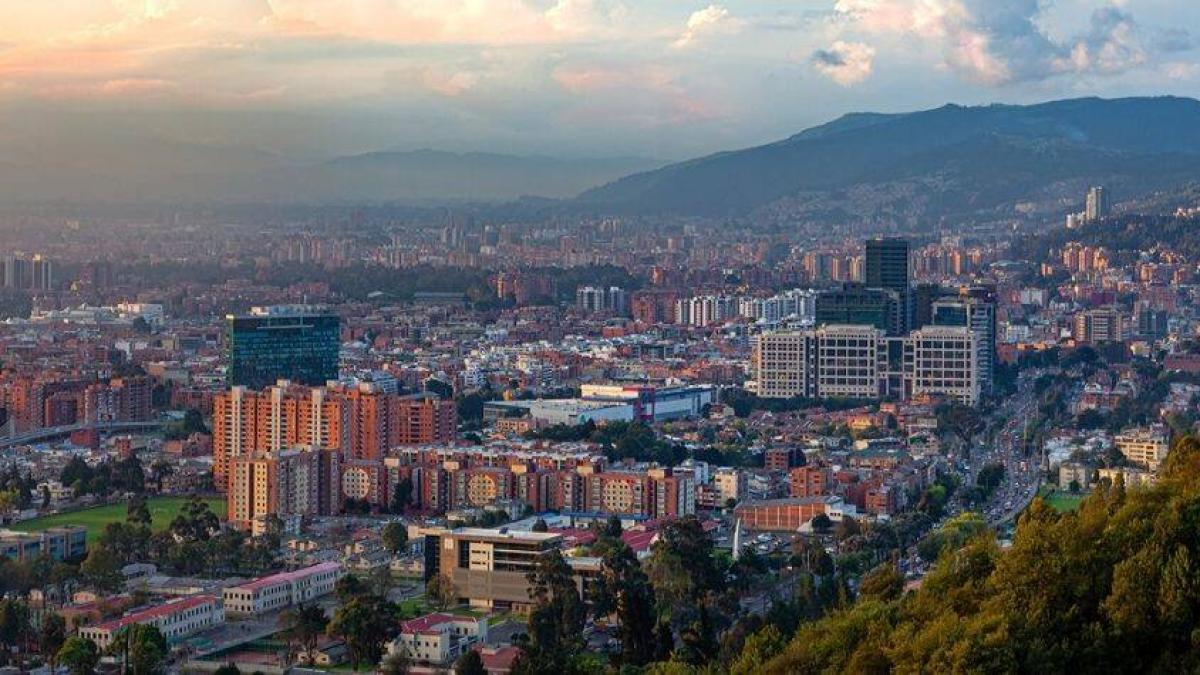
BOGOTÁ — The tourism landscape in Colombia’s capital is currently defined by a striking contradiction. On one hand, Bogotá is experiencing robust domestic connectivity, rising hotel occupancy rates, a proliferation of registered tourism providers, and a significant expansion in sector-related employment. On the other hand, the city has faced a persistent, steep decline in international visitor arrivals since the beginning of the second quarter of 2026.
According to the latest bulletin from the Bogotá Tourism Observatory (Observatorio de Turismo de Bogotá), the city recorded a total of 89,707 inbound flights and 11.2 million passengers between January and June 2026. This data underscores Bogotá’s enduring strength as a national and regional hub, even as shifting macroeconomic dynamics, regional events, and high comparative baselines from the previous year weigh heavily on foreign travel metrics.
Local authorities, industry leaders, and economic analysts are closely monitoring these opposing trends. While domestic mobility and service infrastructure continue to break records, understanding the factors driving the downturn in international arrivals has become paramount for the city’s strategic economic planning.
Main Facts
The foundational data released by the Bogotá Tourism Observatory highlights a thriving local and regional travel market, juxtaposed against a cooling international sector during the first half of 2026.
Flight Traffic and Passenger Volumes
During the first six months of 2026, Bogotá’s aviation sector expanded significantly:
Total Inbound Flights: 89,707 flights landed in the capital between January and June, representing a 5.5 percent increase compared to the same period in 2025.
Passenger Movement: These flights mobilized 11.2 million passengers, marking a 4.5 percent year-over-year growth.
Future Projections: The positive momentum in air travel is expected to persist. Between July and September 2026, authorities project 43,507 direct flights to Bogotá—a 3.6 percent increase over the previous year—backed by an available capacity of more than 7.3 million seats.
Ground Transportation and Accommodation
Terrestrial Terminals: Between January and July, Bogotá’s bus terminals handled over 8 million passengers, reflecting a modest 0.9 percent increase compared to the prior year.
Hotel Occupancy: In June alone, hotel and lodging occupancy in Bogotá reached 50.7 percent. This figure notably outperformed the national average, which stood at 45.4 percent for the same month.
Growth in Tourism Service Providers
The formal tourism economy in Bogotá has also experienced notable expansion. By the end of July 2026, the city counted 15,248 active service providers registered in the National Tourism Registry (Registro Nacional de Turismo), representing a 12.2 percent increase compared to July 2025.
Short-Term Rentals: Tourist housing units registered the most dramatic growth, adding 1,274 new entries.
Agencies and Guides: Travel agencies added 274 new registrations, while licensed tour guides grew by 121.
Chronology of International Arrivals in 2026
The trajectory of foreign tourism in Bogotá tells a tale of two distinct quarters. While the year began with modest gains, international arrivals deteriorated rapidly beginning in April.
First Quarter: Modest Growth
The year started on a positive footing, with international visitor numbers posting small yet stable gains compared to the exceptional figures recorded throughout 2025:
January: Recorded a 1.1 percent increase in foreign arrivals compared to January 2025.
February: Posted a stronger 5.4 percent year-over-year growth rate.
March: Maintained the positive trend with a 1.6 percent increase.
Second Quarter: The Sharp Correction
The paradigm shifted drastically at the start of the second quarter, plunging the sector into a sustained downturn that outpaced national downward trends:
April: Foreign arrivals dropped by 8.8 percent compared to the previous year.
May: The contraction deepened, registering a 9.0 percent decline.
June: The steepest drop occurred in June, with Bogotá receiving 118,000 foreign travelers—a dramatic 23.5 percent decrease compared to the 154,000 international visitors recorded in June 2025 (representing a loss of roughly 36,000 travelers in a single month).
By comparison, the national decline in foreign arrivals for June sat at 16.4 percent, indicating that Bogotá was hit harder by the contraction than the country as a whole.
Supporting Data and Demographics
Despite the mid-year slowdown, Bogotá welcomed a cumulative 1,039,025 foreign travelers between January and July 2026.
Core Source Markets
Geographic proximity and traditional economic ties continued to drive foreign inflows. The top five countries of origin accounted for 53 percent of all international visitors to the capital:
Venezuela
United States
Mexico
Spain
Brazil
Motivations for Travel
Data compiled by the Observatory reveals the primary reasons driving foreigners to Bogotá during this seven-month period:
Leisure Tourism: 54.0 percent
Transit/Layover: 19.2 percent
Business: 8.4 percent
Airline/Maritime Crew: 6.2 percent
Events and Conventions: 2.7 percent
Visiting Residents: 2.6 percent
The 2025 High-Water Mark and External Factors
To contextualize the 2026 figures, analysts point out that 2025 was an exceptionally anomalous year, propelled by high-impact global events. Furthermore, the Tourism Observatory noted that extraordinary regional occurrences—such as major international sporting events and a significant earthquake in Venezuela—temporarily disrupted typical travel patterns and altered regional human mobility flows, diverting certain international markets away from historical trajectories.
Despite the mid-year losses, the national aggregate for the first semester of 2026 remains the second-highest in historical records, sitting just below the record-breaking peaks of 2025.
Official Responses and Strategic Actions
Faced with the cooling international market, district authorities are aggressively realigning their promotion strategies to stabilize foreign visitor flows and capture new demographics.
Ángela Garzón, Director of the District Tourism Institute (Instituto Distrital de Turismo), emphasized that the city is actively working to counteract the dip through targeted international outreach.
"We are advancing the strengthening of international promotion to generate new alliances and diversify markets, primarily in Central America and Europe," Garzón stated. "We want visitors to enjoy the city, stay longer, and find compelling reasons to return."
The District’s strategy focuses on transforming Bogotá from a mere transit hub—given that nearly one-in-five international visitors currently list "transit" as their primary purpose—into a definitive final destination. By highlighting the capital’s culinary scene, cultural heritage, and surrounding nature, officials hope to increase the average length of stay and boost per-visitor economic impact.
Economic and Labor Implications
While international tourism numbers have sparked debate, the broader ecosystem of transportation and lodging has provided substantial positive feedback to Bogotá’s local economy, particularly regarding job creation.
Data covering the April-to-June quarter indicates that the expansion in travel infrastructure has directly translated into robust labor market gains:
Air and Ground Transport Sectors: Employment in activities related to air and ground transportation surged by 16.1 percent, accounting for 5,173 new jobs created during the quarter.
Connected and Auxiliary Sectors: Industries supporting tourism and transit grew by 11.3 percent, generating an additional 5,461 jobs.
These figures demonstrate that the domestic travel boom, alongside steady corporate and logistical activities, is successfully cushioning the economic blow dealt by the reduction in foreign arrivals. The growth in formal registry providers—particularly the explosive expansion of short-term tourist housing (up 1,274 units)—indicates that entrepreneurial confidence in Bogotá’s long-term visitor economy remains high, even as the international segment navigates a period of post-boom normalization.
BOGOTÁ, COLOMBIA — The bicycle has long evolved beyond its rudimentary definition as a simple mode of transport. Today, it serves as a lifestyle, an ecological statement, and an immersive lens through which urban explorers…
By Angie Rodríguez | Travel & Trends Department Updated: September 10, 2026 Costa Rica’s lush Pacific coastline is set to welcome a new pinnacle of ultra-luxury hospitality. Global hospitality giant Hilton has officially announced the…
GLOBAL AVIATION — In an industry defined by fierce competition, shifting geopolitical landscapes, and ever-evolving passenger expectations, the definitive verdict on the world’s finest carriers has officially been delivered. The results of the prestigious 2026…