By Camilo A. Castillo, International Desk
July 23, 2026
In a significant pivot of its international trade policy, the administration of President Donald Trump confirmed on Thursday the implementation of a new, more stringent tariff regime affecting imports from 54 nations, including Colombia. The decision, which imposes a 12.5 percent levy on products originating from these countries, marks a departure from previous temporary measures and establishes a permanent, long-term framework under the U.S. Trade Act of 1974.
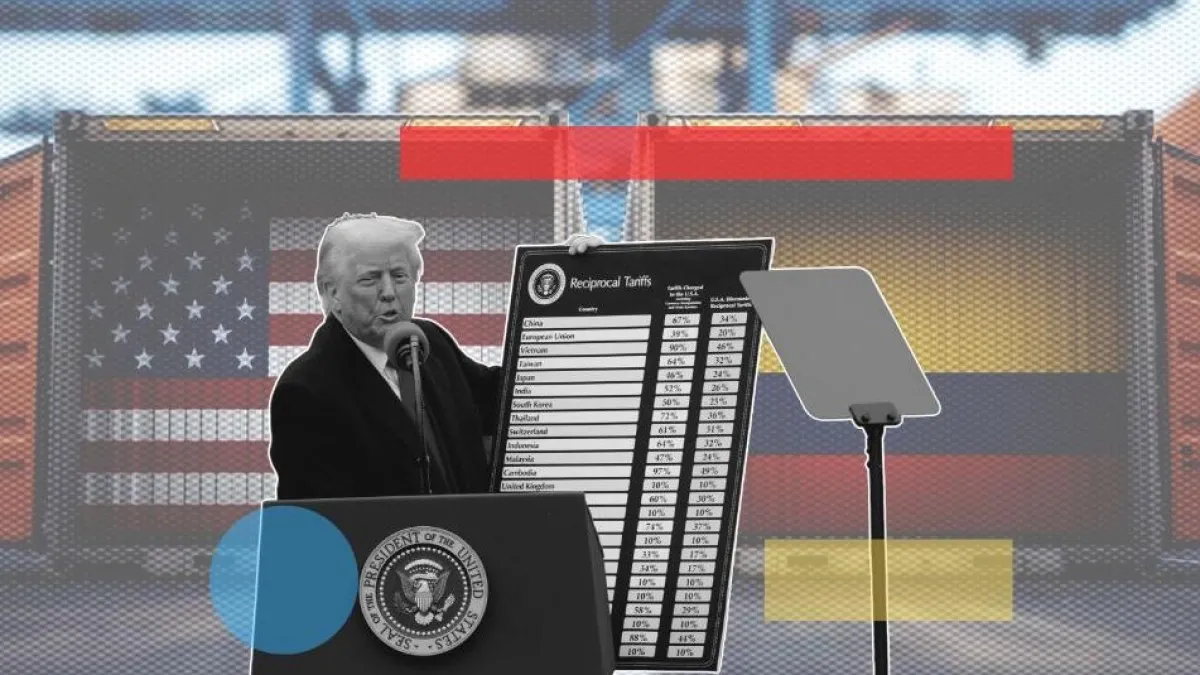
The measure is set to take effect at 12:01 a.m. this Friday, July 24, signaling a new era of protectionism disguised as human rights enforcement. The Office of the United States Trade Representative (USTR), led by Jamieson Greer, finalized the order following a comprehensive investigation into how various economies regulate the entry of goods produced through forced labor.
The Shift from Temporary to Permanent: A Legal Rebranding
For the past several months, the U.S. market has operated under a 10 percent general tariff, initially justified under Section 122 of the Trade Act. This was a stop-gap measure introduced after the U.S. Supreme Court struck down earlier taxes imposed under the International Emergency Economic Powers Act. That temporary policy was governed by a 150-day expiration clause, which was set to lapse this Friday.

To avoid a trade vacuum and maintain pressure on foreign partners, the Trump administration opted to pivot the legal foundation of these tariffs to Section 301 of the Trade Act of 1974. Unlike the previous temporary framework, Section 301 is a formidable instrument in the U.S. trade arsenal, historically used to retaliate against nations whose policies are deemed to burden or restrict U.S. commerce.
"President Trump recognizes that decades of moral persuasion have failed to eradicate forced labor from global supply chains," Greer stated during Thursday’s press briefing. "The United States has maintained a strict prohibition on the import of goods made with forced labor for nearly a century. It is time for our trading partners to mirror our commitment."
Chronology of the Policy Evolution
The current situation is the culmination of a systematic review process initiated by the White House earlier this year. The timeline of this transition highlights the administration’s determination to codify its protectionist agenda:
- March 2026: The USTR launches a formal investigation into 54 global economies, focusing on the efficacy of their internal regulations regarding forced labor.
- June 2026: A preliminary report is published, suggesting a tiered tariff system. Countries with existing, but partial, regulatory frameworks were slated for a 10 percent tariff, while those deemed to have insufficient controls faced a 12.5 percent levy.
- Late June 2026: Public hearings and consultative periods conclude, allowing affected nations to lobby for exemptions.
- July 23, 2026: The USTR formally designates Colombia and other nations as falling into the 12.5 percent tariff bracket, citing a lack of sufficiently robust controls to prevent goods produced by forced labor from entering their domestic markets.
- July 24, 2026: Official implementation of the new, indefinite tariff regime.
Understanding the "Forced Labor" Justification
It is essential to clarify that the U.S. government is not explicitly accusing the Colombian government or its private sector of utilizing forced labor within its borders. Instead, Washington’s grievance lies in what it describes as "insufficient gatekeeping."

From the perspective of the U.S. administration, the failure of a country to enforce strict import bans creates a "transshipment risk," where goods produced under abusive conditions elsewhere can enter the global supply chain through these jurisdictions, ultimately reaching the U.S. market. The administration argues that this creates an unfair competitive environment for American manufacturers, who are subject to rigorous labor compliance standards that increase their cost of production.
By shifting the legal framework to Section 301, the U.S. is essentially asserting that these countries are failing to uphold international fair-trade practices, thereby justifying the imposition of punitive tariffs until such time that the U.S. is satisfied with their regulatory reforms.

Implications for Colombian Exporters
For Colombia, the transition from a 10 percent to a 12.5 percent tariff is more than just a fiscal hit; it is a structural challenge. The increase in the tax rate, while seemingly modest (2.5 percentage points), will squeeze margins for exporters already struggling with logistical costs and global price fluctuations.
However, the most concerning element for the private sector is the indefinite nature of Section 301. Unlike the previous temporary order, there is no automatic expiration date. The legislation governing Section 301 mandates a review every four years. Unless a specific industry or foreign government can successfully lobby for a change, or prove that the conditions triggering the tariff have been rectified to the satisfaction of the USTR, these taxes are likely to persist.
History shows the durability of these measures. The tariffs imposed on China under Section 301 in 2018 have survived several review cycles, serving as a blueprint for the current administration’s long-term economic strategy.
A Targeted Lifeline: Exemptions and Strategic Goods
Not all Colombian exports will face the new tariff. The USTR has provided a critical list of exemptions, acknowledging that some goods are essential to the U.S. economy or simply cannot be produced in sufficient quantities domestically. These exemptions serve as a vital lifeline for key sectors of the Colombian economy.

The products excluded from the 12.5 percent tariff include:
- Agricultural staples: Coffee (including instant varieties), bananas, plantains, pineapples, avocados, and mangoes.
- Livestock: Beef exports remain shielded.
- Commodities: Coal, oil, natural gas, and essential fertilizers.
- Industrial inputs: Specific chemicals, seeds for sowing, and certain components for semiconductor manufacturing.
- Aviation: Civil aircraft and associated parts.
These exemptions reflect the deep interconnectedness of the U.S. and Colombian markets. Washington is clearly attempting to balance its protectionist rhetoric with the practical need to maintain stable supply chains for food and energy, which remain central to the U.S. consumer price index.

Official Responses and Future Outlook
The decision has sent ripples through the Colombian business community and the diplomatic corps. While the government has not yet issued a formal rebuttal, economists warn that this could lead to a broader review of the U.S.-Colombia Trade Promotion Agreement (TPA).
The timing of this announcement also intersects with a broader geopolitical shift in the region. Observers note that the U.S. is concurrently recalibrating its military and security cooperation with Colombia, a development that complicates the diplomatic response. As the administration of President Trump pushes for a "Patriot Plan 2.0," trade friction could become a point of leverage in bilateral negotiations.

For the average Colombian exporter, the message from Washington is clear: compliance is no longer enough. The U.S. now demands proof of active, aggressive enforcement of labor standards across the entire supply chain. Until these standards are met and verified by U.S. officials, the 12.5 percent barrier will remain a fixture of the economic landscape.
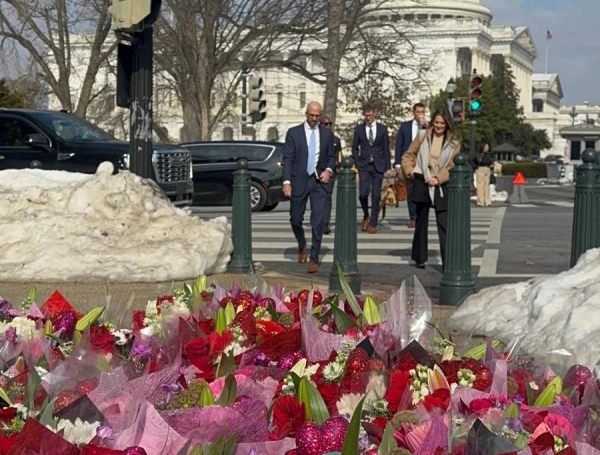
As the markets open on Friday, the impact of this policy will be tested. For sectors like flowers, which remain notably absent from the exemption list, the challenge of maintaining a competitive edge in the U.S. market will be immediate and significant. The coming weeks will likely see an uptick in diplomatic efforts as Bogotá seeks to clarify the specific regulatory changes required to bring Colombia out from under the shadow of the Section 301 investigation.

Ultimately, this move by the Trump administration signals a broader, global trend: the era of "free trade" is being supplanted by a "managed trade" paradigm, where every import is subject to the rigorous, and often unpredictable, scrutiny of U.S. domestic policy objectives. Whether this leads to a cleaner global supply chain or simply a more expensive one remains to be seen.