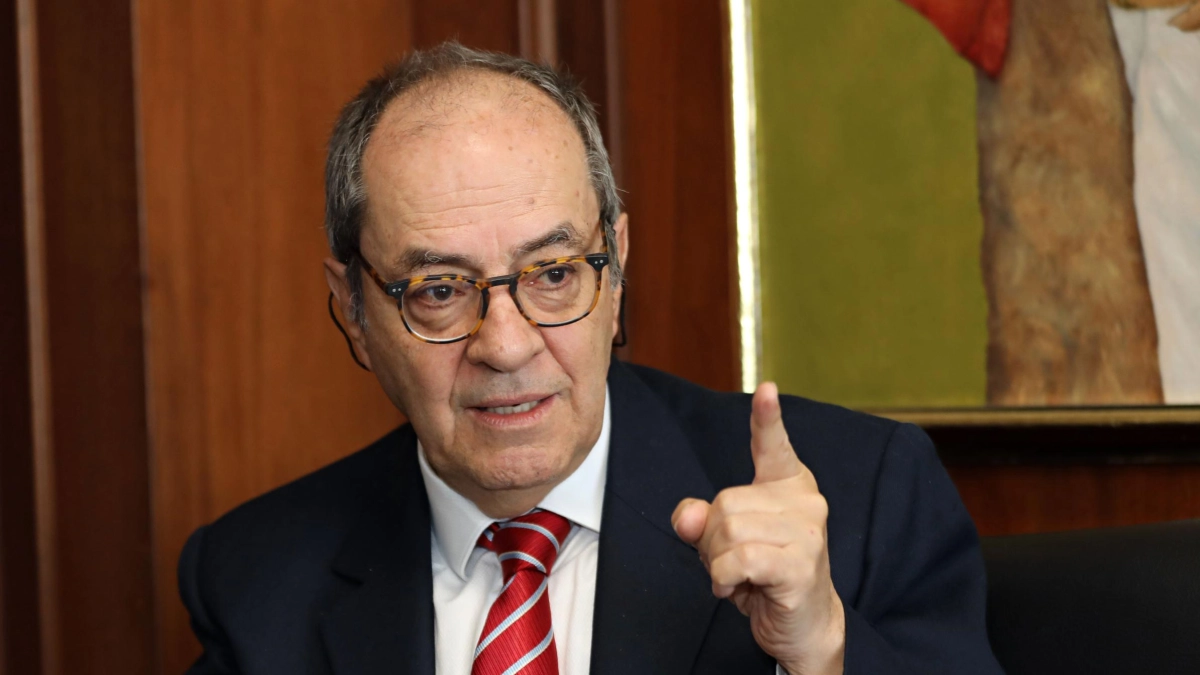
In the high-stakes environment of Colombia’s central banking policy, the debate often narrows to a singular, relentless focus: inflation targeting and interest rate calibration. However, César Giraldo, a codirector of the Banco de la República, is challenging this orthodoxy. In an exclusive dialogue, Giraldo warns that the nation’s economic focus is dangerously misplaced, overlooking a "silent" threat that is systematically dismantling the country’s productive apparatus: the aggressive revaluation of the Colombian peso.
As the nation stands at a fiscal precipice with a deficit nearing 7 percent of GDP, Giraldo argues that monetary policy cannot remain an island. It must evolve, he suggests, to consider the broader reality of the "real economy," where a cheap dollar is not merely a financial metric, but a structural barrier to competitiveness.

The Core Thesis: A Policy Out of Sync with Reality
For Giraldo, the primary risk facing Colombia is not merely the traditional triumvirate of fiscal deficit, inflation, and high interest rates, but the confluence of these factors under the weight of a strengthening peso.
"The autonomy of the Central Bank is a pillar of our stability," Giraldo clarifies, "but autonomy does not mean disconnection. We cannot allow ourselves to be blinded by inflation metrics while the very foundations of our industrial and agricultural competitiveness are being eroded by an overvalued currency."

The mechanism of this erosion is twofold:
- The Export Penalty: Colombian exporters in agriculture, manufacturing, and services—sectors that were gaining traction in global markets—find their margins evaporated by the strength of the peso.
- The Import Surge: A cheap dollar acts as a subsidy for foreign goods, particularly from China, which flood the domestic market, making it increasingly difficult for local producers to compete.
Chronology of a Structural Challenge
The current economic landscape is the result of years of cumulative policy decisions and global shifts.

- 2022–2025: The period was characterized by significant increases in the minimum wage and high inflationary pressures. Despite this, the economy displayed resilience.
- Early 2026: As global supply chains normalized and inflationary pressures began to recede, the central bank maintained a restrictive interest rate stance.
- Mid-2026: The divergence between the Federal Reserve’s cautious policy and the Colombian central bank’s high-interest rate regime created a wide yield differential. This attracted massive "portfolio capital," which, while signaling investor confidence, paradoxically fueled the peso’s revaluation and suppressed domestic industrial growth.
- Current Outlook: The nation faces a transition of government, with fiscal reforms and structural changes to the General System of Participations (SGP) looming on the horizon.
Supporting Data: The "Growth Paradox"
While official unemployment rates are at historic lows, Giraldo points to a "growth paradox." The economy is not failing across the board; it is shifting in ways that may prove detrimental in the long run.
The construction sector remains stagnant, trapped by high borrowing costs. Simultaneously, the manufacturing sector, which is essential for long-term job creation and technological transfer, is showing signs of atrophy.

"The data shows a mixed picture," Giraldo explains. "We have sustained consumption fueled by rising labor income, but the investment side is flagging. When we keep interest rates high to combat inflation, we are effectively cooling the economy to a point where we risk losing the very capacity for future growth."
Giraldo emphasizes that the "country risk" premium reduction—often touted as a success—is misleading. It is not necessarily a reflection of fundamental economic strength, but rather a byproduct of the massive carry-trade opportunity created by the interest rate gap between Colombia and the developed world.

The Dissenting Voice: Beyond Inflation Targeting
Giraldo has frequently stood as the minority voice within the Board of Directors of the Banco de la República. His departure from the majority view centers on the diagnosis of inflation.
The majority argues that high interest rates are the necessary medicine for an economy where aggregate demand outpaced supply. Giraldo disagrees, noting that a significant portion of Colombia’s recent inflation was driven by "supply shocks"—geopolitical tensions, rising agricultural input costs, and global supply chain disruptions—that interest rates cannot fix.

"When inflation is a symptom of structural supply issues," Giraldo asserts, "using only the interest rate tool is like trying to fix a structural leak with a blunt instrument. It causes collateral damage to the productive sector without necessarily addressing the root cause of the price increases."
Implications: The Road Ahead for the Next Administration
As Colombia prepares for a change in government, the economic agenda is heavy with unresolved challenges. The next administration will inherit a fiscal space that is notoriously narrow.
1. Fiscal Sustainability
With a deficit at 7 percent of GDP, the room for maneuver is minimal. Giraldo suggests that tax reform should not be a simple exercise in increasing rates, but a broader strategy to formalize the economy. "The tax system is a contract between the citizen and the state," he says. "If large swathes of the population feel excluded from social protections, they will never buy into a culture of tax compliance."
2. The Trap of Remittances
While remittances have been a vital lifeline for millions of households and a pillar of the balance of payments, Giraldo warns against complacency. They are a temporary buffer, not a development strategy. Generational shifts and changing migration policies in host countries mean that reliance on these flows is a vulnerability, not a strength.
3. A New Productive Bet
What is the path forward? Giraldo identifies key sectors where Colombia must stake its future:
- Biotecnology and Services: Leveraging the country’s natural biodiversity.
- Tourism: A massive, underutilized asset.
- Value-Added Exports: Moving away from raw commodity dependence toward specialized manufacturing and IT services.
The Verdict on Policy Coordination
A recurring theme in the discussion is the relationship between the Banco de la República and the Ministry of Finance. Giraldo defends the necessity of coordination without compromising independence.

"The Minister of Finance sits on our Board for a reason," he says. "Fiscal policy and monetary policy are two sides of the same coin. When the fiscal deficit is high, it inevitably puts pressure on the financial markets, which in turn influences our monetary decisions. We must be aware of the total context."
Regarding the potential for the Central Bank to finance state programs—a topic that has surfaced in various political debates—Giraldo remains cautious. He acknowledges that global precedents exist (such as post-pandemic stimulus measures in other nations), but insists that any such move must strictly adhere to the existing institutional framework to avoid triggering hyperinflationary expectations or destroying institutional credibility.

Conclusion: A Call for Balanced Growth
The discourse provided by César Giraldo is a sobering reminder that economic health is a multidimensional construct. As Colombia navigates the remainder of 2026, the central bank is caught between the imperative to anchor inflation and the necessity to nurture a fragile productive sector.
The "hidden" erosion of competitiveness caused by an overvalued peso may well be the defining economic challenge of the next decade. If the policy response remains narrowly focused on inflation targets, Colombia risks winning the battle against rising prices only to lose the war for sustainable, long-term economic development. The message is clear: it is time to move beyond the traditional models and consider the real, tangible health of the Colombian factory floor, the farm, and the service sector.