
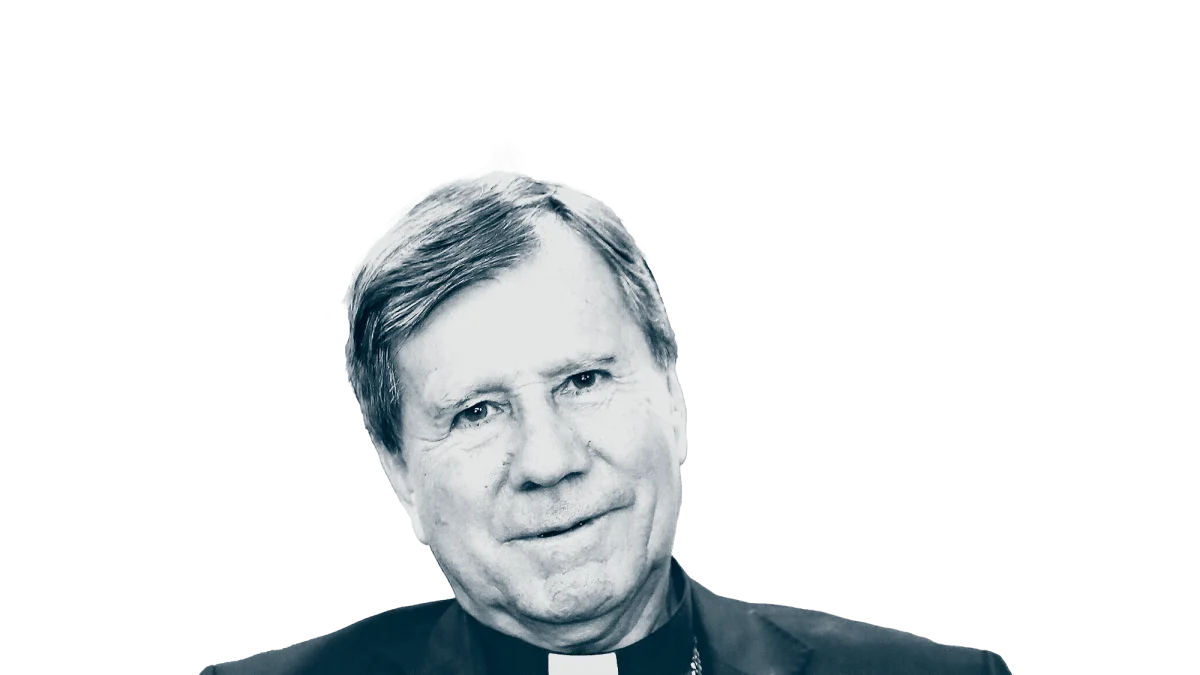
By [Editorial Desk]
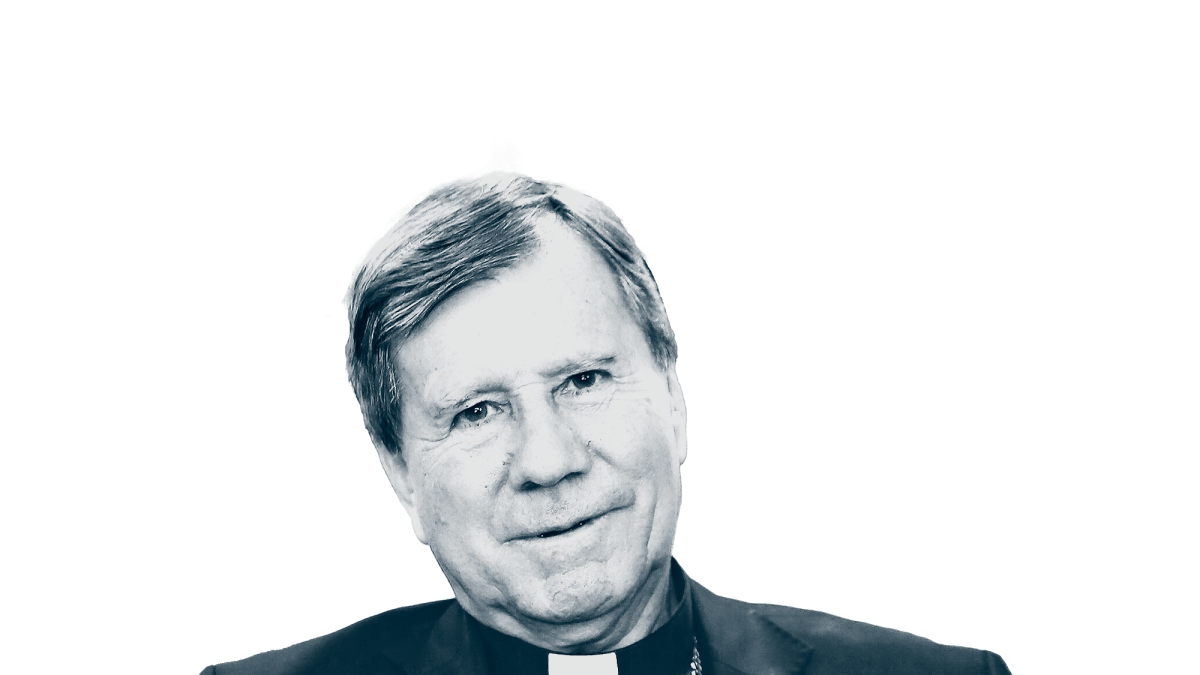
Reflecting on insights from the Bishop Emeritus of Neiva
In contemporary democratic societies, disagreement is not merely expected; it is a vital engine of progress. A healthy democracy relies on the friction of competing ideas to refine policy and ensure representation. However, a troubling trend has emerged in recent years: the systematic replacement of political discourse with a pervasive "culture of hate." This phenomenon, which transcends mere policy disputes, threatens the foundational stability of institutional governance.
The Gramscian Influence: Hegemony and Cultural Warfare
To understand the current polarization, one must look back at the theoretical framework of Antonio Gramsci, the Italian Marxist philosopher. Writing his Prison Notebooks under the constraints of incarceration—a parallel often drawn to Miguel de Cervantes’ composition of Don Quixote—Gramsci proposed a radical shift in how power is maintained.
Gramsci argued that the imposition of power does not rely solely on the physical force of the state or the "dictatorship of the proletariat" envisioned by earlier Marxist thinkers. History has shown the devastating costs of such forced imposition; from the purges in the Soviet Union to the catastrophic socio-economic experiments under Mao Zedong in China (1949–1976), which resulted in an estimated 40 to 70 million deaths, the path of overt tyranny is marked by blood.
Instead, Gramsci advocated for "Cultural Hegemony." He posited that the ruling class maintains control not just through coercion (the political society of laws and police), but through consensus within civil society—schools, media, religious institutions, and unions. By shaping the moral and cultural norms of a society, a dominant group can convince subordinates to accept their own subjugation as a natural state of affairs. Today, critics argue that this strategy is being employed to dismantle existing cultural paradigms from within the halls of academia, aiming to replace them with a narrative of perpetual grievance.
Chronology of a Shifting Landscape
The transformation of public discourse into a battleground for cultural identity has not happened overnight. We can trace this evolution through several distinct phases:

- The Academic Shift (Late 20th Century): The migration of critical theory into mainstream academic curricula began to prioritize the deconstruction of traditional narratives. The focus moved toward identifying power imbalances in every facet of social interaction.
- The Iconoclast Wave (2010–2020): This decade saw the rise of a movement that viewed historical heritage—ranging from architecture and art to classical music—as "bourgeois residues" or manifestations of colonial oppression. Public spaces became sites of struggle, with statues and monuments to national identity being targeted as symbols of a "guilty past."
- The Politicization of Identity (2020–Present): The discourse shifted from economic debate to a radical identity-based struggle. History is now frequently framed as a binary conflict between "the oppressed" and "the oppressor," leaving little room for the nuance of the mestizo identity or the complex realities of colonial history.
Supporting Data: The Case of Regional Instability
The consequences of this ideological shift are perhaps most visible in the exodus of citizens from nations that adopted "21st-century socialism." When ideologies promise a utopian, classless society, the reality often yields the opposite.
In Venezuela, for instance, the rhetoric of "the people versus the elite" has served as a powerful tool for consolidation, yet it has coincided with the collapse of the nation’s infrastructure and the flight of approximately seven million citizens seeking basic freedom and economic opportunity. This migration serves as a stark empirical contradiction to the theoretical "paradise" promised by such movements. When a government claims to act in the name of the "constituent primary" while simultaneously dismantling the mechanisms of the rule of law, the result is invariably a state of social and economic atrophy.
The Institutional Crisis: Montesquieu’s Warning
The stability of any democracy hinges on the principle of the separation of powers. Charles Louis de Secondat, Baron de Montesquieu, argued that a functioning state requires distinct branches—executive, legislative, and judicial—that check and balance one another.

The current "culture of hate" deliberately undermines this interdependency. We observe a recurring pattern among contemporary political actors:
- Selective Respect for Law: Judicial rulings are celebrated only when they align with political interests; when they do not, they are branded as attacks on "the people."
- Disdain for Dissent: The opposition is no longer treated as a legitimate participant in a democratic process, but as an existential enemy that must be neutralized.
- The Rhetoric of the "Constituent": When institutions block executive overreach, leaders frequently invoke a nebulous "constituent power" to bypass the legal frameworks that prevent tyranny.
This erosion is not a one-sided issue. It must be acknowledged that the rise of extremist left-wing rhetoric was often fueled by the prior failure of right-wing institutions to address systemic corruption. A free-market system that abandons the principle of social justice becomes inherently inhumane, providing the very fuel that populist movements use to ignite social unrest.
Implications: Restoring the Democratic Fabric
The implications of this trajectory are profound. When a society loses its ability to engage in civil disagreement, it risks sliding into a cycle of permanent vengeance. The "culture of hate" is a zero-sum game; it teaches citizens that for one side to thrive, the other must be erased.

To reverse this, we must return to the principles of a pluralistic society. This requires:
- Reclaiming Justice: Justice must not be a partisan weapon. A society that views justice solely as a tool for political retribution is not a society governed by the rule of law.
- Defending Intellectual Diversity: Academic institutions must foster an environment where history is debated with complexity, rather than being flattened into a narrative of absolute victimhood or absolute guilt.
- Renewing the Social Contract: Political leaders must be held accountable for the language they use. Inflammatory rhetoric that dehumanizes opponents is the primary driver of political violence.
Conclusion
The danger of our current era is not that we disagree—it is that we have begun to view disagreement as an act of treason. If we continue to allow the "culture of hate" to dictate our interactions, we will find that the institutions we once relied upon to protect our liberties are no longer capable of doing so.
As the Bishop Emeritus of Neiva poignantly observes, if the current political shift in various nations was facilitated by the corruption and moral failings of the past, the solution is not to double down on a cycle of resentment. Instead, it is to recognize that a free market without social equity is fragile, and a government without checks and balances is a tragedy waiting to happen. The path forward lies in a sober commitment to the institutions that protect us all, regardless of our political labels. Only by moving past the politics of "us versus them" can a democracy hope to survive the challenges of the 21st century.