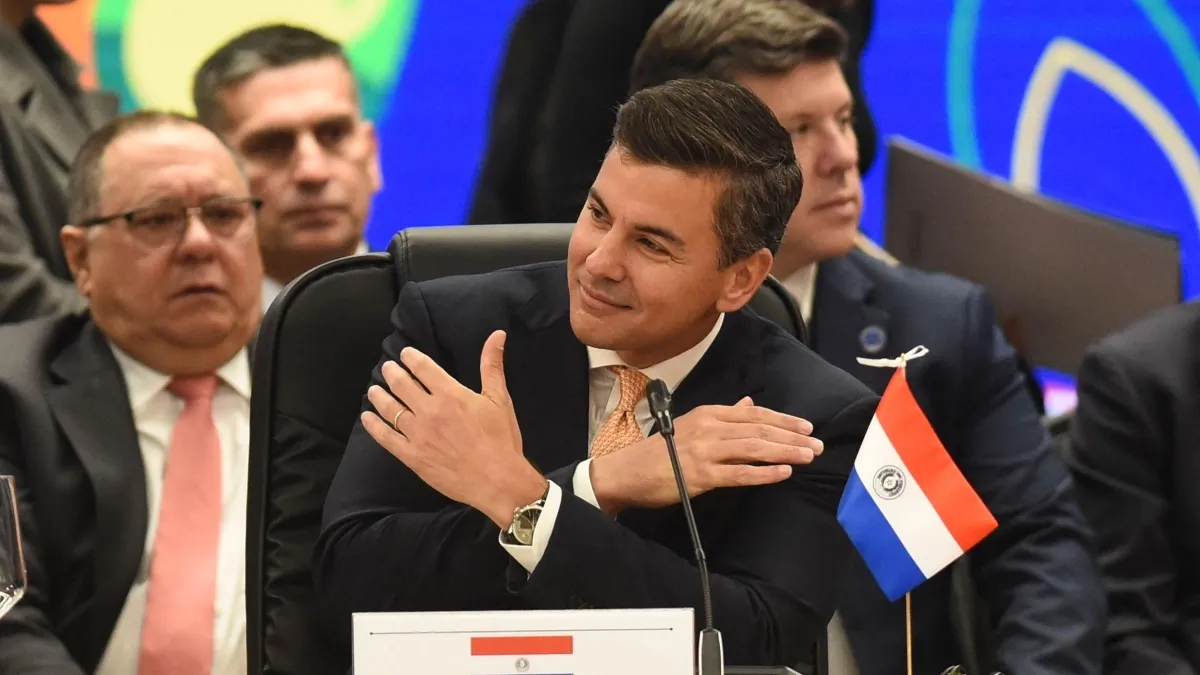
Asunción, Paraguay — In an unprecedented political upheaval that has shaken the foundations of South American governance, the Senate of Paraguay voted overwhelmingly on Friday, November 6, 2026, to remove President Santiago Peña from office. With a decisive tally of 44 votes in favor, Peña became only the second president in modern Paraguayan history to be ousted via political trial (juicio político).
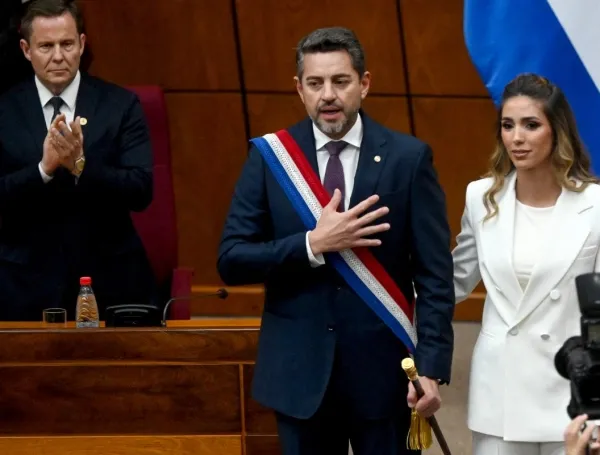
The historic session, conducted in the absence of the embattled head of state, concluded a rapid and intense constitutional process triggered by a severe national crisis: the sudden and catastrophic collapse of Ueno Bank. Amid surging public outrage, profound financial instability, and intense scrutiny over alleged conflicts of interest and personal ties between the executive branch and the collapsed financial institution, the Paraguayan congress moved decisively. Within hours of the vote, Pedro Alliana was sworn in as the new president of Paraguay, tasked with steering a deeply fractured nation through the remnants of a historic storm.
Main Facts: The Impeachment and the Fall of Santiago Peña
The dramatic events of November 6 brought a sudden halt to the administration of Santiago Peña, an economist and former finance minister who had assumed the presidency in August 2023 with promises of modernization and economic stability. Instead, his tenure was abruptly cut short by a convergence of financial malpractice allegations and legislative fury.

The Core Charges
- The Verdict: The Senate found Peña guilty of "mal desempeño de funciones" (malperformance of duties) following a swift political trial.
- The Legislative Tally: A commanding 44 senators voted to convict and remove the president, easily clearing the constitutional threshold required for a presidential ouster.
- The Catalyst: The immediate trigger for the political earthquake was the abrupt closure and subsequent insolvency scandal surrounding Ueno Bank, which sent shockwaves through Paraguay’s financial system and left thousands of citizens and businesses exposed.
- The Successor: Following the constitutional line of succession, Vice President Pedro Alliana was swiftly sworn into office as the new head of state to finish the remainder of the presidential term.
Chronology of a Crisis: From Financial Collapse to Presidential Ouster
To understand how a stable government unraveled so quickly, one must examine the timeline of events that transformed a corporate financial failure into a constitutional crisis.
Phase 1: The Rumbles of Discontent (Late 2025 – Early 2026)
Months before the final parliamentary showdown, economic indicators and investigative reports began pointing toward systemic vulnerabilities in several private financial institutions operating within Paraguay. Among them, Ueno Bank—which had experienced rapid market expansion and boasted high-profile digital banking integration—began showing signs of severe liquidity pressure.
At the same time, investigative journalists and opposition lawmakers began raising questions regarding the cozy relationships between key figures in Peña’s administration, ruling party elites, and the executive leadership of Ueno Bank. While the administration repeatedly denied any wrongdoing or preferential treatment, public skepticism deepened.

Phase 2: The Ueno Bank Meltdown (November 2026)
In the first week of November 2026, the situation deteriorated from a regulatory challenge into an outright emergency. Following unexpected runs on deposits and severe regulatory interventions, Ueno Bank was forced to close its doors. The sudden shutdown trapped billions of guaraníes in frozen accounts, affecting everyday depositors, small businesses, and major corporate entities alike.
Public outrage was instantaneous. Protests broke out in downtown Asunción, outside government buildings and shuttered bank branches. Citizens demanded accountability, questioning how regulatory oversight bodies—supposedly independent—allowed the situation to reach a breaking point without intervening to protect public savings.
Phase 3: The Fast-Track Impeachment (November 5–6, 2026)
Seizing on the public anger and the mounting evidence of administrative negligence, opposition blocs in the National Congress, joined by disaffected factions within the ruling Colorado Party (ANR), began formal impeachment discussions.

- The Accusation: Lawmakers drafted a formal indictment charging President Peña with gross negligence, dereliction of duty, and allowing systemic risks to compromise national economic security due to personal and political complicity with the management of Ueno Bank.
- The Boycott and Defense: As the political trial accelerated, President Peña chose not to appear before the Senate, denouncing the proceedings as a "summary political execution" and a coup disguised as constitutional procedure.
- The Hammer Falls: On the afternoon of November 6, the Senate proceeded in his absence. With 44 votes cast against him, the sentence was delivered, stripping Peña of presidential immunity and authority with immediate effect.
Supporting Data and Economic Context
The ramifications of the Ueno Bank scandal extend far beyond the political arena, touching the core of Paraguay’s macroeconomic stability.
Financial Impact Metrics
- Systemic Exposure: Ueno Bank had grown to become a prominent player in Paraguay’s consumer and digital credit sectors, boasting hundreds of thousands of active accounts. Its sudden closure created an unprecedented liquidity crunch.
- Institutional Loss of Confidence: Central bank indicators showed an immediate spike in interbank lending rates following the closure, as financial institutions grew wary of contagion risks across the broader Paraguayan banking ecosystem.
- Political Capital Evaporated: Despite commanding a comfortable traditional majority through the Colorado Party, Peña’s inability to insulate his administration from the banking scandal led to a rapid defection of legislative allies who feared being politically contaminated by the fallout.
Political analysts note that Paraguay’s economy has historically been sensitive to corruption perceptions and institutional stability. The combination of a major bank failure and the removal of a sitting president places severe pressure on foreign direct investment (FDI) ratings and sovereign debt yields in the short term.
Official Responses and Reactions
The power vacuum left by Peña’s removal prompted swift statements from domestic institutions, political figures, and international observers.
The New Administration: Continuity and Calm
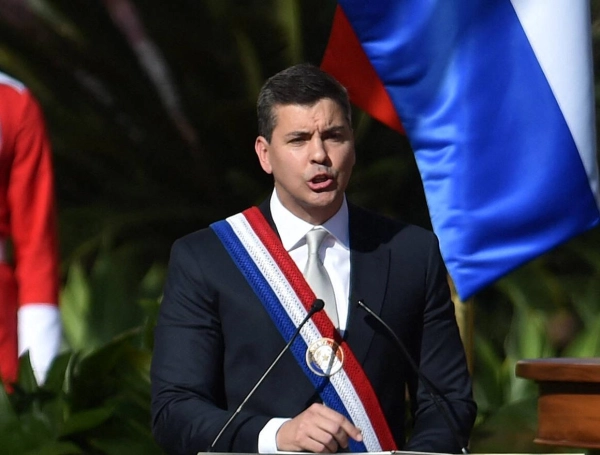
Immediately following his swearing-in ceremony at the Palacio de López, President Pedro Alliana addressed the nation. Alliana called for national unity and constitutional calm, assuring the public that state institutions remain fully operational.
"We are living through a historic and difficult moment for the Republic of Paraguay," Alliana stated during his inaugural address. "My primary commitment is to restore absolute transparency, protect the savings of our citizens, and ensure that the economic stability of our families is guaranteed without exception."
Alliana announced emergency consultations with the Central Bank of Paraguay (BCP) and the Superintendency of Banks to deploy emergency liquidity mechanisms designed to mitigate the damage caused by the Ueno Bank liquidation.

Opposition Reactions
Opposition leaders hailed the Senate’s decision as a triumph of accountability over impunity. Many argued that the swift ouster proves Paraguay’s democratic checks and balances remain functional, even under extreme pressure.
“No president, regardless of their political backing, is above the constitution or the welfare of the Paraguayan people,” declared a prominent opposition senator during the post-vote press conference. “The collapse of Ueno Bank exposed a web of complicity that could no longer be ignored.”
International Observers
Regional bodies and foreign embassies closely monitored the transition. While international monitors expressed concern over the political instability, most emphasized the importance of maintaining democratic continuity and adherence to the rule of law during the handover of power to Alliana.
Implications for Paraguay’s Political and Economic Future
The ouster of Santiago Peña marks a profound turning point for Paraguay, carrying deep implications for its political landscape, economic governance, and institutional credibility.
1. Internal Fractures within the Colorado Party
The Colorado Party (Asociación Nacional Republicana – ANR) has historically dominated Paraguayan politics through disciplined internal cohesion. However, the willingness of enough ruling-party senators to join the opposition and vote for Peña’s removal signals deep internal fractures. Factions within the party chose to sacrifice Peña to distance themselves from the toxic fallout of the Ueno Bank scandal, setting the stage for intense internal power struggles ahead of future electoral cycles.
2. The Credibility of Financial Regulators
The crisis has exposed systemic vulnerabilities in Paraguay’s financial oversight framework. For decades, the country was praised for maintaining macroeconomic discipline, low inflation, and steady growth. The Ueno Bank debacle—and the political patronage alleged by investigators—forces a painful reckoning regarding the independence and effectiveness of the Central Bank and regulatory watchdogs. Restoring investor confidence will require sweeping structural reforms, increased transparency, and aggressive anti-corruption measures.

3. Public Trust and Social Tensions
The speed with which the political class moved to remove Peña reflects an acute awareness of public anger. Street protests and widespread digital mobilization demonstrated that the Paraguayan citizenry is increasingly unwilling to tolerate perceived collusion between political elites and corporate interests. President Alliana faces the immense challenge of not only managing an economic rescue operation but also rebuilding a fragile social contract between the state and its people.
As Paraguay navigates this uncharted territory, all eyes remain fixed on Asunción to see whether the new administration can stabilize the economy, heal political divisions, and restore faith in the nation’s democratic institutions.