By Nathalia Díaz Guzmán
International Desk / Reporting with agencies
Published: November 6, 2026
Executive Summary: A Massive Blow to Wildlife Trafficking
In what environmental protection authorities have termed one of the most audacious and comprehensive wildlife smuggling operations intercepted at an international transit hub in recent years, Peruvian law enforcement successfully derailed an illicit international trafficking ring. Three European nationals—two German citizens and one Polish citizen—were apprehended at the Jorge Chávez International Airport in Lima, Peru’s primary aviation gateway, as they attempted to board commercial flights bound for Europe.
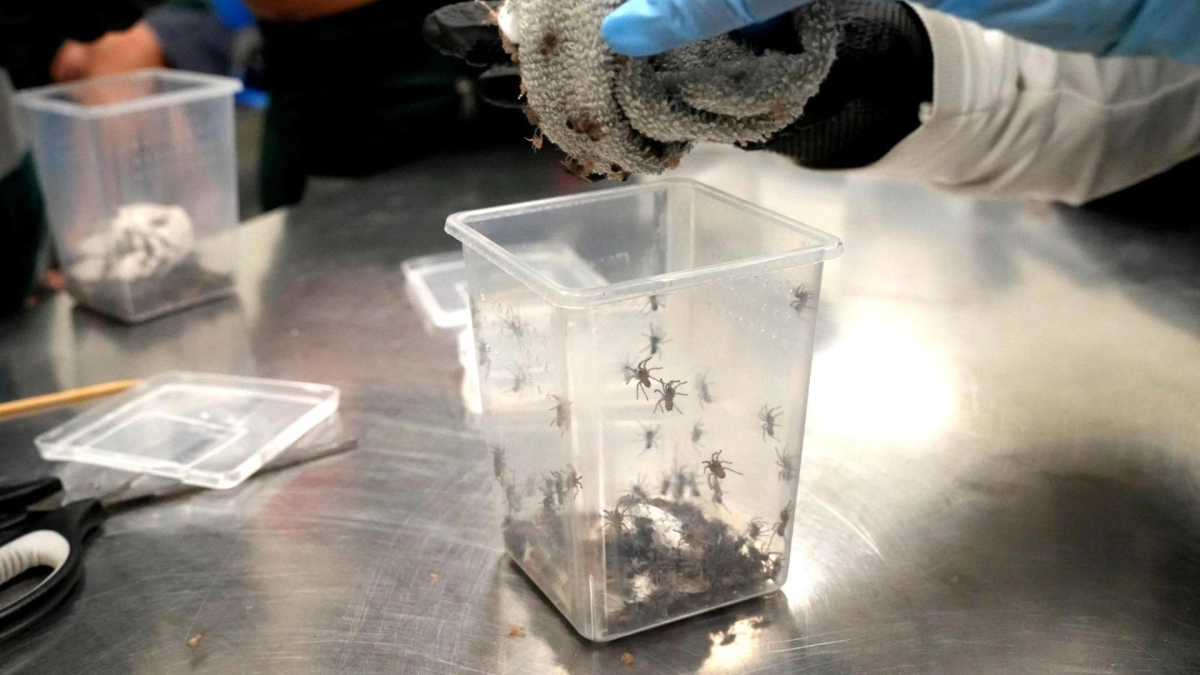
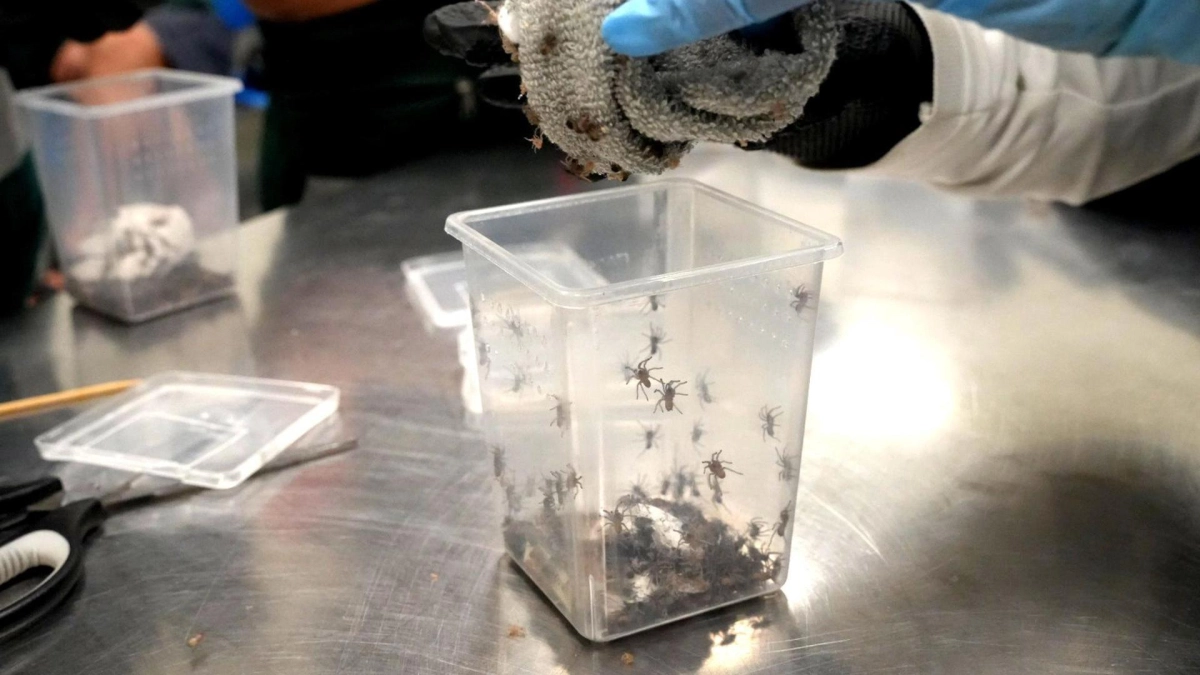
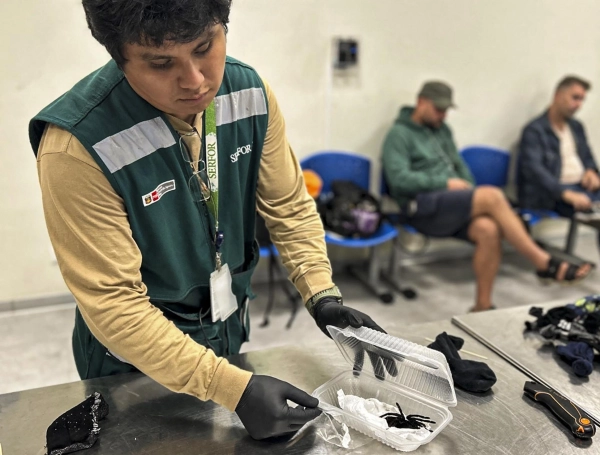
The suspects had packed approximately 3,000 live tarantulas into small plastic containers, ingeniously concealed within the depths of their checked luggage. The sheer scale of the operation, coupled with the biological diversity and evolutionary rarity of the specimens—which included vulnerable, protected, and entirely undocumented species—has sent shockwaves through the scientific community. Among the detained individuals is reportedly a recognized international tarantula researcher, underscoring the sinister intersection between academic expertise and illicit wildlife exploitation.
The successful interception highlights both the growing sophistication of transnational biopiracy networks and the increasing effectiveness of intelligence-led interdiction operations executed by Peruvian agencies, including the Superintendencia Nacional de Aduanas y de Administración Tributaria (SUNAT) and the Servicio Nacional Forestal y de Fauna Silvestre (SERFOR).
Chronology of the Interdiction: From Anonymous Tip to Airport Crackdown
The dismantling of this international web of wildlife trafficking was not a matter of routine baggage screening, but the culmination of a meticulous, multi-agency intelligence operation triggered by a single digital alert.
Phase 1: The Anonymous Tip and Intelligence Gathering
Weeks prior to the dramatic arrests at the Jorge Chávez International Airport, the Peruvian environmental authorities received a confidential tip through Alerta SERFOR, a specialized citizen reporting platform designed to combat illegal trafficking of flora and fauna. The tip pointed toward a coordinated cell of European nationals operating within Peru, systematically collecting native arachnids under the guise of tourism or independent fieldwork.

Armed with this preliminary information, intelligence analysts from SUNAT’s Customs Operations unit, in close collaboration with wildlife inspectors from SERFOR, initiated a silent surveillance and profiling campaign. Investigators began tracking the movements, communications, and logistical preparations of the suspects, establishing a clear link between a Polish traveler and two German accomplices who were coordinating their itineraries to bypass customs scrutiny.
Phase 2: The Airport Interception
On the day of the operation, the suspects attempted to disperse their cargo and travel routes to minimize risk. The Polish national was scheduled to board a flight destined for Kraków, Poland, while the two German nationals prepared to fly to Düsseldorf, Germany.
Customs officers, acting on direct intelligence directives, selected the suspects for targeted secondary inspections as they checked in for their respective flights. Upon inspecting the luggage of the Polish passenger, customs agents made a shocking discovery: dozens of small plastic containers filled with live arachnids tucked meticulously between clothing layers and reinforced structural compartments.
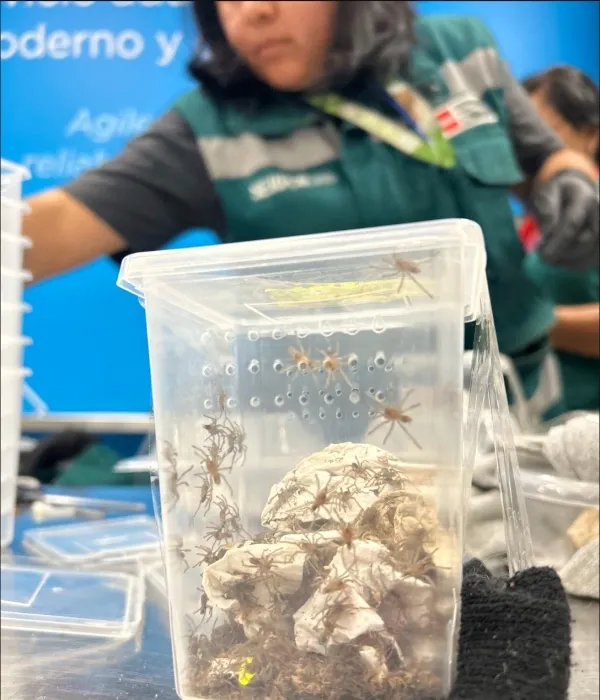
Expanding their investigation immediately, officers realized this passenger was traveling in tandem with the two German nationals. Subsequent searches of the Germans’ luggage yielded thousands more specimens packed with identical methodologies. All three men were immediately taken into custody without incident, and the massive cargo of living cargo was transferred under secure, climate-controlled conditions to specialized holding facilities.
Supporting Data and Biological Significance: A Devastating Ecocide Avoided
The biological inventory of the seized shipment reveals a terrifyingly targeted extraction of Peru’s rich biodiversity. Unlike random poaching operations, this cargo was curated with surgical precision.
According to Cora Suárez, a forest and wildlife control technician with SERFOR, the smugglers did not simply grab whatever spiders crossed their path. "We found the tarantulas in different developmental stages, ranging from eggs and tiny hatchlings to full-grown adults," Suárez stated during the initial press briefing. "The traffickers made a meticulous selection to secure a diverse array of species, including several that have not yet been formally described by science."
Taxonomic Breakdown of the Seized Cargo
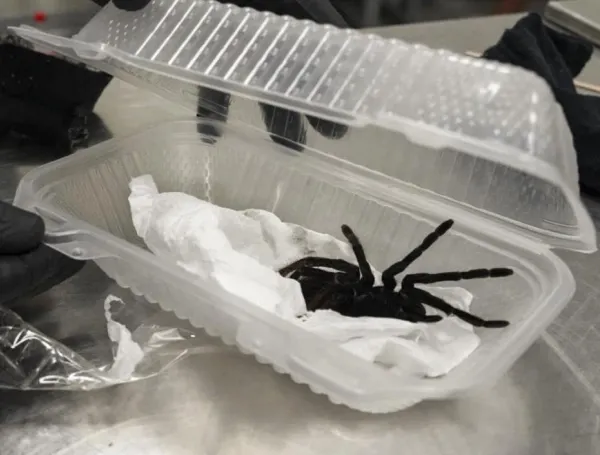
While comprehensive forensic and taxonomic evaluations are ongoing, preliminary identifications conducted by biological experts working alongside SERFOR have highlighted the inclusion of several critical genera and species:
- Genus Pamphobeteus: Known for their striking size and vivid coloration, these South American tarantulas are heavily targeted by international collectors. Among them, Pamphobeteus antinous was identified explicitly within the seized containers. This species is officially categorized as Vulnerable (VU) under the official list of legally protected wild fauna species managed by the Peruvian government.
- Species Thrixopelma lagunas: A localized species prized in the illegal pet trade for its unique behavioral traits and aesthetic appeal.
- Undescribed Taxa (Antikuna sp. and Avicularia sp.): Perhaps the most alarming aspect of the seizure is the presence of multiple specimens belonging to genera that feature species entirely unknown to formal science. These specimens represent irreplaceable evolutionary lineages that could be driven to extinction by black-market collectors before humanity even registers their existence.
The Economics of Arachnid Smuggling
The exotic pet trade and the clandestine black market for live invertebrates generate millions of dollars annually. While mammals and charismatic megafauna like jaguars or macaws often dominate conservation headlines, invertebrates represent a devastatingly under-reported vector of illegal wildlife trafficking.
A single rare tarantula sling (spiderling) can fetch hundreds of dollars on European and North American black markets, while adult specimens of novel or heavily protected species routinely command thousands of dollars among high-end private collectors and illicit breeding operations. The confiscation of 3,000 specimens represents a multi-million-dollar blow to international smuggling syndicates.
Official Responses and Institutional Statements
The successful operation has drawn high-profile commentary from leaders within Peru’s environmental and customs enforcement frameworks, who emphasize the country’s zero-tolerance policy toward the commodification of its natural heritage.
SERFOR’s Stance on Biopiracy
Representatives from SERFOR reiterated that the trafficking of native fauna is not merely a violation of domestic administrative rules, but a serious criminal offense that destabilizes fragile ecosystems. "Peru is one of the megadiverse nations of the world. Our biological wealth belongs to the nation and to global biodiversity heritage—it is not a commodity for illicit exportation and private profiteering," a senior SERFOR official noted.
Furthermore, environmental authorities expressed deep concern regarding the involvement of individuals with academic or scientific backgrounds. The alleged participation of a recognized tarantula researcher among the detainees highlights a dark phenomenon known as "poaching under the lab coat," where individuals abuse scientific collecting permits or exploit academic credentials to mask large-scale commercial smuggling operations.

SUNAT’s Border Security Triumph
The Superintendencia Nacional de Aduanas y de Administración Tributaria (SUNAT) emphasized the critical role played by its specialized intelligence units stationed at Jorge Chávez International Airport. Through advanced passenger profiling, behavioral analysis, and inter-agency data sharing, SUNAT has ramped up its capabilities to detect non-traditional forms of contraband.
"Our customs agents are trained to look beyond traditional narcotics and currency smuggling. Protecting Peru’s fauna is an integral component of our national security and economic sovereignty mandate," stated a spokesperson for SUNAT’s Customs division.
Implications of the Case: Legal, Scientific, and Environmental Fallout
The interception of 3,000 tarantulas in Lima carries profound implications across legal, scientific, and geopolitical dimensions.

1. Legal Consequences and Judicial Proceedings
The three European suspects—two German nationals and one Polish national—have been formally handed over to Peru’s Public Ministry (Fiscalía). They face severe criminal charges under Peruvian law pertaining to illicit trafficking of wild flora and fauna, aggravated by the protected status of several species and the sheer volume of the contraband.
Legal experts predict that if convicted, the men could face substantial prison sentences under Peru’s stringent environmental crime statutes. The inclusion of a suspected academic among the accused may also prompt international academic institutions and European law enforcement agencies to open parallel investigations into the suspect’s professional network, institutional affiliations, and historical research expeditions.
2. Rehabilitation and Reintroduction Challenges
Caring for 3,000 live arachnids presents an unprecedented logistical nightmare for Peruvian wildlife authorities. Invertebrates require highly specific microclimates, humidity levels, and dietary regimens tailored to each distinct life stage and species.

Currently, SERFOR technicians are coordinating the secure housing of the surviving specimens. Once comprehensive veterinary and biological evaluations are finalized, the surviving tarantulas will be transferred to authorized, specialized breeding and rescue centers. Due to the stress of transport, potential exposure to pathogens during captivity, and the difficulty of pinpointing the exact geographic micro-coordinates from which individual specimens were poached, reintroducing thousands of spiderlings and unclassified adults back into the wild poses monumental scientific hurdles.
3. Strengthening International Aviation and Border Controls
This high-profile case is expected to trigger a comprehensive review of luggage screening protocols for outbound international flights departing from Lima. Security agencies are expected to increase collaboration with international wildlife monitoring NGOs, such as TRAFFIC, to share intelligence regarding European distribution hubs in cities like Düsseldorf and Kraków.
4. Combating Biopiracy in the Amazon and Andean Slopes
Peru’s vast geography—stanning the Amazon rainforest, the Andean highlands, and coastal deserts—makes complete policing of ecosystems virtually impossible without active community participation. The success of Alerta SERFOR in this specific case demonstrates the vital importance of citizen science and localized whistleblowers in intercepting sophisticated environmental crimes. Environmental ministries are expected to expand public outreach campaigns to encourage further reporting of suspicious collection activities in rural and protected zones.

Conclusion
The seizure of 3,000 live tarantulas at Lima’s international airport is a stark reminder of the hidden wars being waged against biodiversity across Latin America. While the operation stands as a resounding victory for Peruvian intelligence, customs, and forestry agencies, it simultaneously exposes the relentless ingenuity of international trafficking networks.
As the legal proceedings against the three European nationals move forward, the broader global community must confront the systemic vulnerabilities that allow high-value biological resources to be plundered from the Global South. For the surviving arachnids—some bearing names not yet written in scientific journals—this interdiction represents a second chance at survival, while for Peru, it reinforces an unwavering commitment to defending its irreplaceable natural heritage from the shadows of the black market.