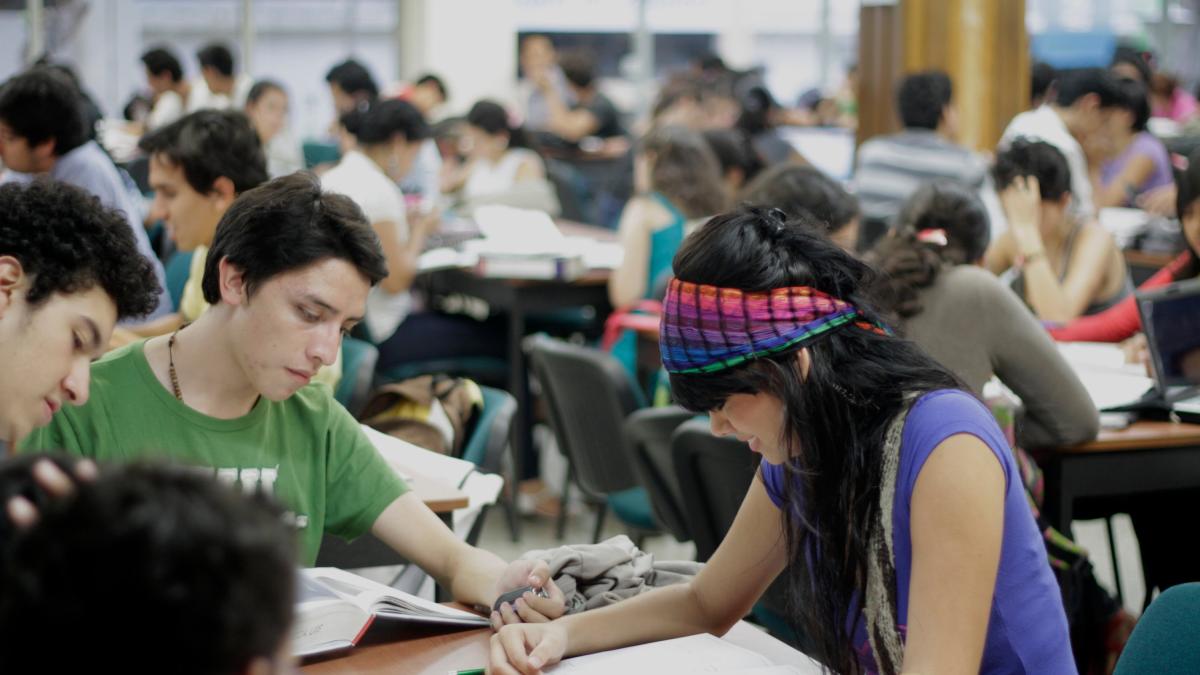
Bogotá — For years, higher education policy in Colombia celebrated a gradual, hard-fought stabilization in student retention. Following the disruptions of the COVID-19 pandemic, institutions had begun to steer the ship back on course, bringing annual dropout rates down to pre-crisis levels by 2022. However, newly released data from the Ministry of Education’s System for the Prevention and Analysis of Dropout in Higher Education (Spadies) shatters that optimistic narrative.
The latest figures reveal an alarming reality: dropout rates have rebounded across virtually every level of tertiary education. Today, out of every 100 students who embark on a university career in the same academic year, a staggering 56 will fail to graduate. Experts warn that unless systemic measures are taken to guarantee student retention, public initiatives aimed at expanding university access—such as free tuition policies—risk becoming hollow gestures that inflate enrollment numbers without transforming lives.
Main Facts: The Numbers Behind the Educational Crisis
The Spadies dataset, which tracks student trajectories on an annual basis, provides a sobering snapshot of the health of Colombia’s higher education ecosystem. (Official tracking deliberately lags to accurately isolate permanent dropouts from temporary leaves of absence, defining definitive abandonment only after a student has spent two to four consecutive semesters out of the classroom).
The headline metrics paint a picture of systemic strain:
The Graduation Barrier: Only 44 out of every 100 university entrants manage to cross the finish line and earn their degrees.
Rising Annual Dropouts: The overall annual dropout rate for the entire higher education system climbed to 9.78%—an increase of 0.81 percentage points compared to 2023. This interrupts a post-pandemic recovery that had brought the indicator down to 9.03% in 2022. It marks the highest abandonment rate recorded since 2021, when it peaked at 10.08%.
Vulnerability in Short Programs: Technical and technological programs—crucial drivers for rapid workforce insertion—suffer from the highest attrition rates. Technological programs saw annual dropouts rise from 13.62% to 14.83%, while technical professional programs hovered at a high 17.05%. University careers, while comparatively more stable, still saw a jump from 7.82% to 8.65%.
The Intersemestral Absence Trap: The Tasa de Ausencia Intersemestral (TAI)—which measures students who fail to register for a subsequent term, usually due to financial constraints—jumped to 13.92% in 2024, up from 12.40% in 2023. In professional technical programs, this indicator skyrocketed to an alarming 27.88%, meaning more than one in four students in these tracks hangs in the balance between semesters.
Chronology: A Trajectory of Recovery Interrupted
To understand how Colombia arrived at this juncture, it is vital to examine the timeline of retention metrics over the past decade:
Pre-Pandemic Baseline (2017–2019): Higher education institutions struggled with structural inertia. Cumulative dropout rates for university tracks hovered stubbornly near 28%, reflecting a persistent gap between expanding initial access and maintaining long-term institutional support.
The Pandemic Shock (2020–2021): COVID-19 dealt a severe blow to families’ economic stability. Annual dropout rates peaked at 10.08% in 2021, driven by widespread job losses, income precarity, and the digital divide that made remote learning nearly impossible for disadvantaged students.
The Brief Post-Pandemic Recovery (2022): Bolstered by emergency government interventions, targeted subsidies, and the gradual return to in-person classes, the system experienced a collective sigh of relief. In 2022, annual dropouts fell across the board, dropping the overall rate to 9.03% and creating a false sense of security that the worst had passed.
The 2023–2024 Rebound: As inflationary pressures squeezed households, and as the long-term economic scars of the pandemic deepened, the downward trend reversed violently. The 2024 Spadies report confirms that gains made in 2022 have been entirely wiped out, pushing dropout and intersemestral absence rates back toward crisis-era levels.
Supporting Data: Deep Dive Into Academic Levels and Cohorts
A granular examination of the Spadies report reveals that the crisis impacts short-cycle higher education much more severely than traditional university tracks.
1. Cumulative Cohort Dropouts
When tracking a specific cohort of students from their first semester to their graduation window, the losses are staggering:
Universities (measured up to semester 10): Cumulative dropout stands at 22.61%. While this shows a slight improvement from 23.15% in 2023 and 27.99% in 2017, it still means more than one in five university students drops out before reaching their final year.
Technological Programs (measured up to semester 6): Cumulative dropout is 32.20%, showing virtually no change from previous years (32.01%).
Technical Professional Programs (measured up to semester 6): Cumulative dropout rests at 32.92%, a marginal drop from 33.52%.
In summary, while roughly one in five university students abandons their studies, nearly one in three students in short technical and technological cycles throws in the towel.
2. Slow and Sluggish Graduation Rates
The flip side of the dropout coin is the glacial pace of graduation. The cumulative graduation rate—measured up to semester 14 for universities and semester 9 for short cycles—grew by mere decimals between 2023 and 2024:
Universities: Inced from 44.22% to 44.78%.
Technological Programs: Rose from 38.56% to 38.79%.
Technical Programs: Rose from 36.60% to 36.79%.
Over a seven-year span since 2017, university graduation rates have crawled upward by a paltry 5.16 percentage points. Consequently, more than 55% of university enrollees—and over 61% of technical and technological students—fail to graduate within the expected maximum timeframe.
Official Responses and Expert Analysis
Leading voices in Colombian education and economics have met the Spadies release with profound concern, framing the statistics not merely as numbers, but as a symptom of deeper socioeconomic fractures.
Gloria Bernal, director of the Laboratory of Economics of Education (LEE) at Pontificia Universidad Javeriana, did not mince words regarding the implications of the data:
"The abandonment of higher education negatively affects the future of the individual students and the future of the country as a whole. It is vital to design and execute policies that allow for constant monitoring and early warning systems to identify root causes and intercept dropout risks before they materialize."
Luz Karime Abadía, Dean of Economics at the same university and former director of Higher Education Promotion at the Ministry of Education, emphasized that the dropout crisis is fundamentally a crisis of inequality:
"Dropout is clearly an issue of inequality. The highest rates occur in the lowest socioeconomic strata [Strata 1 and 2]. These are young people who arrive with lower academic performance due to the deficiencies of the high schools they attended, compounded by severe economic hardships that force them to abandon their education."
Abadía also highlighted a hidden structural flaw: the lack of robust professional orientation in public secondary schools, which house approximately 80% of Colombia’s youth.
"Many of these youngsters become frustrated after entering the wrong career path, and that mismatch is directly reflected in high dropout rates," she explained.
Ricardo Rodríguez, an educational analyst, cautioned that blind pursuit of coverage expansion is a trap:
"Governments at all levels and higher education institutions must understand that the challenge is not just enrolling more fresh students; it is about not losing them. Without guaranteeing graduation, initiatives like ‘Matrícula Cero’ [Free Tuition] or ‘Jóvenes a la E’ have no real, lasting impact on the nation. Working on student retention is paramount."
Rodríguez added that safeguarding social support programs—such as interest rate subsidies for Icetex student loans—is non-negotiable if policymakers want to prevent vulnerable students from hitting economic dead-ends.
Implications: A Call for Structural Transformation
The 2024 Spadies data serves as a stark warning flare for Colombia’s socioeconomic future. As the nation attempts to pivot toward a knowledge-based economy driven by technological innovation and artificial intelligence, the high attrition rate in tertiary education threatens to stall human capital development.
The implications of this crisis are multi-layered:
Widening Social Divides: When students from lower-income backgrounds drop out at rates seven times higher than their wealthier peers, higher education ceases to be an engine of social mobility and instead reinforces existing class structures.
Wasted Public Resources: Expanding institutional capacity and subsidizing tuition fees yields little return on investment if the majority of beneficiaries fail to secure a professional diploma or technical certificate.
Workforce Mismatches: With technical and technological programs suffering from extreme vulnerability to economic shocks (evidenced by the 27.88% intersemestral absence rate in technical tracks), industries facing critical labor shortages will struggle to find qualified, certified personnel.
Experts agree that piecemeal interventions will no longer suffice. To reverse this upward surge in dropouts, Colombia must synchronize its secondary and tertiary education systems. This requires bridging the academic preparation gap for public school students, implementing data-driven early warning systems within universities, strengthening mental health and financial aid networks, and ensuring that technical pathways offer flexible, resilient safety nets for students navigating economic uncertainty.
Without a decisive pivot from a strategy focused solely on access to one anchored firmly in permanence and graduation, the promise of higher education will remain out of reach for thousands of young Colombians.
By Mateo Chacón Orduz Subeditor of Vida de Hoy / Special to Global Education Review Main Facts The landscape of Colombian higher education is undergoing a pivotal transition. Father Harold Castilla, the rector of the…
BOGOTÁ, COLOMBIA — In an era defined by the exponential growth of digital media and the imperative need for rigorous cybersecurity frameworks, Colombia’s leading publication, EL TIEMPO, has rolled out a comprehensive overhaul of its…
By Alexandra Cabrera | Special to The Times Updated July 18, 2026 As we navigate the third week of July 2026, the celestial alignment offers a profound opportunity for introspection, structural realignment, and emotional maturation.…