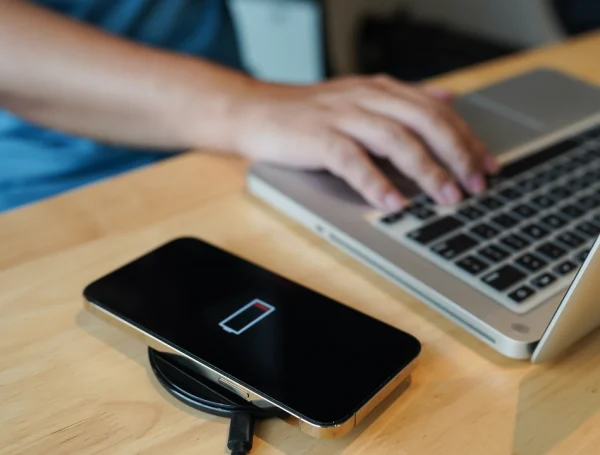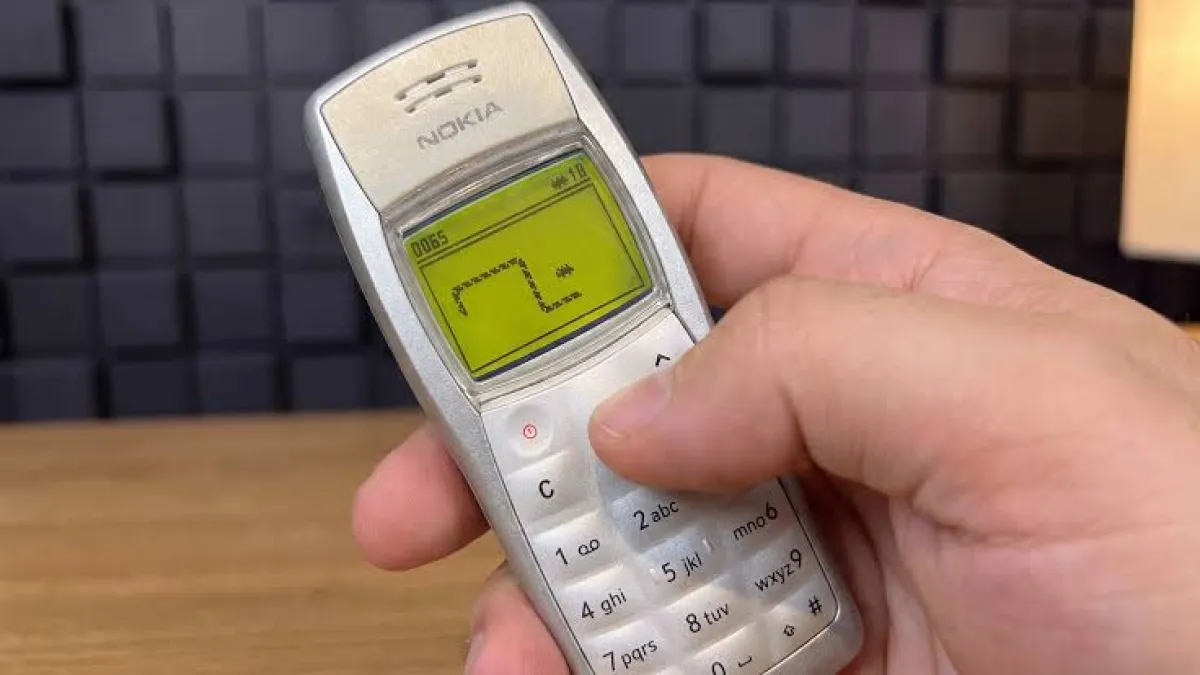
Long before smartphones commanded every waking hour—consolidating personal communications, high-resolution photography, mobile gaming, and constant internet access into glowing glass rectangles—the telecommunications market was driven by a completely different philosophy. Devices were purpose-built to execute a handful of fundamental tasks with absolute reliability. Among the most iconic relics of this bygone era is the Nokia 1100. Launched to the global market in August 2003, this unassuming mobile phone continues to generate a surprising wave of interest among modern collectors, tech historians, and users experiencing digital fatigue.
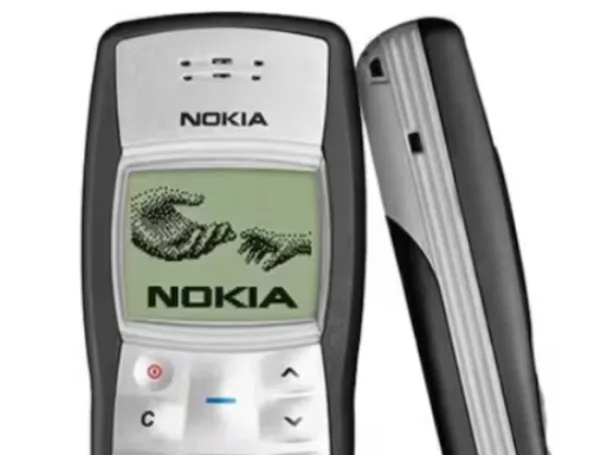
More than two decades after its initial debut, the Nokia 1100 retains the core features that made it a household name: an integrated flashlight, an alarm clock, a calculator, and the legendary Snake II video game, affectionately known simply as "la culebrita." It features a rugged physical keypad, a high-contrast monochromatic screen, and a removable lithium-ion battery that could hold a charge for days.
However, its functional limitations in the modern hyper-connected landscape are stark. The device lacks Wi-Fi connectivity, a web browser, a camera, and the processing architecture required to install modern software. Consequently, it is entirely incompatible with modern digital staples such as WhatsApp, Instagram, Facebook, and TikTok.
Despite these limitations, its utility persists for those seeking a total escape from the digital noise. Yet, bridging the gap between a 2003 hardware architecture and today’s telecommunications infrastructure presents a formidable set of hurdles.
Main Facts: Anatomy of a Legend
When Nokia officially unveiled the 1100 on August 27, 2003, the Finnish multinational telecommunications giant marketed the device as an affordable, ultra-reliable solution tailored for emerging markets and consumers taking their first tentative steps into mobile telephony. The company achieved unprecedented commercial success, ultimately pushing the Nokia 1100 to become the best-selling electronic device of its kind in history, moving a staggering 250 million units worldwide before production finally ceased.
Core Specifications and Features:
- Display: Monochromatic graphic screen with a resolution of 96 x 65 pixels.
- Connectivity: Pure GSM (Global System for Mobile Communications) operating on 2G networks.
- Battery: Removable 850 mAh Li-Ion battery (BL-5C or similar variants) offering exceptional standby times.
- Durability: Renowned for its drop-resistant silicone keypad and robust plastic housing designed to withstand harsh environmental conditions.
- Built-in Utilities: Flashlight on the top panel, alarm clock, stopwatch, calculator, and two pre-installed games (Snake II and Space Impact+).
Even today, many of these native functions remain fully operational even if the device lacks an active SIM card or cellular network connection. Users can still use the flashlight during power outages, play Snake II to pass the time, and set alarms, showcasing a level of standalone utility that modern smartphones, which quickly brick or shut down without complex operating systems, simply cannot match.

Chronology: The Journey from Global Dominance to Niche Collectible
To understand the current fascination with the Nokia 1100, it is helpful to retrace its trajectory across more than two decades of technological evolution:
- August 2003: Nokia officially launches the 1100, targeting developing economies in Latin America, Asia, and Eastern Europe with a reliable, dust-resistant, and economically accessible communications tool.
- Mid-2000s: The device achieves viral popularity, driven by word-of-mouth praise for its indestructible build quality. It eventually crosses the historic milestone of 250 million units sold, cementing its status as the world’s best-selling consumer electronics device.
- Late 2000s to Early 2010s: The smartphone revolution takes hold. Apple’s iPhone and subsequent Android devices rapidly eclipse feature phones. The Nokia 1100 is gradually phased out of retail inventories and pushed into secondary drawers as consumers migrate en masse to mobile data and touchscreen interfaces.
- Mid-2010s: Telecom operators globally begin migrating spectrum away from legacy networks to make room for 4G LTE and incoming 5G infrastructure. The 20G-dependent Nokia 1100 begins facing localized connectivity challenges.
- December 2024: Regulatory bodies, such as Colombia’s Communications Regulation Commission (CRC), document an aggressive, accelerated phase-out of legacy 2G infrastructure. Major carriers like Tigo completely shut down their 2G networks, while competitors drastically trim their legacy cell tower counts.
- Present Day: The Nokia 1100 undergoes a renaissance, transitioning from an obsolete piece of junk into a prized collector’s item and a statement piece for the "dumbphone" and digital detox movements.
Supporting Data: The 2G Sunset and Market Valuation
While the aesthetic and nostalgic appeal of the Nokia 1100 remains high, putting the device to practical use in the current era requires navigating a rapidly shrinking technological ecosystem.
The Telecommunications Reality: The Death of 2G
The Nokia 1100 operates exclusively on second-generation (2G) GSM technology. To place phone calls or send SMS text messages, the device requires an active, compatible cellular network broadcasting on frequencies the hardware can process (typically GSM 850/900/1800/1900 MHz).
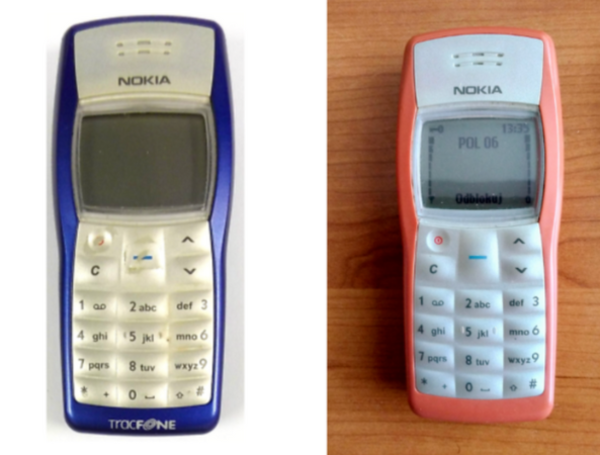
However, telecommunications regulators worldwide are systematically decommissioning aging infrastructure to optimize bandwidth for high-speed data networks. In Colombia, for instance, official reports from the Communications Regulation Commission (CRC) highlight a stark reality:
- Tigo completely pulled the plug on its 2G network operations, leaving zero compatibility for legacy phones on its network.
- Claro and Movistar have dramatically reduced the physical footprint of their legacy base stations, shrinking 2G coverage areas to sporadic pockets.
Consequently, inserting a modern SIM card into a Nokia 1100 does not guarantee functionality. In many urban centers, the phone will display a permanent "No Service" warning, rendering it incapable of placing traditional voice calls, regardless of how healthy the internal hardware might be.
Current Market Pricing and Acquisition
Because the Nokia 1100 has long been out of production, interested buyers cannot simply walk into a retail storefront to purchase a brand-new unit. Instead, the secondary market thrives across digital classifieds, specialized vintage tech shops, and online auction platforms.
Pricing fluctuates significantly based on the condition of the unit, its functional integrity, and the presence of original factory accessories:
- Standard Used Units: Functional devices showing normal signs of wear and tear typically command prices ranging between $60,000 and $150,000 Colombian Pesos (approx. $15 to $40 USD).
- Collector-Grade Units: Pristine, well-preserved devices complete with the original product box, OEM wall chargers, instruction manuals, and pristine faceplates can easily fetch between $210,000 and $310,000 Pesos (approx. $55 to $80 USD).
Experts advise prospective buyers to thoroughly inspect critical components before finalizing a purchase—specifically testing the responsiveness of the silicone keypad, the brightness of the built-in flashlight, the condition of the battery compartment for corrosion, and whether the logic board can successfully register a cellular carrier signal, even if network coverage itself is constrained by local infrastructure shutdowns.
Official Responses and Regulatory Insights
Telecommunications authorities and consumer watchdog groups have increasingly weighed in on the transition away from legacy technologies, issuing clear advisories to the public regarding older hardware.

Regulatory bodies emphasize that while consumers maintain a sentimental attachment to vintage electronics, the aggressive evolution of spectrum auctions means that hardware obsolescence is no longer just a matter of software updates—it is a physical decommissioning of the airwaves.
"The gradual sunset of 2G and 3G networks is an inevitable step toward spectrum efficiency and the deployment of robust mobile broadband services," notes telecommunications policy analysts. "While classic devices like the Nokia 1100 represent a golden age of engineering durability, users must recognize that their operational lifespan as functional communication tools is fundamentally tied to the commercial decisions of mobile network operators."
Furthermore, consumer protection agencies urge secondary-market buyers to exercise caution when purchasing vintage mobile phones. Because many of these units are sold "as-is" by private collectors, consumers must verify local carrier compatibility before investing money into devices that may effectively function as offline paperweights or desktop novelties rather than working mobile phones.

Implications: The Rise of Digital Detox and Cultural Nostalgia
The enduring appeal of the Nokia 1100 extends far beyond technical specs or retro-hardware collecting; it taps into a growing cultural counter-movement against constant connectivity.
In an era defined by attention economy fatigue, algorithmic feeds, constant push notifications, and the blurred boundaries between work and personal life, the Nokia 1100 offers a radical proposition: complete disconnection. For a growing demographic of users experiencing anxiety driven by social media saturation, carrying a "dumbphone" as a secondary device—or embracing digital minimalism—has transformed from an eccentric lifestyle choice into a deliberate wellness strategy.
The Limits of Modern Substitution
Of course, substituting a modern smartphone with a 2003-era feature phone is not realistically feasible for the average citizen. Modern life demands mobile data access for essential daily tasks: mobile banking applications, ride-sharing services, secure multi-factor authentication codes, QR-code menu scans, and professional messaging apps like Slack or WhatsApp. The Nokia 1100 cannot serve as a daily driver for modern existence.

Instead, the device occupies a unique hybrid space. For tech historians and industrial designers, it remains a masterclass in ergonomic efficiency, user interface simplicity, and structural durability—a testament to an era when a phone was designed to survive being dropped down a flight of stairs and still hold a week-long charge. For nostalgic consumers, it is a tangible anchor to a simpler youth, free from the digital tethering of the twenty-first century.
As the physical network infrastructure supporting 2G continues to fade into history, the operational window for devices like the Nokia 1100 is narrowing. Yet, whether resting quietly on a collector’s display shelf, serving as an offline emergency tool during a blackout, or simply reminding us of a time when mobile phones did one thing exceptionally well, the Nokia 1100 remains an immortal icon of mobile telecommunications history.