By Juan José Ríos Arbeláez
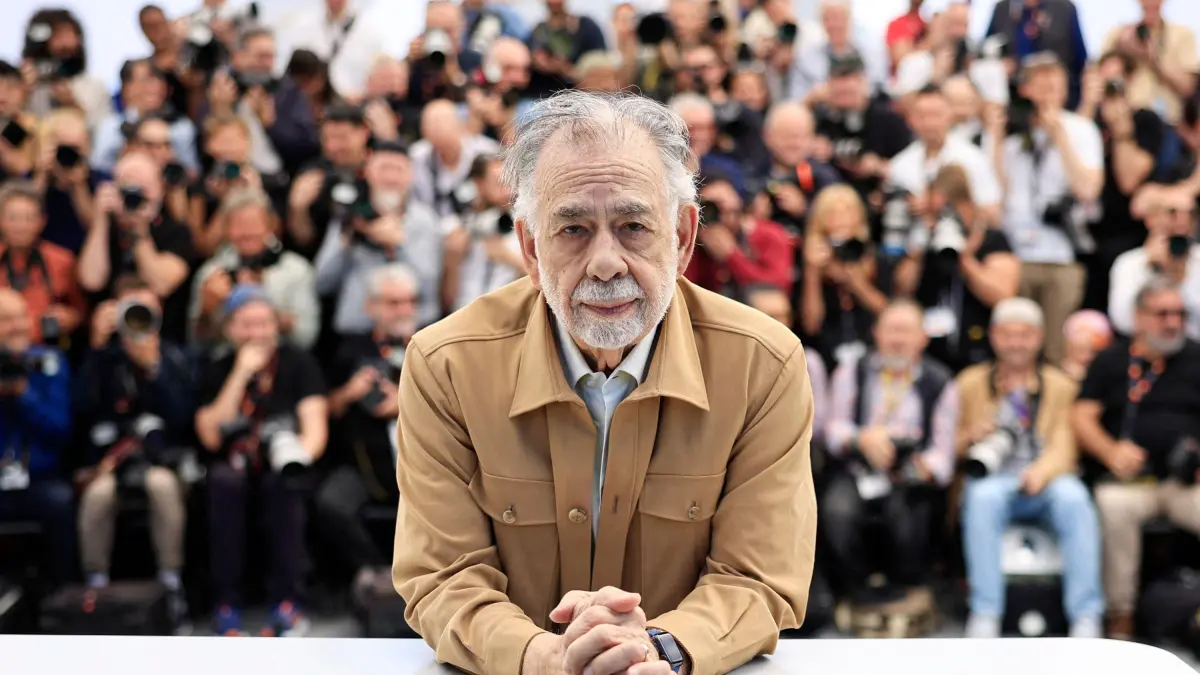
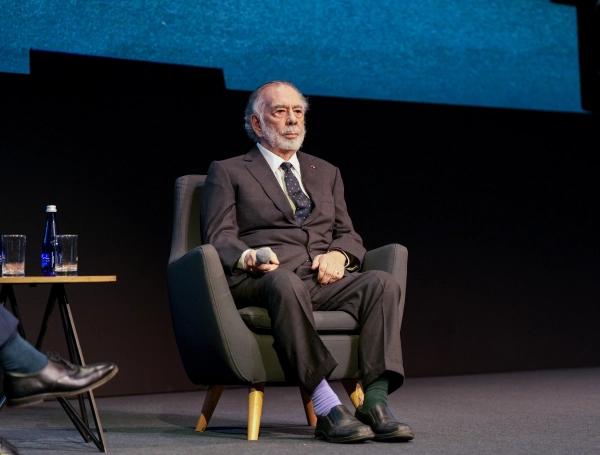
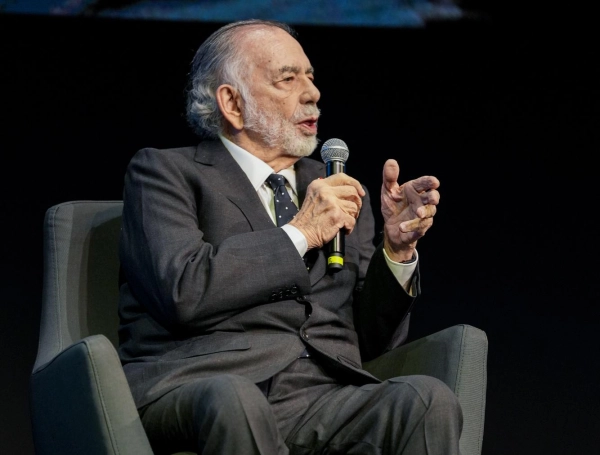
At 87 years old, Francis Ford Coppola remains a monolith in the landscape of global cinema. Whether through the lens of a historical pioneer who redefined the aesthetics of the 1970s or as a modern-day contrarian navigating the volatility of the contemporary studio system, his presence is inescapable. This week, the director of The Godfather, Dracula, and Apocalypse Now descended upon Bogotá, Colombia, as a featured speaker at the World of Business Ideas (WOBI).
However, those expecting a conventional masterclass on corporate success were met with something far more profound: a candid, at times raw, meditation on the necessity of creative defiance. For Coppola, the business of cinema is not merely about balancing ledgers; it is about the agonizing, often expensive, and inherently personal struggle to protect a singular vision against a machine designed to dilute it.
The Anatomy of Defiance: Fighting the Studio Machine
Coppola’s career has been defined by a recurring theme: he is a man who has consistently bet his professional survival on his own intuition. During his WOBI appearance, he revisited the genesis of his greatest triumph, The Godfather, revealing that his most celebrated creative choices were, at the time, viewed by Paramount executives as reckless, if not catastrophic, errors in judgment.
The Battle for Creative Integrity
Paramount had hired the young, rising filmmaker—part of the "New Hollywood" cohort that included Martin Scorsese, Steven Spielberg, and George Lucas—specifically for his Italian-American heritage. They wanted a commercial hit about the Corleone family. Yet, they insisted on a modern, 1970s setting in St. Louis to capitalize on the aesthetic trends of the day.
Coppola’s rejection of this mandate was absolute. He insisted on the 1945 setting and a New York City backdrop, aligning the film with Mario Puzo’s source material. The financial fallout was immediate: the projected budget ballooned from $2.5 million to $6 million. "I was convinced I would be fired," Coppola told the Bogotá audience. "But I wasn’t. We ended up filming in New York."

Casting the Uncastable
The friction extended to the casting, a domain where studio interference is often at its peak. Paramount executives were adamant about hiring Ryan O’Neal for the role of Michael Corleone, viewing him as a bankable star. Coppola, however, was obsessed with an unknown actor named Al Pacino. "When you just meet someone and then read a book, it happens that every time you turn a page, you start imagining that person in the story," he explained.
Similarly, the studio viewed Marlon Brando—now considered one of the greatest actors of the 20th century—as a "problematic" liability. Coppola’s solution was pure, desperate innovation. Lacking formal authority to force the casting, he resorted to subterfuge. He took a film crew to Brando’s home, instructing them to move "like ninjas," and captured the legendary screen test that would eventually force the studio’s hand. Reflecting on the moment, he noted, "I didn’t have power, but I had cunning. And that is how I made my way."
Cinema Against the Formula: The Death of Originality
As the conversation shifted toward the future of the industry, Coppola’s tone turned from retrospective to cautionary. He expressed deep concern for the current generation of filmmakers, whom he believes are being systematically hollowed out by the demands of the modern studio model.
The "Slave to the System"
Coppola argued that today’s industry is characterized by the co-opting of young talent. Instead of being encouraged to develop their own unique voices, promising directors are often funneled into the service of massive, soulless intellectual property (IP) franchises.
"What does James Bond have to do with the actual lives of people?" he asked rhetorically, dismissing the obsession with tentpole films. "That is a waste." He warned that creators who succumb to the allure of high-budget studio contracts risk becoming "slaves to the system," where the pressure to conform to algorithmic expectations stifles the very things that define the human experience.
Challenging the Algorithm
The director offered a stinging critique of modern streaming platforms. He posits that the current reliance on data-driven recommendations is a cycle of stagnation. "Those companies tell you: ‘Watch this,’ because, whether you know it or not, they are making the same movie over and over again." Coppola remains optimistic, however, that the audience’s appetite for novelty will eventually outpace the efficiency of the algorithm, leading to a resurgence of demand for authentic, human-centric storytelling.
The Resilience of Failure: Apocalypse Now and Megalopolis
For an artist of his stature, Coppola’s history is remarkably marked by both transcendent highs and harrowing lows. He famously reminded the audience of the initial reception of Apocalypse Now. Upon its release, it was widely panned, with one major critic calling it "the worst movie ever made."
"People hated it," he admitted. But he refused to let the immediate critical consensus define the film’s legacy. He reminded his crew of the core of their project: "What do we have? We have heart." Decades later, the film is considered a masterpiece of world cinema. It is a lesson in the longevity of art: some films are not meant to be understood in their opening weekend. They possess a life force that endures, finding new generations of spectators long after their initial release.
The Megalopolis Gamble
This philosophy of "long-term vision" is perhaps best embodied by his latest and most controversial project, Megalopolis. The production was a financial precipice; Coppola revealed he lost $120 million on the project, including his own personal investment of $20 million. "I put everything into that project," he confessed.
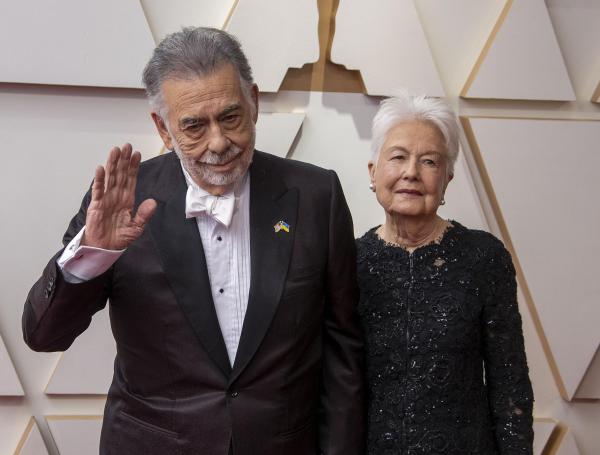
Despite the immense personal and professional stakes, he remains undeterred. He is currently finalizing a new cut of the film, titled Megalopolis Unbound, holding onto the conviction that its value will be realized in time.
A Life Dedicated to the Next Frame
Despite his 87 years, Coppola showed no signs of slowing down. When asked about his future, he offered a defiant optimism. "I am not sick and I have a good memory," he said. "So I hope to live long enough to make another movie."
His working method remains a unique, recursive process. He describes a habit of working on a project until he begins to hate it, at which point he abandons it for another. Eventually, he returns to the original project with fresh eyes, realizing it wasn’t as flawed as he once thought. "I am always making the movie previous to the one I abandoned," he joked.

A Legacy Beyond the Screen
Beyond the technical and the professional, the visit to Bogotá offered a glimpse into the man behind the camera. He recalled, with a touch of nostalgia, a private moment from years ago: cooking spaghetti for Gabriel García Márquez during a meeting with Fidel Castro. It was a reminder that Coppola’s life has been as much about the intersection of art, history, and personal connection as it has been about the craft of film.
Implications for the Industry
The implications of Coppola’s visit are clear for both aspiring filmmakers and seasoned executives:
- Technological Democratization: He urges young filmmakers not to wait for permission or massive budgets. "Make them with your iPhones, make them with your friends," he advised. The barrier to entry has never been lower, yet the pressure to conform has never been higher.
- The Human Element: Regarding the rise of Artificial Intelligence, Coppola remains firm. He acknowledges the technological shift but insists that creativity is an exclusively human act. "Only we can decide what excites us and what doesn’t."
- Risk as a Prerequisite: The career of Francis Ford Coppola stands as a testament to the idea that the very traits that lead to initial dismissal—stubbornness, eccentricity, and a refusal to follow the "formula"—are the same traits that lead to a lasting legacy.
As he concluded his talk to a standing ovation, the message was clear: The cinema is not a static object defined by box office receipts or critical consensus. It is a living, breathing, and deeply human pursuit. For Coppola, the next film is always the most important one, and the risk of failure is a small price to pay for the possibility of truth.