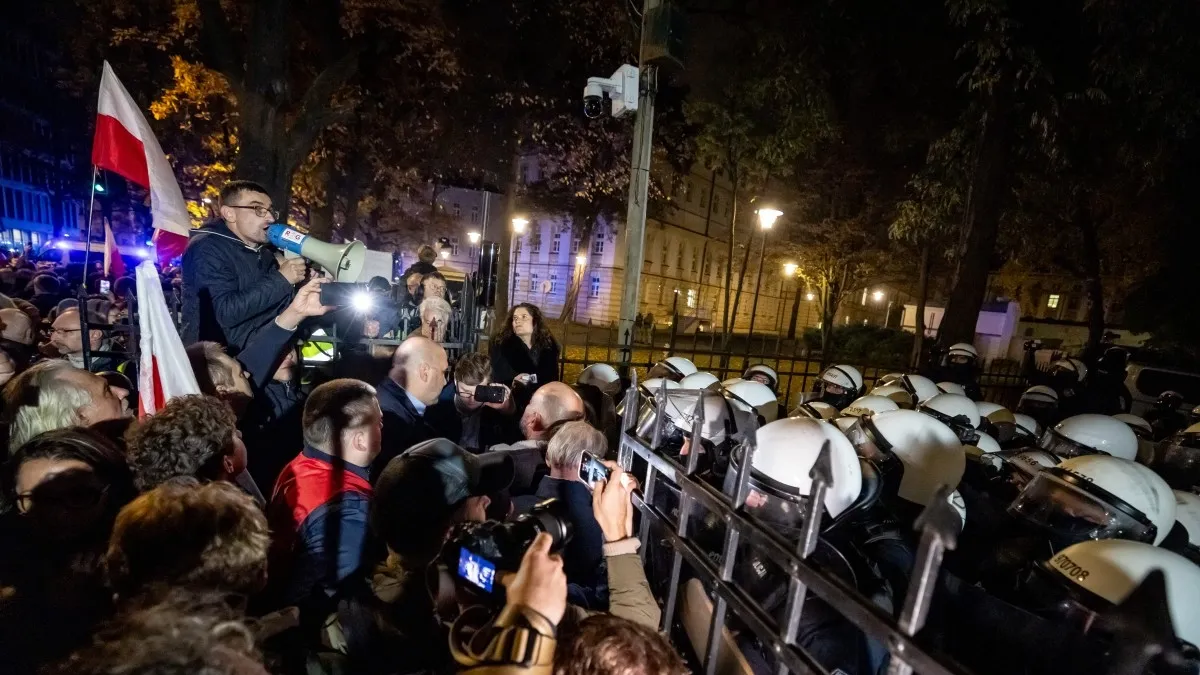
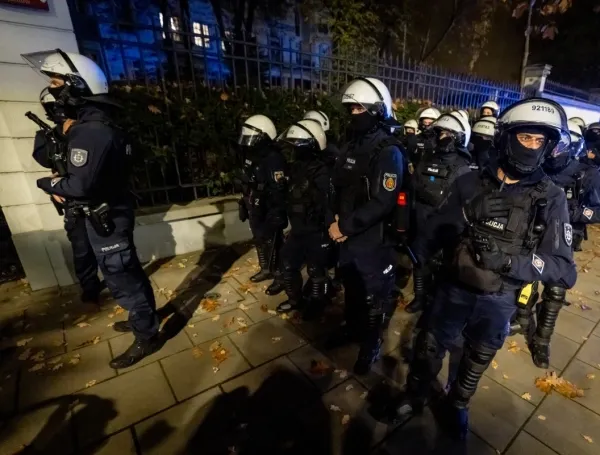
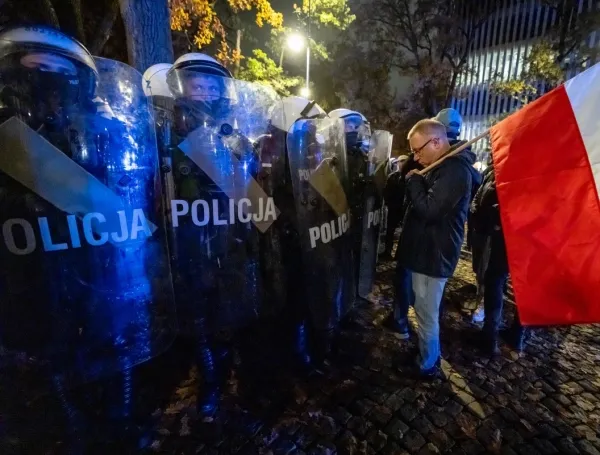
VARSOVIA, POLAND — Tensions reached a boiling point in the heart of Poland’s capital on Friday night as heavily armed anti-riot police were deployed around the imposing perimeter of the Constitutional Tribunal. The drastic security measure followed a high-stakes judicial announcement that plunged the nation deeper into an unprecedented constitutional crisis. The standoff pits the centrist government of Prime Minister Donald Tusk against the nationalist opposition and key judicial figures appointed by the previous administration—a bitter factional feud that has paralyzed parts of the state apparatus and drawn anxious gazes from Brussels.
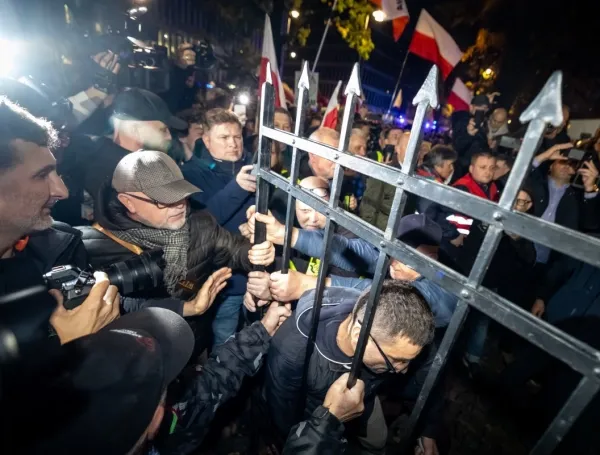
As dozens of police officers barricaded the entrances to prevent access, furious supporters of the national-conservative Law and Justice (PiS) party swarmed the streets outside the tribunal. Chanting slogans such as "Tusk, traitor!" and waving Polish flags, the demonstrators have maintained a constant vigil in recent weeks to protect the high court from what they perceive as an encroaching authoritarian takeover by the current executive branch.
The cascading events of Friday evening have effectively transformed Poland’s highest judicial body into ground zero for a fierce ideological war over the rule of law, democratic norms, and the separation of powers.
Main Facts
The epicenter of Friday’s crisis revolves around a direct challenge to the leadership of the Constitutional Tribunal.
The Suspension: Judge Anna Korwin-Piotrowska publicly announced the suspension of the tribunal’s controversial president, Bogdan Swieczkowski, a prominent figure linked to the former PiS government.
Legal and Executive Action: Concurrently, the Minister of Justice and Prosecutor General moved swiftly, announcing that formal requests had been filed to lift the legal immunity of both Swieczkowski and his deputy, Bartlomiej Sochanski.
The Official Response: The Tribunal forcefully rejected the suspension, briefly taking down its website before issuing a fiery statement via its official channels denouncing the actions as a "coup d’état." The court argued that Swieczkowski remains the legitimate president, asserting that Korwin-Piotrowska cannot legally assume an interim role because she has not taken the required oath before the President of the Republic.
The Security Lockdown: To manage the compounding crowds and potential civil unrest, the government deployed cordons of riot police around the tribunal’s headquarters in central Warsaw.
Presidential Intervention: President Karol Nawrocki, a nationalist-aligned head of state, was forced to abruptly interrupt an international trip to Senegal, boarding an emergency flight back to Warsaw to manage the escalating crisis. Upon arrival, he held closed-door consultations at the Presidential Palace with Swieczkowski and Zbigniew Kapinski, the first president of the Supreme Court.
Chronology of Events: How Friday Unfolded
The dramatic escalation on Friday was the culmination of weeks of simmering judicial friction, but the timeline of the immediate crisis highlights the sheer velocity at which the situation deteriorated:
Late Afternoon: Rumors and formal notifications regarding the suspension of Tribunal President Bogdan Swieczkowski begin circulating within legal circles in Warsaw, triggering immediate alarm among conservative factions.
Early Evening: The Ministry of Justice holds a hastily arranged press conference, confirming that prosecutors are seeking to strip Swieczkowski and his deputy of their legal immunities, signaling a coordinated legal offensive by the Tusk administration.
Friday Night (Approx. 18:30): The government deploys dozens of anti-riot police officers to secure the Constitutional Tribunal. Physical barriers are erected, sealing off the compound to prevent unauthorized entry as crowds begin to amass.
Mid-Evening: Crowds of PiS supporters and nationalist citizens gather outside the tribunal. Demonstrators begin chanting anti-government slogans, directing their fury at Prime Minister Donald Tusk and the European Union.
Late Night: The Constitutional Tribunal’s official website goes offline, but its active digital communication channels release a scathing declaration labeling the events a "coup d’état" and disputing the legitimacy of Judge Korwin-Piotrowska’s attempt to take the reins.
Midnight: President Karol Nawrocki lands in Warsaw following his aborted trip to Africa. Eschewing rest, he heads directly to the Presidential Palace to convene an emergency meeting with key judicial leaders to formulate a counter-strategy.
Supporting Data and Context
To fully understand the gravity of Friday’s mobilization, one must examine the broader political landscape in Poland since the late-2023 elections.
+-------------------------------------------------------------------------+
|                  THE POWER STRUGGLE IN POLAND                           |
+---------------------------+---------------------------------------------+
| EXECUTIVE BRANCH          | Led by PM Donald Tusk (Centrist/Pro-EU)     |
|                           | Goal: Restore rule of law, purge PiS loyalists|
+---------------------------+---------------------------------------------+
| JUDICIAL BRANCH           | Constitutional Tribunal (PiS-Appointed)     |
|                           | Goal: Resist executive overreach, claim coup|
+---------------------------+---------------------------------------------+
| PRESIDENTIAL OFFICE       | President Karol Nawrocki (Nationalist)      |
|                           | Goal: Block Tusk's appointments/initiatives |
+---------------------------+---------------------------------------------+
When Donald Tusk—a former President of the European Council—returned to the premiership in late 2023, he made the restoration of institutional independence a core pillar of his political platform. For years, the European Union had locked horns with the previous PiS administration, accusing Warsaw of transforming the Constitutional Tribunal into a partisan instrument and steadily eroding judicial independence.
The EU consequently withheld billions of euros in recovery funds, plunging Poland into a protracted financial and constitutional standoff. Tusk’s coalition partners campaigned heavily on clearing out political appointees from high courts to appease Brussels and re-establish democratic checks and balances.
However, these efforts have routinely hit a brick wall. President Karol Nawrocki, who retains strong ties to the nationalist opposition, has utilized his executive vetoes and constitutional prerogatives to systematically block the government’s judicial nominees. This institutional gridlock created a dual-power reality in Warsaw: an executive eager to purge the system and a judiciary packed with conservative loyalists fighting to preserve their mandates. Friday’s deployment of police was the physical manifestation of this legal stalemate breaking out into the open streets.
Official Responses and Public Reactions
The ideological chasm dividing Poland was vividly illustrated by the contrasting rhetoric issued by the country’s primary political and judicial actors following the Friday night lockdown.
The Government Perspective
Prime Minister Donald Tusk took to social media platform X (formerly Twitter) to defend his administration’s uncompromising stance, writing:
"Restablecer el Estado de derecho es nuestro deber" (Restoring the rule of law is our duty).
The government frames its actions not as an authoritarian power grab, but as a necessary surgical intervention to cleanse the judiciary of figures it deems illegitimately installed during the PiS era. Ministers argue that true democracy cannot function when the highest constitutional arbiter is viewed as an extension of a single political party.
The Opposition and Tribunal Perspective
Conversely, the tribunal itself, along with the broader nationalist movement, views the government’s maneuvers as a direct assault on the constitutional order. By officially declaring a "coup d’état," the tribunal sought to mobilize both domestic and international sympathy.
Outside the cordons, demonstrators echoed this sentiment. "They are destroying the last independent institution standing between the citizens and a totalitarian government controlled from Brussels," shouted one prominent PiS activist addressing the crowd. The presence of thousands of digital sympathizers amplifying the hashtag #TuskEUCOUP online further underscores how deeply polarized the Polish public remains.
Implications for Poland and the European Union
The events of Friday night carry profound implications that extend far beyond the cobblestone streets of Warsaw.
Constitutional Paralysis: With the tribunal officially rejecting its own interim leadership while the Ministry of Justice actively pursues criminal immunity waivers for its sitting president, Poland’s highest legal body is functionally dysfunctional. Decisions rendered by either faction will likely be deemed illegitimate by the opposing side, creating a legal void.
The Risk of Civil Unrest: The successful mobilization of thousands of nationalist protesters on short notice demonstrates that the conservative opposition retains a potent grassroots base. Should the government continue its push to physically or legally remove judges, street-level confrontations with police risk becoming a regular, highly volatile feature of Polish politics.
The Presidential Factor: President Nawrocki’s hurried return from Senegal emphasizes that the presidency remains the ultimate institutional bulwark for the nationalist opposition. His consultations at the palace will likely dictate whether the crisis escalates into a total constitutional war or forces a temporary, uneasy truce.
Brussels’ Dilemma: For the European Union, the chaos in Warsaw is a double-edged sword. While Brussels fundamentally supports Tusk’s goal of restoring an independent judiciary aligned with EU law, the sight of anti-riot police sealing off a constitutional court and mutual accusations of a "coup d’état" will spark deep concern over democratic stability in a frontline member state.
As dawn broke over Warsaw on Saturday, the barricades around the Constitutional Tribunal remained firmly in place. What began as a legislative dispute over court appointments has matured into a full-scale institutional crisis—leaving Poland’s democracy caught dangerously in the crossfire.
Main Facts: A Triumphant and Defiant Homecoming in Caracas Caracas, Venezuela — In a development that has sent profound shockwaves through the Latin American geopolitical landscape, Venezuelan opposition leader and Nobel Peace Prize laureate María…
By International News Desk Updated: July 17, 2026 Venezuela remains in a state of profound national mourning and emergency mobilization following the devastating double earthquake that struck the nation’s northern coast on June 24, 2026.…
By: International Desk Analysis Published: September 11, 2026 Introduction: The Architecture of a Global Tragedy Two decades and a half after the earth-shattering events of September 11, 2001, the world continues to grapple with the…