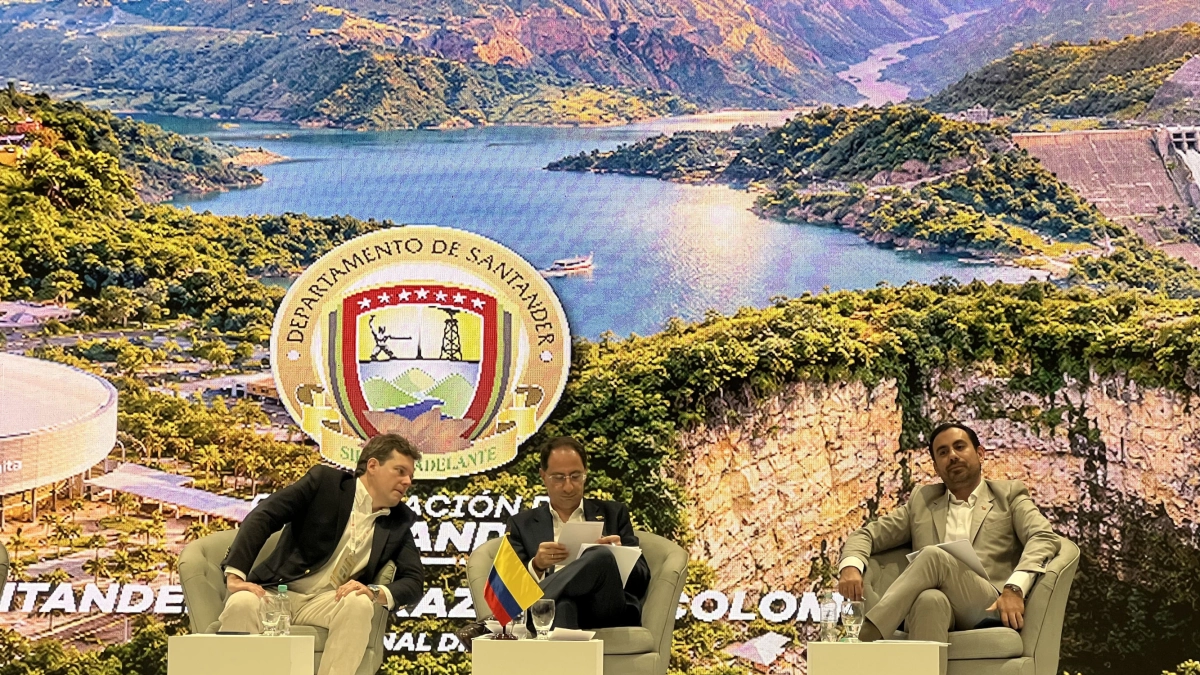
Bucaramanga, Santander — In a paradigm shift that could redefine how South American nations measure the success of their visitor economies, the Colombian government has unveiled a comprehensive master plan for the tourism and hospitality sector. Speaking at the 32nd National Hotel Congress (Congreso Nacional de la Hotelería) at the Neomundo Convention Center, Vice President José Manuel Restrepo urged industry leaders to abandon traditional metrics centered solely on raw headcounts. Instead, he championed a model focused on experiential value, deep economic impact, fiscal equity, and technological modernization.
The high-profile gathering comes at a critical crossroads for Colombia’s hospitality landscape. While post-pandemic travel initially triggered a wave of optimism, recent data reveals a cooling market, heightened regulatory pressures on alternative lodging, and international travel advisories that continue to challenge the nation’s global positioning. Through the newly minted "Misión Crecer" (Grow Mission), the administration of President Gustavo Petro is looking to reverse these headwinds by cementing tourism as a core pillar of national development, aiming for staggering milestones by the end of the decade.
Main Facts: The Blueprint for a New Tourism Era
The central thesis of the government’s presentation in Bucaramanga is that volume does not equal value. For decades, tourism ministries worldwide have celebrated record-breaking arrival statistics as the ultimate proof of success. Vice President Restrepo argued that this metric is fundamentally flawed if the wealth generated does not trickle down robustly to local communities, formal employment, and sustainable infrastructure.
"You—the tourism sector—represent the most powerful asset of Colombia: its people, its biodiversity, and the cultural expressions that reflect the deepest meaning of being Colombian," Restrepo told an audience of hoteliers, investors, and regional officials. "I want to invite you to change our mindset. Historically, we have measured ourselves by visitor flows, and I believe this must change to measure the value of the experience."
The administration’s core objectives for the sector over the next strategic window include:
- Reaching 10 Million Visitors: A targeted horizon aimed at sustainable, managed expansion.
- Generating $20 Billion in Economic Impact: Prioritizing high-yield travelers over mass, low-expenditure tourism.
- Elevating Tourism’s GDP Contribution: Targeting a 3.5% share of the nation’s Gross Domestic Product.
- Leveling the Playing Field: Implementing strict regulatory standards, tax compliance, and quality benchmarks for alternative and short-term rental properties.
- Mitigating International Travel Warnings: Actively coordinating with diplomatic and defense sectors to address and revise security alerts issued by key source markets like the United States.
Chronology: How the Crisis and the Strategy Unfolded
To understand the urgency behind the government’s announcements at Neomundo, it is vital to trace the recent timeline of Colombia’s travel and hospitality sector:

- Late 2023 – 2024: Colombia experiences a robust post-pandemic tourism boom, welcoming millions of international travelers drawn by favorable currency exchange rates, rich biodiversity, and aggressive international marketing campaigns. However, cracks begin to appear regarding infrastructure capacity and the unregulated proliferation of digital short-term rental platforms.
- Throughout 2025: Economic pressures, inflation, and shifting global travel trends cause a deceleration in domestic and international travel momentum. The hospitality sector notes a tightening margin between operational costs and revenue.
- January – August 2026: According to the Monthly Accommodation Survey (EMA) published by the National Administrative Department of Statistics (DANE), national hotel occupancy drops to 48.0%, down from 49.7% during the same eight-month period in 2025. Real income for hoteliers contracts by 7.5%, and direct employment within the sector falls by 4.7%.
- October 29, 2026: The 32nd National Hotel Congress officially kicks off in Bucaramanga. On day one, Deputy Minister of Tourism Julián Felipe Franco Restrepo addresses the stark reality of the market, confirming a year-over-year sector contraction of roughly 4% following a previous downturn, setting the stage for structural reforms.
- October 29, 2026 (Later): Vice President José Manuel Restrepo takes the stage at Neomundo to officially introduce "Misión Crecer," outlining the administration’s strategy to overhaul regulations, boost airport connectivity, and pivot toward experience-driven tourism.
Supporting Data: The Hard Realities of Colombia’s Hotel Sector
The bullish projections presented by the executive branch stand in stark contrast to the sobering numbers coming out of DANE’s tracking systems. The hospitality industry in Colombia is currently grappling with a triad of challenges: falling occupancy, shrinking revenues, and a reduction in labor capacity.
+-------------------------------------------------------------------------+
| DANE EMA DATA: HOTEL SECTOR PERFORMANCE (JAN-AUG 2026 vs. JAN-AUG 2025) |
+-------------------------------------------------------------------------+
| Metric                 | 2025 Period       | 2026 Period       | Trend  |
+------------------------+-------------------+-------------------+--------+
| National Occupancy     | 49.7%             | 48.0%             | -1.7%  |
| Real Hotel Incomes     | Baseline          | -7.5%             | Down   |
| Personnel Employed     | Baseline          | -4.7%             | Down   |
+-------------------------------------------------------------------------+
Deputy Minister Julián Felipe Franco Restrepo did not sugarcoat the figures during his inaugural address at the congress. "The reality is that the country is contracting. Last year we contracted by around 11 percent, and this year we are seeing a decline of close to 4 percent," he stated frankly.
Despite these setbacks, the government insists that consumer demand for Colombia as a destination remains high. The bottleneck, according to Vice President Restrepo, is that the formal hotel infrastructure is falling behind while alternative, often unregulated lodgings capture a massive share of the market.

"The demand is there, but the formal hotel is falling short," Restrepo noted, emphasizing that the focus must shift from merely building more rooms to enhancing the holistic ecosystem of travel, which includes digital integration, artificial intelligence adoption, and stringent quality assurance.
Official Responses and Strategic Pillars
The government’s roadmap—designed to steer the country out of its current slump—rests on three foundational pillars articulated by Vice President Restrepo and supported by the Ministry of Commerce, Industry, and Tourism:
1. Regulatory Balance and the "Level Playing Field"
One of the most contentious issues plaguing hoteliers across Colombia has been the unchecked growth of short-term rental apartments operating without the tax burdens, safety protocols, or labor regulations required of traditional hotels.

The administration’s response is not to ban these platforms, but to enforce rigorous oversight. Restrepo stressed that the National Tourism Registry (Registro Nacional de Turismo) is only the first step. The goal is to establish an unbendable framework ensuring that every provider—regardless of whether they operate a luxury resort or a residential rental unit—complies with quality standards, fiscal commitments, and national obligations.
2. Overcoming International Travel Barriers (The U.S. Market)
The United States remains Colombia’s primary international feeder market for tourism. However, ongoing security concerns and official travel warnings issued by Washington have frequently dampened booking rates.
To combat this, Restrepo revealed that high-level inter-ministerial meetings have already taken place between the Ministry of Commerce, the Ministry of Defense, and the Ministry of Foreign Affairs. The coordinated objective is to provide transparent security assessments, enhance regional protections, and actively lobby to modify travel advisories that paint the entire country with too broad a brush.

3. The Three Strategic Fronts: Connectivity, Positioning, and Trust
To secure long-term viability, the government has isolated three distinct operational arenas that require immediate intervention:
- Connectivity: "Routes in a territory like this must be managed. We must strengthen all airport capabilities to guarantee better connectivity," Restrepo asserted. Without seamless domestic and international flight access, regional tourism hubs remain isolated.
- Positioning: Colombia must cease competing solely on price. The national strategy must pivot toward the richness of its heritage, culinary diversity, ecological uniqueness, and the caliber of its service experiences.
- Trust: Building absolute confidence among travelers through transparent pricing, ironclad institutional backing, guaranteed safety, and fair market competition.
Furthermore, the administration is exploring a unified system of fiscal guarantees and legal stability incentives designed to encourage private equity investment in regional tourism infrastructure, while pushing companies to adopt artificial intelligence to better predict and cater to consumer behavior.
Implications: What This Means for the Future of Colombian Tourism
The policy shifts announced at the 32nd National Hotel Congress signal a mature transition in Colombia’s economic development strategy. By moving away from vanity metrics—such as celebrating arbitrary arrival milestones without checking if tourists are actually spending money—the government is attempting to build a more resilient, high-value industry.

For hotel owners and operators, the promises of regulatory enforcement against informal lodging and the creation of tax incentives offer a glimmer of hope after a difficult fiscal cycle. However, the success of these measures will depend heavily on execution. Hoteliers will be watching closely to see if the Ministry can successfully bridge the gap between lofty policy goals and regional realities, especially when it comes to upgrading secondary airport infrastructure and restoring international confidence through security updates.
As "Misión Crecer" rolls out over the coming months, Colombia is betting its economic future on the premise that true hospitality is not just about keeping rooms filled, but about transforming the traveler’s experience while uplifting the local communities that welcome them. If successful, the country could well serve as a continental blueprint for sustainable, high-impact tourism in the post-pandemic era.