By Edwin Caicedo, Environment and Health Correspondent
The global crisis of biodiversity loss has reached a critical juncture that demands an immediate, structural re-evaluation of how human societies produce food, generate energy, and manage capital. The Living Planet Report 2026, published jointly by WWF and the Zoological Society of London, serves as both a chilling diagnostic and a roadmap for systemic transformation. It argues that we can no longer view the degradation of nature as a mere consequence of isolated environmental neglect; rather, it is the inevitable byproduct of economic systems that prioritize short-term gain over planetary stability.

The Global Diagnostic: A 73% Decline
The core metric of the report, the Living Planet Index, provides a sobering overview of the state of the natural world. By tracking the population trends of thousands of species of mammals, birds, fish, reptiles, and amphibians, the researchers found that between 1970 and 2022, monitored populations plummeted by an average of 73%.
However, the authors of the report caution against interpreting this figure as a uniform global collapse. The index serves as a high-level alarm, but it masks significant regional variations. In specific ecosystems, certain species are not only maintaining stable population levels but are demonstrating remarkable resilience and recovery—proof that targeted, long-term conservation efforts can yield positive results. The challenge, therefore, is to scale these isolated successes into systemic shifts that halt the broader trend of decline.

Chronology of the Crisis and the Path to 2030
To understand the urgency of the 2026 report, one must look at the trajectory of the last decade:
- 1970–2010: A period marked by rapid industrialization and the expansion of global trade, during which the foundational drivers of biodiversity loss—deforestation and over-exploitation—began to accelerate.
- 2015: The adoption of the Sustainable Development Goals (SDGs), which provided a framework for conservation but failed to trigger the necessary shift in global financial flows.
- 2020–2023: The "Activation Phase." Global awareness of the climate and biodiversity crises reached an all-time high, but the financial system continued to pour trillions into environmentally destructive activities.
- 2026: The current "Acceleration Phase." The Living Planet Report 2026 posits that we have only four years remaining to meet the international 2030 targets for reversing nature loss. The window for incremental change has closed; only structural transformation is sufficient.
The Financial "Perverse Incentives"
Perhaps the most startling revelation of the report is the role of the global financial sector. WWF identifies a massive imbalance in capital allocation: in 2023, approximately $7.3 trillion was directed toward economic activities that actively harm the environment, such as unsustainable industrial agriculture, fossil-fuel-dependent infrastructure, and extractive industries. In stark contrast, only $220 billion—a fraction of the former—was funneled into projects designed to protect or restore natural habitats.

Carlos Mauricio Herrera, Director of Conservation and Governance at WWF Colombia, describes these as "perverse incentives." Tax benefits, government subsidies, and private credit lines often inadvertently subsidize the very activities that accelerate ecosystem collapse. "We are effectively paying for our own destruction," Herrera explains. The report calls for a radical realignment: shifting these massive flows away from degradation and toward nature-positive solutions, such as regenerative agriculture and protected area management.
Agriculture: Balancing Food Security and Biodiversity
The food system remains the primary driver of habitat loss worldwide. In Colombia, the pressure is manifesting in the expansion of agricultural frontiers into highly vulnerable ecosystems. The Orinoquia region, home to vast floodable savannas, is witnessing an aggressive expansion of rice, soy, and oil palm cultivation.

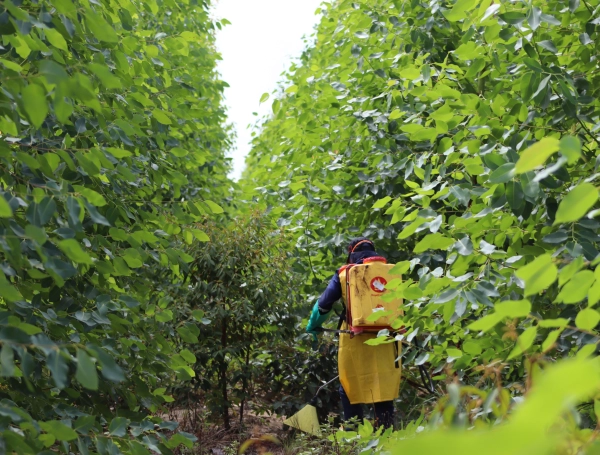
The issue, however, is not merely one of land use, but of methodology. The intensive use of chemical fertilizers and pesticides disrupts the biological integrity of the soil and contaminates critical water sources. The Living Planet Report 2026 emphasizes that the agricultural sector must transition toward "nature-positive" production. This involves not only changing where we grow food but also how we grow it, coupled with a drastic reduction in food waste and a shift toward sustainable dietary patterns that place less strain on planetary boundaries.
The Energy Transition: A Double-Edged Sword
Energy policy is the third pillar of the report. Colombia’s power grid, heavily reliant on hydroelectric generation, is often touted as "clean." However, the report warns that the transition away from fossil fuels is not without its own environmental risks.

As the world pivots toward renewable energy, the demand for "critical minerals"—lithium, copper, and cobalt—is skyrocketing. Without stringent environmental oversight, the mining of these materials threatens to repeat the patterns of the past, with extractive activities causing irreparable harm to biodiversity hotspots. Globally, the energy sector is the most advanced in its transition, with solar energy becoming the cheapest source of electricity and electric vehicles capturing a quarter of the global market in 2024. The lesson here is that once an industry reaches a "positive tipping point," market forces can begin to drive change independently of policy.
The Vital Role of Local Communities
The Living Planet Report 2026 unequivocally states that indigenous and local communities are not mere stakeholders to be consulted; they are the primary stewards of the world’s most biodiverse regions. In Colombia, a significant percentage of the country’s best-preserved ecosystems lie within ethnic or campesino territories.
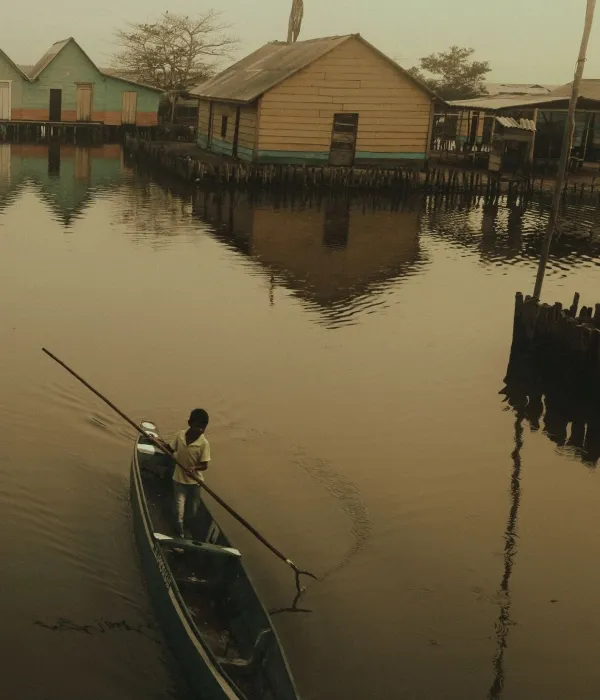
Herrera highlights that conservation results are consistently superior when local authority is recognized and respected. The report advocates for:
- Strengthening Governance: Empowering local groups to manage their lands through participatory monitoring and legal protection.
- Financial Support: Ensuring that international and national conservation funding actually reaches the organizations on the ground, rather than being swallowed by bureaucratic overhead.
- Sustainable Economic Alternatives: Developing pathways for communities to thrive through eco-tourism, agroecology, and research, rather than being forced to rely on illicit activities for survival.
Evidence of Resilience: The "Positive Tipping Points"
Despite the dire nature of the data, the report emphasizes that the loss of biodiversity is not a closed chapter. It cites global success stories such as the recovery of wild tiger populations, the comeback of the Atlantic bluefin tuna, and the stabilization of African elephant herds.
Colombia offers its own localized success stories that prove conservation is viable. The expansion of the Andean bear’s range in the Western Cordillera—which grew from 52% to 76% in just five years—serves as a testament to the effectiveness of localized, sustained intervention. Similarly, the ongoing restoration of mangroves across the Colombian coast demonstrates that when an ecosystem is granted the space to recover, nature responds with surprising speed.
Implications for Policy and Private Sector
The Living Planet Report 2026 concludes with a clear ultimatum: we must move from the "activation" phase of the last decade to a phase of "acceleration" by 2030.
For the private sector, the implication is clear: the dependency of economic activities on nature can no longer be ignored. Companies must integrate "nature-risk" into their financial reporting. For governments, the mandate is to reform the fiscal architecture—ending subsidies for deforestation and creating robust mechanisms for biodiversity payments.
As the report underscores, the path forward is not found in isolated projects, but in the structural reconfiguration of our economic life. We have the technology, the evidence, and the local expertise. What remains to be seen is whether the political and financial will can match the urgency of the moment. The 2026 report is not just a summary of what has been lost; it is an invitation to decide what we will choose to save.