By Juan José Ríos Arbeláez
With reporting from EFE
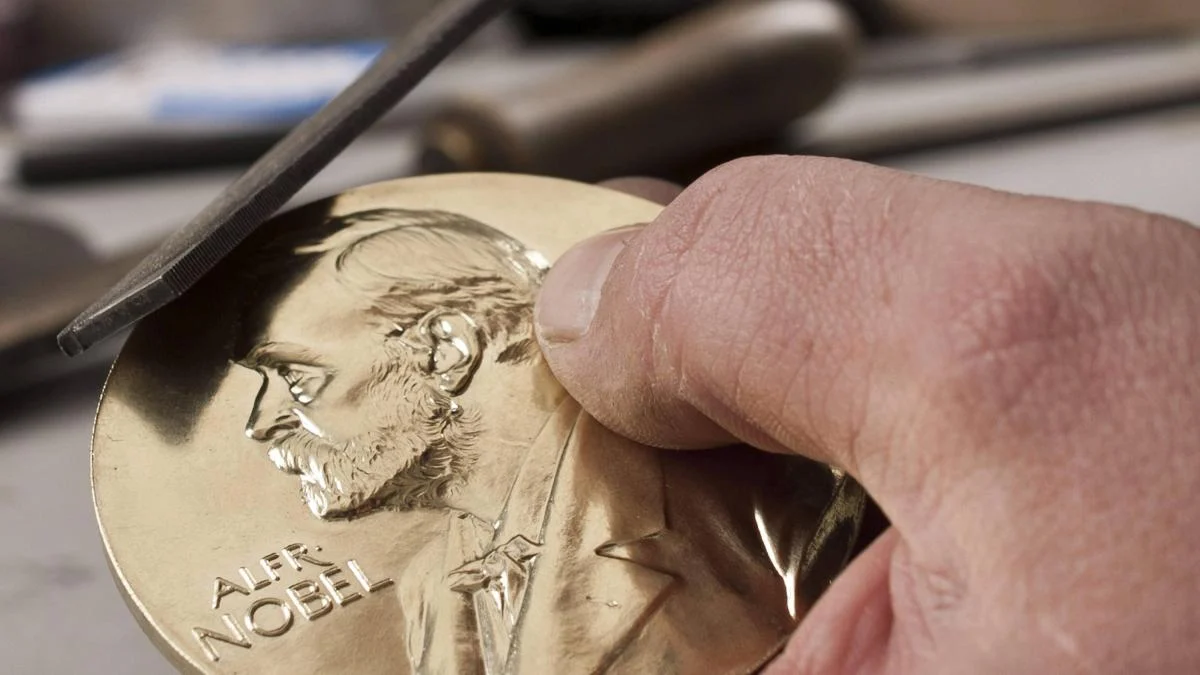
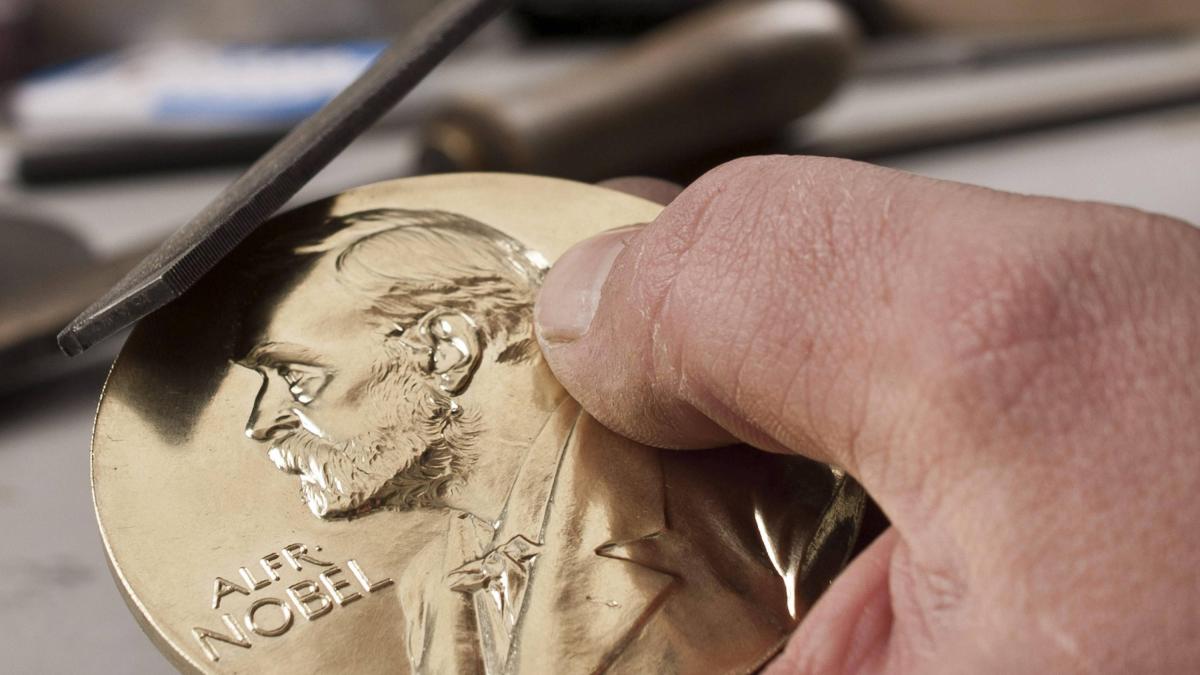
In Colombia, mentioning the Nobel Prizes immediately invokes two moments of national pride: Gabriel García Márquez capturing the Prize in Literature in 1982, and Juan Manuel Santos receiving the Peace Prize in 2016 for his efforts to end decades of internal armed conflict. For most, the Nobel Prize represents the absolute pinnacle of human intellectual and moral achievement—a pristine, highly formal institution where brilliant minds ascend sunlit stages in Stockholm and Oslo to receive gold medals from European royalty.
Yet, beneath the veneer of academic solemnity and rigid protocol lies a sprawling tapestry of human messiness. The history of the Nobel Prize is not merely a record of equations solved, novels penned, and treaties signed; it is also a ledger written in prison cells, punctuated by empty chairs, complicated by bureaucratic timing, and haunted by persistent statistical disparities.
As the Nobel season unfolds with the announcement of the Prize in Medicine and paves the way for a week of groundbreaking revelations, a deep dive into five unconventional facets of the prize reveals that excellence is inextricably tied to the delightfully flawed human condition.
1. Main Facts: The Human Paradoxes of the World’s Most Prestigious Award
Established by the final will and testament of the Swedish chemist, engineer, and industrialist Alfred Nobel in 1895, the prizes were designed to reward those who conferred "the greatest benefit on mankind." However, the execution of Nobel’s vision has frequently collided with the chaotic realities of geopolitics, biology, and social change.
The core tension of the Nobel Prize rests on its dual nature: it is an elite, highly conservative institution administered by Swedish and Norwegian committees, yet it is meant to reflect the sweeping, often turbulent currents of global history.

Over more than a century of existence, the awards have confronted scenarios Alfred Nobel could scarcely have anticipated. Laureates have been locked away in maximum-security prisons by regimes they criticized; others have achieved international renown while still young enough to be university undergraduates, while some have lived nearly a century before receiving the call. Furthermore, the strict rules governing mortality have occasionally been bypassed by mere hours, creating administrative headaches for committees that fiercely guard the living status of their recipients.
Simultaneously, the institution faces an ongoing internal reckoning regarding representation. Despite producing some of history’s most consequential intellectual figures, the demographic makeup of the laureates reflects systemic historical barriers that modern committees are only beginning to address.
2. Chronology: Milestones and Anomalies Through Time
To understand how the Nobel Prize has evolved from a European scientific fraternity into a global cultural touchstone, one must examine the specific chronological milestones where history disrupted protocol.
When the Prize Went to Prison
Since 1901, the Nobel Peace Prize has on five separate occasions been awarded to individuals who were actively imprisoned or detained by authoritarian states at the moment of their selection. This creates a profound institutional irony: honoring champions of peace while they sit behind bars.
- 1936: German journalist, pacifist, and anti-Nazi dissident Carl von Ossietzky was awarded the Peace Prize while interred in a Nazi concentration camp. Too ill and heavily surveilled to travel, he never truly experienced freedom before his death in 1938.
- 1991: Burmese opposition leader Aung San Suu Kyi was awarded the prize while under house arrest by her country’s military junta. Though permitted to travel, she chose not to leave Burma out of fear she would not be allowed to return.
- 2010: Chinese dissident Liu Xiaobo was serving an 11-year prison sentence for subversion when he won the Peace Prize. In a poignant break with tradition, the Norwegian Nobel Committee placed the award on an empty chair—an image that reverberated across global media and infuriated the Chinese government.
- 2022: Belarusian human rights advocate Ales Bialiatski remained imprisoned during his award ceremony, represented by his wife, Natalia Pinchuk, who powerfully articulated his ongoing struggle against state oppression.
- 2023: Iranian human rights activist Narges Mohammadi received the Peace Prize while incarcerated in Tehran’s notorious Evin Prison, continuing a grim lineage of defenders whose voices the state attempted to silence.
The Death Defying Timing: Pósthumous Awards and Near-Misses
The Nobel Foundation maintains a strict statute regarding mortality. Instituted in 1974, the rules explicitly forbid the awarding of a prize pósthumesly. If a laureate dies between the announcement in October and the ceremony in December, the prize stands. If they pass away before the announcement, they are generally disqualified.
However, historical exceptions and dramatic near-misses pepper the timeline:
- 1931 & 1961: Before the modern statute was codified, Swedish poet Erik Axel Karlfeldt received the Literature prize posthumously in 1931, and United Nations Secretary-General Dag Hammarskjöld was awarded the Peace Prize posthumously in 1961 following a fatal plane crash.
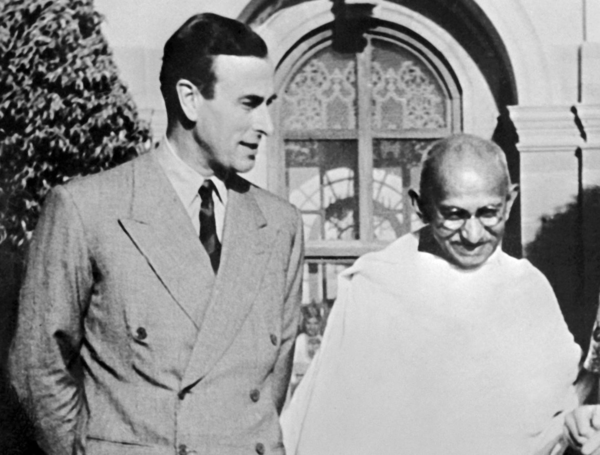
- 1948: The Peace Prize was conspicuously withheld entirely. While the committee cited "no suitable living candidate," historians widely agree it was a pósthumous tribute to Mahatma Gandhi, who had been assassinated earlier that year. The Nobel Committee has since expressed deep regret that Gandhi was never officially honored while alive.
- 2011: Canadian immunologist Ralph Steinman was awarded the Nobel Prize in Medicine. Tragically, the committee was unaware that Steinman had succumbed to pancreatic cancer three days prior. Because the decision had been made in good faith before his death—and without the committee knowing he had passed—the Nobel Foundation made a historic exception and allowed him to keep the award.
Extremes of Age: From Youth to Longevity
The Nobel lifecycle spans almost the entirety of human existence:
- Malala Yousafzai (2014): At just 17 years old, the Pakistani activist became the youngest-ever Nobel laureate for her fearless defense of girls’ education.
- Lawrence Bragg (1915): Holding the record for the sciences, Bragg was only 25 when he shared the Physics prize with his father for work he initiated at age 21.
- John B. Goodenough (2019): At the staggering age of 97, the American materials scientist won the Chemistry prize for developing lithium-ion batteries, proving that intellectual output can peak at the twilight of life.
3. Supporting Data: The Persistent Gender Gap
Beyond the human-interest stories of cells and ages lies a stark quantitative reality: the glaring disparity in gender representation among laureates.
Out of more than 630 Nobel Prizes awarded since 1901, fewer than 11 percent—roughly 68 prizes—have been awarded to women. While the proportion of female laureates has ticked upward modestly over the past decade, the structural gap remains particularly pronounced within the hard sciences.

| Scientific Field | Total Laureates (Approx.) | Female Laureates | Percentage |
|---|---|---|---|
| Physics | 230 | 5 | ~2.1% |
| Chemistry | 200 | 8 | ~4.0% |
| Medicine | 232 | 14 | ~6.0% |
| Economics | 99 | 3 | ~3.0% |
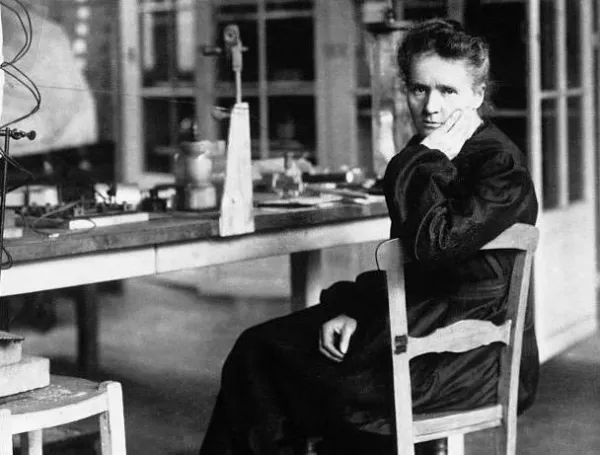
This imbalance persists despite the foundational legacy of the awards. Fittingly—and ironically—the very first person in history to win two Nobel Prizes was a woman: Marie Curie, who captured the Physics prize in 1903 and the Chemistry prize in 1911.
4. Official Responses and Institutional Stance
Faced with mounting scrutiny over historical exclusions, geographic bias, and gender imbalances, the various Nobel committees have consistently addressed their critics through structural adjustments rather than ideological quotas.
Rejecting Quotas, Reforming Nominations
Leadership within the Royal Swedish Academy of Sciences and the Norwegian Nobel Committee have repeatedly and explicitly rejected the implementation of demographic quotas. Committees maintain that doing so would compromise the foundational meritocratic principle established by Alfred Nobel.

Instead, the academies have focused on the "top of the funnel": the nomination process. In recent years, secret voting bodies have actively encouraged universities, research institutions, and past laureates worldwide to broaden their scope when nominating candidates. They have systematically urged nominators to look beyond traditional Western academic strongholds and to actively search out overlooked female researchers and scientists from the Global South.
"Our goal is not to fill a quota, but to ensure that our blinders are removed," a former committee secretary noted during a retrospective review of the nomination guidelines. "The history of science is filled with overlooked women and marginalized thinkers. Our mandate is to correct those omissions through rigorous peer review, not tokenism."
5. Implications: What the Nobel’s Humanity Tells Us About Global Society
The quirks, controversies, and institutional evolutions of the Nobel Prizes carry profound implications for how the world views authority, science, and morality in the 21st century.

First, the presence of empty chairs and prison cells at peace ceremonies serves as a blunt reminder that the pursuit of justice is inherently dangerous. Authoritarian regimes may lock away dissidents like Carl von Ossietzky, Liu Xiaobo, and Narges Mohammadi, but the Nobel platform transforms their isolation into a global megaphone. It underscores that peace is rarely a gift from the powerful; it is an ongoing struggle waged by individuals willing to endure state persecution.
Second, the shifting age brackets—from Malala Yousafzai at 17 to John B. Goodenough at 97—challenge linear notions of human potential. They signal to the global academic community that profound breakthroughs are not bound by institutional career paths or conventional life stages.
Finally, the agonizingly slow closing of the gender gap acts as a mirror for broader systemic issues within global academia and research funding. While Marie Curie shattered glass ceilings over a century ago, the low percentage of female laureates in physics, chemistry, and economics indicates that the pipeline leading to these stages remains deeply obstructed by institutional barriers.

Alfred Nobel envisioned an award that would celebrate individuals who conferred the greatest tangible benefit upon humanity. More than a century later, the enduring beauty of the Nobel Prize is that its history refuses to remain sterile or abstract. By continually absorbing the turbulence of real human existence—complete with political imprisonment, pósthumous timing controversies, generational extremes, and long-overdue reckonings with equality—the Nobel Prize remains uniquely, undeniably human.