GLOBAL AVIATION — In an industry defined by fierce competition, shifting geopolitical landscapes, and ever-evolving passenger expectations, the definitive verdict on the world’s finest carriers has officially been delivered. The results of the prestigious 2026 World Airline Awards, widely regarded as the "Oscars of the aviation industry," have been announced, offering a fascinating look at which airlines truly mastered the art of global travel over the past year.
Unlike industry accolades determined by closed-door panels of aviation executives or technical judges, the Skytrax rankings remain the gold standard of consumer-driven evaluation. Built entirely upon a massive, months-long global passenger satisfaction survey, the results reflect the raw, unfiltered experiences of everyday travelers navigating the post-pandemic skies.
This comprehensive report details the methodology behind the 2026 results, provides a complete breakdown of the top 10 carriers, explores the chronological evolution of the awards, analyzes supporting data from the survey, highlights official statements from industry leaders, and assesses the broader implications for the future of global commercial aviation.
1. Main Facts: The Methodology Behind the 2026 Rankings
To understand the weight of the 2026 World Airline Awards, one must examine the rigorous mechanics of how the data is gathered, vetted, and analyzed. Conducted by Skytrax—a UK-based international air transport rating organization—the survey for this year’s edition ran continuously from September 2025 through August 2026.
Scope and Participation
Global Reach: The open online survey attracted responses from travelers representing over 100 nationalities.
Industry Scale: More than 300 airlines from across the globe were evaluated during the voting period.
Multi-Facet Evaluation: Passengers were asked to grade carriers across dozens of Key Performance Indicators (KPIs) spanning the entire journey, including airport ground services, check-in efficiency, boarding procedures, cabin cleanliness, seat comfort, catering, inflight entertainment, and staff hospitality.
Integrity and Vetting Process
To ensure absolute impartiality, Skytrax enforces a strict auditing framework:
No Pay-to-Play: Participation in the survey is entirely voluntary. Airlines are barred from paying fees to secure nominations, and voters receive no financial or material incentives to cast ballots.
Fraud Detection: Following the closure of the survey window, independent data analysts scrub the dataset to eliminate duplicate IP addresses, automated bot submissions, and flagged fraudulent entries.
Size Ponderation: Recognizing that a regional carrier operating narrowbody jets cannot fairly be compared on raw volume to a massive mega-carrier with widebody flagships, Skytrax applies a balancing formula. This normalization process ensures that airlines of all sizes—from boutique carriers to massive intercontinental alliances—compete on a level playing field focused on service quality relative to their operational model.
2. Chronology: The Evolution of Excellence (1999–2026)
The World Airline Awards did not achieve their current cultural and corporate significance overnight. Their history reflects the dramatic transformations of commercial aviation over the last quarter-century.
The Inception (1999)
Launched at the cusp of the new millennium, Skytrax established the World Airline Awards in 1999 with a singular mission: to give the flying public a direct voice in evaluating commercial airline standards. In an era before social media and real-time review aggregators, the annual ranking became the first truly global consumer metric in aviation.
The Era of Transformation (2000–2019)
Throughout the 2000s and 2010s, the awards tracked seismic shifts in the industry:
The rise of ultra-long-haul travel and the dominance of Gulf carriers (Qatar Airways, Emirates, Etihad).
The modernization of cabins, transitioning from basic seatback screens to touch-screen on-demand entertainment and high-speed satellite Wi-Fi.
The fierce battle for premium real estate in the skies, giving birth to ultra-luxurious First Class suites and revolutionary Business Class concepts like Qatar’s Qsuite.
Resilience and the Modern Era (2020–2026)
The COVID-19 pandemic temporarily disrupted global aviation, altering passenger priorities. Hygiene, biosecurity, contactless technology, and flexible booking policies briefly overshadowed traditional metrics of luxury and catering.
By 2025 and 2026, as global passenger volumes not only recovered but surpassed pre-2019 peaks, the Skytrax survey returned its focus to holistic travel experiences. The 2026 awards highlight how top-tier airlines successfully adapted to structural pilot shortages, supply chain delays in aircraft manufacturing, and surging passenger demand while elevating sustainability and digital integration.
3. Supporting Data: The 2026 World’s Top 10 Airlines
The culmination of millions of verified passenger votes yielded a 2026 "Top 10" list dominated by Asian and Middle Eastern powerhouses, alongside select European and North American stalwarts. Here is the complete breakdown of the world’s finest carriers for 2026, ranked from tenth to first:
10. Korean Air
Securing the tenth position, South Korea’s flagship carrier continues to impress international travelers. Operating across 44 countries, Korean Air excels not only in passenger transport but also in cargo and specialized aviation services. Voters heavily praised the airline for its seamless transfer procedures at Incheon International Airport, its meticulous cabin upkeep, and its globally acclaimed catering, which blends traditional Korean cuisine with Western fine dining options.
9. Japan Airlines (JAL)
Ranking ninth, Japan Airlines remains a masterclass in cultural hospitality (omotenashi). Operating out of major hubs like Tokyo Haneda and Narita, JAL was cited by passengers for its exceptionally attentive cabin service, intuitive seating designs in both economy and premium cabins, and a punctuality record that is the envy of the global industry.
8. Hainan Airlines
As the highest-ranked mainland Chinese carrier on the list, Hainan Airlines holds the eighth spot. Known for its extensive domestic network integrated with key international routes linking China to Europe, North America, and the South Pacific, Hainan has built a loyal passenger base through warm, personalized service and spacious cabin configurations on its widebody fleet.
7. Air France
Representing European aviation excellence at seventh place, Air France capitalizes on its robust dual-hub operation centered around Paris-Charles de Gaulle and its powerful integration within the Air France-KLM group. Passengers routinely score Air France high on the culinary front, noting that the airline treats dining as an extension of French gastronomy, paired with an extensive wine list curated by world-renowned sommeliers.
6. Emirates
Synonymous with global connectivity, Dubai-based Emirates takes the sixth spot. Operating an all-widebody fleet consisting entirely of Airbus A380s and Boeing 777s, Emirates is a favorite among long-haul travelers. Voters highlighted the carrier’s industry-leading ice inflight entertainment system—offering thousands of channels of movies, TV shows, and live sports—as well as the unmatched scale of its global route network connecting six continents.
5. Turkish Airlines
Claiming the fifth position, Turkish Airlines boasts one of the most geographically diverse route networks in aviation, serving over 300 cities worldwide. Centered at its massive new mega-hub in Istanbul, the airline won high marks for its award-winning "Flying Chef" service in business class, comfortable seating, and an expansive lounge network that redefines airport hospitality.
4. ANA All Nippon Airways
Japan’s largest airline by revenues and fleet size secures the fourth spot. ANA is widely celebrated for its domestic efficiency and its sophisticated international long-haul product. Travelers frequently single out ANA for the pristine condition of its aircraft cabins, innovative seat designs that maximize personal space, and a deeply ingrained corporate culture of courtesy and safety.
3. Cathay Pacific Airways
Rounding out the podium in third place, Hong Kong’s hometown carrier demonstrates a powerful rebound. As a founding member of the oneworld alliance, Cathay Pacific provides stellar connectivity across Asia, North America, Europe, Africa, and Australia. Passengers lauded the airline for its sophisticated lounge offerings in Hong Kong, refined culinary programs, and an exceptionally professional, multilingual cabin crew.
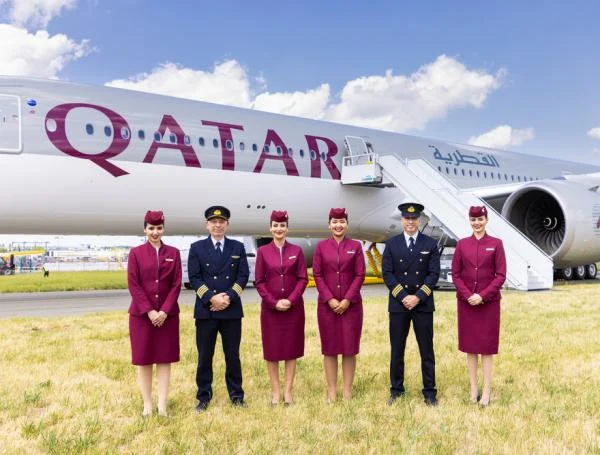
2. Qatar Airways
Securing the runner-up position, Qatar Airways continues to set the global benchmark for luxury and operational execution. Headquartered in Doha at Hamad International Airport, Qatar Airways earned rave reviews for the peerless comfort of its modern fleet, its innovative Qsuite business class product (often cited as the best in the industry), world-class dining on demand, and immaculate attention to detail from ground staff to flight attendants.
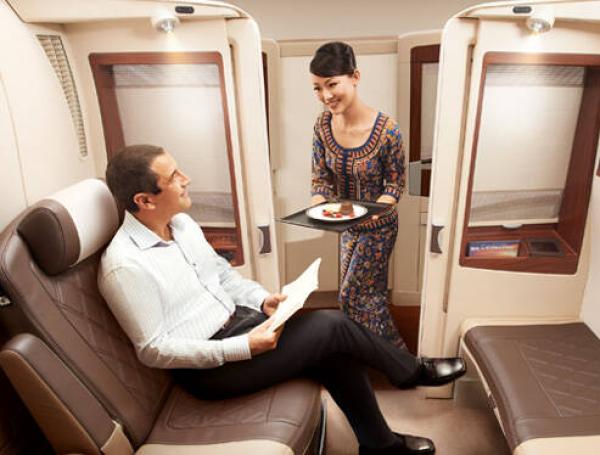
1. Singapore Airlines
Claiming the coveted crown as the World’s Best Airline for 2026, Singapore Airlines reclaims the top step of the podium. Renowned globally for its legendary Singapore Girl service, the carrier excelled across almost every survey category. From its revolutionary First Class suites featuring sliding doors and standalone beds to its robust economy class amenities, gourmet culinary selections, and the world-class KrisWorld entertainment ecosystem, Singapore Airlines proved unbeatable in the eyes of global travelers.
4. Official Responses and Industry Perspectives
The announcement of the 2026 Skytrax awards prompted celebratory statements from executive suites around the globe, alongside reflections from aviation analysts regarding the state of the industry.
Singapore Airlines Celebrates the Top Honor
Upon accepting the award, Singapore Airlines CEO Goh Choon Phong attributed the victory to the relentless dedication of the airline’s workforce:
"Winning the title of the World’s Best Airline in 2026 is a profound validation of our employees’ hard work, resilience, and unwavering commitment to service excellence. Navigating the complexities of modern aviation requires constant innovation without ever losing sight of the human element. This award belongs to every single staff member—from our engineering teams and ground agents to our pilots and cabin crew—who ensures that every journey with Singapore Airlines is exceptional."
Skytrax CEO Emphasizes Consumer Trust
Edward Plaisted, Chief Executive Officer of Skytrax, underscored the significance of a passenger-driven award in an era of corporate marketing noise:
"The World Airline Awards remain unique because they are driven entirely by the travelers themselves. In 2026, we witnessed heightened competition as airlines invest heavily in customer-facing technology, sustainability initiatives, and cabin retrofits. Singapore Airlines’ achievement in securing the top spot reflects their consistent ability to anticipate passenger needs and deliver an elite travel experience across all classes of service."
5. Implications for the Global Aviation Industry
The 2026 Skytrax results do more than just hand out trophies; they act as a strategic compass for the future of global commercial aviation. Several critical trends emerge from this year’s data:
1. The Elevation of the Economy Passenger Experience
While elite suites and business class flat beds dominate marketing campaigns, the 2026 survey data reveals that winning airlines achieved their status by drastically improving the economy class experience. Carriers that failed to invest in ergonomic seating, enhanced meal options, and reliable Wi-Fi for economy travelers saw their rankings slip. The message from the market is clear: the baseline travel experience must be dignified and comfortable.
2. Hub Dominance and Airport Integration
A recurring theme among the top 10 airlines (such as Singapore Airlines at Changi, Qatar Airways in Doha, and Turkish Airlines in Istanbul) is their symbiotic relationship with world-class mega-hubs. Passengers increasingly judge an airline not just by the time spent in the air, but by the seamlessness of the entire transit ecosystem—including transfer efficiency, lounge quality, and baggage handling.
3. Sustainability as a Competitive Frontier
Though not explicitly a standalone category in passenger scoring, eco-efficiency and modern fleets correlate strongly with high passenger satisfaction. Newer aircraft mean quieter cabins, better air filtration, advanced mood lighting, and lower carbon footprints. As environmental consciousness grows among global travelers, airlines that aggressively modernize their fleets with next-generation fuel-efficient aircraft are indirectly reaping rewards in customer satisfaction surveys.
Looking Ahead
As the aviation sector looks toward the remainder of the decade, the bar has been set decisively high. For the reigning champions, the challenge lies in maintaining these immaculate standards amidst rising operational costs. For challengers, the 2026 rankings provide a clear roadmap: listen to the passenger, invest in the human touch, and never compromise on safety or service.
Main Facts: The Sacred Geography of Lhasa and the Architectural Marvel of the Potala Palace Perched on the towering plateaus of the Himalayas at an altitude of 3,700 meters above sea level, Lhasa—the capital of…
The conclusion of the 2026 FIFA World Cup has left an indelible mark not only on the annals of sporting history but, more significantly, on the structural economic fabric of Mexico. As the dust settles…
BOGOTÁ, COLOMBIA — The bicycle has long evolved beyond its rudimentary definition as a simple mode of transport. Today, it serves as a lifestyle, an ecological statement, and an immersive lens through which urban explorers…