BRASÍLIA — In a high-stakes political manoeuvre just weeks before a fiercely contested presidential election, the Brazilian government has announced a significant increase to its flagship social welfare program, Bolsa Família. The move, designed to bolster the vulnerable segments of the population amid economic headwinds, immediately sent shockwaves through Latin America’s largest economy, rattling financial markets, weakening the Brazilian real, and intensifying fierce debates over the nation’s rapidly deteriorating public finances.
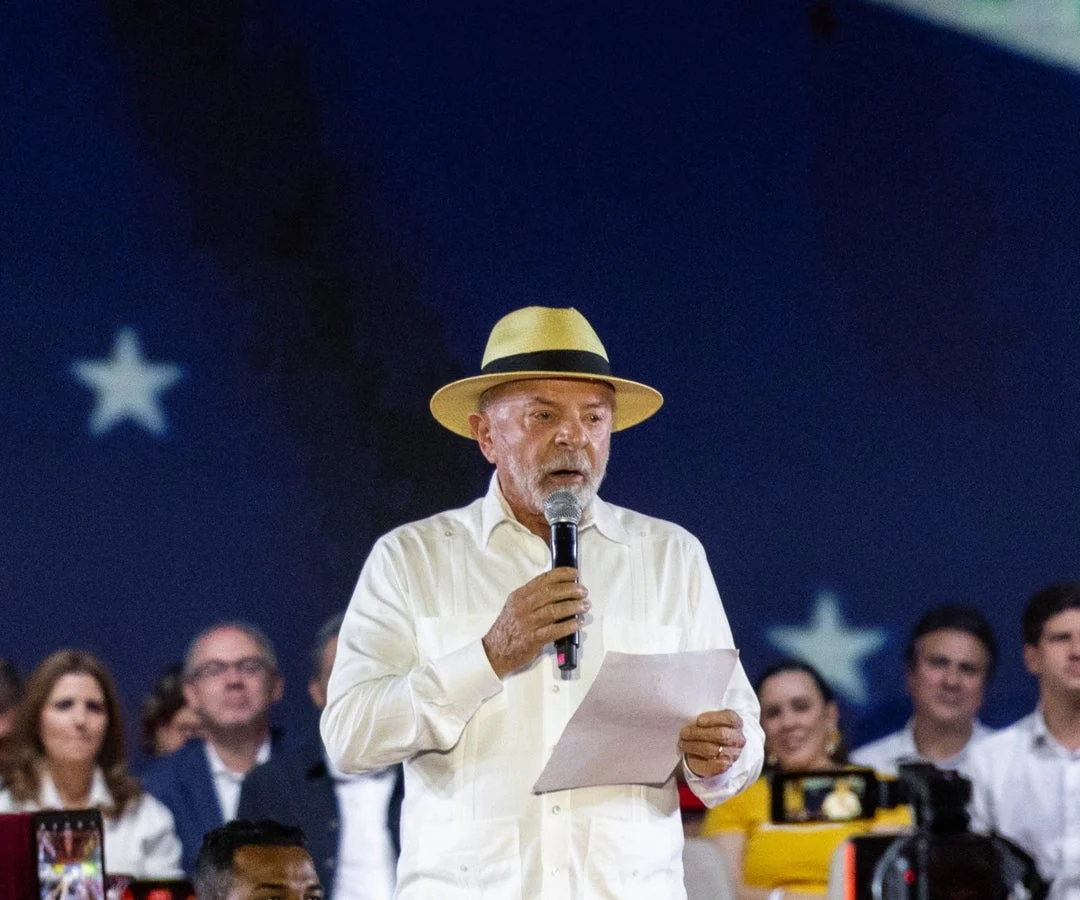
The announcement was made during an official ceremony in Brasília by Planning Minister Bruno Moretti, standing alongside President Luiz Inácio Lula da Silva. Under the revised terms, the minimum monthly welfare payout will rise from the current 600 reals to 691 reals (approximately US$133.85). While the administration insists the measure is a technical adjustment permitted under the program’s framework to combat inflation and protect impoverished families, political analysts and market participants view the timing as a calculated, high-impact electoral strategy.
As Brazil barrels toward a neck-and-neck October ballot that pits the incumbent leftist leader against a formidable right-wing challenger, the intersection of populist social spending and macroeconomic stability has once again become the central battleground of national politics.
1. Main Facts: The Bolsa Família Expansion and Its Immediate Fallout
The core of the government’s announcement centres on the upward revision of the Bolsa Família payouts, Brazil’s cornerstone conditional cash transfer initiative that supports millions of low-income households.
- The Benefit Increase: The minimum monthly transfer will increase from 600 reals to 691 reals (US$133.85).
- Fiscal Cost: According to Planning Minister Bruno Moretti, the policy will require 5.8 billion reals for the remainder of the current year and is projected to expand to 22 billion reals by 2027.
- Political Timing: The adjustment comes merely weeks before a polarising presidential election where opinion polls indicate a strict technical dead-heat between President Luiz Inácio Lula da Silva and his right-wing opponent, Flávio Bolsonaro.
- Market Reaction: Domestic financial markets reacted swiftly and negatively. The Brazilian real slumped to its intraday low, swap rates climbed sharply, and the benchmark Ibovespa stock index tumbled by as much as 1.2% before recovering a portion of its losses.
- Official Justification: The administration maintains that the adjustment is entirely legal, adheres to statutory inflation-compensation mechanisms, and is fully covered by fiscal margins generated through internal spending reviews.
2. Chronology: Path to the Announcement and Escalating Tensions
To understand how Brazil arrived at this critical juncture, it is essential to trace the sequence of events leading up to the policy shift and the escalating political campaign:
- Early 2023 – Late 2024: President Lula’s administration attempts to navigate a sluggish post-pandemic economic recovery while grappling with a widening nominal fiscal deficit, which hovers near 10% of Gross Domestic Product (GDP). Public debt mounts due to persistent double-digit interest rates and elevated public spending.
- Mid-2025: Speculation mounts regarding the political landscape ahead of the upcoming presidential race. Lula’s early lead in opinion polls begins to evaporate, weighed down by public fatigue over economic strains and a series of corruption allegations involving members of his administration and family circle.
- September 2025: A high-profile internal crisis erupts within Brazil’s Supreme Federal Tribunal (STF), thrusting the judicial branch into the centre of a massive banking scandal. Flávio Bolsonaro, the eldest son of former president Jair Bolsonaro and the leading right-wing candidate, leverages the judicial turmoil to divert attention away from a separate federal police investigation concerning his own alleged ties to the central figures of the banking probe.
- Early October 2025: An AtlasIntel poll published exclusively by Bloomberg News reveals a statistical deadlock. In a projected second-round runoff, both Lula and Flávio Bolsonaro capture roughly 47% of the vote each. In a hypothetical first round, Lula edges ahead with 44% compared to Bolsonaro’s 42%.
- Mid-October 2025: Planning Minister Bruno Moretti and Finance Ministry officials formally announce the Bolsa Família minimum benefit increase from 600 to 691 reals during a public event in Brasília with President Lula.
- Immediate Post-Announcement: Financial markets react with immediate volatility. Currency traders drive the real down, swap rates surge, and economists issue stark warnings regarding the long-term sustainability of Brazil’s fiscal framework.
3. Supporting Data: Economic Indicators and Polling Realities
The socioeconomic and political backdrop of Brazil is defined by tight margins, heavy debt burdens, and a deeply polarized electorate. The interplay between hard economic metrics and voter sentiment underscores the high stakes of the current political cycle.
Fiscal Indicators and Market Metrics
- Nominal Deficit: Brazil’s fiscal deficit remains stubbornly high, sitting at approximately 10% of GDP, driven by structural spending commitments and high borrowing costs.
- Interest Rates: Persistent double-digit interest rates have compounded the cost of servicing public debt, severely limiting the state’s fiscal maneuverability.
- Cost of the Measure: The 5.8 billion real expenditure for the current year, scaling up to 22 billion reals by 2027, represents a notable expansion in baseline mandatory spending at a time when economists are demanding austerity.
- Market Volatility: The immediate 1.2% drop in the Ibovespa and the depreciation of the real reflect deep-seated investor anxiety over fiscal discipline.
Polling Data (AtlasIntel / Bloomberg News)
- First-Round Projections:
- Luiz Inácio Lula da Silva: 44%
- Flávio Bolsonaro: 42%
- Second-Round Runoff Projections:
- Luiz Inácio Lula da Silva: 47%
- Flávio Bolsonaro: 47%
The data illustrates an intensely polarized country where every policy decision is heavily scrutinized for its electoral utility. With margins this tight, any measure capable of shifting public opinion among low-income voters carries immense political weight.
4. Official Responses: Government Justifications Versus Market Critiques
The divergence between the official narrative presented by the Planalto Palace and the reactions from financial analysts and market strategists highlights a profound conflict between social policy goals and macroeconomic orthodoxy.
The Government’s Stance
Administration officials have aggressively defended the timing and mechanics of the Bolsa Família adjustment, denying any explicit connection to the electoral calendar.
- Dario Durigan (Ministry of Finance): Explained that the adjustments are fully authorized under the structural parameters of the welfare program, which mandates periodic evaluations to protect beneficiaries from the erosive effects of inflation.
- Bruno Moretti (Ministry of Planning): Insisted that the government possesses the necessary fiscal room to absorb the multi-billion-real cost through internal spending reviews and targeted budget optimization. He emphasized that the policy complies fully with electoral laws, which prohibit the creation of entirely new assistance programs during campaign windows but permit statutory adjustments to existing initiatives.
- President Luiz Inácio Lula da Silva: Took to social media to champion the initiative, framing it as an indispensable moral and social obligation. "Se trata de que el gobierno cuide de quienes lo necesitan, luche contra el hambre, reduzca la pobreza y crea las condiciones para que millones de brasileños tengan más ingresos, oportunidades y una vida mejor," Lula posted, reinforcing his historic political identity as a champion of the working class.
The Market and Analytical Backlash
Conversely, economic analysts, portfolio managers, and trading desks have condemned the decision as fiscally irresponsible and politically transparent.
- Marcio Riauba (StoneX Bank): Warned that the program adjustment will deliver a severe blow to the country’s fiscal credibility. "El ajuste al programa Bolsa Familia tendrá un impacto significativo en cuanto al empeoramiento de las perspectivas fiscales," Riauba stated bluntly. "Lo que ya es malo, empeorará."
- Murilo Arruda (Morada Capital): Highlighted the dual threat of the measure, pointing to both the economic deterioration and the unfair electoral advantage it confers. "La decisión genera un mayor riesgo electoral, ya que las medidas con gran atractivo popular podrían ayudar a Lula a recuperar la aprobación. En resumen, un panorama fiscal más débil y un contexto electoral que podría volverse menos favorable para los mercados."
5. Implications: Navigating a Fragile Fiscal and Political Future
As Brazil moves deeper into the final weeks of the presidential campaign, the ramifications of the Bolsa Família benefit increase extend far beyond the immediate market reaction. The policy touches upon structural questions regarding governance, institutional stability, and the long-term economic health of Latin America’s largest democracy.
Fiscal Sustainability and Institutional Credibility
For international investors and domestic ratings agencies, the core concern is not merely the immediate cost of 5.8 billion reals, but the precedent it sets. Brazil’s public accounts are already under immense strain, with debt-to-GDP ratios drawing cautious glances from major credit rating agencies. By expanding mandatory spending obligations ahead of an election, critics argue that the administration is sacrificing long-term macroeconomic stability for short-term political survival.
Furthermore, the simultaneous convergence of fiscal expansion, a high-stakes judicial scandal involving the Supreme Federal Tribunal, and a bruising political rivalry creates a volatile cocktail of uncertainty. Investors have repeatedly called for credible, binding fiscal anchors from all political factions. Instead, the current climate suggests that fiscal discipline will likely take a backseat to populist campaigning, regardless of who ultimately secures victory in October.
The Social Imperative Versus Economic Realities
From the perspective of the administration’s supporters, however, framing the debate purely through the lens of market orthodoxy ignores the harsh reality of poverty and income inequality in Brazil. Millions of households depend on Bolsa Família to meet basic nutritional and living requirements. In an environment marked by persistent inflationary pressures and sluggish wage growth among the poorest strata, proponents argue that failing to adjust the benefits would amount to an implicit devaluation of social safety nets.
For President Lula, whose political legacy is inextricably linked to poverty alleviation programs established during his earlier terms in office, reinforcing the social contract is viewed as both an ethical duty and an electoral necessity. Yet, whether this strategy will succeed in breaking the deadlock with Flávio Bolsonaro remains to be seen.
The Road Ahead
With the first round of voting rapidly approaching, the Brazilian electorate faces a profound choice between competing visions for the nation’s future. On one side stands an incumbent administration attempting to shore up its base through increased social spending, despite warnings of fiscal peril. On the other stands a resurgent right-wing opposition capitalizing on public discontent, institutional scandals, and economic anxiety.
Ultimately, whoever assumes the presidency in January will inherit a daunting economic landscape: a bloated public deficit, deeply anxious financial markets, and a polarized society demanding both fiscal responsibility and effective social protection. How the next leader balances these competing pressures will shape Brazil’s economic trajectory for years to come.