WASHINGTON / HARRISBURG — Public health officials in Pennsylvania have confirmed two additional fatalities associated with measles, bringing the state’s death toll to four for the year. This grim milestone unfolds against the backdrop of a relentless national resurgence that has already surpassed total infections recorded throughout the previous year.
The renewed spread of a virus once declared eliminated in the United States has ignited intense debate among federal health authorities, state leadership, and the scientific community. As hospitalizations mount and vaccination rates face unprecedented headwinds from shifting political narratives, public health experts are grappling with a crisis that threatens decades of immunization progress.
Main Facts of the Outbreak
The Pennsylvania Department of Health released a formal statement confirming that two more residents have succumbed to measles. According to health officials, neither individual had received the measles, mumps, and rubella (MMR) vaccine.
- Geographic Distribution: One of the deceased resided in Jefferson County, while the other lived in Mifflin County. To protect patient privacy, state health authorities have withheld further identifying details.
- Statewide Impact: Pennsylvania has now reported nearly 700 confirmed cases during the current outbreak. More than 130 individuals have required hospitalization, the vast majority of whom were similarly unvaccinated.
- National Context: The cumulative impact of these deaths places the United States at its highest mortality level from measles in decades. In July of this year, total national infections officially surpassed the figures recorded for the entirety of the previous year.
The reemergence of measles in Pennsylvania marks a dramatic shift for a state that had not recorded a single measles-related fatality in 35 years prior to this summer. Public health agencies emphasize that the current trajectory underscores the extreme contagiousness of the virus: approximately nine out of ten unvaccinated individuals who come into contact with an infected person will contract the disease. This exposure can rapidly cascade into severe medical complications, including pneumonia, acute encephalitis (inflammation of the brain), and death.
Chronology of the Resurgence
To understand the scale of the current public health crisis, epidemiologists look back at the historical timeline of measles transmission and political intervention in the United States:
- 1989–1991: The United States experienced a severe nationwide measles epidemic, during which the Centers for Disease Control and Prevention (CDC) recorded 166 suspected measles-related deaths. This crisis ultimately spurred aggressive community immunization campaigns.
- 2015: Following decades of high vaccination coverage that successfully drove down transmission rates, a rare fatality occurred, marking one of the few isolated deaths from the virus in the 21st century prior to recent years.
- Previous Year: National tracking revealed three deaths attributable to measles, serving as an early warning sign of eroding herd immunity.
- Summer of This Year: Pennsylvania recorded its first measles deaths in three and a half decades. The state’s case count began an exponential climb, eventually pushing past 700 infections.
- August: Following initial state notifications regarding the first summer deaths, federal health leadership openly questioned the validity of the reports, suggesting political motivations behind the data—a move that shocked career epidemiologists.
- Recent Weeks: Pennsylvania health authorities formally notified the CDC of two additional fatalities. Federal agencies dispatched ongoing support evaluations while state laboratories continued processing hundreds of active cases.
Supporting Data and Epidemiological Analysis
The mathematical realities of measles transmission leave little room for ambiguity among infectious disease specialists. Because the virus is airborne and can linger in a room for up to two hours after an infected person has departed, community protection relies heavily on high herd immunity thresholds—typically around 95% vaccination coverage.
When coverage dips even slightly below this threshold, outbreaks ignite with extraordinary speed. Data from the Pennsylvania Department of Health highlights a stark divide between vaccinated and unvaccinated populations within the current cluster of nearly 700 cases:
- Hospitalization Rates: Over 130 patients have been admitted to regional hospitals, placing a severe strain on local healthcare infrastructure.
- Immunization Status: Overwhelmingly, hospitalized patients and those suffering severe complications share a common denominator: a complete lack of prior vaccination.
- Historical Comparisons: While the 1989–1991 epidemic remains the benchmark for modern U.S. measles morbidity, the velocity of the current spread in individual states like Pennsylvania has alarmed epidemiologists who thought endemic transmission was a relic of the past.
The CDC maintains active communication with Pennsylvania health officials. A federal spokesperson confirmed that while state departments retain primary jurisdiction over local health tracking, the CDC stands ready to deploy additional on-the-ground epidemiologists to assist with contact tracing, containment strategies, and clinical resource allocation should formal requests be made.
Official Responses and Political Friction
The unfolding health emergency has intensified a turbulent debate over national vaccine policies, pitting career public health scientists against political appointees.
The outbreak has accelerated amid sweeping administrative changes led by U.S. Department of Health and Human Services (HHS) leadership under Secretary Robert F. Kennedy Jr. A prominent critic of conventional vaccine policies for years, Kennedy has frequently promoted unverified alternative treatments and characterized mandatory or standard immunization protocols as matters of "personal choice." Furthermore, he has propagated scientifically discredited claims regarding vaccine ingredients.
Tensions boiled over when Pennsylvania reported its initial summer deaths. Secretary Kennedy publicly cast doubt on the veracity of the reports, implying that the administration of Democratic Governor Josh Shapiro had manufactured the casualty figures for political leverage.
Governor Shapiro fired back sharply, accusing federal leadership of actively undermining public trust in life-saving immunizations during an active health emergency. The public disagreement within the federal-state apparatus has fueled internal anxieties among CDC personnel, many of whom have expressed growing alarm over executive skepticism regarding peer-reviewed science.
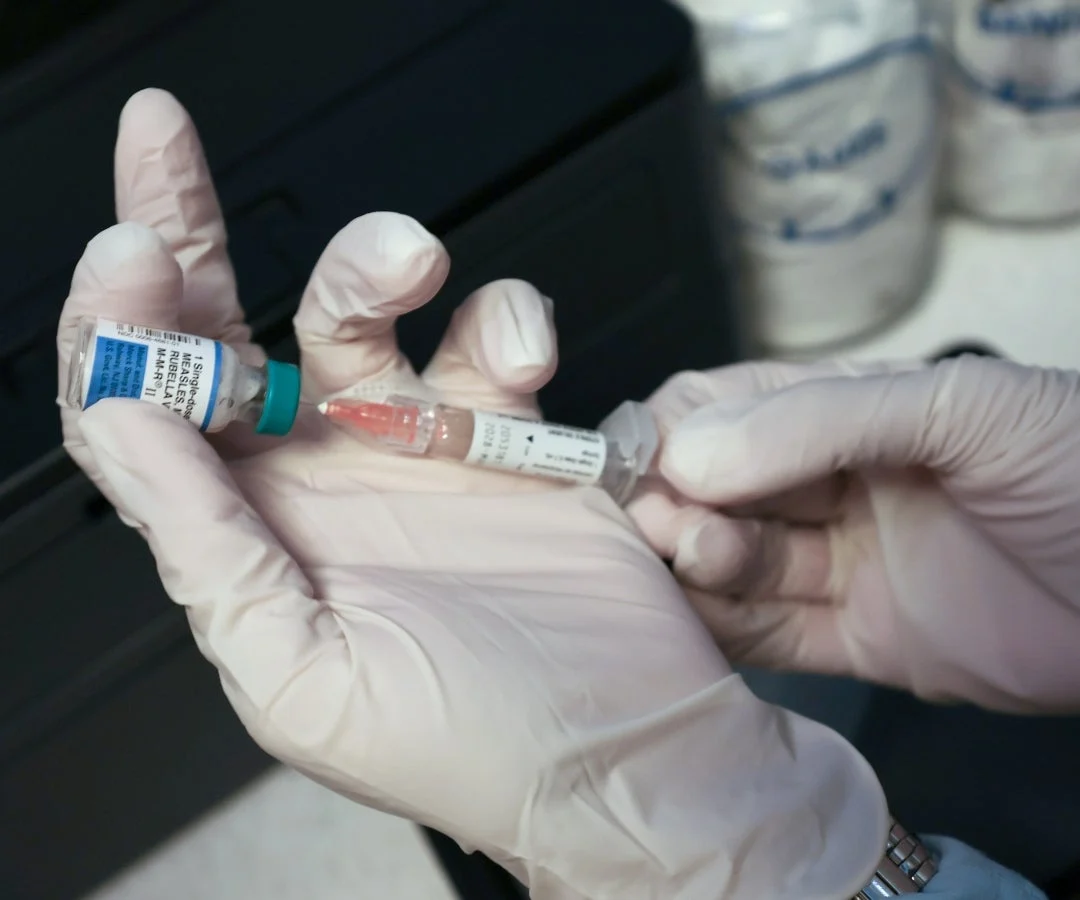
Adding to the regulatory complexity, the executive branch recently signed an administrative recommendation advising that the standard multi-disease MMR inoculation be divided into three separate doses. Medical associations and vaccine manufacturers warned that such a mandate would introduce logistical hurdles, drive up healthcare costs, and force families to endure multiple clinical visits to achieve full protection against three distinct, highly dangerous viruses.
Despite these headwinds, pockets of institutional resistance and pragmatism remain visible within the federal health apparatus. During a high-stakes confirmation hearing before the Senate, Chris Klomp—current senior advisor to the HHS and a nominee for second-in-command at the department—offered an unequivocal endorsement of standard immunization science.
“Without a doubt, the MMR vaccine is the most effective public health tool we have at our disposal against measles,” Klomp declared to members of the Senate panel, publicly distancing himself from the rhetoric of political leadership.
Broader Implications for Public Health
The convergence of rising infection curves, tragic fatalities, and polarizing political discourse has created a precarious landscape for American healthcare. Public health advocates warn that the erosion of vaccine confidence extends far beyond the borders of Pennsylvania, threatening to unravel herd immunity protections against other preventable childhood illnesses such as mumps, rubella, and pertussis.
As local health clinics across Pennsylvania and neighboring states work overtime to administer catch-up doses to unprotected populations, medical professionals emphasize that restoring public trust will require consistent, transparent messaging grounded strictly in empirical science. For now, the families of the four deceased Pennsylvanians—and the hundreds of others who have suffered through hospitalization—represent a stark human toll in a preventable public health crisis.