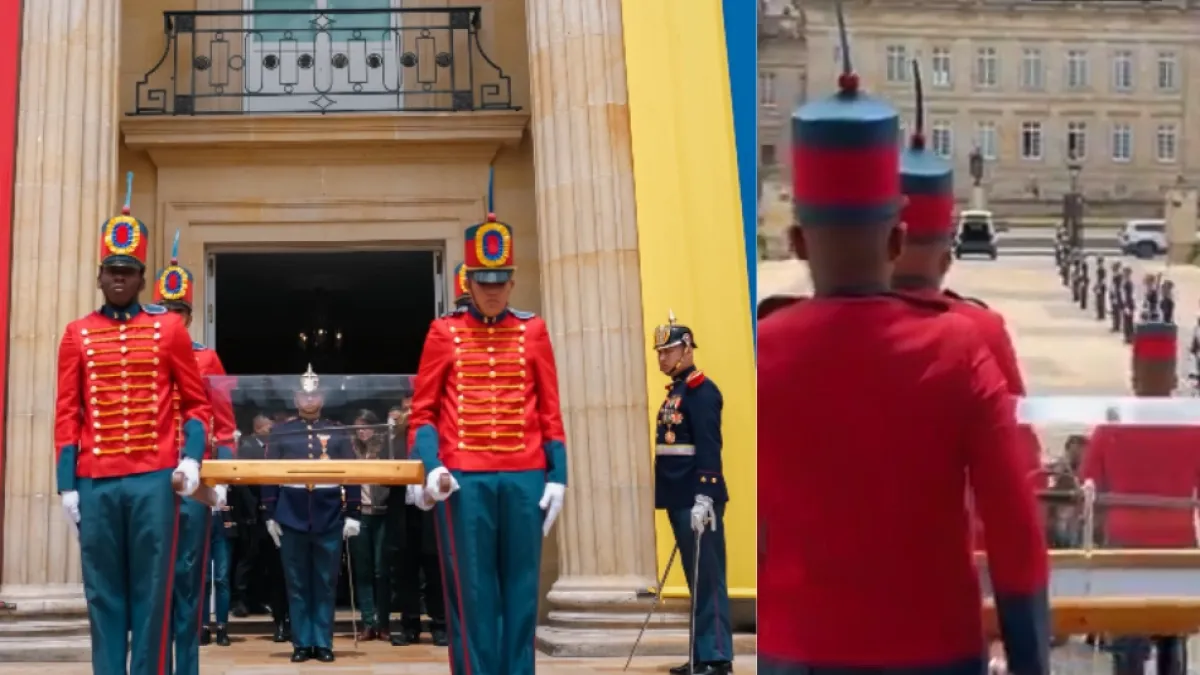
Bogotá, Colombia – July 24, 2026 – In a ceremony steeped in historical and political symbolism, the iconic sword of Simón Bolívar, the revered liberator of much of South America, was ceremoniously transferred this Friday, July 24, from the Casa de Nariño, Colombia’s presidential palace, to the Casa Museo Quinta de Bolívar in Bogotá’s historic center. The event, spearheaded by outgoing President Gustavo Petro, took place just days before the imminent presidential change of command and notably coincided with the anniversary of Bolívar’s birth, adding layers of significance to the solemn procession.
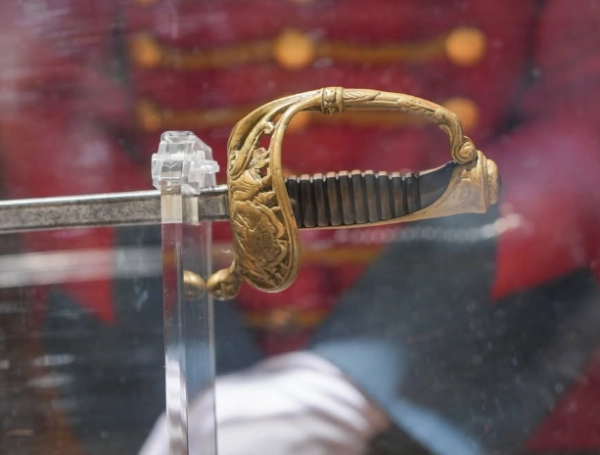
The relocation of the cherished relic, escorted with precision and honor by the Presidential Guard Battalion, represented more than a mere administrative movement of an artifact. For President Petro, a former member of the M-19 guerrilla group that famously stole the sword decades ago, its presence in the presidential palace since his 2022 inauguration has been a powerful emblem of his administration’s commitment to social justice, popular sovereignty, and a "second national independence." Its return to the museum now signals the symbolic closing of a chapter deeply intertwined with his unique political narrative and legacy.
Main Facts of the Symbolic Transfer
The journey of Bolívar’s sword on July 24, 2026, was meticulously planned and executed, transforming a simple relocation into a public spectacle rich with political messaging. President Gustavo Petro personally led the ceremony, emphasizing the profound significance he attributes to the artifact. The sword, which has been a constant, visible presence during his four-year tenure, was moved from its prominent display within the Casa de Nariño, the seat of executive power, to the historic Casa Museo Quinta de Bolívar. This museum, a colonial estate once inhabited by Bolívar himself, had been its home for decades before its audacious theft in 1974.
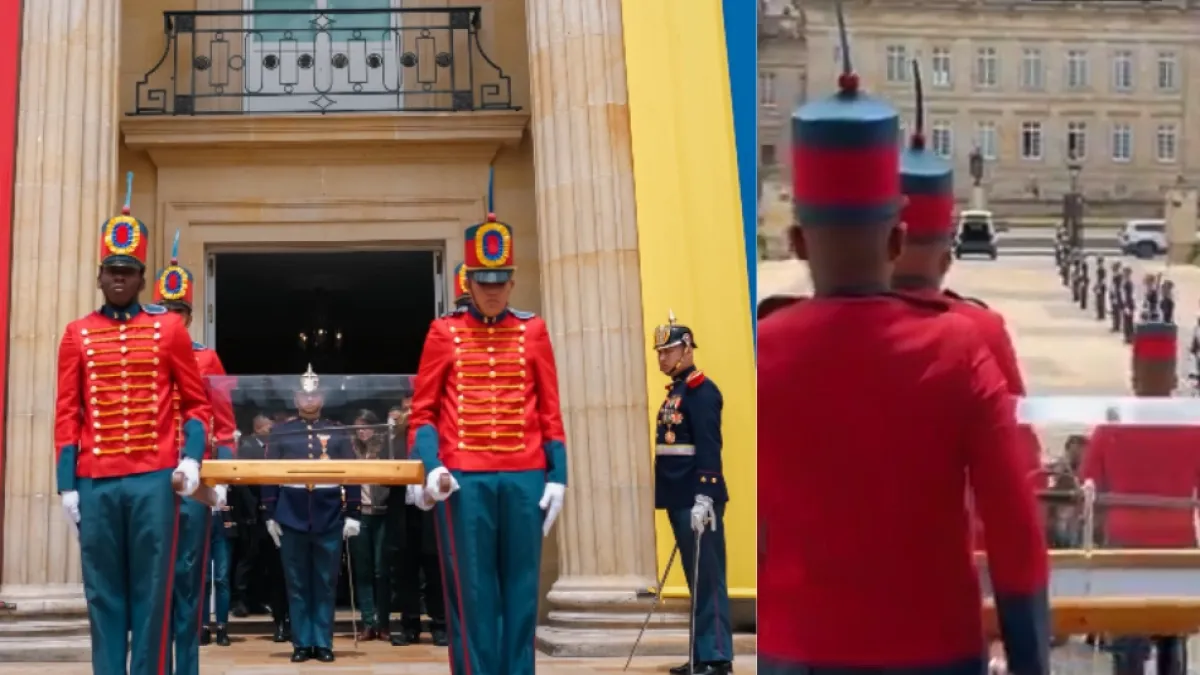
The timing of the transfer was crucial. Occurring just two weeks before the August 7 presidential handover, it served as a poignant bookend to Petro’s term. Furthermore, the selection of July 24 was deliberate, commemorating the 243rd anniversary of Simón Bolívar’s birth in Caracas in 1783. This dual timing underscored Petro’s consistent efforts to align his political agenda with Bolívar’s revolutionary ideals.
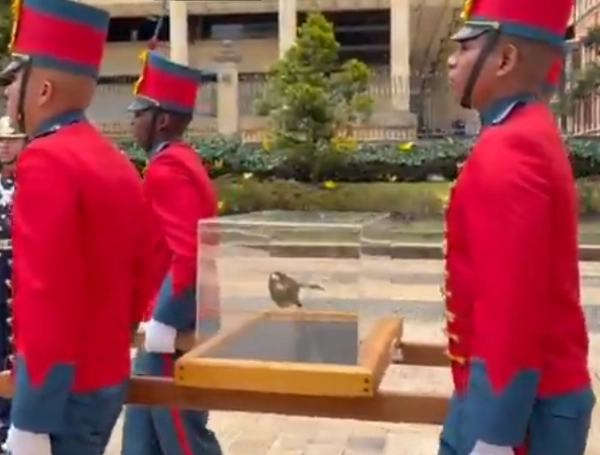
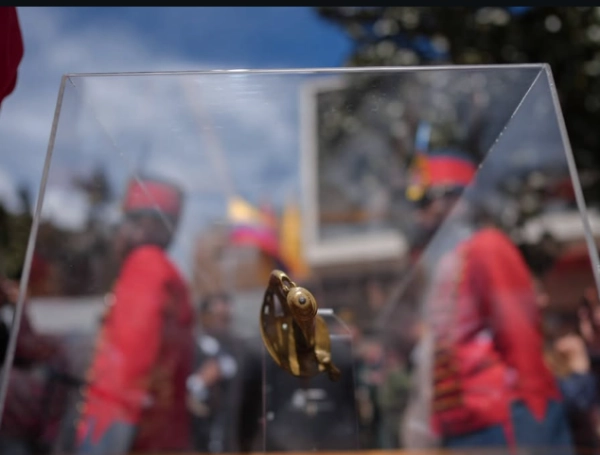
The procession itself was designed to engage the public. Citizens were invited to gather at 11:00 a.m. at the monument to Policarpa Salavarrieta, a national heroine of the Colombian independence movement, located at Carrera 2 with Calle 18. From this starting point, the official delegation and public escort traversed approximately 800 meters through the heart of Bogotá’s historic district to the Casa Museo Quinta de Bolívar. Throughout this solemn march, the sword remained under the vigilant custody of the Presidential Guard Battalion, ensuring its security and lending a formal, martial dignity to the proceedings. Upon its arrival at the museum, the sword was immediately placed back on public exhibition, reinstating its traditional role as a historical centerpiece for scholarly study and public appreciation.
A Chronology of a National Symbol
The sword of Simón Bolívar is not merely a historical artifact; it is a living symbol that has woven itself into the fabric of Colombia’s political and social history, often reflecting the nation’s tumultuous journey and ideological battles.

- 1783: Simón Bolívar is born in Caracas, Venezuela, on July 24. He would go on to become "El Libertador," leading multiple South American nations to independence from Spanish rule. His sword, a gift from the Peruvian city of Lima, became a personal emblem of his military campaigns and political vision.
- Late 19th – Mid-20th Century: After Bolívar’s death in 1830, the sword eventually finds its way to Colombia, where it becomes a treasured national heritage item. For many decades, it is housed and displayed at the Casa Museo Quinta de Bolívar, a serene colonial estate that served as Bolívar’s residence during his stays in Bogotá. It stands as a testament to his legacy and a focal point for national memory.
- January 17, 1974: The M-19 Theft: In one of the most audacious acts of political symbolism in Colombian history, the Movimiento 19 de Abril (M-19) guerrilla group breaks into the Quinta de Bolívar and steals the sword. The M-19, a left-wing nationalist movement, declared that they were "returning the sword to the people" and vowed to keep it until "the people were in power." This act instantly transformed the sword into a potent symbol of rebellion, popular struggle, and a challenge to the established order. The theft resonated deeply, linking the ideals of Bolívar with contemporary revolutionary aspirations.
- 1974-1990: The Sword in Hiding: For sixteen years, the sword remained hidden, its whereabouts a mystery to most, becoming a mythical object. It occasionally resurfaced symbolically in M-19 propaganda or communiqués, reinforcing the group’s narrative that they were the true inheritors of Bolívar’s revolutionary spirit.
- January 31, 1991: The Return: As part of the peace process that led to the M-19’s demobilization and transformation into a political party, the sword was formally returned to the Colombian state. It was a pivotal moment, symbolizing the group’s commitment to peace and its reintegration into democratic political life. The sword was subsequently returned to its rightful place in the Casa Museo Quinta de Bolívar, where it remained for the next three decades.
- August 7, 2022: Petro’s Inauguration: Gustavo Petro, a former M-19 combatant, is inaugurated as President of Colombia. In a moment that captured national and international attention, Petro made the presence of Bolívar’s sword a central demand for his inauguration ceremony. Despite initial reluctance from the outgoing President Iván Duque, Petro insisted, and the sword was brought to the Plaza de Bolívar for the event. Its presence on the balcony of the Casa de Nariño during his swearing-in was a powerful visual statement, signaling a new era and explicitly linking his presidency to the revolutionary legacy of Bolívar and, implicitly, to the M-19’s historical narrative. From this day forward, the sword remained in the Casa de Nariño, frequently featuring in Petro’s public addresses and serving as a potent symbol of his government’s ideological stance.
- July 24, 2026: Return to the Museum: As his presidency draws to a close, President Petro orchestrates the sword’s return to the Casa Museo Quinta de Bolívar. This final act, coinciding with Bolívar’s birthday and just ahead of the presidential transition, symbolically concludes the sword’s journey through his term, returning it to its institutional home while leaving an indelible mark on its historical trajectory.
Supporting Data and Contextual Deepening
The journey of Bolívar’s sword from a battlefield relic to a presidential emblem and back to a museum piece is steeped in layers of historical and political significance that demand deeper contextual understanding.
Simón Bolívar: The Architect of Nations
Simón Bolívar, "El Libertador," remains the most towering figure in South American independence. Born into Venezuelan aristocracy, he dedicated his life to liberating the continent from Spanish colonial rule, leading successful campaigns that established Gran Colombia (comprising modern-day Colombia, Venezuela, Ecuador, and Panama), Peru, and Bolivia. His vision was not merely for political independence but for a unified, republican South America, free from foreign dominance and internal tyranny. His sword, therefore, is not just a weapon but a tangible link to this monumental figure and his foundational ideals of liberty, sovereignty, and continental unity. For many, it embodies the very spirit of nation-building and the enduring struggle for self-determination.
The M-19’s Appropriation: Reclaiming a Symbol
The M-19’s theft of the sword in 1974 was a masterstroke of political theater. Unlike other guerrilla groups focused on rural insurgency, M-19 often favored urban, symbolic actions to garner attention and communicate their ideology. By stealing Bolívar’s sword, they aimed to:
- Legitimize their cause: They positioned themselves as the true inheritors of Bolívar’s revolutionary ideals, arguing that the corrupt oligarchy had betrayed the Liberator’s vision.
- Challenge the establishment: The act was a direct affront to the state, demonstrating its vulnerability and questioning its authority over national symbols.
- Mobilize popular support: They sought to ignite a sense of historical grievance and revolutionary fervor among the populace, inviting them to join the "second independence" struggle.
This act cemented the sword’s status as a contested symbol, a representation of both official history and revisionist, revolutionary narratives.
Gustavo Petro: The Nexus of Past and Present
President Gustavo Petro’s personal history is inextricably linked to the M-19. His past as a former guerrilla member, who later transitioned into democratic politics, provided a unique lens through which he viewed and utilized Bolívar’s sword. For Petro, the sword was not just an artifact; it was a living testament to the M-19’s original motivations and a powerful reminder of his own political journey from rebel to head of state.
During his presidency, Petro frequently invoked the sword as a symbol of his government’s reformist agenda, emphasizing themes of social justice, peace, and national sovereignty. He often spoke of completing Bolívar’s unfinished revolution, particularly in addressing economic inequality, environmental challenges, and the need for regional integration. His repeated use of the sword in public addresses served to connect his administration directly to a lineage of popular struggle and revolutionary change, positioning his government as the fulfillment of Bolívar’s — and by extension, the M-19’s — historical promise.
The Casa de Nariño vs. Quinta de Bolívar: Spaces of Power and Memory
The two locations involved in the transfer hold distinct but intertwined significance.
- Casa de Nariño: As the official residence and workplace of the President of Colombia, it embodies contemporary state power. The sword’s presence here during Petro’s term symbolized its integration into the highest echelons of current governance, a direct assertion of a particular political ideology within the heart of the state.
- Casa Museo Quinta de Bolívar: This historic site offers a more reflective, historical context. It is a place of memory, dedicated to preserving Bolívar’s legacy and showcasing artifacts from his era. Its return to the museum signifies a re-anchoring of the sword within its historical context, making it accessible as an educational tool rather than a direct instrument of political messaging.
The "Second Independence": Petro’s Vision
Petro’s tweet accompanying the sword’s transfer explicitly referred to "the second national independence." This concept has been a cornerstone of his political discourse. For Petro, Bolívar’s original independence liberated Colombia from Spanish colonial rule, but failed to address deep-seated internal inequalities, economic dependencies, and social injustices. The "second independence," therefore, implies a struggle against neo-colonialism, economic exploitation, climate change, and the persistent structures of inequality that he believes still plague the nation. By linking the sword’s return to this concept, Petro positioned his presidency as a crucial, albeit incomplete, step in this ongoing historical process, suggesting that the "sword will shine again" when these deeper societal transformations are achieved.
Official Responses and Public Engagement
The official communication surrounding the sword’s transfer was largely orchestrated by President Gustavo Petro himself, who utilized his social media platforms to amplify the event’s symbolic weight.
Petro’s primary official response came in the form of a tweet on his X (formerly Twitter) account, published as the ceremony commenced. Accompanying a video depicting the start of the procession, his message was both an explanation and a political manifesto: "Sale la espada de Bolívar de la Casa de Nariño. Espero que el pueblo bogotano la cuide. La espada sale hacia la Quinta de Bolívar en ostracismo. El 7 de agosto termina la independencia nacional de Colombia. La espada de Bolívar volverá a brillar cuando conquistemos la segunda independencia nacional." (The sword of Bolívar leaves the Casa de Nariño. I hope the people of Bogotá will take care of it. The sword goes to the Quinta de Bolívar in ostracism. On August 7, the national independence of Colombia ends. Bolívar’s sword will shine again when we conquer the second national independence.)
This statement encapsulated several key elements of Petro’s political philosophy:
- Custodianship by the people: His hope that "the people of Bogotá" care for the sword underscores his belief in popular sovereignty and the idea that national symbols belong to the citizenry, not solely to the state elite.
- "Ostracism" and "end of independence": These strong, somewhat provocative terms suggest a lament for the perceived state of the nation as his term concludes. The notion that "national independence ends" on August 7, the day of the presidential handover, implies a criticism of the incoming administration or a broader pessimism about the nation’s trajectory without his leadership, at least concerning his vision of "second independence."
- Prophecy of "second independence": The promise that the sword will "shine again" upon the conquest of a "second national independence" reinforces his long-held political project, framing his presidency as a precursor to a deeper, more profound societal transformation. It serves as a rallying cry for future struggles, extending his political vision beyond his term in office.
The public engagement aspect was an invitation issued by the President through his social media, urging citizens to accompany the 800-meter journey. This move aimed to transform a governmental act into a popular demonstration, allowing citizens to participate directly in the symbolic farewell of a presidential era defined by the sword’s presence. While the specific numbers of public attendance were not detailed, the call for collective participation underscored Petro’s consistent effort to connect with and mobilize grassroots support, positioning himself as a leader directly linked to the popular will, echoing the M-19’s original intent of "returning the sword to the people."
The contrast with the 2022 inauguration was also implicitly highlighted. At that time, former President Iván Duque had initially refused to authorize the sword’s transfer from the museum to the Plaza de Bolívar for Petro’s inauguration, citing security and protocol concerns. Petro, however, insisted, effectively overriding Duque’s decision once he assumed office. This earlier episode established the sword as a point of contention and a symbol of the ideological clashes between different political factions in Colombia. Its return to the museum, therefore, can be seen as a final, deliberate act by Petro, concluding his stewardship of the symbol on his own terms.
Implications for Colombia’s Political Landscape and National Memory
The return of Bolívar’s sword to the Casa Museo Quinta de Bolívar carries multifaceted implications for Colombia’s political landscape, national memory, and the ongoing interpretation of its foundational symbols.
For President Gustavo Petro’s Legacy: This final act solidifies the sword’s pivotal role in defining Petro’s presidency. By bringing it into the Casa de Nariño and making it a recurrent symbol of his administration, he indelibly linked his government to Bolívar’s revolutionary spirit and, critically, to the M-19’s historical narrative. Its return, framed as an "ostracism" awaiting a "second independence," serves as a powerful closing statement, articulating his vision for Colombia beyond his term. It positions him not just as a president, but as a continuation of a historical struggle, leaving a legacy deeply rooted in a particular interpretation of national history and destiny. Future historians will undoubtedly analyze this period through the lens of the sword’s journey, recognizing its centrality to Petro’s political identity and messaging.
For the Incoming Administration: The departure of the sword from the presidential palace also symbolically clears the stage for the incoming president. The next administration will not inherit a direct, daily reminder of Petro’s specific ideological lineage. This could allow the new president to establish their own symbolic framework, perhaps one that de-emphasizes the more confrontational aspects of historical memory that the sword has come to represent under Petro. However, the sword’s profound symbolic power means that any future administration will still have to contend with its legacy and the various interpretations attached to it, particularly those amplified during Petro’s tenure.
The Evolution of a National Symbol: The sword’s journey — from a historical artifact, to a guerrilla symbol of rebellion, to a presidential emblem, and now back to a museum piece — underscores its dynamic and evolving nature. It demonstrates how national symbols are not static but are constantly reinterpreted, appropriated, and contested by different political actors and generations. This process reflects ongoing debates about national identity, the meaning of independence, and the role of popular movements in shaping Colombia’s future. The sword remains a powerful conduit for these conversations, embodying the nation’s aspirations and its unresolved historical tensions.
National Memory and Historical Narratives: The event prompts a critical reflection on how Colombia constructs and remembers its past. Petro’s use of the sword championed a narrative that foregrounded popular struggles, social justice, and a critique of traditional power structures, aligning with the M-19’s original motivations. Its return to the museum, while a physical act, does not erase these narratives. Instead, it embeds them further into the sword’s storied history, ensuring that the M-19 theft and Petro’s presidency will forever be part of its interpretative framework. This enriches the national memory, presenting a more complex and multifaceted understanding of foundational figures like Bolívar and the ongoing quest for a more equitable society.
In conclusion, the transfer of Bolívar’s sword was far more than a ceremonial gesture. It was a carefully orchestrated political act, rich with historical resonance and personal significance for President Gustavo Petro. As it returns to the quiet halls of the Casa Museo Quinta de Bolívar, it carries with it the echoes of past revolutions, the aspirations of a controversial presidency, and the enduring questions about Colombia’s path towards its own "second independence." The sword may be back in a museum, but its symbolic journey through the heart of Colombian politics will continue to resonate for years to come.

Andrés Felipe Bejarano Bejarano
REDACCIÓN ÚLTIMAS NOTICIAS