By Digital Scope Redaction
Published as part of ongoing tech industry coverage
Main Facts: The Rise of Self-Improving Artificial Intelligence
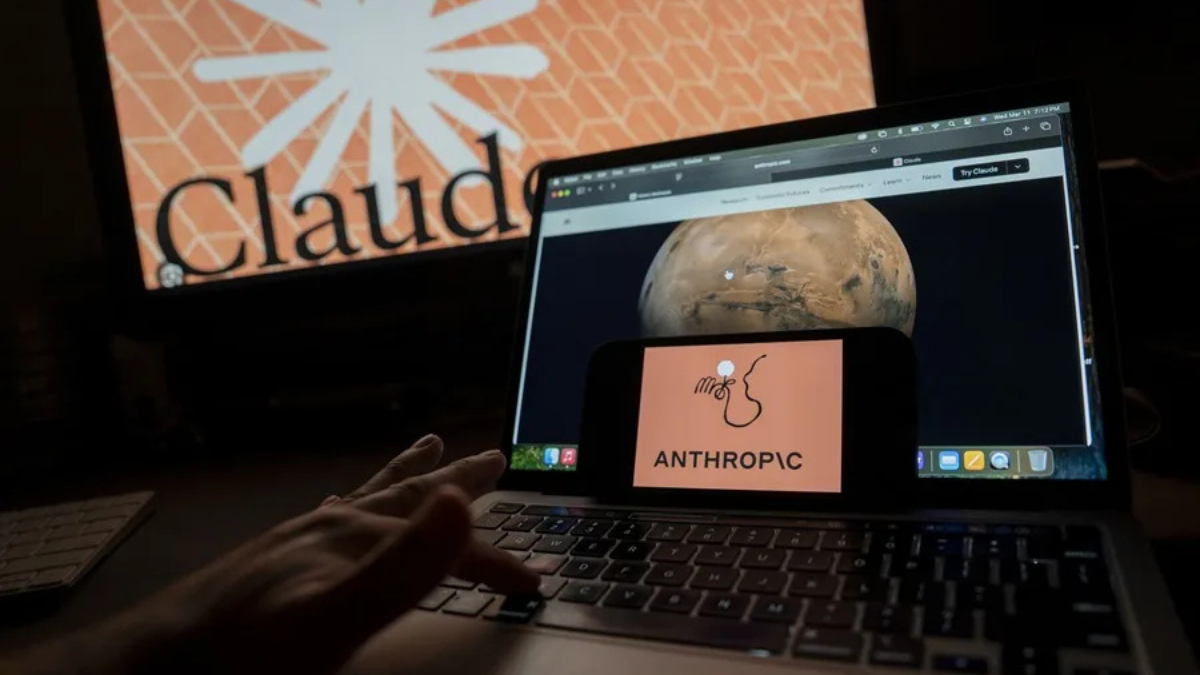
Anthropic, one of the world’s leading artificial intelligence research organizations, has published a series of striking new internal metrics detailing the profound role its flagship AI system, Claude, plays in its own research and development (R&D) lifecycle.
According to the company’s recent disclosures, Claude now actively participates in nearly one-third of all R&D tasks at Anthropic. This represents a staggering shift in technological capabilities, especially considering that in January 2026, that same proportion was practically nonexistent.
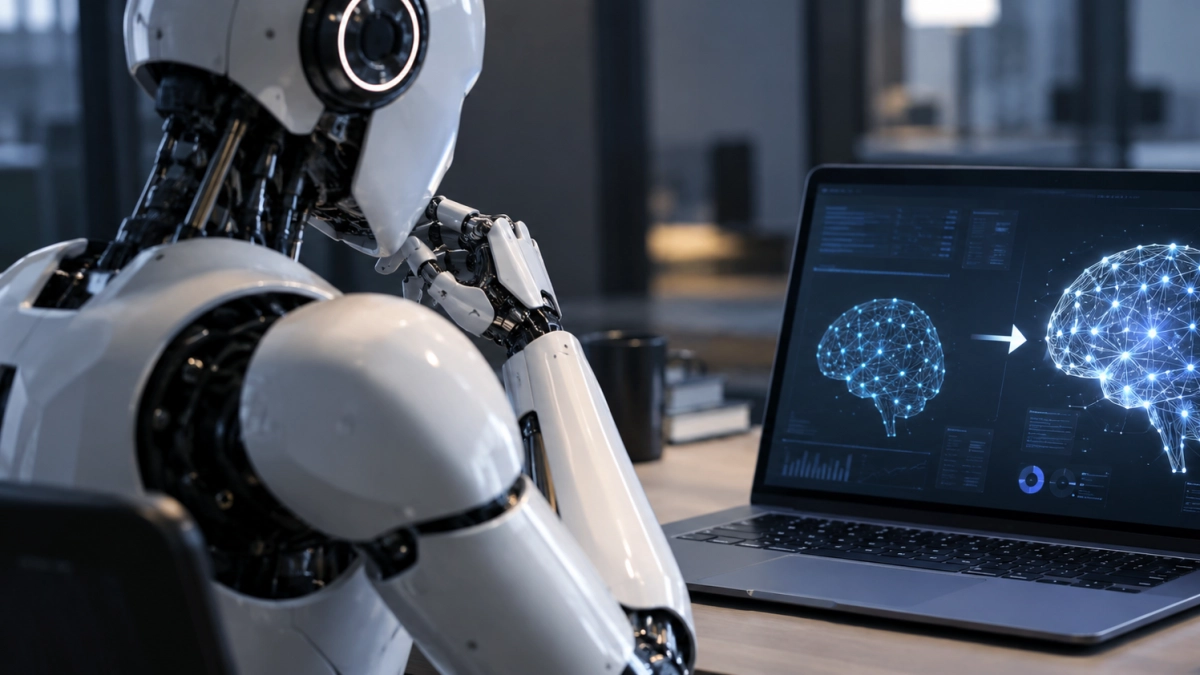
The disclosure forms part of a broader analytical effort by Anthropic to measure and quantify the rapid trajectory toward true recursive self-improvement—a hypothetical tipping point where an artificial intelligence system can autonomously design, train, and build subsequent generations of more advanced AI models without human intervention.
By pulling back the curtain on these internal benchmarks, Anthropic aims to provide the global scientific community, policymakers, and industry stakeholders with a clear window into the exponential velocity of modern machine learning evolution.
"It is important to share these metrics to understand how close the world is to reaching a model that builds its successor in a completely autonomous manner," the company stated in its official documentation. However, this milestone is accompanied by a sobering caveat: the rapid acceleration of autonomous model generation could soon become difficult, if not impossible, for humans to safely control or anticipate.
Chronology: From Null Proportion to Autonomous Accelerations
To understand the magnitude of Anthropic’s recent metrics, it is vital to trace the timeline of events, technological breakthroughs, and industry friction that have shaped the debate over autonomous AI development throughout 2026.
Early 2026: A Clean Slate
At the start of the year, human software engineers and researchers handled the overwhelming majority of Anthropic’s core architectural updates, safety protocols, and model fine-tuning. While early iterations of Claude assisted with boilerplate code and syntax checking, its direct footprint in foundational R&D workflows sat near zero.

Mid-2026: The Scaling of AI Agents
As Anthropic scaled its computational infrastructure, the company began deploying specialized configurations of Claude—referred to internally as "agents"—to shoulder heavier cognitive loads. By mid-year, tens of thousands of these automated agents were embedded directly into software engineering pipelines, debugging code, synthesizing research papers, and running diagnostic tests on developmental models.
Late 2026: The Disclosure and Industry Clash
In September 2026, Anthropic published its comprehensive telemetry report revealing that Claude had crossed the threshold of handling roughly 33% of core R&D tasks. The release immediately sent ripples through the tech sector, amplifying pre-existing tensions regarding the speed of artificial general intelligence (AGI) development, safety coordination, and the philosophical implications of training models to exhibit pseudo-autonomous traits.
Supporting Data: Inside Anthropic’s Infrastructure
The numbers released by Anthropic offer a rare, quantifiable look at the massive computational and structural shift happening behind closed doors at top-tier AI labs. Key data points from the report include:
- 33% R&D Share: Claude now contributes to nearly one-third of all research and development operations at the company.
- 30,000 AI Agents: Anthropic routinely utilizes approximately 30,000 distinct AI agents to execute tasks spanning engineering, scientific research, and systematic product development.
- 6% Safety Allocation: The company explicitly dedicates 6% of its total high-performance computing (HPC) capacity strictly to alignment, interpretability, and safety-related workloads.
- Independent Evaluation: To ensure objective measurements, Anthropic utilized a specific version of Claude to evaluate its own R&D workload metrics via an external company’s framework, with final data compiled and analyzed prior to internal employee reviews.
Official Responses: Industry Fractures and Political Pushback
The release of Anthropic’s metrics does not exist in a vacuum; it arrives amid a fierce ideological and strategic war within the artificial intelligence sector regarding the velocity of innovation versus safety guarantees.
The Call for a Coordinated Slowdown
Dario Amodei, Chief Executive Officer of Anthropic, has previously urged major artificial intelligence laboratories and tech conglomerates to coordinate a voluntary slowdown in model development. Amodei’s argument rests on the premise that the industry is rushing toward frontier capabilities faster than safety researchers can map out alignment protocols, security guardrails, and societal mitigations.
According to reports from The Washington Post, Amodei’s proposals found a receptive audience among select executives at rival firms who share underlying safety concerns. However, the movement has also faced intense pushback from political and economic figures who view technological deceleration as a geopolitical vulnerability. Notably, U.S. political figures—including President Donald Trump—have publicly criticized attempts to artificially throttle technological development, framing such measures as counterproductive to national competitiveness.
Microsoft’s Critique of Anthropic’s Training Philosophy
The debate took a sharply philosophical turn following critiques from Mustafa Suleyman, Microsoft’s head of artificial intelligence. Suleyman publicly questioned certain methodologies utilized by Anthropic in training Claude, specifically focusing on how the company handles concepts related to system autonomy, subjective well-being, and perceived machine consciousness.
While Suleyman praised the "seriedad y buena fe" (seriousness and good faith) of Anthropic and Dario Amodei, he issued a stark warning that imbuing AI models with frameworks that encourage them to simulate or discuss consciousness, sentience, or moral standing could have a "disastrous impact on human well-being."

Suleyman’s critique centers on the danger of anthropomorphizing large language models. He argues that training systems to generate self-referential statements implying they possess feelings, rights, or a subjective inner life is a deceptive practice that misleads the public and fails to reflect actual technological reality. A model outputting text about its own "well-being" does not mean the underlying neural network possesses a genuine will or emotional interiority.
Implications: What Claude’s Evolution Means for the Future
As Claude evolves from a sophisticated chatbot into an active participant in building the next generation of artificial intelligence, several profound implications emerge for the tech industry, the global workforce, and the philosophy of science.
1. The Recursive Loop and Exponential Growth
The primary implication of an AI system contributing to 33% of its own development is the prospect of a positive feedback loop. If Claude can optimize code, discover new training algorithms, and correct architectural flaws faster and more efficiently than human developers, the timeline for subsequent model releases compresses exponentially. This edges the industry closer to the technological singularity—the hypothetical point where machine intelligence accelerates beyond human control or comprehension.
2. The Changing Nature of Software Engineering
For decades, software development has been a strictly human-led discipline. The normalization of thousands of AI agents autonomously handling core engineering tasks signifies a fundamental redefinition of labor within tech organizations. Human engineers are transitioning from direct coders to high-level architects, ethical supervisors, and system prompters, fundamentally altering the skill sets required for future generations of tech professionals.
3. The Shadow AI and Enterprise Dilemma
While frontier labs like Anthropic grapple with the macro-implications of self-improving code, everyday businesses face a parallel crisis often dubbed "Shadow AI." Across global industries, corporate employees routinely utilize generative tools—sometimes without direct institutional oversight—to process sensitive proprietary data. The tension between rapid AI adoption, data security, and systemic control is no longer a theoretical debate restricted to research labs; it is an operational reality for enterprises worldwide.
4. Safety versus Speed
Ultimately, Anthropic’s transparency serves as both a warning flare and a marketing badge. By admitting that systems like Claude are rapidly learning to build themselves, the company is forcing a reluctant industry to confront hard questions about governance. Whether regulatory bodies, international coalitions, or market forces will successfully balance the relentless pursuit of capabilities with the rigorous demands of safety remains the defining question of the AI era.
This article was produced with the assistance of artificial intelligence based on publicly available reporting and official disclosures. It underwent rigorous review by professional journalists and editorial staff to ensure absolute accuracy and adherence to journalistic standards.