By Felipe Santanilla Ayala
Redacción Últimas Noticias
Updated: April 6, 2026, 18:21 GMT
Main Facts
In a decisive escalation of tensions between regional authorities and the central government, the Governor of Antioquia, Andrés Julián Rendón, has officially announced a robust judicial offensive against recent decisions made by President Gustavo Petro’s administration and the Office of the Attorney General of the Nation (Fiscalía General de la Nación).
The crux of the departmental pushback centers on an official resolution that suspends the arrest warrants of 23 high-profile leaders of major criminal organizations operating within Medellín and the broader Aburrá Valley. These individuals, who currently serve as representatives or delegates in exploratory peace and dialogue tables promoted by the national government, have seen their legal impediments lifted—a reality that has sparked severe political and institutional fallout.
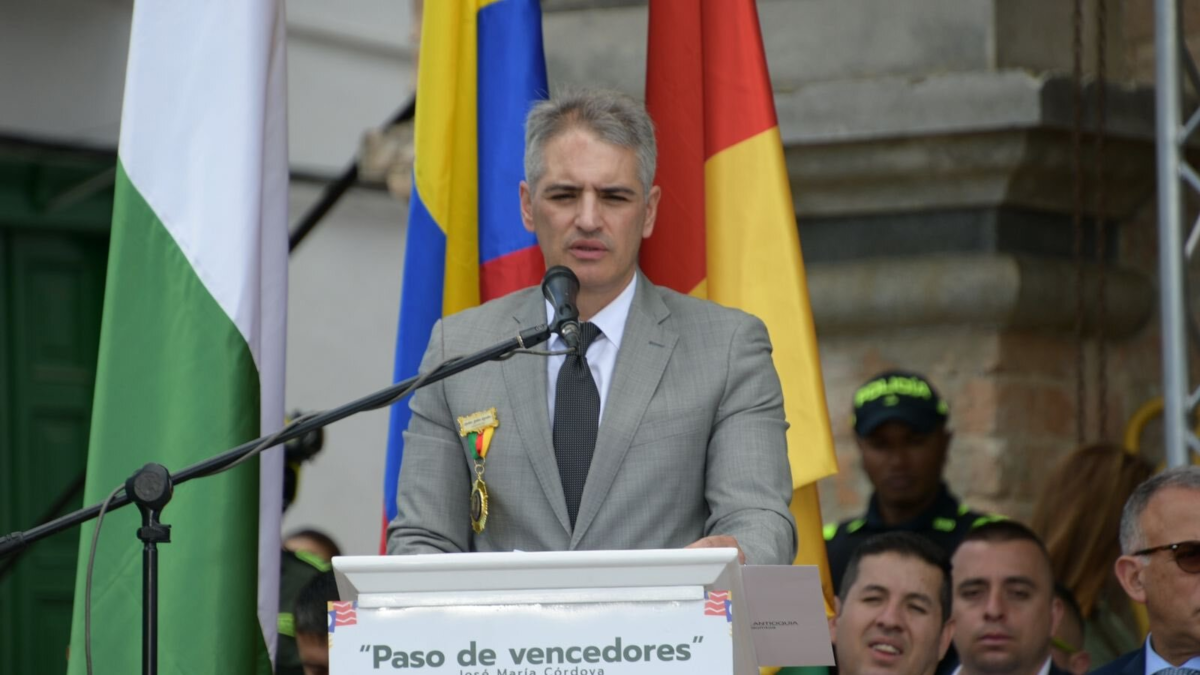
During a high-level security council meeting alongside local leaders and mayors from the Aburrá Valley, Governor Rendón confirmed that the departmental administration will formally file a nullity lawsuit accompanied by an urgent request for a provisional precautionary measure before the Council of State (Consejo de Estado). The objective of this legal recourse is to immediately halt the execution and effects of the official resolution, which Rendón argues dismantles years of arduous police and military work while severely undermining local security, public trust, and institutional stability.

"I am filing a nullity lawsuit with a precautionary measure before the Council of State: Gustavo Petro and the Attorney General are releasing criminals, undermining justice, and betraying the victims, judges, prosecutors, police officers, and soldiers who have risked their lives to capture them. They are building a highway of impunity," Rendón declared via his official social media channels.
The move highlights a profound rift over the administration’s "Total Peace" (Paz Total) policy, revealing deep anxieties among regional authorities who believe that negotiations with high-impact criminal structures are ultimately traded for territorial concessions and public safety compromises.

Chronology of Events
To fully understand the gravity of the current confrontation between the Gobernación de Antioquia and the central government, it is vital to trace the sequence of events leading up to this institutional crisis:
- Early 2026 (The Peace Framework): The national government expands its multi-layered approach to negotiations with urban criminal structures, focusing heavily on structured dialogues with gangs and organized crime syndicates in Medellín and the Aburrá Valley.
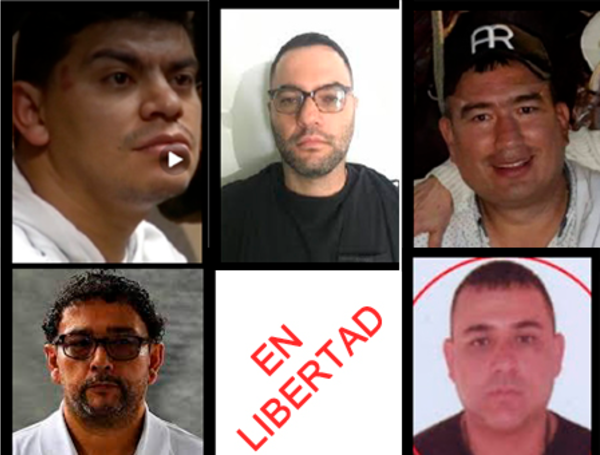
- April 1, 2026: Public awareness peaks regarding the precise identity of the 23 criminal kingpins benefiting from the suspension of arrest warrants. Investigative reports reveal that out of these 23 major figures, at least 7 are already moving about with full freedom, participating in political and social contexts while ostensibly acting as "peace spokespersons."
- April 5, 2026: Governor Andrés Julián Rendón takes to public platforms to formally announce his decision to challenge the government’s legal pathways, criticizing both President Gustavo Petro and Attorney General Luz Adriana Camargo.
- April 6, 2026 (Morning): During a security council meeting with local mayors in the Aburrá Valley, Rendón details the legal strategy and confirms the imminent filing of the nullity lawsuit at the Council of State.
- April 6, 2026 (Afternoon): Political momentum grows as allied figures within the region align with the departmental stance. Anticipated in the immediate hours following the governor’s announcement, the President of the Medellín City Council, Alejandro De Bedout, prepares a parallel, complementary legal challenge targeting the same administrative acts.
Supporting Data and Context
The friction between the regional administration and Bogotá is rooted in concrete numbers and specific legal controversies that have defined the security landscape of Antioquia over recent years:
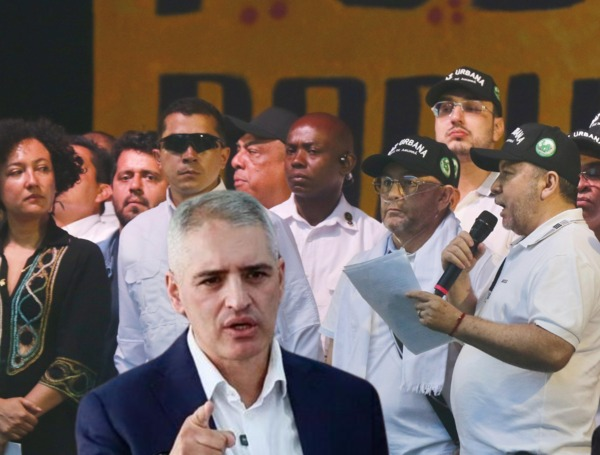
- The 23 Kingpins: The contested resolution directly impacts 23 high-ranking leaders operating across urban and semi-urban crime syndicates (commonly referred to in Colombia as combos). These groups have historically managed drug trafficking, extortion, contract killing, and localized micro-trafficking networks in Medellín’s communes.
- Current Status of Beneficiaries: Out of the 23 total individuals designated as dialogue representatives, investigative journalism and security reports confirm that at least 7 are currently enjoying full physical freedom, raising alarms among local prosecutors and security commanders who spent years building evidentiary cases against them.
- Parallel Legal Controversies: The debate surrounding the Attorney General’s Office has been further inflamed by concurrent decisions in other high-profile judicial matters. Governor Rendón specifically pointed out perceived contradictions within the prosecution’s approach, noting public discussions regarding the potential lifting of arrest warrants for figures such as alias "Calarcá," even while urban gangs in Antioquia receive sweeping judicial leniency.
- Institutional Alignment: The legal pushback is not isolated to the Governor’s Office. The involvement of municipal legislative leaders, such as Medellín City Council President Alejandro De Bedout, indicates a coordinated legislative and executive front at the local and departmental levels designed to block what they characterize as unchecked executive overreach in criminal matters.
Official Responses and Perspectives
The Regional Stance: Gobernación de Antioquia
Governor Andrés Julián Rendón has consistently framed the national government’s peace concessions not as a pathway to reconciliation, but as a direct assault on the rule of law. According to the departmental administration, treating hardened criminals as political actors degrades the moral standing of the public force.
In his public statements, Rendón did not mince words regarding the implications of the executive branch’s decisions:

"By one hand, Prosecutor Camargo has recently suggested lifting the arrest warrant against alias ‘Calarcá,’ and now she gives a free pass to the worst crooks in Antioquia. My God, it infuriates them that our people vote with freedom in the ballot boxes."
The governor further warned that these concessions transcend simple legal debates, evolving into instruments of territorial intimidation and electoral pressure. He argued that armed actors utilize their newfound legitimacy or freedom to constrain local populations, creating a climate of fear that directly violates departmental autonomy.
The National Government and the Office of the Attorney General
While the national executive branch and the Fiscalía have defended these measures as necessary exploratory steps under the constitutional framework of seeking comprehensive peace, critics argue that the architecture of "Total Peace" lacks clear accountability mechanisms. The central government maintains that opening dialogue channels with urban structures is indispensable to reducing homicide rates and dismantling historical cycles of violence in densely populated areas like the Aburrá Valley.
However, critics from regional bodies argue that this approach sacrifices retributive justice, leaving victims without closure and demoralizing operational units of the National Police and the Military Forces whose dangerous operations led to the original captures.

Implications
The legal confrontation initiated by the Gobernación de Antioquia carries profound ramifications for Colombia’s institutional framework, security strategy, and future peace architecture:
1. Judicial Precedent
If the Council of State accepts the precautionary measures requested by Governor Rendón and subsequently nullifies the resolution, it could create a major legal roadblock for the national government’s ongoing peace talks with urban criminal groups. This would force a re-evaluation of the boundaries between executive powers in peace-building and the statutory independence of the judicial branch and prosecutorial bodies.

2. Security and Territorial Control
Local security commanders in Antioquia have expressed quiet concern that the temporary or permanent release of high-level gang leaders could destabilize local criminal dynamics. Without strict confinement, surveillance, and verifiable demobilization commitments, critics fear these individuals may use the cover of peace talks to regroup, consolidate territorial monopolies, and expand extortion rings.
3. Political Polarization
The clash highlights the growing disconnect between centralist peace policies designed in Bogotá and the security realities experienced by local authorities in regions like Antioquia. As regional leaders position themselves as defenders of institutional rigor and the rights of victims, the debate is increasingly weaponized within the broader national political discourse leading up to future electoral cycles.

4. The Future of "Total Peace" in Urban Centers
Medellín has historically served as a laboratory for various peace and transitional justice experiments—ranging from the demobilization of the-paramilitary Bloque Cacique Nutibara in the early 2000s to modern urban pacts. The outcome of this legal battle will determine whether the current administration can legally sustain negotiations with multi-crime urban syndicates or if judicial oversight will rein in executive discretion regarding detained criminal leadership.
As the Council of State prepares to review the nullity lawsuit and the emergency injunction, all eyes remain fixed on Bogotá and Medellín, where the balance between judicial impunity and negotiated peace hangs in a delicate and fiercely contested balance.