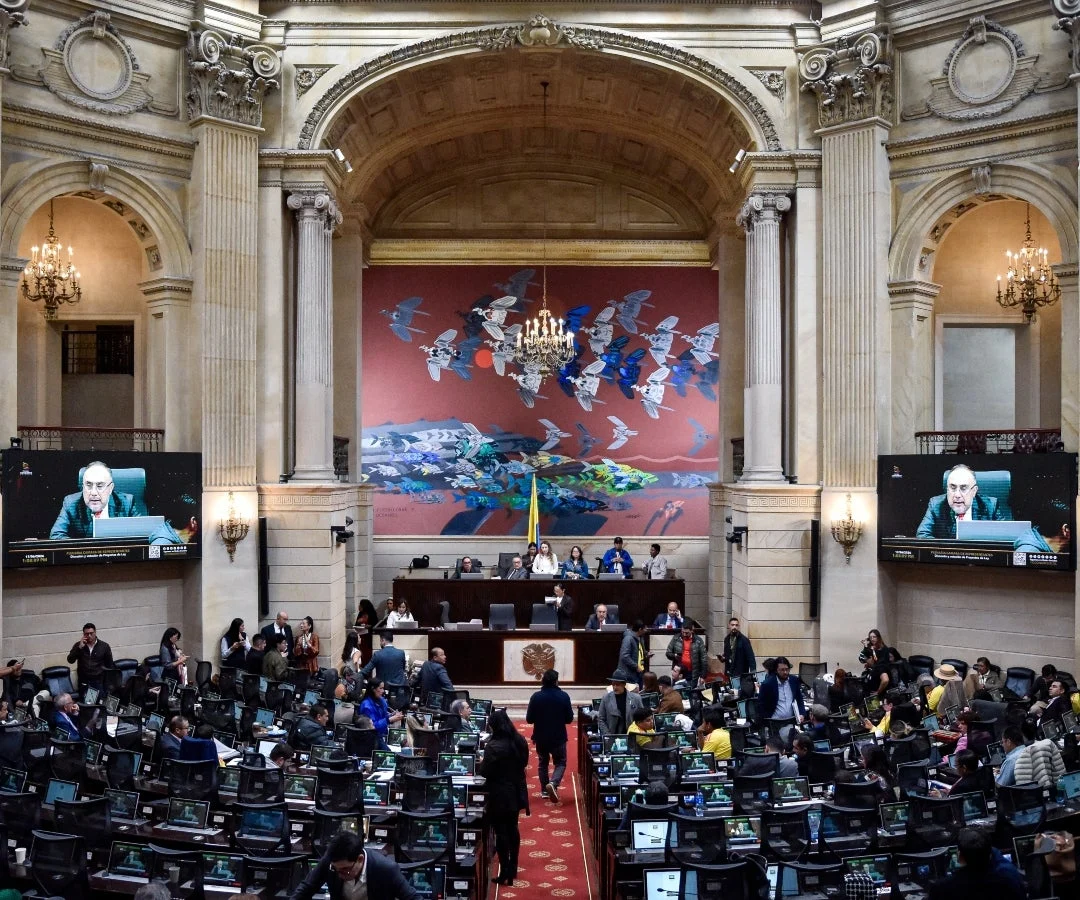
BOGOTÁ – On a historic July 20, 2026, coinciding with Colombia’s Independence Day, the Elliptical Hall of the National Capitol became the epicenter of a pivotal political transition. The installation of the Congress of the Republic for the 2026-2030 term marks not only the beginning of a new legislative cycle but also the final curtain call for the administration of outgoing President Gustavo Petro and the dawn of the era under President-elect Abelardo De La Espriella.
The atmosphere in the halls of power was electric, characterized by a mix of protocolary solemnity and intense partisan maneuvering. While the day is traditionally a celebration of democracy, the primary focus has shifted to a fierce internal battle for the Presidency of the Senate. The outcome of this vote will determine the legislative tone for the first year of the De La Espriella administration and signal the new balance of power between the executive and the legislature.
Main Facts: A Divided Senate and a New Mandate
The installation of the 2026-2030 legislative period centers on the election of the President of the Senate, a position that carries immense weight in setting the national agenda. The contest has narrowed down to two prominent figures: Honorio Henríquez of the Centro Democrático (Democratic Center) and Alfredo Deluque of the Partido de la U (Party of the U).
As of the opening of the session, the political arithmetic appears to favor Deluque. Despite the Centro Democrático claiming the right to hold the presidency during the first year—arguing their status as the largest pro-government bench—a coalition of traditional and centrist parties has coalesced around Deluque.
The President-elect, Abelardo De La Espriella, has notably thrown his weight behind Deluque, signaling a preference for a more transversal leadership style to navigate the complex legislative waters ahead. This endorsement has catalyzed a series of alliances, leaving the Centro Democrático in a defensive position despite their numerical strength as a single party.
Chronology of the Installation: July 20, 2026
The day’s events followed a strict constitutional protocol, beginning in the early hours of the morning as lawmakers arrived at the Plaza de Bolívar amidst tight security and public demonstrations.
1. The Call to Order and Quorum Verification
The session officially commenced with the roll call of the honorable congressmen. The Secretariat of the Senate and the House of Representatives confirmed that the constitutional requirements for a "decisive quorum" had been met.
- The House of Representatives: Sub-secretary Luz Stella Pedraza reported that 180 representatives were registered, ensuring a full house for deliberations and voting.
- The Senate: Secretary Fabio Raúl Amín confirmed the presence of 91 out of 103 senators, providing the necessary legal standing to proceed with the election of the high office.
2. Protocol and Symbolism
Following the roll call, the National Capitol was filled with the sounds of the Symphony Band, followed by the appointment of protocol commissions. These commissions are tasked with escorting the President of the Republic from the Casa de Nariño to the Elliptical Hall. The singing of the National Anthem served as the final prelude to the political speeches.
3. The Farewell of Lidio García
Lidio Arturo García, the outgoing President of the Congress and a veteran of the Liberal Party, delivered a speech focused on the preservation of democratic institutions. Having served as the head of the legislature on two occasions, García’s words carried the weight of experience. He emphasized the need to end the polarization that has characterized Colombian politics over the last decade, urging his colleagues to seek "a true democracy" through dialogue rather than division.
4. The Final Address of Gustavo Petro
In a moment of significant historical weight, President Gustavo Petro entered the hall to install the 2026-2027 ordinary sessions. This marked his final speech to the legislative body as head of state. Petro’s address focused on the legacy of his "Total Peace" initiatives and his social reforms, many of which faced uphill battles in the very room where he stood. His departure marks the end of the first leftist government in modern Colombian history.
5. The "Voto Limpio" Declaration
As the session moved toward the voting phase, the Centro Democrático bench made a visual and political statement. Arriving with banners supporting Honorio Henríquez and the party’s "natural leader," former President Álvaro Uribe Vélez, the bench signaled they would not withdraw their candidate. Uribe himself announced that the party would go to "voto limpio" (a clean, contested vote) rather than seeking a backroom deal, setting the stage for a dramatic showdown.
Supporting Data: The Legislative Arithmetic
The election of the Senate President is a game of numbers, and the current breakdown suggests a significant shift in the parliamentary "National Agreement."
The Deluque Coalition (The Frontrunner)
Alfredo Deluque enters the vote with a formidable block of support, totaling approximately 29 confirmed votes before the final tally, plus additional unaligned votes expected to follow the President-elect’s lead:
- Liberal Party: 13 votes (The decision of the Liberals to join Deluque was the turning point in the campaign).
- Conservative Party: 9 votes.
- Alianza Verde-En Marcha-Aico Coalition: 7 votes.
- Party of the U: Internal support from his own bench.
The Henríquez Challenge (The Majority Bench)
Honorio Henríquez relies on the ideological discipline of the right-wing benches, though he currently lacks the broad coalition needed for a majority:
- Centro Democrático: 17 votes.
- Individual Defections: Notably, Senator "Jotape" Hernández of the Alianza Verde broke with his party coalition to announce his support for Henríquez, citing ideological alignment on security and opposition to the previous administration.
The Centro Democrático maintains that as the primary party supporting the incoming De La Espriella administration, they should lead the Senate to ensure the passage of the new government’s "Law and Order" agenda. However, the President-elect’s preference for Deluque suggests a strategy of "governance through consensus" rather than "governance through party dominance."
Official Responses: Voices from the Floor
The rhetoric inside the Elliptical Hall reflected the deep-seated tensions of a country in transition.
Lidio Arturo García (Liberal Party):
"We cannot continue to divide the Colombian people simply for having different ideas. These four years of work have shown that while we disagree, the institution must prevail. I call upon the incoming legislators to build a country where the word ‘opposition’ does not mean ‘enemy’."
Álvaro Uribe Vélez (Centro Democrático Leader):
Through social media and party spokespeople, Uribe reinforced the "Voto Limpio" strategy. "Our candidate, Honorio Henríquez, represents the consistency of our ideas. We will go to the floor and let the votes decide, defending the right of the majority bench to lead the legislative process."
Alfredo Deluque (Candidate for President):
Deluque has maintained a pragmatic tone, focusing on his ability to bridge the gap between various political factions. "The country requires a Congress that moves beyond the stalemates of the past. My candidacy is one of unity, supported by a diverse coalition that wants to see Colombia succeed under the new mandate."
Implications: What This Means for the De La Espriella Era
The result of this installation and the subsequent election will have immediate and long-term implications for Colombia’s political landscape.
1. Legislative Governance
If Alfredo Deluque wins, as expected, it indicates that President-elect De La Espriella will rely on a "Grand Coalition" model. This approach might make it easier to pass structural reforms—such as the anticipated overhaul of the security framework and tax codes—by including traditional parties like the Liberals and Conservatives in the decision-making process.
2. The Internal Rift in the Right
The decision by De La Espriella to support a candidate from the Partido de la U over the Centro Democrático candidate could create early friction within his own support base. The Centro Democrático has been the most vocal supporter of the President-elect, and being sidelined in the Senate Presidency could lead to internal tensions regarding "who truly represents the government" in Congress.
3. The Future of the Opposition
With Gustavo Petro leaving office, the leftist and progressive benches move into the role of the opposition. The unity shown by the Liberal and Green parties in supporting Deluque suggests that the "Petrista" block may find itself isolated if it cannot find common ground with the centrist factions that are now gravitating toward the new administration.
4. Stability and Markets
The international community and financial markets often view the July 20th installation as a barometer for Colombian stability. A smooth transition and the election of a moderate-leaning Senate President like Deluque would likely be interpreted as a sign of institutional continuity and predictable governance, which is vital for foreign investment in the post-Petro era.
As the sun sets over the Plaza de Bolívar on this Independence Day, the ballots are being cast. The 2026-2030 Congress is now a reality, and with it, a new chapter in the history of the Republic of Colombia begins. The "Voto Limpio" promised by the veterans and the strategic alliances formed by the newcomers will now face the ultimate test: governing a nation eager for results.