By International Correspondent
July 20, 2026
In a move that has sent shockwaves through global markets and effectively rewritten the rules of North American trade, United States President Donald Trump signed three executive proclamations this Monday imposing aggressive 50% tariffs on a vast array of goods imported from Canada. The decision, justified by the White House as a necessary corrective measure against what it termed "discriminatory and protectionist" treatment of American exports, marks a significant departure from previous trade policies and threatens to dismantle the fragile stability of the United States-Mexico-Canada Agreement (T-MEC/USMCA).
The new levies, which are scheduled to take effect in 30 days, represent a broad-spectrum economic intervention. They target products ranging from everyday consumer goods, such as wine and alcoholic beverages, to industrial staples like cement and even cultural staples like hockey sticks. While the administration has carved out limited exemptions for critical minerals, energy resources, and certain segments of the fishing industry, the scope of the tariffs is unprecedented in its reach, bypassing traditional safeguards meant to protect free trade between the two nations.
The Legal Foundation: Invoking the 1930 Tariff Act
The administration’s decision is rooted in a seldom-used legal instrument: Section 338 of the Tariff Act of 1930. This provision empowers the President to impose additional duties on imports from countries that the U.S. government deems to be engaging in discriminatory trade practices that place American products at a competitive disadvantage.
By turning to this nearly century-old statute, the White House is signaling a shift toward a more unilateral enforcement mechanism. Legal analysts suggest that the administration is attempting to bypass standard World Trade Organization (WTO) dispute resolution processes, which Washington has historically criticized as being too slow or biased against American interests. The move effectively asserts that the executive branch has the authority to define "discriminatory treatment" unilaterally and to calibrate retaliatory measures without the need for prolonged intergovernmental litigation.
Chronology of Growing Friction
The sudden imposition of these tariffs did not occur in a vacuum. For months, the relationship between Washington and Ottawa has been characterized by rising acrimonious rhetoric and a series of unresolved trade disputes.
- Early 2026: Tensions began to simmer as the U.S. Trade Representative’s office voiced concerns over Canadian market access for American dairy and automotive components.
- Spring 2026: The discourse soured further when President Trump publicly criticized the Canadian government for its environmental policies, specifically blaming Ottawa for failing to control the smoke from wildfires that drifted across the border, impacting air quality in the American Midwest and Northeast.
- June 2026: Informal trade talks stalled. Sources close to the White House indicate that the administration grew frustrated with what it viewed as a lack of reciprocity regarding the pricing and distribution of American alcohol in Canadian provinces.
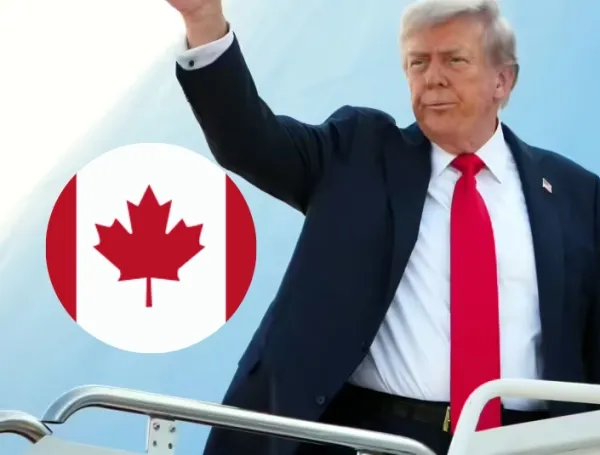
- July 20, 2026: President Trump formally signs the three proclamations, triggering a 30-day window before the 50% duties are applied to the affected product categories.
Supporting Data and Sectoral Impact
The White House justification for the tariffs relies on a specific set of grievances regarding market access. According to a briefing released by the administration, the U.S. is facing systematic barriers in three primary sectors:
The Automotive Sector
Washington argues that Canadian regulations and local content requirements create an uneven playing field, effectively forcing American manufacturers to pay higher costs to distribute their vehicles in the northern market. The administration claims that these regulatory hurdles undermine the spirit of the T-MEC, which was intended to streamline the automotive supply chain across the continent.
The Dairy and Agricultural Market
A long-standing point of contention, the Canadian supply management system for dairy remains a focal point for U.S. ire. The White House specifically pointed to quotas that it claims favor European Union exports over American products, characterizing this as a direct violation of fair competition principles.
The Beverage Industry
The majority of Canadian provinces maintain state-controlled liquor boards that govern the sale and distribution of alcohol. The U.S. government alleges that these boards impose arbitrary markups and restrict the availability of American-produced spirits and wines, effectively shielding domestic Canadian labels from legitimate price competition.
Official Responses and Diplomatic Silence
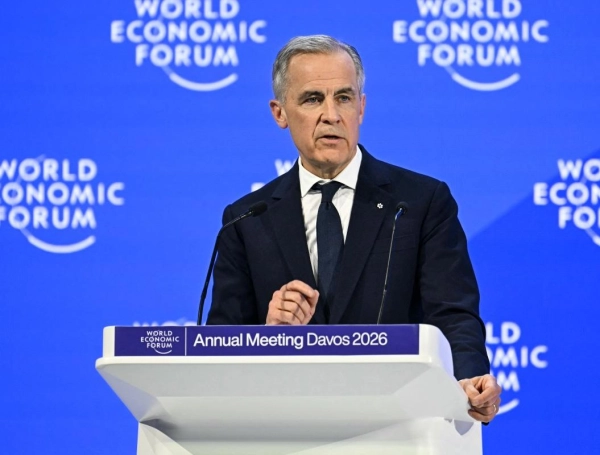
As of the close of business on July 20, the government of Canadian Prime Minister Mark Carney has remained notably reserved. While analysts expect a formal rebuttal in the coming days, the lack of an immediate, high-level response suggests that Ottawa is currently engaged in internal crisis management.
Economic experts in Canada have warned that a 50% tariff would be "catastrophic" for small and medium-sized businesses that rely on the U.S. market for survival. Meanwhile, in Washington, the announcement has received a polarized reception. Supporters of the President’s "America First" agenda have praised the move as a bold stand against foreign unfairness, while trade lobbyists and economists have expressed profound concern that the tariffs will drive up inflation for American consumers and provoke a retaliatory trade war that could damage the North American manufacturing base.

Implications for the Future of Trade
The decision to impose these tariffs—even on goods theoretically protected by the T-MEC—represents a paradigm shift. If the United States is willing to disregard its own free-trade agreements to address unilateral grievances, the entire framework of North American economic integration is brought into question.
Economic Inflation and Supply Chains
The immediate economic impact will likely be a surge in the cost of goods for the American consumer. Industries that rely on cross-border supply chains—such as construction (cement) and retail—will face immediate pressure to either absorb the 50% tariff or pass the costs on to the end user. This could exacerbate inflationary pressures that the Federal Reserve has been working to contain throughout 2026.
The "Reprisal" Risk
The White House statement noted that Canada, much like China, has a history of responding to U.S. pressure with its own retaliatory measures rather than negotiation. If Ottawa chooses to impose its own 50% tariffs on American goods in response, the resulting trade war could hit critical American export industries, including agriculture and tech services, leading to a protracted period of volatility.

Geopolitical Stability
Beyond the balance sheet, the move risks fracturing the political alliance between the two nations. For decades, the U.S.-Canada border has been a model of cooperation. By treating Canada as a hostile trade actor, the Trump administration is signaling that no nation—regardless of its political alignment—is immune from the current administration’s aggressive protectionist doctrine.
As the 30-day countdown begins, the business community, international investors, and the Canadian public are waiting to see if a diplomatic solution can be negotiated before the tariffs become an entrenched reality. For now, the move stands as a stark reminder of the volatility of modern international relations and the precarious nature of the global trade order in the second half of the 2020s.