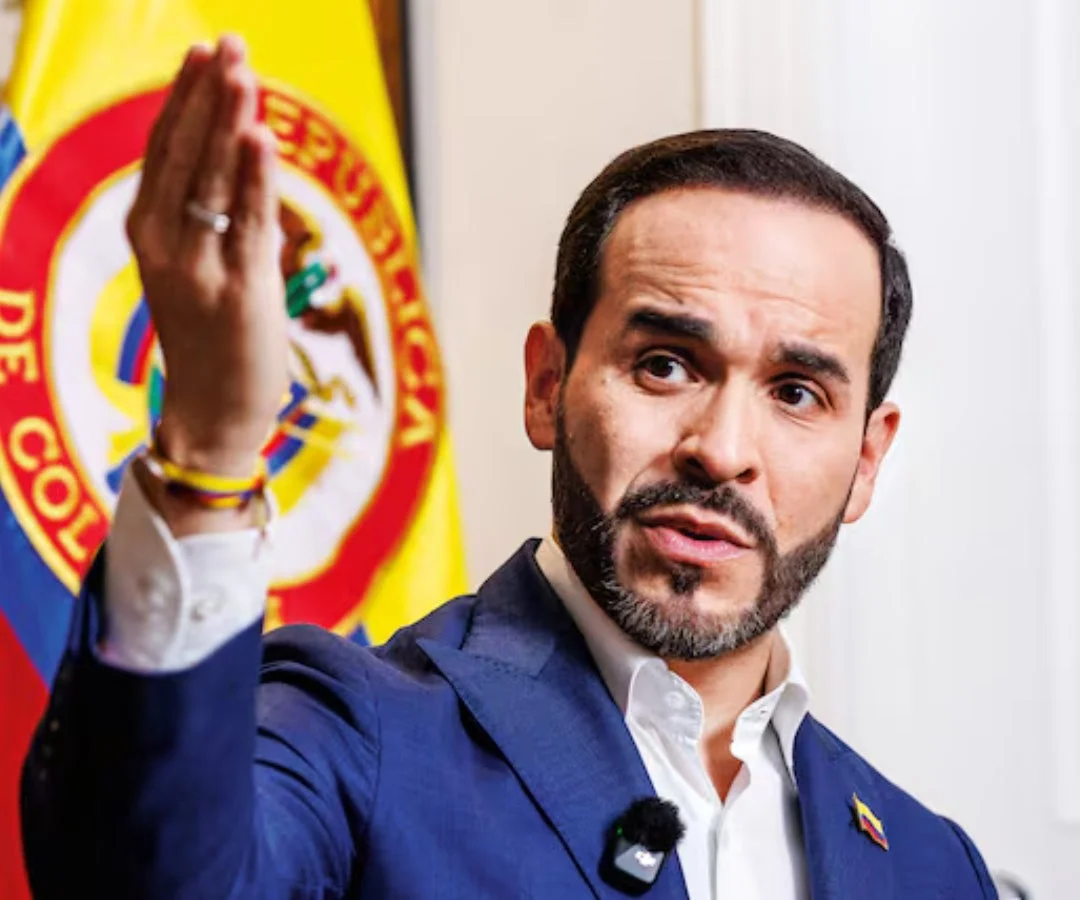
BARRANQUILLA – As the countdown to the presidential inauguration on August 7 begins, President-elect Abelardo de la Espriella has moved to solidify the core of his executive team. In a series of strategic appointments announced via an official communique, the incoming leader has filled four high-level positions within the Administrative Department of the Presidency (DAPRE). These roles are designed to serve as the "engine room" of the new administration, focusing on institutional coordination, regional outreach, and a robust communications strategy.
The announcements come amidst a flurry of activity in Barranquilla, where the President-elect has been hosting high-level summits with international investors and domestic business leaders. These meetings signal a clear shift toward a "pro-investment" agenda aimed at economic revitalization and the restoration of legal certainty for the private sector. While the core of the presidential staff is now taking shape, the political landscape remains in suspense as three key ministerial portfolios remain vacant.
I. Main Facts: The Strategic Appointments
The four individuals selected by President-elect De la Espriella are characterized by a blend of academic rigor and specialized expertise. Unlike traditional political appointments that often reward party loyalty, these selections appear to prioritize technocratic capability in areas of security, public policy, and crisis management.
1. Carlos Ríos: Secretary General of the Presidency
Taking the helm of the General Secretariat is Carlos Ríos, a lawyer with a dual Master’s degree in Political Studies and Security and Defense. The Secretary General is often considered the "gatekeeper" of the palace, responsible for the legal and administrative integrity of the President’s daily operations.
According to the transition team, Ríos has been tasked with a three-fold mission: coordinating institutional management, ensuring seamless articulation between various presidential dependencies, and monitoring the fulfillment of campaign promises. His background in security and defense suggests that the De la Espriella administration will place a high premium on institutional stability and the protection of executive authority.
2. Valerie Lafaurie: Manager of the Regions
In a move to decentralize executive influence, Valerie Lafaurie has been named the Manager of the Regions. A lawyer with a Master’s in Political and Corporate Communication, Lafaurie will lead an office designed to bypass traditional bureaucratic bottlenecks.
The mandate for this office is specific: to implement a territorial management model that brings the national government directly to the provinces. By working closely with governors and mayors, Lafaurie is expected to ensure that strategic projects reach local communities "without political intermediaries." This "anti-clientelism" stance is a cornerstone of the De la Espriella platform, aiming for transparency in resource allocation.
3. Nicolás Gómez: Chief of Staff (Jefe de Despacho)
Nicolás Gómez, a political scientist with a Master’s in Public Policy, will serve as the Chief of Staff. This role is inherently strategic, acting as the bridge between the President’s vision and the cabinet’s execution. Gómez will be responsible for coordinating the government team’s strategy and implementing a "results-oriented" management style. His role is to ensure that the President’s agenda does not get lost in the machinery of the state, maintaining a focus on KPIs (Key Performance Indicators) and executive efficiency.
4. María Fernanda Sandoval: Director of Communications and Press
To manage the administration’s narrative, De la Espriella has selected María Fernanda Sandoval. A journalist and social communicator, Sandoval brings a modern toolkit to the palace, specializing in Digital Marketing and holding a Master’s in Political Communication and Crisis Management. Her appointment indicates that the incoming government intends to maintain an aggressive and professionalized presence in both traditional and digital media, with a specific readiness for the high-pressure environment of national politics.
II. Chronology of the Transition
The road to the August 7 inauguration has been marked by a deliberate and phased rollout of the new government’s structure.
- Post-Election Phase: Following his electoral victory, De la Espriella focused on domestic stability and establishing a transition committee to audit the outgoing administration’s accounts.
- The Ministerial Rollout: Over the past weeks, the President-elect has been naming his cabinet members. To date, the majority of the ministries have been assigned to figures from various sectors, including academia, the private sector, and seasoned public servants.
- The Barranquilla Summit (Current Week): Instead of remaining in the capital, Bogotá, De la Espriella moved his operations to Barranquilla. This week has been dedicated to "Economic Installation," involving a rigorous agenda with foreign investors and the productive sector.
- The Inner Circle Announcement (Today): The naming of Ríos, Lafaurie, Gómez, and Sandoval marks the final phase of staffing the Presidential Office itself.
- The Final Count: With only days remaining before the transfer of power, the public awaits the names of the final three ministers, whose identities are being closely guarded to prevent premature political friction.
III. Supporting Data: The Economic and Regional Mandate
The appointments are not merely administrative; they are reflections of the data-driven priorities of the incoming administration. The transition team has released internal memos highlighting the need for a "shock therapy" approach to the economy.
Economic Reactivation and Legal Security
During the meetings in Barranquilla, the President-elect emphasized that "legal security" is the primary concern for international capital. Data from the transition team suggests that foreign direct investment (FDI) has seen fluctuations due to regulatory uncertainty in previous years. De la Espriella’s strategy involves:
- Tax Incentives: Proposing a streamlined tax code for companies generating more than 500 direct jobs.
- Deregulation: Reducing the "red tape" for infrastructure projects, a task that will fall partly under Valerie Lafaurie’s regional management.
- Investor Confidence: The presence of investors from North America and Europe in Barranquilla suggests a pivot back toward traditional Western economic alliances.
The "No Intermediary" Model
The creation of a robust "Gerencia de las Regiones" is supported by data showing that nearly 30% of regional project budgets are often lost to administrative inefficiencies or local political maneuvering. By appointing Lafaurie, the administration intends to use digital tracking and direct oversight to ensure that 100% of allocated funds reach their intended destination.
IV. Official Responses: The Administration’s Stance
In the official communique, the President-elect’s office was emphatic about the philosophy guiding these appointments.
"We are building a team that understands that the government must serve the people, not the other way around," the statement read. "The designation of these four officials reflects our commitment to technical excellence and operational efficiency. We are moving away from the era of political favors and toward an era of results."
Carlos Ríos, speaking briefly after his designation, stated: "My mission is to ensure that the Presidency is an institution of order. We will provide the President with the administrative platform he needs to transform this country from day one."
Similarly, the transition team addressed the missing ministerial appointments. A spokesperson noted that the delay is intentional: "The President-elect is taking the necessary time to vet the final three candidates. These are sensitive portfolios that require a perfect alignment with our national security and fiscal responsibility goals. They will be announced before the August 7 deadline."
The business community in Barranquilla has responded with cautious optimism. A representative from a major international investment fund, who attended the summit, noted: "The emphasis on legal security and the direct involvement of the President in economic talks is a positive signal. We are looking for stability, and the team being assembled seems to prioritize that."
V. Implications: What This Portends for the De la Espriella Era
The configuration of the "inner circle" provides a roadmap for how De la Espriella intends to govern. Several key implications can be drawn from these moves:
1. Centralization of Strategic Control
By placing highly qualified specialists in the Secretary General and Chief of Staff roles, De la Espriella is ensuring that the "brain" of the government remains tightly controlled. This suggests a presidency that will be deeply involved in the minutiae of policy execution rather than delegating entirely to ministers.
2. A "Crisis-Ready" Narrative
The appointment of María Fernanda Sandoval, with her expertise in crisis management, suggests the administration is bracing for a turbulent start. Whether due to the remaining three ministerial appointments or the ambitious economic reforms planned, the government is prioritizing its ability to control the news cycle and respond to opposition effectively.
3. The Regional Power Shift
Valerie Lafaurie’s role is perhaps the most disruptive. By signaling a direct line from the Presidency to the mayors and governors, De la Espriella is effectively challenging the traditional "political bosses" (gamonales) who usually act as brokers for state resources. This could lead to friction with the legislature but may win significant favor with local populations who feel neglected by the central government.
4. The Final Three Ministers: The Missing Piece
The three remaining ministries are widely rumored to be Finance, Defense, and Interior—the "Power Triangle." The fact that these are the last to be named suggests that De la Espriella is either navigating complex political negotiations or is seeking individuals of such high caliber that the vetting process is exhaustive. The nature of these final three picks will determine if the government leans more toward a conservative coalition or a purely technocratic "independents" model.
5. Economic Diplomacy as a Priority
The decision to hold the final transition meetings in Barranquilla—a hub of commerce and logistics—rather than the political center of Bogotá, is a symbolic and practical choice. It reinforces the "employment-first" rhetoric of the campaign. The implication is clear: the De la Espriella government views productivity and international capital as the primary tools for social development.
As August 7 approaches, the structure of the De la Espriella administration is nearly complete. The "Barranquilla Four" represent a commitment to a modern, efficient, and direct form of governance. However, the true test of this team will begin when the rhetoric of the communique meets the reality of governing a complex and divided nation. For now, the President-elect has sent a clear message to both the political class and the international community: his government will be one of order, efficiency, and an unapologetic focus on economic growth.