

By Edwin Caicedo, Environment and Health Correspondent
Updated: April 26, 2026
The environmental governance of Colombia is facing an unprecedented crisis. Following a devastating terrorist attack on April 25, 2026, in the department of Cauca—an assault that claimed the lives of at least 14 people—the nation’s environmental authorities have sounded a desperate alarm. Among the casualties were two dedicated public servants from the Corporación Autónoma Regional del Cauca (CRC), whose deaths have reignited a national debate regarding the viability of state presence and environmental oversight in regions plagued by armed conflict.

The Association of Autonomous Regional Corporations and Sustainable Development (Asocars), which represents the environmental authorities across the country, has formally declared that the security conditions for their personnel have reached an unsustainable breaking point. As the country grapples with the loss of these officials, the question arises: Can environmental protection exist where the rule of law has been eclipsed by the shadow of insurgent violence?
A Tragic Chronology: The Attack at the Cajibío Tunnel
The events of April 25 began as a standard workday for the team at the CRC. The attack occurred in the vicinity of the Cajibío Tunnel, a strategic corridor in the southwestern region of the country that has become a flashpoint for territorial disputes between illegal armed groups.

According to preliminary reports, the explosion—a calculated act of terror—targeted a convoy traveling through this high-risk area. The blast resulted in the immediate deaths of 14 individuals, among them two pillars of the local environmental authority:
- Patricia Mosquera: A respected official from the Patía Territorial Directorate and a prominent leader of the Social Movement of Afro-Patía Women. Her death represents not only a loss for the environmental sector but a blow to local community leadership and gender-inclusive social development in the region.
- Jarol Jair Bojorge: A dedicated professional from the internal control office of the CRC, whose work was essential in maintaining the transparency and administrative integrity of the organization.
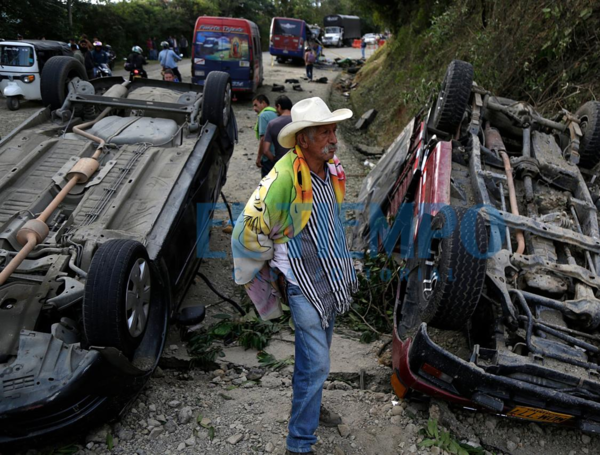
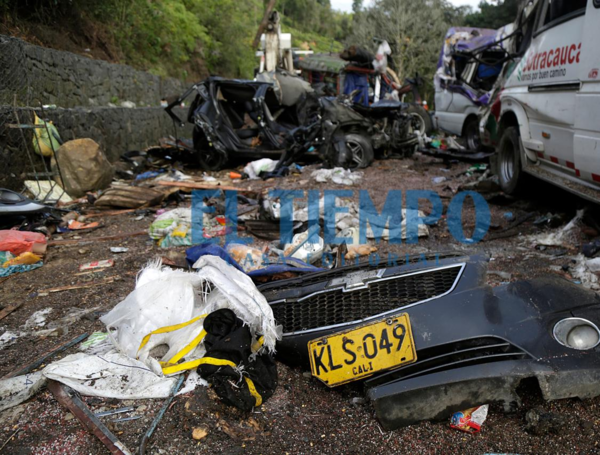
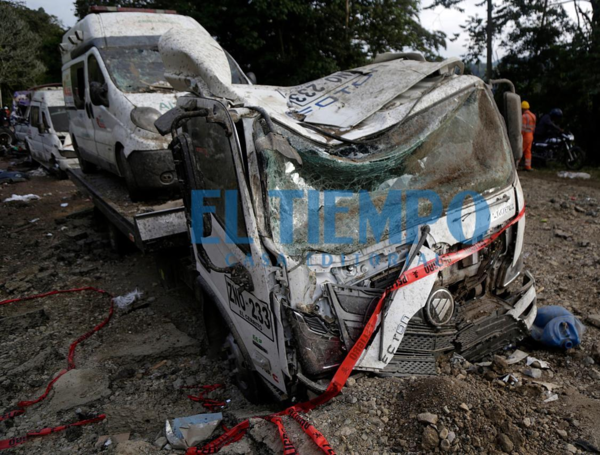
The magnitude of the attack, which left a trail of destruction in the Cauca region, has been described by government officials and local observers as a direct challenge to the state’s sovereignty. The intensity of the explosion left little chance for survival for those in the immediate vicinity, marking one of the bloodiest days in the region’s recent history.
The Institutional Crisis: Asocars Raises the Alarm
The reaction from Asocars was swift and unequivocal. In a formal statement, the organization condemned the act as a "terrorist attack" and explicitly linked the tragedy to a broader, systemic failure to provide security for those tasked with the stewardship of Colombia’s natural resources.
Yesid González Duque, the executive director of Asocars, did not mince words when addressing the press. "We reject this attack and the terrorist escalation that our country is suffering, especially in the Cauca and Valle del Cauca regions. These areas have been the target of cruel attacks that impact both the civilian population and our institutional capacity," González Duque stated.
The director emphasized that the administrative work of the Autonomous Regional Corporations (CARs) is not a desk job. Over 70% of the staff within these organizations are involved in operational and environmental authority roles that require constant travel, inspection, and presence in remote or high-risk territories. When the state cannot guarantee the safety of these individuals, the country’s ability to prevent illegal mining, deforestation, and water contamination is effectively paralyzed.
"It is clear that there are no longer the necessary conditions to exercise our mission of managing and conserving natural resources," González Duque admitted, underscoring the precarious reality faced by thousands of public employees who act as the thin green line in territories controlled by criminal actors.

Supporting Data: The Vulnerability of Field Personnel
To understand the scope of the crisis, one must look at the nature of the work performed by these environmental agencies. These bodies are responsible for the management of the environment at a regional level, overseeing everything from water permits to the monitoring of protected forest areas.
- Operational Risk: The majority of CAR staff are field agents. Their duties include surveying sites of environmental degradation, which often puts them in direct conflict with illegal armed groups involved in illicit economies such as gold mining, coca production, and illegal logging.
- The "Frontline" Paradox: While these officials are technically representatives of the state, they often lack the military or tactical protection required to enter contested zones. They operate with administrative authority, not police power, making them "soft targets" for groups that view any state presence as an obstacle to their illicit profits.
- Geographic Concentration: The departments of Cauca and Valle del Cauca have seen a 40% increase in security incidents involving public servants over the past 24 months. As the central government shifts its security strategy, these remote areas are often left in a power vacuum.
The data suggests that this is not an isolated incident, but part of a pattern. The previous day, an explosive attack on the Pan-American Highway left several indigenous community members wounded, further illustrating that the terror in the region is indiscriminate, targeting anyone who represents a structure of order or social progress.
Official Responses and Calls for Solidarity
The calls for justice and protection have resonated throughout the Colombian political landscape. Ángelo Bacci Hernández, president of the board of directors of Asocars and director of the Cardique Corporation (Canal del Dique), has issued a clarion call to the National Government, the judiciary, and the international community.
"We must surround our regional entities and the communities that inhabit these areas," Bacci Hernández urged. He noted that the survival of the environment is tied to the survival of the people who defend it. If the state abandons its duty to protect its environmental officials, it is essentially abandoning the environment itself to the hands of groups that exploit it for profit.
The Ministry of Environment has yet to release a comprehensive protection plan, but pressure is mounting. The death of Patricia Mosquera, in particular, has mobilized feminist and environmental groups who argue that the intersectional violence—targeting women, environmental defenders, and state officials—is reaching a point of "structural collapse."
The Implications: What Happens When the State Retreats?
The implications of this tragedy extend far beyond the immediate grief of the victims’ families. If the CRC and other regional bodies are forced to withdraw from areas of high conflict, the long-term environmental consequences for Colombia will be catastrophic:

- Increased Illegal Resource Exploitation: Without official oversight, illegal mining and land-grabbing operations operate with complete impunity, leading to the irreversible destruction of river basins and biodiversity hotspots.
- Erosion of Institutional Trust: When the state cannot protect its own agents, the local communities lose faith in the government’s ability to provide services, often turning to the very armed groups that terrorize them for local "security."
- Human Capital Flight: The psychological toll on public servants is immense. Many qualified professionals are now reconsidering their roles, leading to a "brain drain" from the environmental sector in regions that need expertise the most.
As the nation mourns the loss of Patricia Mosquera and Jarol Jair Bojorge, the message from Asocars is a sobering reminder that there is no sustainable development without security. The "green agenda" of the current administration, often touted as a pillar of national policy, is currently colliding with the harsh reality of a country still deeply scarred by conflict.
For now, the flag at the CRC headquarters flies at half-mast. The officials are calling for a national dialogue—not just about environmental policy, but about the fundamental right to exist and work in a country that is still struggling to define its peace. As the investigations into the attack at the Cajibío Tunnel continue, the environmental sector waits for more than just condolences; they wait for the state to prove that it can, and will, protect those who protect the nation’s future.