
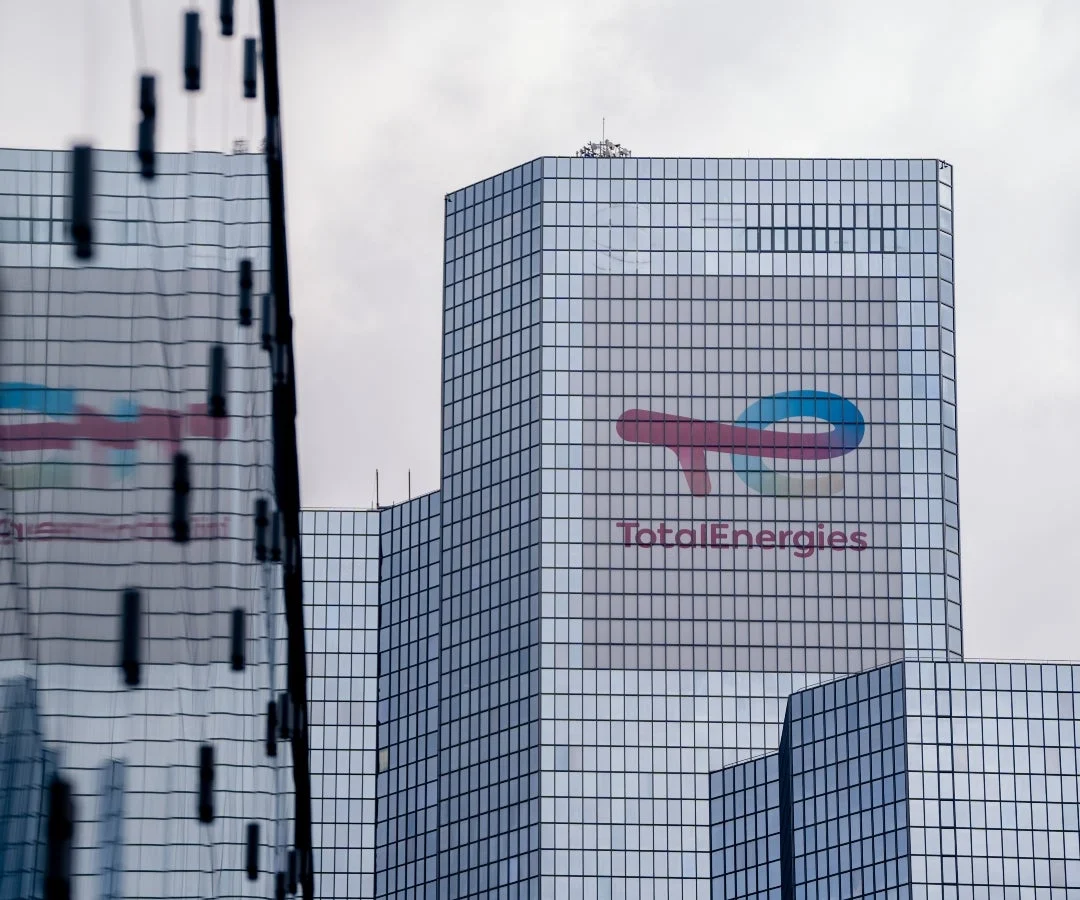
MEXICO CITY – In a move that further solidifies his standing as a titan of the Latin American energy landscape, Carlos Slim, the region’s wealthiest individual, has reached an agreement to acquire a significant stake in a prime offshore oil block in the Gulf of Mexico. Through his conglomerate, Grupo Carso, Slim is set to purchase a 30% interest in "Block 30" from the French energy giant TotalEnergies.
The transaction, revealed in a recent filing with the U.S. Securities and Exchange Commission (SEC), represents the latest chapter in Slim’s aggressive multi-billion-dollar pivot toward Mexico’s hydrocarbon sector. As the Mexican state-owned oil company, Petróleos Mexicanos (Pemex), continues to grapple with staggering debt and declining production, Slim is positioning Grupo Carso as the preeminent private-sector partner capable of stabilizing the nation’s energy future.
Main Facts: The Strategic Acquisition of Block 30
The deal involves a subsidiary of Grupo Carso acquiring the 30% stake held by TotalEnergies EP México in the offshore area known as Block 30. This block is located in the Sureste Basin, a prolific hydrocarbon province in the shallow waters of the Gulf of Mexico.
While Grupo Carso will hold a substantial minority share, the British independent driller Harbour Energy—the UK’s largest oil and gas producer—will maintain a 70% controlling interest and continue to serve as the operator of the block. The completion of the sale is currently pending customary regulatory approvals from the Mexican government, specifically the National Hydrocarbons Commission (CNH).
This acquisition is strategically significant for several reasons:
- Diversification of Assets: It shifts Carso’s portfolio toward exploration and production (E&P) in partnership with international majors.
- Private-Sector Dominance: It reinforces Slim’s strategy of acquiring assets that are not under the direct operational control of Pemex, allowing for greater efficiency and private-sector agility.
- Geographic Synergy: Block 30 is situated in a region where Slim has already established a presence through previous acquisitions, allowing for potential logistical and operational synergies.
Chronology: Carlos Slim’s Rapid Ascent in the Oil and Gas Sector
Carlos Slim’s entry into the upstream oil and gas sector has been both calculated and rapid. While his fortune was famously built on the foundations of telecommunications (América Móvil) and construction, the last three years have seen a decisive shift toward energy.
- May 2023: The Talos Energy Entry: Grupo Carso acquired a 49.9% stake in the Mexican subsidiary of Talos Energy for approximately $125 million. This gave Slim a seat at the table for the Zama field, one of the world’s largest shallow-water discoveries in recent decades.
- Late 2023: The Ixachi Mega-Contract: Slim secured a $1.2 billion (later estimated up to $2 billion) service contract with Pemex to drill and complete more than 30 wells at the Ixachi field in Veracruz. This onshore field is critical for Mexico’s natural gas production.
- January 2024: The Fieldwood Mexico Acquisition: In a landmark $530 million deal, Carso purchased Fieldwood Mexico from the Russian firm Lukoil. This gave Slim 100% ownership of the Ichalkil and Pokoch fields, which are already in the production phase.
- May 2024: The TotalEnergies Agreement: The current deal for Block 30 marks the fourth major energy move in roughly twelve months, signaling that Slim is not merely dabbling in oil but intends to build a vertically integrated energy powerhouse.
Supporting Data: The Production Gap and Financial Context
To understand why Slim is investing so heavily now, one must look at the data surrounding Mexico’s energy landscape.
The Pemex Production Crisis
As of April 2024, Pemex reported a production level of approximately 1.65 million barrels per day (bpd) of crude and condensates. This is a far cry from the peak of 3.4 million bpd seen in 2004. The decline is attributed to the natural depletion of "super-fields" like Cantarell and a lack of capital investment for new exploration.
Slim’s Projections
Carlos Slim has publicly stated that Mexico’s total oil and gas production could feasibly return to 2.5 million bpd. However, he emphasizes that this target is only attainable with significant private sector participation. His investment in the Ixachi field alone is projected to nearly double that field’s output to 200,000 bpd within the next three years.
Financial Might
With a net worth estimated at $102 billion to $130 billion (depending on market fluctuations), Slim possesses the "dry powder" necessary to fund capital-intensive offshore projects that Pemex, burdened by over $100 billion in debt, cannot afford. Grupo Carso’s involvement provides a "Mexican face" to private investment, which is politically more palatable under the current administration’s "energy sovereignty" framework.
Refining and Midstream
Slim’s influence extends beyond extraction. His stakes in PBF Energy, a major U.S. refiner, and his company’s extensive work in building natural gas pipelines across Mexico, position him as a player across the entire value chain.
Official Responses and Regulatory Environment
The reaction from the Mexican government and regulatory bodies has been cautiously optimistic. Under the administration of President Andrés Manuel López Obrador (AMLO), there has been a notable pushback against the 2013 energy reforms that opened the market to foreigners. However, Slim has navigated this political minefield with characteristic finesse.
The Government’s Stance
President López Obrador has frequently praised Carlos Slim as a "nationalist" businessman. By buying out foreign firms like Lukoil (Russia), Talos (USA), and now TotalEnergies (France), Slim is effectively "Mexicanizing" the private oil sector. This aligns with the government’s narrative of keeping resources in Mexican hands, even if those hands are private rather than state-owned.
Carso’s Strategic Silence
In SEC filings and public statements, Grupo Carso has maintained a strictly professional tone, focusing on "portfolio optimization" and "long-term value creation." Earlier this year, Slim made a pointed clarification: while he is a partner to Pemex, his companies would avoid new joint ventures (JVs) directly with the state entity if they involve shared operational risks under the current debt-heavy Pemex structure. Instead, he prefers service contracts or buying out existing private stakes where the rules of engagement are already established.
TotalEnergies’ Global Strategy
From the perspective of TotalEnergies, the divestment of the 30% stake in Block 30 is part of a broader global strategy to high-grade their portfolio. The French major is focusing on ultra-deepwater projects and renewable energy transitions, offloading smaller minority stakes in shallow-water blocks to focus capital on higher-yield or lower-carbon assets.
Implications: A New Era for Mexican Energy
The expansion of Grupo Carso into Block 30 carries profound implications for the future of Mexico’s economy and its relationship with global energy markets.
1. The "Slim Factor" as a Stabilizer
Slim’s entry provides a level of financial stability that the Mexican oil sector desperately needs. International investors often view Mexico with skepticism due to shifting regulatory goalposts. Slim’s presence acts as a "seal of approval," signaling that the Mexican private sector remains a viable and profitable space despite political rhetoric.
2. Technological Transfer and Local Expertise
By partnering with Harbour Energy, Grupo Carso is gaining access to world-class offshore drilling technology and management practices. Over time, this builds a reservoir of Mexican technical expertise that does not reside within the bureaucracy of Pemex, potentially creating a more competitive domestic service industry.
3. Impact on the Presidential Transition
As Mexico prepares for the inauguration of Claudia Sheinbaum, the acquisition of Block 30 suggests that big capital expects a level of continuity in energy policy. Sheinbaum, a scientist with a background in energy engineering, is expected to balance the "energy sovereignty" of her predecessor with a pragmatic need for investment to fund social programs. Slim’s maneuvers suggest he sees a favorable environment for the next six years.
4. The Natural Gas Factor
While much of the focus is on crude oil, Block 30 and Slim’s work in Ixachi are vital for Mexico’s natural gas security. Currently, Mexico imports a vast majority of its natural gas from the United States. Increasing domestic production is a matter of national security, and Slim is now one of the few individuals with the infrastructure to address this.
5. Legacy and Succession
At 84 years old, Carlos Slim is increasingly looking toward the legacy of his conglomerate. By pivoting Grupo Carso toward energy—a sector with decades-long horizons—he is ensuring that his heirs inherit a company that is central to the fundamental functioning of the Mexican state, much like his telecommunications empire was in the 1990s and 2000s.
Conclusion
The deal between Grupo Carso and TotalEnergies is more than a simple transfer of equity; it is a signifier of the changing guard in Mexican oil. As international majors become more selective and the state-owned Pemex remains financially hamstrung, the "richest man in Latin America" is stepping into the vacuum. Through Block 30, Carlos Slim is not just buying oil; he is buying a seat at the head of the table for Mexico’s industrial future. The success of this venture will likely determine whether Mexico can meet its ambitious production goals or if it will remain a nation of untapped potential in a rapidly evolving global energy market.