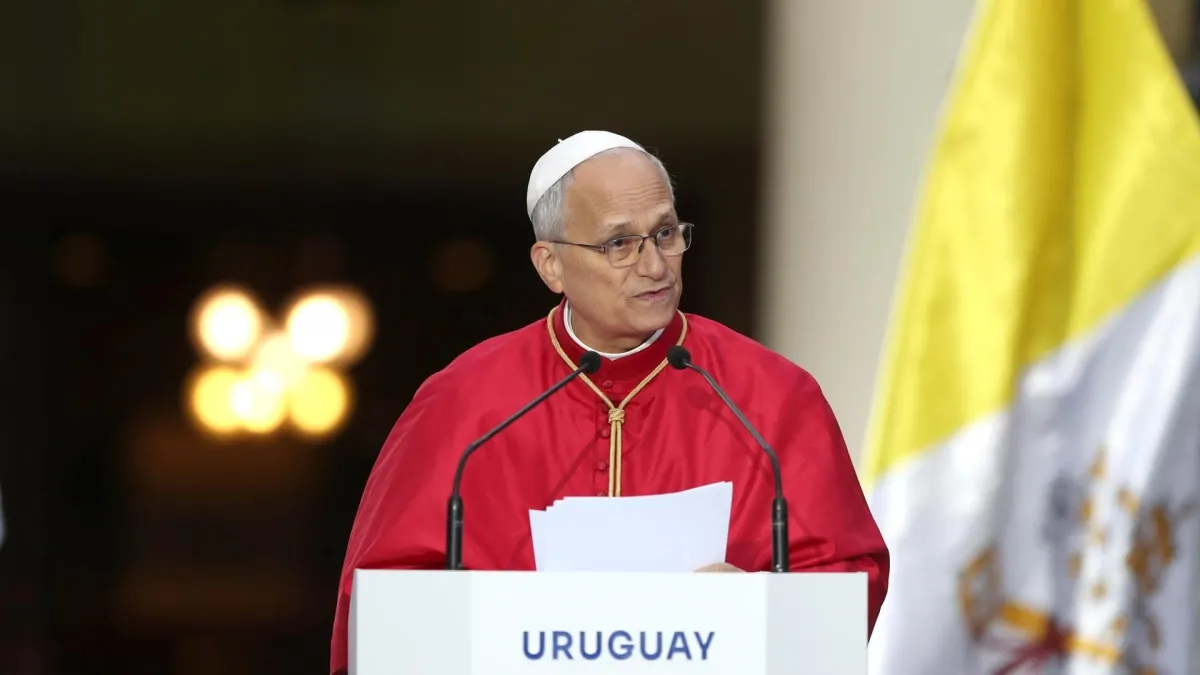
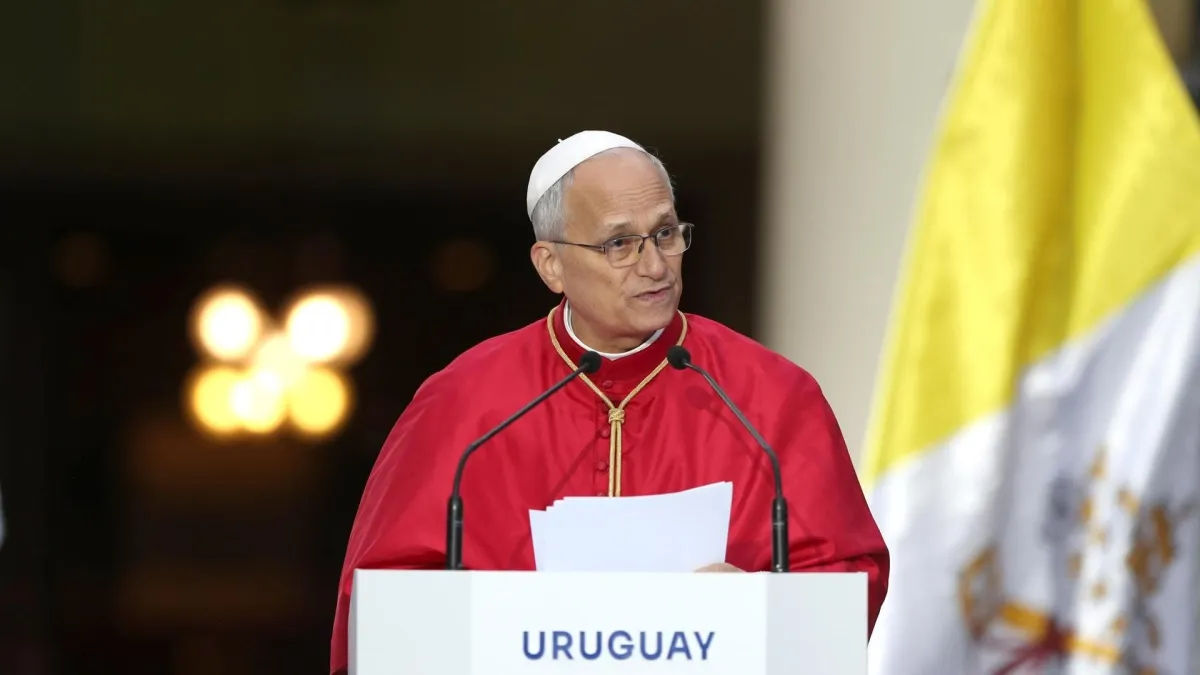
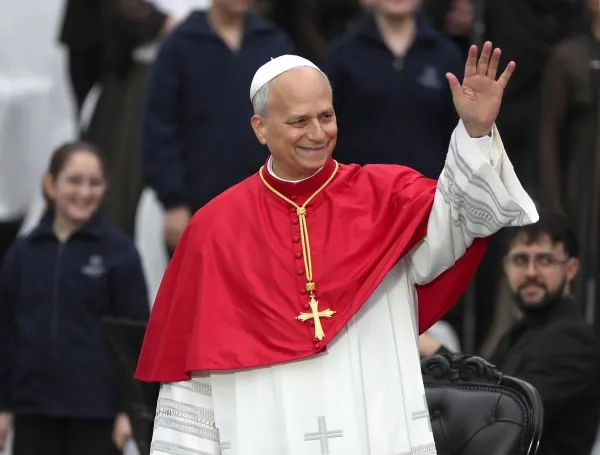
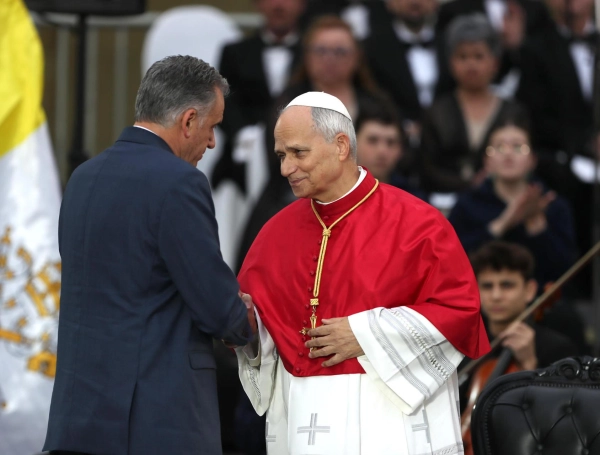
PAYSANDÚ, URUGUAY — In a historic second day of his apostolic journey through South America, Pope Leo XIV presided over a massive, emotionally charged Holy Mass in the city of Paysandú, Uruguay. Gathering approximately 40,000 the faithful at the Paris Londres Park on the outskirts of the city, the Supreme Pontiff delivered a profound homily blending spiritual fortification with deep appreciation for local culture—famously elevating the traditional ritual of mate into a powerful theological symbol of human fraternity and communion.
The celebration marked a central milestone of the pontiff’s regional tour, deeply connecting the modern Catholic Church with the historical roots of the Uruguayan nation, a land forever stamped by the legacy of Blessed Jacinto Vera y Durán, Paysandú’s historical figure and the first Bishop of Montevideo, widely venerated as the "father of the Church" in Uruguay.
Main Facts
Massive Turnout: An estimated 40,000 attendees gathered at the Paris Londres Park in Paysandú to witness the papal liturgy, according to local authorities.
Theological Symbolism of Mate: Pope Leo XIV dedicated a significant portion of his homily to analyzing the cultural and spiritual resonance of mate, describing it as an emblem of friendship, shared vulnerability, and quiet reflection.
The Bridge as Metaphor: The Pontiff referenced the international bridge connecting Paysandú with Colón, Argentina, using it to urge regional communities to actively build interpersonal and cross-border bonds.
Doctrinal Solidity: Amidst a changing cultural landscape, the Pope cautioned the faithful against straying toward novel and fragile ideologies, insisting instead on deep Christian formation rooted in charity and unity.
Continuation of a Legacy: The Holy Father invoked the memory of Blessed Jacinto Vera, challenging contemporary generations to carry forward his evangelizing mission with a focus on youth and the vulnerable.
Chronology: Day Two of the Apostolic Journey in Paysandú
The morning began early as security forces and local volunteers managed the steady influx of pilgrims traveling from various departments of Uruguay and neighboring Argentina. Long before the papal motorcade arrived at Paris Londres Park, the atmosphere hummed with hymns, traditional instruments, and the ubiquitous sharing of mate gourds among attendees braving the spring air.
Morning Arrival and Liturgy
Upon his arrival, Pope Leo XIV was greeted by ecstatic crowds waving yellow and white Vatican flags alongside the Uruguayan Pabellón Nacional. Moving through the sectors in the popemobile, the Pontiff blessed children and paused to acknowledge the elderly before taking his place at the altar.
The liturgy commenced under clear skies, blending traditional Roman liturgical elements with regional hymns. The readings of the day emphasized community, service, and the breaking of bread—themes that would echo profoundly in the Pope’s subsequent address.
The Homily: Bridges, Palms, and Mate
Taking the pulpit mid-morning, Pope Leo XIV structured his reflection around three iconic symbols native to or deeply embedded in the daily life of the Río de la Plata region: the bridge, the palm trees, and the mate.
The Pontiff noted how these elements were not merely geographical or dietary markers, but living metaphors for the Christian calling to live in communion with God and neighbor.
Supporting Data and Context
The selection of Paysandú for a major papal mass was far from arbitrary. Situated on the eastern banks of the Uruguay River, the city serves as a vital geographic and cultural nexus between Uruguay and Argentina.
Demographics of Faith: While Uruguay is historically known as one of the most secular nations in Latin America—owing to early 20th-century state-church separations—the Catholic Church retains deep historical roots and robust localized pockets of devotion, particularly energized by recent canonization processes and high-profile pastoral visits.
The Jacinto Vera Connection: Blessed Jacinto Vera y Durán (1813–1881), who spent decades ministering across Uruguay on horseback during times of civil unrest, represents a unifying historical figure for Uruguayans across ideological lines. Pope Leo XIV’s homage to Vera aimed to rekindle this historical resilience among modern believers.
Logistics: Local authorities deployed over 1,500 personnel, including medical teams, civil protection units, and municipal transit police, to ensure the safety and seamless flow of the 40,000 pilgrims gathered at Paris Londres Park.
Official Responses and Papal Quotes
The emotional high point of the homily arrived when the Pope turned his attention to the cultural ritual of mate, elevating a simple social custom to a spiritual exercise.
"The mate is a sign of familiarity, of friendship, and of encounter," Pope Leo XIV told the hushed assembly of 40,000 faithful. "It teaches us to share and to be together, to tighten the bonds that unite and make us brothers and sisters. Surely the mate has also accompanied you today, on the journey toward this celebration, and it will accompany you upon your return."
The Pontiff went on to dissect the duality of the mate ritual—how it functions simultaneously as a social connector in groups and a companion during moments of absolute solitude:
"In those spaces of solitude, how many times so many of you must have confided to God your worries and your needs, your deepest desires and yearnings."
Shifting from the individual to the geopolitical and communal sphere, the Holy Father invoked the international bridge that links Paysandú with the Argentine city of Colón:
"How important it is to be builders of bridges! That is the vocation to which we are all called: to build bridges, to draw bonds closer, to unite, to communicate, to transmit the joy of the faith."
To maintain these bridges, the Pope stressed that foundations must be unshakeable. He warned against fleeting spiritual trends:
"Only thus will we be instruments of unity and bonds of charity," he stated, urging the congregation to protect their Christian formation from superficial doctrines that have emerged in contemporary culture.
Implications of the Visit
The visit of Pope Leo XIV to Paysandú carries profound implications for the ecclesiastical and social landscape of the Southern Cone:
Cultural Inculturation of the Faith: By validating local traditions like mate and regional architecture/geography (bridges and palm trees) within a liturgical context, the Pontiff reinforced the Vatican’s long-standing mandate of inculturation—presenting the Gospel not as an alien imposition, but as something that speaks directly to the vernacular heart of a people.
Binational Solidarity: The strong emphasis on the bridge linking Uruguay and Argentina serves as a subtle yet powerful diplomatic nudge toward regional integration, reminding neighboring nations of their shared cultural DNA and Christian heritage.
Revitalization of the Uruguayan Church: For a local Church operating in a heavily secularized environment, a gathering of 40,000 energized believers acts as a significant morale boost. It demonstrates that traditional faith, when anchored in social closeness and historical continuity (such as the legacy of Bishop Jacinto Vera), can still mobilize vast segments of the population.
Youth and Future Mission: By explicitly challenging the community to train children and young people in works of charity and evangelization, the Pope laid down a strategic roadmap for the local hierarchy to sustain the spiritual momentum generated by his 11-day South American tour.
As the mass concluded and the massive crowd slowly dispersed across Paris Londres Park—sharing final rounds of mate under the late afternoon sun—the prevailing sentiment among pilgrims was one of renewed hope, unity, and a reinforced commitment to building bridges within their communities and beyond.
By Alexandra Cabrera | Special to The Times Updated July 18, 2026 As we navigate the third week of July 2026, the celestial alignment offers a profound opportunity for introspection, structural realignment, and emotional maturation.…
As the international community navigates a complex matrix of geopolitical friction, extreme weather events, and transnational security threats, a series of critical developments across continents has underscored the fragility of global stability. From escalating conflicts…
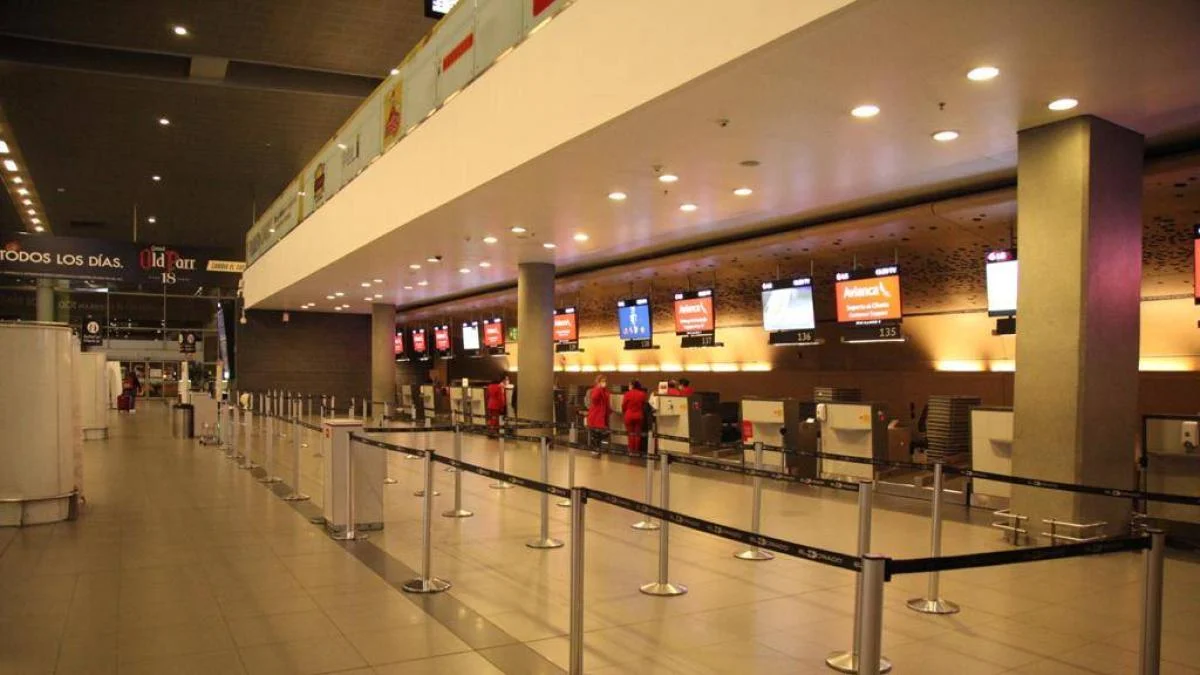
BOGOTÁ, Colombia — Aviation authorities in Colombia have confirmed that operations at the nation’s primary aviation hub, the El Dorado International Airport in Bogotá, are steadily returning to normal following a critical technical failure that…