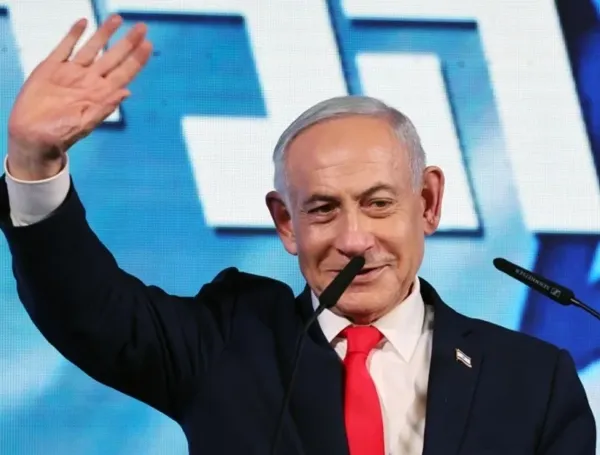
JERUSALEM — In a momentous political shift that marks the potential conclusion of an era, Israeli President Isaac Herzog officially announced his decision to task opposition leader Gadi Eisenkot with the mandate to form a new government. The pivotal decision follows a rigorous round of consultations with the various political factions represented in the Knéset, the Israeli parliament. Eisenkot successfully consolidated a decisive parliamentary majority following the general elections held on October 27, 2026, surpassing the long-serving incumbent, Benjamin Netanyahu.
According to an official statement released by the President’s Residence and confirmed by the EFE news agency, Herzog formally invited Eisenkot to the presidential compound. The official mandate-handing ceremony is scheduled for Sunday at 5:00 p.m. local time (15:00 GMT), setting the clock ticking on a high-stakes legislative drama that will shape the geopolitical and domestic trajectory of Israel for years to come.
Main Facts: The Numbers Behind the Mandate
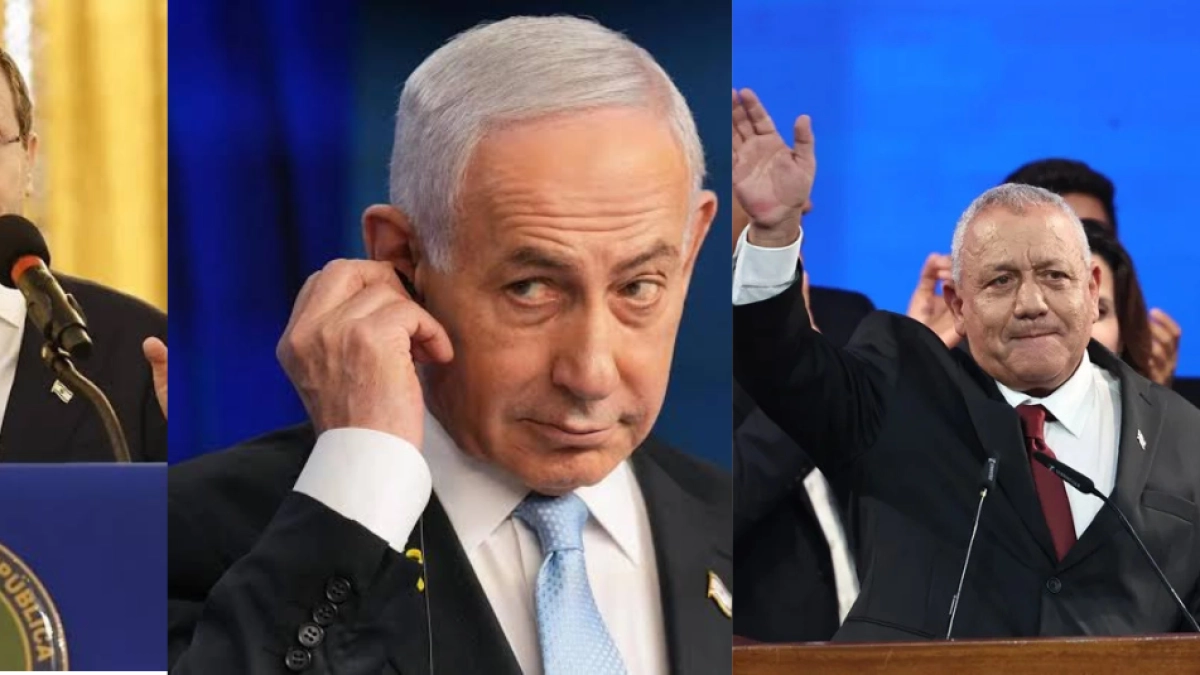
The transition of the mandate comes after a mathematics-driven reality check on the floor of the Knéset. During the formal consultations with parliamentary blocs, Gadi Eisenkot secured a commanding total of 67 recommendations from newly elected lawmakers. In stark contrast, Benjamin Netanyahu—who has served as Israel’s prime minister for a cumulative total of 19 years across multiple periods—managed to secure only 46 supporting recommendations.
The tipping point in the delicate calculus of Israeli coalition-building occurred when the ultra-Orthodox party United Torah Judaism (UTJ), which controls 7 seats and has historically been a reliable pillar of Netanyahu’s right-wing blocs, opted to withhold its endorsement and declined to recommend any candidate. This abstention effectively paralyzed Netanyahu’s path to the threshold required to claim the first opportunity to form an executive branch, clearing the lanes for the opposition’s rise.

Eisenkot’s path forward, however, will not be a walk in the park. Constructing a viable, stable coalition in Israel’s hyper-fragmented political ecosystem requires delicate compromises among disparate ideological factions. As the leader of the centrist Yashar! party, Eisenkot must now weave together a coalition capable of surviving both domestic socioeconomic pressures and intense regional security dynamics.
Chronology of Events: From the October 27 Elections to the Presidential Decree
To fully understand how Israel arrived at this diplomatic and domestic crossroads, it is vital to trace the timeline of events leading up to President Herzog’s decree:

- October 27, 2026: Israeli citizens head to the polls in a high-stakes general election defined by deep-seated debates over national security, economic stability, and the future of the nation’s governance.
- Late October – Early November 2026: As votes are finalized and tallied, preliminary seat distributions reveal a paralyzed right-wing bloc unable to cross the magical 61-seat majority threshold on its own, largely due to shifting alliances and the pivotal neutrality adopted by parties like United Torah Judaism.
- November 6–7, 2026: President Isaac Herzog opens formal consultations at the presidential residence, inviting leaders from every elected faction in the Knéset to declare their official recommendations for the next prime minister.
- November 7, 2026 (Afternoon): Tabulation of the consultations reveals that Gadi Eisenkot has clinched 67 recommendations, eclipsing Netanyahu’s 46.
- November 7, 2026 (Evening): President Herzog officially announces his decision to bypass the incumbent and task Eisenkot with forming the next government, inviting him to a formal investiture ceremony set for Sunday evening.
Supporting Data and Legal Framework: The 28-Day Countdown
Under Israeli Basic Law, the designated prime minister does not automatically assume power upon receiving the mandate; rather, they enter a rigorous, high-pressure negotiation phase to construct a government that can win a vote of confidence in the Knéset.
- The Initial Window: Upon receiving the mandate from the president, the candidate is granted a strict window of 28 days to successfully assemble a coalition cabinet and present its guidelines and ministerial lineup to parliament.
- The Extension Period: Recognizing the notorious complexity of Israeli coalition math, the law permits the president to grant an extension of up to 14 additional days if the candidate demonstrates substantial progress in negotiations but requires more time to finalize agreements.
- The Alternative Scenario: If Eisenkot fails to secure a confirmed majority government within the maximum 42-day window, the constitutional framework dictates that the president may transfer the mandate to an alternative candidate or return the decision back to the Knéset, opening the door to further political deadlock or even the specter of repeat elections.
Given the deeply polarized nature of the current parliament, Eisenkot and his negotiating teams will need to work around the clock to finalize ministerial portfolios, policy compromises, and coalition agreements before the clock runs out.
Official Responses: Netanyahu’s Unity Plea vs. The Opposition’s Retort
The announcement sent immediate shockwaves through the Israeli political establishment, prompting rapid, contrasting reactions from the key players involved.
Benjamin Netanyahu’s Call for a Unity Government
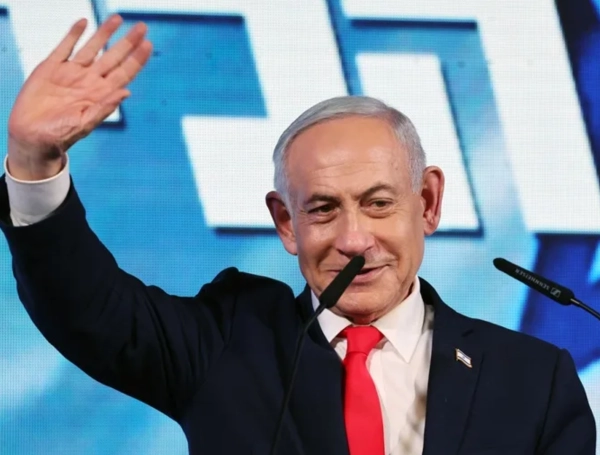
Faced with the tangible prospect of losing power after nearly two decades at the helm, outgoing Prime Minister Benjamin Netanyahu released a dramatic video statement. Eschewing his usual hardline partisan rhetoric, Netanyahu appealed for the rapid formation of a broad "unity government."
Speaking directly to the public and political actors, Netanyahu argued that national survival demands crossing ideological lines. His proposed framework aims to co-opt elements of the opposition while explicitly seeking to block Arab political parties from securing influence or integration within the upcoming executive branch. Political analysts note that this maneuver is designed to put pressure on centrist elements within Eisenkot’s orbit, attempting to reframe the political narrative around security unity rather than partisan replacement.
The Opposition’s Counter-Punch
The response from the opposition camp was swift and uncompromising. Yashar!, the political faction led by Eisenkot, publicly dismissed Netanyahu’s televised appeal, labeling it a "historic speech" born entirely out of the desperation of losing power.

In a strongly worded statement, Yashar! directly targeted the legacy of the outgoing administration. The party urged Netanyahu to abandon his long-standing reliance on extremist right-wing elements and instead demonstrate true statesmanship by considering an unconditional role—or at least non-obstructive cooperation—within a stable, pragmatic administration led by Eisenkot. The opposition maintains that Israel’s democratic institutions require a clean break from polarizing policies and a return to consensus-driven governance.
Implications for Israel’s Domestic and International Future
The ascension of Gadi Eisenkot to the role of prime-minister-designate carries profound implications for both domestic policy and Israel’s standing on the global stage.

Domestic Re-Alignment
For domestic observers, an Eisenkot-led government promises a significant shift in tone and administration style. Known for his methodical, military-strategic background as a former Chief of General Staff of the Israel Defense Forces (IDF), Eisenkot has cultivated an image of pragmatism and institutional respect. His administration is expected to focus heavily on repairing internal societal fractures, addressing pressing economic concerns—such as the rising cost of living and taxation debates—and redefining the relationship between the state and ultra-Orthodox communities, particularly regarding military enlistment and civic obligations.
Foreign Policy and Regional Dynamics
Internationally, Western allies and regional partners are watching the transition closely. An administration led by Eisenkot could herald a recalibration of diplomatic strategies, particularly concerning ongoing regional conflicts, normalization agreements, and the management of strategic alliances. While Israel’s foundational security doctrines are expected to remain robust regardless of who sits in the Prime Minister’s Office, the stylistic approach to diplomacy under Eisenkot is anticipated to be more aligned with traditional statecraft and multilateral consultation.

As Sunday’s official ceremony approaches, all eyes in Jerusalem and beyond are fixed on the President’s Residence. Gadi Eisenkot steps forward not only to claim a mandate, but to shoulder the monumental task of uniting a fractured nation and steering it through one of the most complex chapters in its modern history.