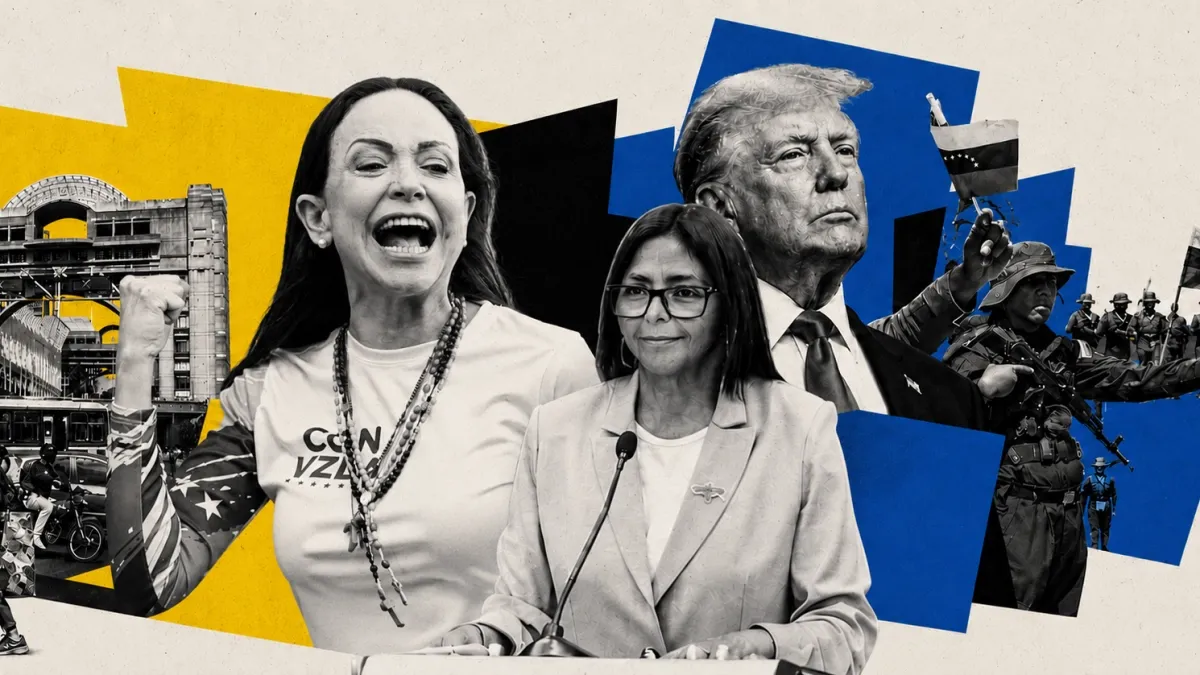
Caracas — The unexpected reappearance of opposition leader and Nobel Peace laureate María Corina Machado on Venezuelan soil has sent seismic shocks through the nation’s political landscape. After enduring years of administrative persecution, intense surveillance, and a prolonged period of operating primarily through digital channels from abroad, Machado’s physical return to Caracas has fundamentally altered the power dynamics between the ruling chavista regime and the democratic opposition.
Her homecoming—achieved after a clandestine entry following seven previous attempts—not only galvanizes the disillusioned citizenry and unites fragmented anti-government factions, but it also places immense pressure on executive figures such as Delcy Rodríguez, while intensifying the watchful gaze of the international community, most notably the United States. As Venezuela approaches what many hope will be a turning point, the nation stands at a critical geopolitical and social crossroads.
1. Main Facts: A Paradigm Shift in Venezuelan Politics
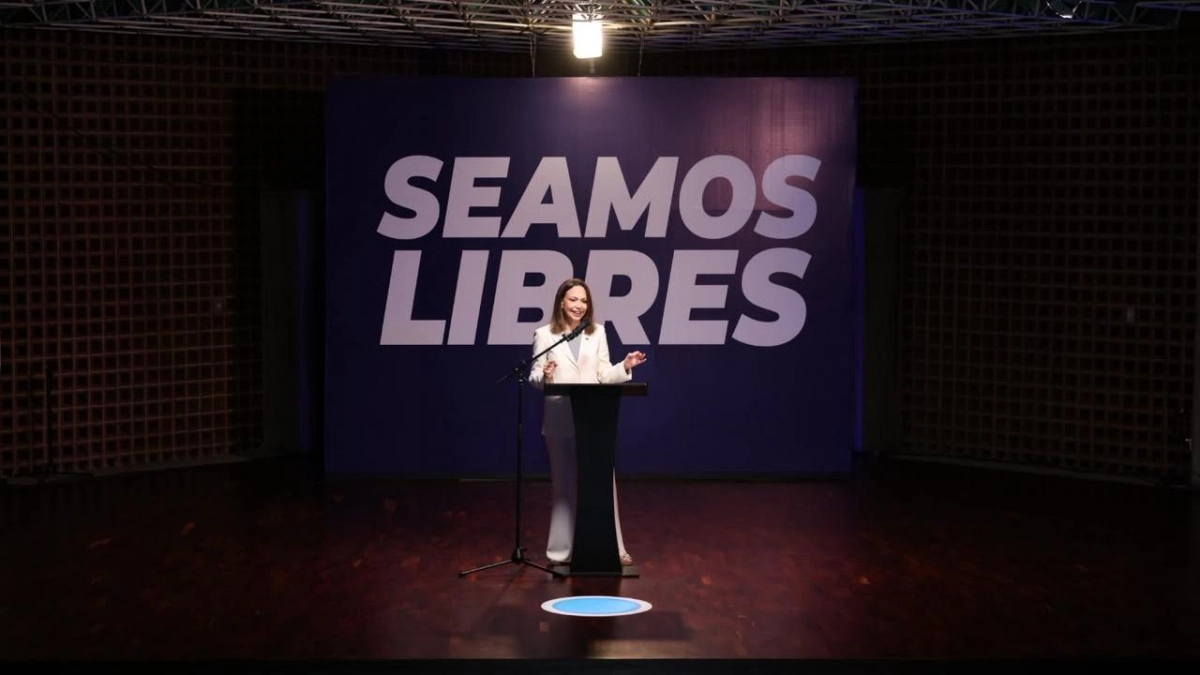
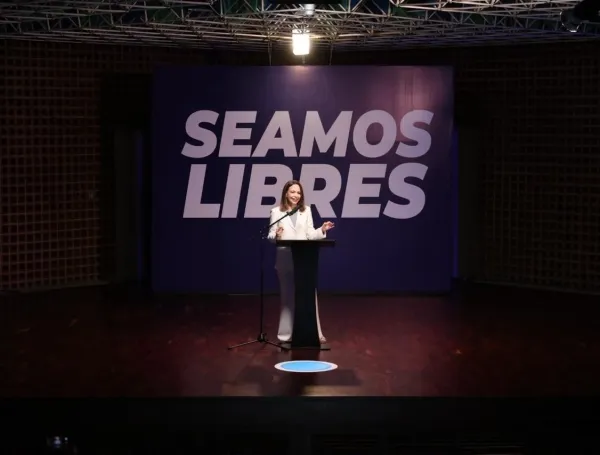
The core development centers on Machado’s dramatic physical return to Caracas and her subsequent address at the Universidad Católica Andrés Bello (UCAB)—her alma mater, where she graduated as an engineer. Standing before an enthusiastic crowd of supporters, students, and civic leaders, Machado made her intentions unequivocally clear: "I came back to finish a task and fulfill a mandate."
Rather than offering a traditional political rally, her discourse emphasized a collective national effort. "We want it to be a Venezuelan-style transition," she asserted. "We want millions of Venezuelans to be part of the transition design and the new Venezuela. No durable institution can be built turning its back on the people."

Machado’s return serves as a direct challenge to the normalization narratives pushed by the central government. By establishing a physical presence inside the country, she has eliminated the primary critique often leveraged against remote leadership: that digital activism lacks the immediate, grassroots gravity required to dismantle entrenched authoritarian structures. With a public approval rating consistently polling well above 60%, Machado commands a level of popular backing that makes ignoring her presence impossible for the current administration.
Concurrently, the opposition’s unified strategy—backed by the Plataforma Unitaria—insists on a hard timeline: presidential elections must take place no later than 2027, aligning with benchmarks and roadmaps previously supported by Washington and international observers.
2. Chronology of Events: From Clandestine Return to Political Confrontation
To fully understand the gravity of the current moment, it is essential to trace the sequence of events that culminated in Machado’s public emergence:
- Late October (The Clandestine Arrival): After seven failed attempts due to tight border controls and intelligence tracking, María Corina Machado successfully slips back into Venezuelan territory. She purposefully keeps the logistics and methods of her entry confidential to protect the network of citizens who assisted her passage.
- The Days Leading to the Announcement: Rumors swirl across Caracas regarding heightened security movements and unconfirmed sightings of opposition leaders. Civil society organizations and international embassies prepare for a significant political shift.
- Thursday, October 31, 2026 (Simultaneous Moves):
- The Officialist Pivot: Barely an hour before Machado’s scheduled address, Delcy Rodríguez appears on national television. Wearing strikingly similar attire, Rodríguez attempts to preempt the opposition’s momentum by announcing the end of arbitrary detentions, promising a renovation of the National Electoral Council (CNE), and stating that elections will be held when they "correspond."
- The Opposition Mobilization: María Corina Machado steps onto the stage at the UCAB Aula Magna. In her landmark press conference, she declares the democratic transition "irreversible," denies any backroom deals or contact with Rodríguez, and demands a citizen-led transition plan.
- Post-Speech Repercussions: Opposition leaders like Delsa Solórzano rally behind Machado’s legal right to reside and conduct politics freely in Venezuela, while officialist figures like Interior Minister Diosdado Cabello publicly dismiss the events as a "cardboard theater show" intended to mask the opposition’s supposed waning influence.
3. Supporting Data and Sociological Context
The resurgence of Machado’s physical leadership is underpinned by profound socio-economic and demographic realities within Venezuela:
- Public Sentiment and Popular Support: Independent polling data and sociological evaluations—such as those highlighted by analyst Ricardo Ríos—indicate that Machado’s approval rating comfortably exceeds 60%. This high sentiment is heavily driven by accumulated social exhaustion, hyper-inflationary pressures, and the continuous decay of public services (water, electricity, healthcare, and education).
- Demographic Urgency: Millions of displaced Venezuelans scattered across the globe look toward a structured transition as their only hope for repatriation. The average citizen, facing a severe cost-of-living crisis, views political change not as an abstract ideological victory, but as an immediate matter of survival and family reunification.
- Civil Society Alignment: Human rights organizations, including PROVEA (represented by Óscar Murillo), have emphasized that robust, cohesive leadership is indispensable to force institutional reforms. They argue that civil society must work in tandem with political actors to hold authorities accountable regarding detained dissidents and delayed constitutional processes.
- International Backing and Economic Leverage: The United States and regional multilateral bodies continue to act as external anchors. Washington’s positioning is clear: sanctions relief and normalized bilateral relations remain strictly conditioned upon verifiable democratic milestones, transparent electoral arbitrated bodies, and the full restoration of political rights.
4. Official Responses and Institutional Reactions
The reaction from the state apparatus highlights deep internal divisions and an acute anxiety regarding how to handle a leader with immense popular momentum without triggering mass civic unrest or severe international backlash.
- Delcy Rodríguez and the Moderation Narrative: Seeking to project an image of administrative pragmatism, Delcy Rodríguez’s recent public appearances have attempted to signal openness. By pledging to reform the CNE and curb arbitrary detentions, the executive branch is trying to appease international creditors and regional governments (such as Brazil and Colombia) that have long pushed for institutional normalization. However, by refusing to set a definitive date for presidential elections—clinging instead to the ambiguous phrase "when they correspond"—Rodríguez exposes the regime’s reluctance to relinquish absolute control.
- Diosdado Cabello and Hardline Retoric: In stark contrast to Rodríguez’s measured tone, hardliner and Interior Minister Diosdado Cabello resorted to aggressive public dismissals. Cabello characterized Machado’s return and the subsequent media coverage as a "show" engineered to distract from domestic issues. This duality within the government reveals a regime caught between the necessity of international engagement and the hardliners’ traditional impulse toward confrontation.
- The Opposition Coalition (Plataforma Unitaria): Through voices like Delsa Solórzano, the democratic coalition has reaffirmed its unwavering support for Machado as the legitimate standard-bearer. The coalition’s strategy focuses on a multi-step transitional framework:
- Restructuring the Supreme Tribunal of Justice (TSJ) before the close of the year.
- Appointing a technically sound, transparent, and balanced National Electoral Council (CNE).
- Scheduling a free and competitive presidential election within a strict six-month window following the formal declaration of absolute vacancy or a regulated transition framework.
5. Implications for the Future: A Nation at the Crossroads
Political scientists like Benigno Alarcón have noted that Machado’s physical presence radically shifts the tactical calculus. "It is not the same thing to do politics via social media from abroad as it is to do it standing right here," Alarcón observed. "The democratic opposition recognizes her as the undisputed leader and will rally behind her command. This significantly increases the probability of a genuine transition scenario."
Nevertheless, profound obstacles remain. The persistent threat of political disqualifications, the lack of an agreed-upon electoral calendar, and the immense task of rebuilding an impartial electoral arbiter are hurdles that cannot be easily swept aside by enthusiasm alone.
For the everyday citizen—such as Carmen Ortiz, a Caracas retiree who welcomed Machado with tears of hope—the stakes could not be higher. "I am here for my children," Ortiz shared with reporters. "Because I finally believe we are going to reclaim our country and our freedom."
Ultimately, Venezuela faces a defining historical moment. The convergence of relentless internal civic pressure, a unified political opposition led once again from within national borders, and strategic international diplomacy will test whether peaceful, negotiated democratic transition remains achievable in a nation that has suffered a decade of political polarization and socio-economic collapse. The coming months will determine if the promise of 2027 becomes the dawn of a new democratic republic or another missed opportunity in Venezuela’s turbulent modern history.