By Juan Sebastián Lombo Delgado
Political Redaction & Investigative Unit
Published: October 28, 2026
Main Facts: The Clash Between Executive Communication and Regulatory Oversight
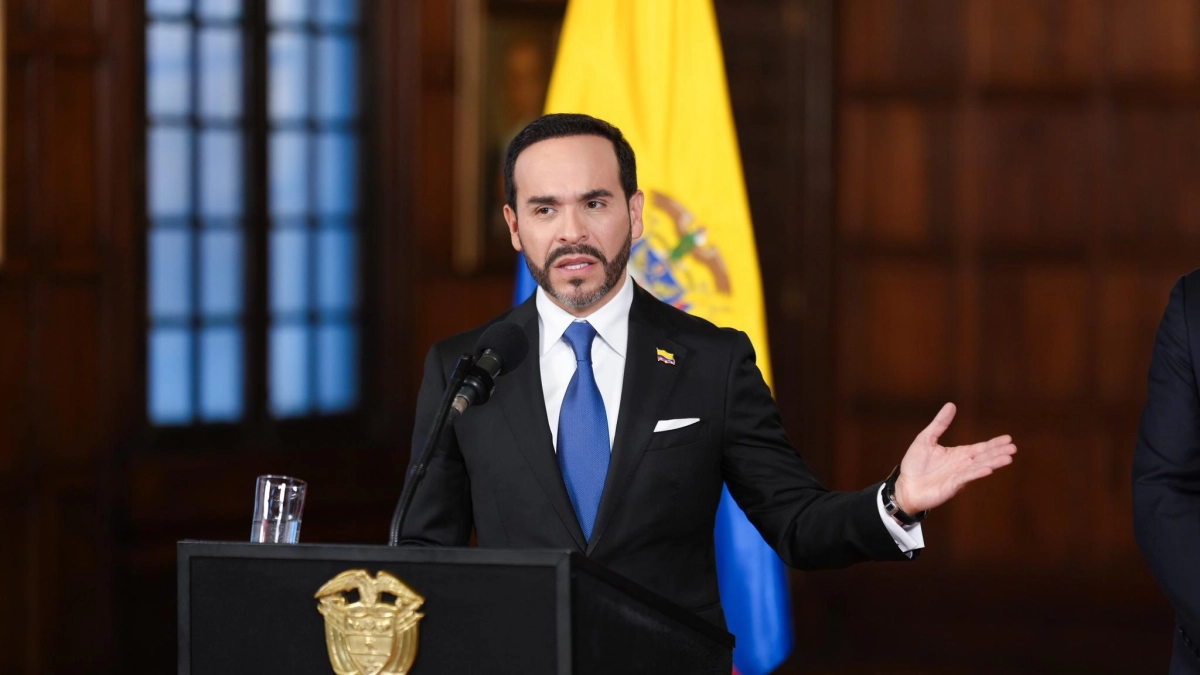
The Communications Regulation Commission (CRC)—an entity that typically operates away from the national spotlight—has emerged as a central institutional watchdog during the administration of President Abelardo De La Espriella. Tasked by the Council of State with regulating access to national television broadcasts and managing the allocation of public broadcast spectra for presidential addresses (alocuciones), the CRC has found itself repeatedly at odds with the executive branch.
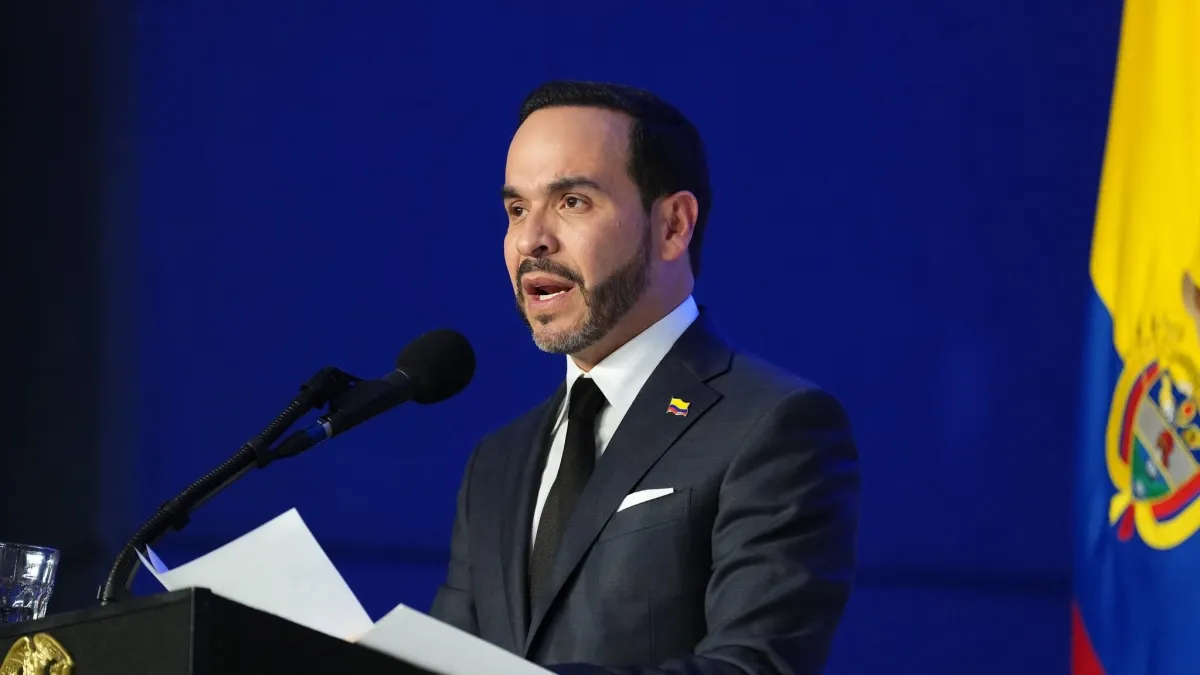
Since President De La Espriella assumed office, the CRC has granted approval for all seven of his requested national addresses. However, these authorizations have not come without institutional friction. Alongside each approval, the commission has issued rigorous technical reports detailing a series of escalating warnings and observations regarding how the administration utilizes public airwaves.
At the heart of the controversy is a fundamental tension between the executive’s desire to communicate directly with citizens and the strict legal parameters established by the Council of State. According to the regulatory framework, presidential addresses must be exceptional, limited in thematic scope, bound by time constraints, and—crucially—free from recurrence. The CRC’s latest evaluations indicate that the De La Espriella administration has systematically pushed, and arguably breached, these boundaries through frequent weekend broadcasts, extended runtimes, and unauthorized diversions into political defense, personal leadership reflections, and criticisms of the media and political opposition.

Despite these pointed warnings, the regulatory body has not blocked any of the president’s requests to address the nation. This dynamic has sparked a broader debate in Colombian politics about the limits of presidential communication, the independence of regulatory bodies, and the democratic implications of utilizing mandatory primetime broadcasts for political discourse.
Chronology of Broadcasts and Regulatory Warnings
A chronological review of the CRC’s evaluation reports reveals a clear trajectory of mounting institutional concern over the frequency and content of President De La Espriella’s televised messages. While initial addresses passed with minimal scrutiny regarding their scheduling, a distinct pattern of bi-weekly and weekly interruptions to regular television programming has alarmed regulatory officials.

The Foundation of the Pattern (August – September 2026)
- August 17 & August 30, 2026: The administration initiated a rhythm of Sunday and holiday-lundi broadcasts. In the August 30 evaluation, the CRC registered its first notable content caution, noting that the president had included remarks regarding the Minister of Commerce, Mauricio Gómez, and his official visit to Japan—a topic entirely absent from the initial administrative request submitted to the commission.
- September 13 & September 27, 2026: While formal criteria were technically met during the mid-September broadcasts, the CRC used its evaluation reports to issue a formal admonishment. The commission explicitly instructed the Presidency that national addresses are not appropriate forums for general governmental accountability reports—specifically regarding the handling of a regional earthquake tragedy that occurred on August 10. The regulator emphasized that utilizing mandatory broadcast time for administrative progress updates violates the intended emergency-or-policy-specific nature of alocuciones.
Escalation and Overt Warnings (October 2026)
- October 12, 2026: The regulatory friction intensified during the national address on this date. Although the overarching request ostensibly focused on institutional actions concerning political violence and the protection of democratic exercise, the CRC noted a stark departure from the approved scope. The president dedicated segments of the address to discussing the "Talent Bank" initiative and leveling reproaches against the previous government. Furthermore, the commission flagged that a generalized thematic request had been used to deliver a tribute to the late former senator and political leader Miguel Uribe Turbay, crossing the line of thematic limitation.
- October 18, 2026: Just eight days after the previous intervention, another address triggered a formal reprimand concerning periodicity. The CRC formally noted: "While this Session approved the Presidency’s request, it is notable that the periodicity and frequency with which the Head of State is making use of the radio-electric spectrum begins to constitute a pattern that continually weakens compliance with the requirement of non-recurrence."
- The Most Recent Address (Late October 2026): The CRC’s cumulative frustration culminated in its most stringent evaluation to date. The commission documented multiple violations in a single broadcast:
- Time Overrun: The executive requested and was granted a 30-minute window, but the actual broadcast extended to nearly 40 minutes.
- Thematic Deviation: Towards the end of the broadcast, the president engaged in a comprehensive defense of his administration’s management, offered reflections on his government’s popular legitimacy, launched direct criticisms against political opponents and media sectors, and evaluated his own leadership style—none of which appeared in the initial docket submitted to the regulator.
Supporting Data: Frequency and Regulatory Metrics
To understand the weight of the CRC’s observations, it is necessary to examine the statistical and structural framework governing Colombia’s broadcasting sector.
- Seven and Counting: President De La Espriella has requested and received authorization for exactly seven national television addresses since taking office.
- The Cadence of Interruptions: Since August 2026, the scheduling data demonstrates a rigid rhythm:
- August: 17, 30
- September: 13, 27
- October: 12, 18, and the subsequent late-month broadcast.
- Timing Consistency: Every single address has been scheduled during prime evening viewing hours on Sundays or holiday Mondays—moments when national television viewership is traditionally at its highest, thereby maximizing audience reach while causing the maximum disruption to commercial and public programming schedules.
- The Legal Standard: The Council of State mandates that access to the national television spectrum for executive broadcasts must satisfy four cardinal pillars:
- Excepcionalidad (Exceptionality): Reserved for matters of supreme national interest.
- No Recurrencia (Non-recurrence): Must not become a regular or routine communications tool.
- Limitación Temática (Thematic Limitation): Must strictly adhere to the specific agenda items approved in advance by the regulatory authority.
- Proporcionalidad Temporal (Temporal Proportionality): Must respect the pre-approved time limits allocated for the transmission.
According to the CRC’s Content Audiovisual Session documents, the recurring bi-weekly and weekly scheduling directly undermines the non-recurrence principle, transforming an extraordinary constitutional mechanism into a routine platform for weekly executive commentary.

Official Responses and Institutional Positions
The standoff between the Communications Regulation Commission and the executive branch highlights the delicate balance of powers in contemporary Colombian governance.
The CRC, operating through its technical evaluation panels, has maintained a scrupulously legalistic and institutional posture. In its published reports, the agency has balanced the statutory duty to respect the executive’s ultimate authority to communicate with the public against its mandate to protect public airwaves from overuse. By consistently documenting deviations—ranging from unauthorized tributes to Miguel Uribe Turbay and the inclusion of the "Talent Bank" controversy, to broader systemic critiques of media outlets and political opponents—the CRC has built a robust paper trail. Legal analysts note that while these reports currently serve as formal warnings, they establish a foundational record that could later be utilized in constitutional or administrative litigation regarding executive overreach.

On the other hand, the Presidency of the Republic has defended its communication strategy as an essential component of direct democracy and governmental transparency. Representatives of the De La Espriella administration have argued that rapid political developments, security challenges, and the ongoing necessity to counter misinformation justify a proactive and frequent dialogue with the Colombian citizenry. From the executive’s perspective, technical limitations imposed by regulatory bodies should not infringe upon the democratically elected president’s fundamental capacity to report directly to the nation on matters of vital public concern.
Implications for Colombian Democracy and Media Freedom
The ongoing controversy surrounding President De La Espriella’s television addresses carries profound implications for the future of democratic governance, institutional checks and balances, and media independence in Colombia.
1. The Erosion of Regulatory Boundaries
When an independent or delegated regulatory body repeatedly flags violations of periodicity, time limits, and thematic scope without exercising its power to deny requests, a dangerous precedent is set. It signals that regulatory guardrails can be systematically bypassed as long as the executive acknowledges the warnings without altering its behavior. This dynamic risks reducing independent regulatory reports to mere symbolic gestures devoid of enforcement teeth.
2. The Weaponization of Public Airwaves
National television addresses interrupt commercial broadcasting across all major public and private networks simultaneously. Originally designed for genuine national emergencies or monumental policy announcements, their routine use for political defense, media criticism, and leadership self-assessment blurs the line between state communication and partisan campaigning. For media watchdogs and opposition groups, this utilization of the public spectrum grants an incumbent leader an unearned, unfiltered political advantage that circumvents traditional journalistic scrutiny.

3. Institutional Resilience at the Close of an Administration
As the political landscape shifts and institutions navigate the complexities of contemporary governance—marked concurrently by high-profile executive decisions such as the emergency contracting for national passports and intense legislative debates over reforms—the role of watchdog entities like the CRC becomes ever more critical. How the Colombian state manages the friction between executive communication and regulatory oversight will set a definitive benchmark for the health of the nation’s democracy in the years to come.