By Felipe Santanilla Ayala
Redacción Últimas Noticias
Updated: April 6, 2026, 6:21 PM
Main Facts
The political and institutional rift between regional authorities in Colombia and the central government has deepened significantly following a contentious decision regarding high-profile criminal figures. Andrés Julián Rendón, the Governor of Antioquia, has formally announced an aggressive legal offensive targeting recent administrative actions executed by the National Government and the Office of the Attorney General (Fiscalía General de la Nación).
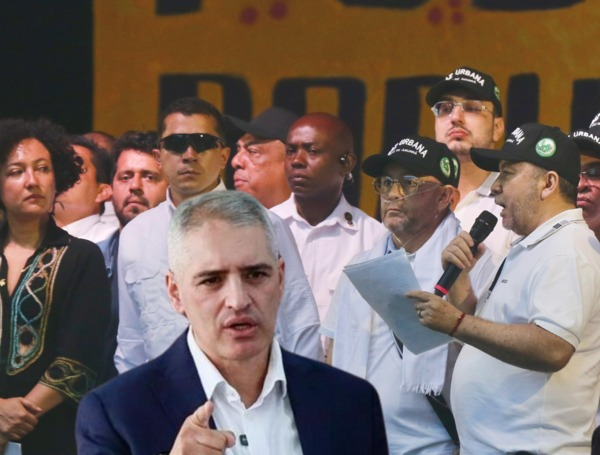
The crux of the dispute centers on an official resolution that orders the suspension of arrest warrants for 23 high-ranking leaders of dangerous criminal structures operating across Medellín and its surrounding metropolitan area, the Valle de Aburrá. These individuals—many of whom have already been released from custody—are designated as representatives or spokespersons for prominent criminal syndicates involved in extortion, drug trafficking, and urban violence, and are currently integrated into government-sponsored dialogue tables.
During an emergency security council meeting held alongside local leaders and mayors from the Valle de Aburrá, Governor Rendón confirmed that the departmental administration is filing a formal lawsuit for nullity (demanda de nulidad) before the Council of State. Alongside this constitutional challenge, the Gobernación of Antioquia is petitioning for an urgent precautionary measure to temporarily halt the enforcement and legal effects of the official resolution while the high court reviews its legality.

According to the departmental administration, the release and legal protection granted to these kingpins constitutes a severe blow to regional security, undermines public confidence in the rule of law, and disrespects the ongoing sacrifices made by the Military Forces and the National Police.
Chronology of Events
The escalation of tensions did not happen overnight; it represents the culmination of mounting friction between local governance in Antioquia and the peace policies championed by the administration of President Gustavo Petro.

- Early 2026 / Late March: Discussions surrounding the formal incorporation of urban gang representatives into peace initiatives intensify. Investigative reports and security briefings highlight that various criminal leaders in Medellín are being positioned as "peace spokespersons," drawing immediate scrutiny from local watchdogs and regional authorities.
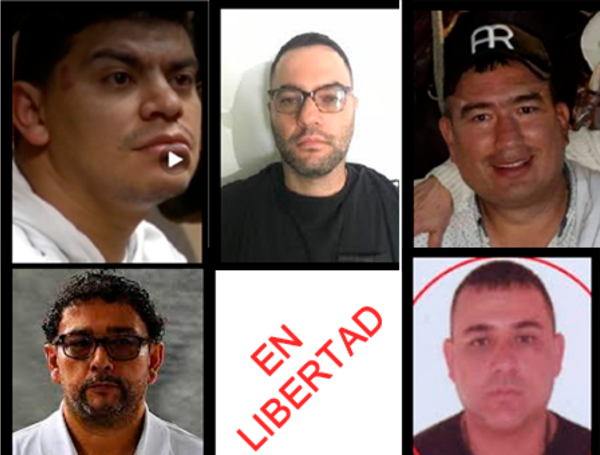
- April 1, 2026: Public awareness peaks regarding the precise scope of the measure. Reports confirm that out of the 23 cabecillas benefiting from the suspension of arrest warrants, at least 7 have already walked free, prompting intense public debates across Antioquia regarding urban safety and impunity.
- April 5, 2026: Governor Andrés Julián Rendón takes to social media and public forums to officially announce his legal counter-offensive. He condemns the executive branch and the Attorney General’s Office, utilizing the phrase "autopista de impunidad" (highway of impunity) to describe the legal mechanisms allowing dangerous criminals to evade justice.
- April 6, 2026 (Morning): During a security council meeting with Valle de Aburrá mayors, Governor Rendón formalizes the parameters of the legal action, confirming the filing at the Council of State. He links the national decisions directly to broader concerns over regional stability and democratic freedoms.
- April 6, 2026 (Afternoon): Updates from the departmental administration confirm that the legal strategy is expanding. Political figures, including the President of the Medellín City Council, Alejandro De Bedout, announce parallel judicial maneuvers to back the regional push against the controversial resolution.
Supporting Data and Context
The controversy is underpinned by complex security dynamics within Medellín and the broader Antioquia department. The Valle de Aburrá has historically served as an epicenter for powerful local criminal structures—often evolved from legacy cartels and integrated into loose confederations like "La Oficina."
The government’s peace strategy seeks to dismantle these urban militias and reduce homicide rates through negotiated surrenders or conditional dialogues. However, data from local security observatories emphasizes the volatile nature of these groups. Key data points framing the debate include:
- 23 Cabecillas Targeted: The administrative resolution explicitly shields nearly two dozen top-tier commanders of metropolitan criminal organizations from legal prosecution.
- Immediate Releases: Out of the total beneficiaries, at least 7 key figures have transitioned from maximum-security environments or fugitive status directly to freedom or protected status as "peace spokespersons."
- Parallel Legal Controversies: The decision coincides with other contentious judicial measures nationwide, including debates surrounding the legal treatment of figures linked to major criminal investigations, such as alias "Calarcá," which has further fueled skepticism among regional executives regarding the consistency of the Attorney General’s policies under current leadership.
- Institutional Dissent: The resistance is not confined to the Governor’s office. Legislative and municipal representatives, such as the leadership of the Medellín City Council, have mobilized to support multi-pronged legal challenges against executive overreach in criminal matters.
Official Responses and Public Statements
The public declarations surrounding the lawsuit reflect a profound ideological and political clash between local authorities tasked with territorial security and national officials pursuing a overarching "Total Peace" (Paz Total) agenda.
Governor Andrés Julián Rendón did not mince words when criticizing the central administration. In a public statement that quickly circulated across national media, Rendón accused President Gustavo Petro and the Attorney General of prioritizing concessions to criminals over the safety of everyday citizens:

"I am filing a lawsuit for nullity with a precautionary measure before the Council of State: Gustavo Petro and the Prosecutor General are releasing criminals, undermining justice, and betraying the victims, judges, prosecutors, police officers, and soldiers who have risked their lives to capture them. They are building a highway of impunity…"
Rendón further expanded on his criticisms during his address to local mayors, drawing comparisons to other controversial national decisions:
"On one hand, Prosecutor Camargo has recently mentioned that arrest warrants against alias ‘Calarcá’ must be lifted, and now she gives a free pass to the worst thugs in Antioquia. By God, it infuriates them that our people vote with freedom in the ballot boxes."
The governor argued that the institutional concessions extended to armed actors are being weaponized to exert psychological pressure on the civilian population, thereby infringing upon regional autonomy and voter independence. From the perspective of the Gobernación, undermining the local police and military apparatus demoralizes the rank-and-file personnel who fought for years to dismantle these very criminal networks.

While national executive branches and the Office of the Attorney General have previously defended these measures as legal instruments authorized under peace framework legislation designed to achieve structural dismantling of armed groups, regional leaders maintain that the execution of these policies sacrifices local security for speculative political outcomes.
Implications for Regional Security and the Rule of Law
The legal battle initiated by Governor Rendón carries profound implications for Colombia’s legal and security landscape, setting up a high-stakes constitutional showdown between regional autonomy and national executive powers.

- Judicial Precedent at the Council of State: Should the Council of State accept the Gobernación’s petition for a precautionary measure, it would temporarily freeze the suspension of the arrest warrants, forcing the 23 kingpins back onto the radar of law enforcement. A ruling in favor of the nullity demand could severely constrain the executive branch’s capacity to unilaterally suspend judicial processes for criminal actors under the guise of peace dialogues.
- Escalation of Decentralized Opposition: Antioquia has frequently positioned itself as a bastion of institutional resistance against central government policies. This judicial offensive signals a growing trend where regional departments utilize the judiciary to block national security directives that they deem detrimental to local stability.
- Impact on the Police and Military: Morale within the security forces remains a central talking point for regional leaders. Law enforcement agencies that expend resources, intelligence, and occasionally blood to capture high-value targets frequently express frustration when those same targets are released via administrative decrees. The lawsuit attempts to provide a legal validation of that frustration.
- Electoral and Territorial Control: Governor Rendón’s warnings regarding the use of armed groups to intimidate local populations underscore fears that suspended criminals could leverage their newfound freedom to reassert territorial dominance, influence local politics, and coerce communities ahead of future electoral cycles.
As the legal documents are processed by the Council of State and additional actions are prepared by municipal leaders in Medellín, all eyes remain on the capital to see whether the judiciary will intervene to halt one of the most ambitious—and polarizing—elements of the national peace architecture.