By Digital Reach Desk
Published: October 26, 2026
Main Facts: A Modern Twist on a French Classic
In the ever-evolving world of haute cuisine and home gastronomy, few things capture the imagination quite like taking a familiar, everyday ingredient and transforming it into an extraordinary culinary masterpiece. This is precisely what acclaimed chef José Ra Castillo has achieved with his latest viral creation: the Banana Brûlée with a Creamy Spoonful.
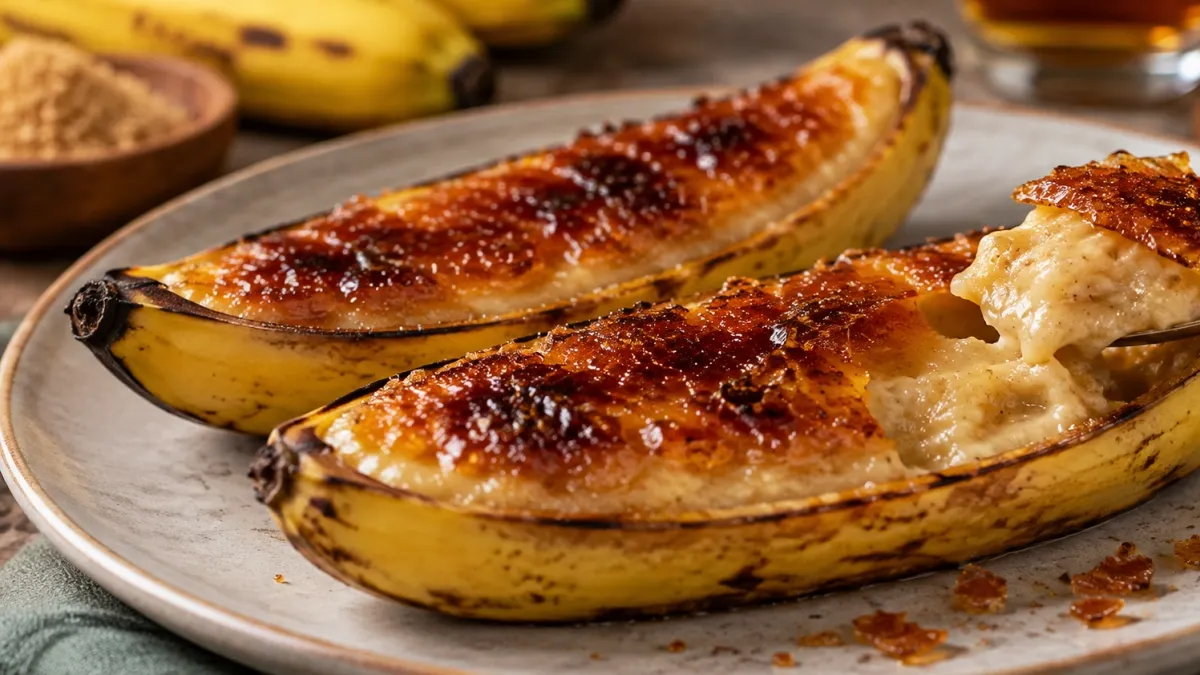
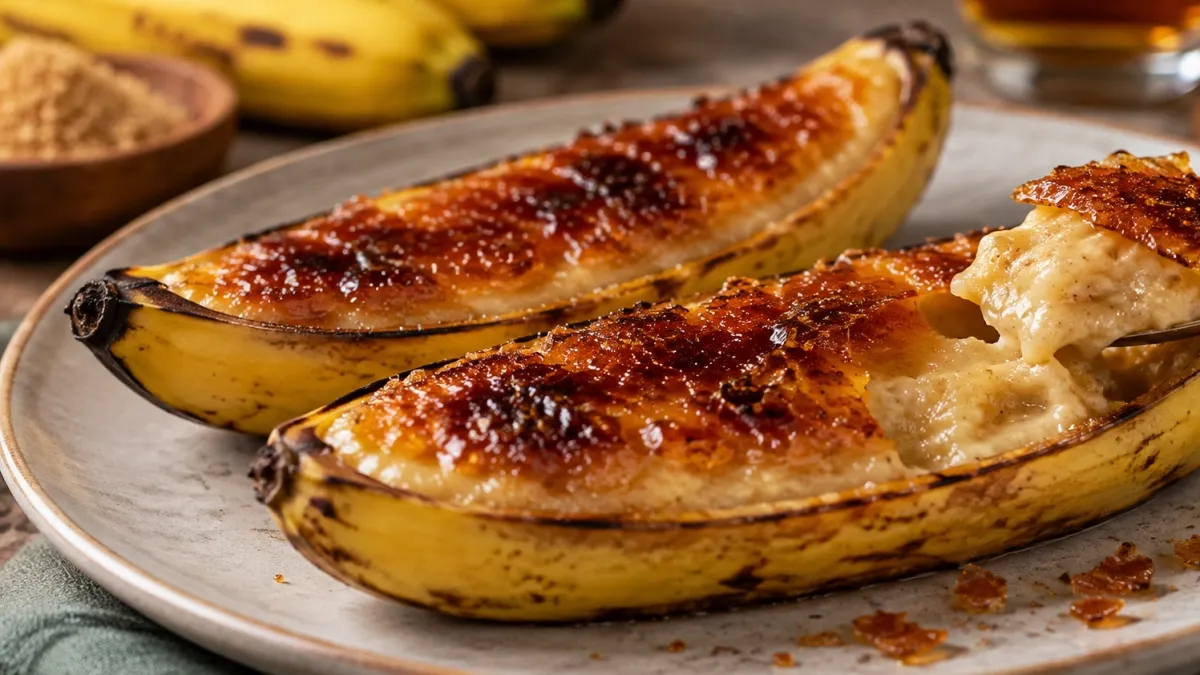
Moving far beyond traditional fruit platters or standard baked goods, Castillo has reimagined the classic French crème brûlée—traditionally a rich custard encased in a fragile, glass-like sheet of caramelized sugar—by utilizing the banana not just as a flavor profile, but as the actual vessel for the dessert.
Shared through his widely popular YouTube channel, the recipe ingeniously combines simple yet sophisticated components: fresh bananas, aromatic vanilla extract, rich milk, unrefined mascobado sugar, and a vibrant splash of rum for a dramatic culinary flair. The result is a texturally dynamic dessert that marries a warm, velvety, spiced banana-and-milk purée with a satisfyingly brittle, crackling crust of caramelized sugar on top.

What makes this recipe particularly ingenious is its zero-waste presentation. Instead of serving the mixture in traditional ramekins, Castillo instructs home cooks to hollow out the fruit and use the banana’s own skin as a rustic, organic serving boat. This visual and conceptual flair has quickly turned the recipe into a social media sensation, drawing praise from professional pastry chefs and home-cooking enthusiasts alike.
Chronology: From Concept to Kitchen Counter
The journey of the Banana Brûlée from a professional test kitchen to global home kitchens followed a carefully calculated digital release schedule:
- Early Preparation and Sourcing (Mid-October 2026): Chef José Ra Castillo conceptualized the recipe as a way to bridge French culinary technique with accessible, tropical ingredients. He finalized the ingredient proportions, emphasizing unrefined mascobado sugar for its deep, molasses-like undertones.
- The Video Premiere (October 26, 2026): Castillo published the step-by-step video guide on his official YouTube channel. The video immediately gained traction, showcasing the striking visual contrast of breaking through the hard sugar shell to reveal a rich, aromatic cream inside.
- Digital Virality and Media Pickup (Late October 2026): Food blogs, lifestyle publications, and digital news desks began curating the recipe, highlighting its accessibility and the clever use of the banana peel as a serving container.
- Global Replication: Home cooks around the world began recreating the dessert, sharing their flambeado (flambé) successes and safety warnings regarding the open flame required for the rum infusion.
Supporting Data: Ingredients and Breakdown
To successfully execute Chef Castillo’s recipe at home, precision is key. While exact quantities can be adjusted based on the number of servings, the core formulation relies on a specific balance of starches, sugars, and spirits to achieve the desired consistency.
Ingredient Checklist:
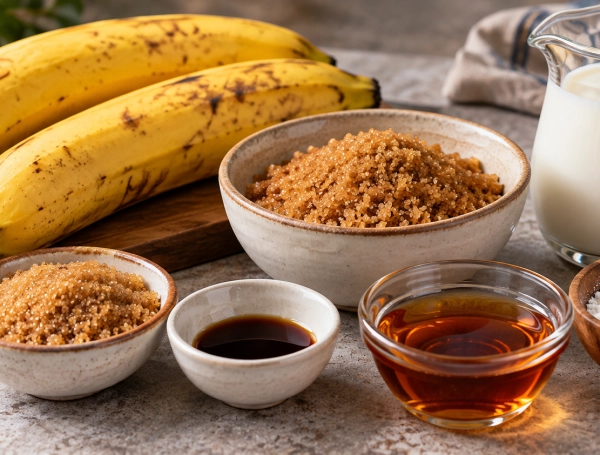
- Fresh Bananas: Firm, ripe bananas serve as both the primary base and the edible/organic containers.
- Mascobado Sugar: Divided into two distinct stages. A portion is used to cook and sweeten the banana pulp, while a heavier layer is reserved for the final crust. Mascobado is specifically chosen over standard white sugar because its molasses content yields a richer, more complex caramelization.
- Extract or Bean Vanilla: Provides a warm, aromatic depth that cuts through the natural sweetness of the fruit.
- Milk: Adds moisture and acts as the liquid base for the creaminess.
- Cornstarch (Fécula de maíz): The essential thickening agent mixed with the milk to transform the fruit and dairy mixture into a dense, spoonable paste.
- Rum: Used primarily for deglazing the pan and executing a dramatic flambé, imparting a subtle, sophisticated warmth to the mixture.
The Two-Stage Sugar Process
A critical data point in understanding this recipe is the dual application of the mascobado sugar. Unlike standard desserts where sugar is added strictly at the beginning for sweetness, this recipe leverages sugar’s chemical properties twice:
- In-Pan Reduction: The initial amount of sugar draws out the natural juices of the banana pulp during sautéing, helping to break down the fruit’s cellular structure into a smooth compote.
- Surface Torching: The final heavy blanket of sugar undergoes pyrolysis when exposed to intense heat, melting and rapidly cooling into the characteristic glassy "brûlée" crust.
Official Recommendations and Step-by-Step Instructions
For those looking to recreate the Banana Brûlée at home, Chef José Ra Castillo outlines a meticulous, multi-step process designed to guarantee optimal texture and presentation.
Step 1: Excavating the Fruit
Begin by taking a fresh banana and carefully slicing off approximately one-fourth of it longitudinally. Using a small spoon or knife, gently extract the internal pulp. Crucial instruction: Do not discard or damage the outer peel; ensure it remains structurally intact, as it will serve as your serving vessel once the filling is cooked.
Step 2: Sautéing and Flambéing
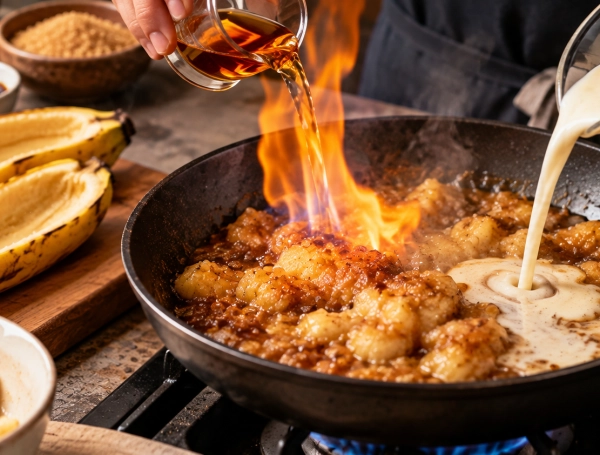
Transfer the extracted banana pulp into a wide skillet over medium heat. Add the initial portion of mascobado sugar (approximately 30 grams) along with a dash of pure vanilla extract. Allow the ingredients to marry and bubble gently. Once the mixture is cohesive, introduce the rum. Tilt the pan slightly away from you to safely ignite the alcohol, executing a professional flambé that burns off the harsh alcohol bite while retaining a deep, oaky sweetness.
Step 3: Thickening the Cream
In a separate small bowl, whisk together the milk and the cornstarch until completely dissolved with no lumps remaining. Pour this dairy-and-starch slurry directly into the skillet with the bubbling banana mixture. Continuously stir and mash the fruit with a wooden spoon or spatula until the mixture thickens into a rich, velvety, homogenous paste. Once this heavy consistency is achieved, remove the skillet from the heat source and allow it to cool completely to room temperature.
Step 4: Assembly
Take the reserved, hollowed-out banana peels. Spoon the cooled, thickened banana-and-milk cream back into the cavities, smoothing out the top surface with a spatula or the back of a spoon to create a flat, uniform canvas.
Step 5: Achieving the Brûlée Crust
To finalize the dessert, dust the remaining mascobado sugar (roughly 100 grams) evenly across the flat surface of the filling. Using a culinary kitchen torch (or a broiler if a torch is unavailable), heat the sugar until it melts, bubbles, and hardens into a solid, golden-brown glass-like sheet.

Implications: Safety, Culinary Trends, and the Future of Dessert
While the visual payoff of the Banana Brûlée is undeniably impressive, culinary experts and food safety advocates have emphasized several important implications surrounding the preparation of this viral dish.
Kitchen Safety and Flambé Precautions
The inclusion of a flambé step—igniting rum in a hot pan—has prompted culinary commentators to issue safety reminders. Professional kitchens are equipped to handle open flames, but home environments require heightened caution. Chef Castillo and safety advocates stress the following golden rules for home flambéing:

- Distance from Flammables: Always perform the technique away from overhanging paper towels, curtains, or wooden cabinets.
- Never Pour from the Bottle: The most common cause of kitchen fires during flambéing is pouring alcohol straight from the glass bottle into a hot pan, which can cause the flame to travel backward into the reservoir. Always measure the rum into a separate vessel before adding it to the skillet.
Sustainable Gastronomy and Zero-Waste Trends
Beyond the kitchen mechanics, the recipe taps into a broader, highly desirable cultural shift toward sustainability and zero-waste cooking. By repurposing the banana peel as a biodegradable, natural ramekin, the dish eliminates the need for ceramic or glass dishware, reduces cleanup time, and offers an aesthetically rustic presentation that resonates deeply with modern diners.
As digital platforms continue to democratize haute cuisine, recipes like José Ra Castillo’s Banana Brûlée prove that extraordinary culinary experiences do not require expensive imported ingredients. Instead, they require creativity, fundamental technique, and a willingness to look at everyday produce through an imaginative lens. Whether prepared for a quiet weeknight treat or served as the conversational centerpiece of a dinner party, this dessert firmly establishes the humble banana as a canvas for high culinary art.