Main Facts: An Urgent Government Response to High-Level Allegations
BOGOTÁ — In a swift and decisive executive action, the Colombian government has activated a comprehensive, high-priority security protocol to safeguard the life, physical integrity, and fundamental rights of 26-year-old Deyci Jiménez. The measure comes directly in response to explosive public revelations made by Jiménez regarding an alleged institutional network of young female contractors who were reportedly instrumentalized during the administration of former President Gustavo Petro.
The directive was issued following a direct command from the nation’s leadership. Working in tandem, the Ministry of Justice and Law and the Ministry of the Interior—currently headed by acting Minister Iván Cancino González—coordinated immediate protective measures alongside the National Protection Unit (UNP). The move was prompted not only by the severe nature of Jiménez’s public disclosures but also by her direct plea for state protection during an investigative interview with the national news magazine Semana.
According to government spokespersons, the activation of this emergency protection route leaves no room for administrative delays. The executive branch has underscored that ensuring the safety of whistleblowers and citizens who come forward with testimonies of public interest is a non-negotiable priority. Authorities have reiterated that no individual in Colombia should face intimidation, silencing, or threats for exercising their right to freedom of expression or for shedding light on potential abuses of state power.

Chronology of the Scandal: From Congressional Revelations to Whistleblower Testimony
To fully understand the gravity of the measures adopted by the current administration, it is essential to trace the timeline of events that brought this alleged network into the public eye.
September 2026: The DAPRE Revelations
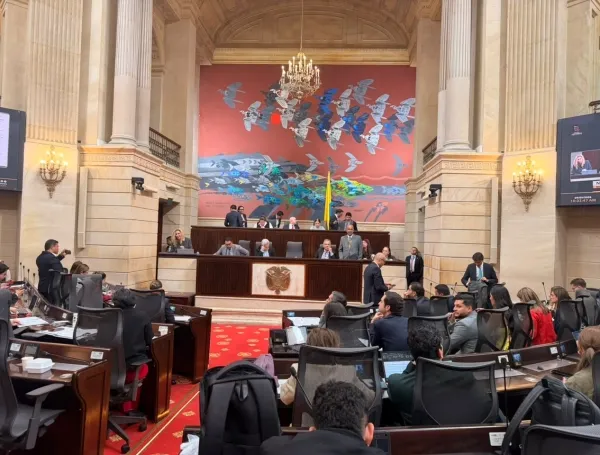
The first formal institutional warning regarding the alleged system of preferential contracting came to light during a heated political control debate in the Senate of the Republic. Carlos Ríos, the current director of the Administrative Department of the Presidency (DAPRE), took to the floor to denounce what he characterized as a systematic perversion of public resources within the nation’s highest office.
Ríos dropped a political bombshell by asserting that the Casa de Nariño had been utilized during the prior administration for purposes entirely divorced from governance. In his address, he alleged that a network had been meticulously organized to facilitate inappropriate activities, claiming that public funds were funneled through professional service orders (OPS) to secure the compliance and presence of nearly 50 young women.

"We are going to prove it to the Colombian people," Ríos stated during the congressional debate, describing how the executive mansion was allegedly operated. "How the Casa de Nariño was armed, organized, and configured for something different than governing—to party there, to bring women. Forty-eight women are talking with us about how, through a contract and an OPS, they were bound, they were instrumentalized in order to be with the president."
October 2026: Deyci Jiménez Steps Forward
The scandal escalated dramatically weeks later when 26-year-old Deyci Jiménez stepped out of anonymity to corroborate the broad strokes of Ríos’s allegations through a detailed, on-the-record interview with Semana.
In her testimony, Jiménez provided a granular account of how she was allegedly approached and integrated into the ecosystem surrounding former President Petro. She detailed the mechanics of an alleged pressure system wherein professional stability, lucrative state contracts, and service orders were reportedly dangled or tied directly to intimate encounters with the then-mandatary. Her account transformed an abstract political accusation into a deeply personal narrative of alleged institutional coercion, placing her at the center of a national firestorm.
Recognizing the immediate peril such a high-profile disclosure carried, Jiménez used her platform during the interview to urgently appeal to the government for state protection, fearing swift retaliatory actions or attempts to discredit her testimony.
October 25, 2026: Emergency Government Intervention
Responding to the dual pressures of protecting a vulnerable citizen and securing potential state witnesses, the administration of President Abelardo de la Espriella acted decisively. Within hours of the interview’s publication, the Ministry of Justice, the Ministry of the Interior, and the UNP formalized the emergency protection protocol. This intervention ensured that Jiménez’s physical safety would be immediately prioritized under high-security guidelines, insulating her from potential intimidation campaigns.
Supporting Data and Systemic Mechanics: The Anatomy of the Alleged Network
The core of the investigation revolves around the alleged abuse of public administration mechanisms—specifically, the misuse of Órdenes de Prestación de Servicios (OPS), or Service Provision Orders. In Colombia, OPS contracts are widely utilized by government entities to hire external professionals and technicians for specific tasks. However, critics and investigators have long pointed out that the flexibility of these contracts can render them vulnerable to clientelist manipulation or discretionary abuse.
According to testimonies presented by both DAPRE Director Carlos Ríos and whistleblower Deyci Jiménez, the alleged network operated on several distinct structural pillars:
- Targeted Recruitment: Young women, often facing economic precarity or seeking professional footholds within government agencies, were reportedly identified and brought into the orbit of high-ranking officials.
- Contractual Leverage: Rather than being hired strictly on merit or professional qualifications, recipients of these OPS contracts allegedly experienced systemic pressure where the renewal or acquisition of state employment was tied to personal, non-institutional demands, including intimate favors for the former head of state.
- Public Resource Allocation: The investigation highlights the core allegation that taxpayer funds were systematically utilized to finance this alleged dynamic, transforming state payroll mechanisms into personal instruments of coercion.
- Scale of Operations: While Jiménez represents a primary individual voice giving a human face to the phenomenon, administrative checks and preliminary internal audits referenced by the current DAPRE leadership suggest that upwards of 48 individuals may have been subjected to similar contracting patterns during the period in question.
Official Responses and Institutional Stance
The unfolding scandal has triggered a wall-to-wall reaction across Colombia’s political and judicial landscapes, drawing sharp lines between the current administration and the allies of the former president.
The Executive Branch: Zero Tolerance for Retaliation
In an official statement released by the Ministry of Justice and Law, the government emphasized that the protection of citizens who denounce corruption or abuse of power is an absolute constitutional duty.

"The safeguarding of human life and fundamental rights admits no dilations," the ministry’s communiqué read. It further stressed that the actions coordinated with the UNP would be executed with "strict diligence, absolute confidentiality, and unwavering respect for the rights of the citizen."
Acting Interior and Justice Minister Iván Cancino González reinforced this message in public statements, declaring that the Colombian state will not tolerate an environment of fear for those willing to testify about matters of severe public interest. "No one in this country should be silenced through threats, intimidation, or retaliations," Cancino stated, signaling that the executive branch stands ready to assist independent investigative bodies with any documentation or logistical support required to clear up the matter.
The Defense of Former President Gustavo Petro
As expected, allies and legal representatives of former President Gustavo Petro have pushed back aggressively against the accusations, characterizing the allegations as a coordinated political smear campaign designed to delegitimize his legacy and the political movement he represents.

While formal legal defenses are currently being prepared by Petro’s legal team, political defenders have argued that testimonies obtained from contractors under the current administration must be scrutinized for potential biases, political motivations, or coercion. They maintain that the former president governed with strict adherence to legal frameworks and that attacks targeting his personal conduct are part of a broader strategy by political adversaries to undermine his historic tenure.
Broader Implications for Colombian Democracy and Governance
The case of Deyci Jiménez and the broader allegations surrounding the instrumentalization of state contractors transcend a standard political scandal; they strike at the heart of institutional integrity, public trust, and gender equity in Colombia.
1. The Vulnerability of Public Contractors
The scandal has reignited a long-standing debate regarding the precarious nature of labor conditions within the Colombian public sector. The heavy reliance on short-term OPS contracts—often lacking robust labor protections, social security guarantees, or union representation—creates an inherent power asymmetry between state employers and contractors. Observers note that this structural vulnerability makes workers exceptionally susceptible to abuses of authority, administrative overreach, and implicit coercion.

2. The Intersection of Power, Gender, and Ethics
Beyond the administrative and fiscal irregularities implied by the alleged misuse of public funds, the human dimension of the case underscores severe ethical concerns regarding gender dynamics in high-profile political offices. The allegation that professional advancement was conditioned on personal compliance highlights systemic risks of exploitation within hierarchical power structures, prompting civil society organizations and feminist groups to demand rigorous, independent oversight into how authority is exercised within government buildings.
3. Judicial Accountability and Next Steps
With the executive branch actively shielding the primary whistleblower and the current DAPRE leadership committed to unearthing institutional records, the spotlight now shifts firmly to the Office of the Attorney General (Fiscalía General de la Nación) and the Supreme Court of Justice. These entities will be tasked with transforming political debates and media interviews into legally sound evidentiary processes.
Investigators will need to audit past contracting cycles, cross-reference payroll logs with access registries to the Casa de Nariño, and evaluate the corroborating statements of the nearly 50 women referenced by state officials. Only through transparent, rigorous judicial proceedings can the truth behind these grave allegations be established, ensuring that accountability prevails regardless of political affiliation.

As Deyci Jiménez remains under high-level state protection, Colombia watches anxiously, awaiting the next developments in a judicial and political drama that promises to test the resilience and independence of the nation’s democratic institutions for months to come.