By Sofia Gomez, Culture Desk
October 25, 2026
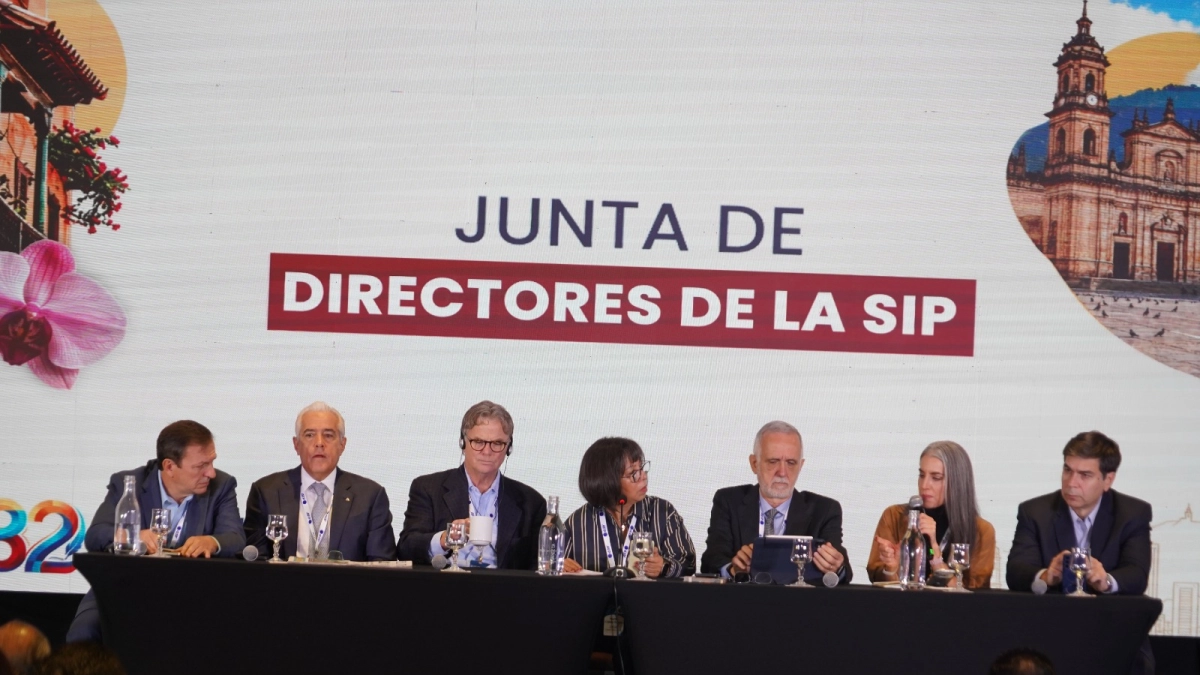
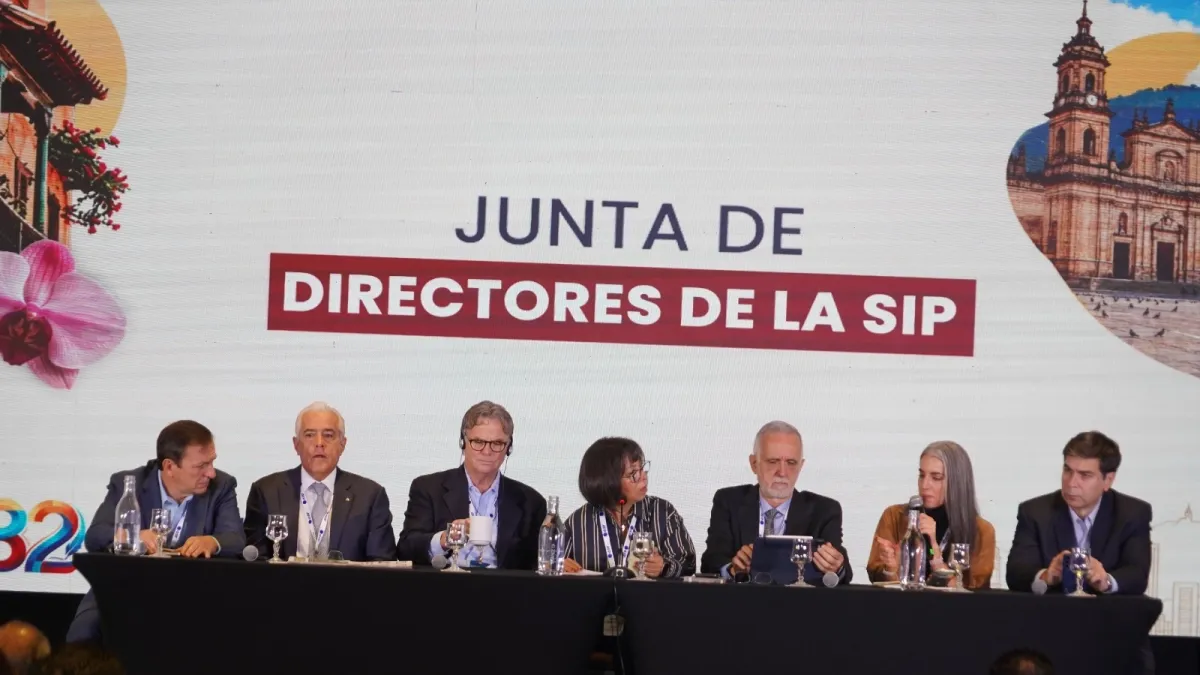
The 82nd General Assembly of the Inter-American Press Association (SIP, by its Spanish acronym) concluded this Sunday in Bogotá, leaving behind a sobering diagnosis of the state of journalism across the Americas. For four intense days, the Hotel Hilton Bogotá served as the epicenter of a high-stakes dialogue among the continent’s most influential media directors, editors, and journalists. The gathering, which addressed everything from the existential threat of artificial intelligence to the survival of independent journalism in increasingly authoritarian climates, marked a definitive turning point for the organization.
While the event served as a platform to celebrate editorial excellence, the underlying mood was one of urgent concern. The assembly’s final resolution painted a "bittersweet" panorama, highlighting that the fundamental right to report the truth is under siege from both violent criminal actors and systemic state-sponsored erosion of democratic norms.
The State of Press Freedom: A Continent Under Siege
The assembly’s concluding report did not mince words regarding the physical and structural risks facing media professionals. Violence remains the most immediate and lethal threat to the industry. During the final six months of 2026 alone, the toll has been staggering: two journalists murdered in Colombia, three in Mexico, two in Guatemala, one in Peru, and one in Haiti. The case of Wesly Renaud Jean, who remains missing in Haiti since September 12, serves as a grim reminder of the impunity that continues to plague the region.
The Rise of Structural Censorship
Beyond physical violence, the SIP highlighted a more insidious trend: the "structural" erosion of press freedom. This includes legal harassment, the weaponization of the judiciary to silence investigative reports, and persistent campaigns of stigmatization directed by high-ranking government officials.
"The disqualification of the press by political leaders is not merely rhetoric," the report noted. "It is a deliberate strategy to delegitimize the media, creating an environment of hostility that often leads to self-censorship and a chilling effect on critical coverage."

The assembly specifically pointed to the situation in Argentina, where the current administration has proposed legislation that uses "ambiguous language" to punish what it labels as "massive disinformation" and "manipulation of public opinion." Media leaders warned that such laws, while framed as efforts to curb fake news, are frequently used as tools to criminalize dissent and independent journalism.
Leadership Transition: A New Direction for 2027
A major highlight of the final session was the official handover of the SIP presidency. Pierre Manigault, the outgoing president, concluded his tenure by passing the torch to Carlos Jornet, the director of the Argentine newspaper La Voz del Interior.
Jornet, a veteran of the industry known for his staunch defense of democratic institutions, addressed the assembly with a clear sense of gravity. "I feel deeply honored by this appointment," Jornet stated. "However, we must recognize that the clocks are ticking faster. We are not just defending the news business; we are defending the very survival of democratic institutionalism."

Strategic Initiatives: The MediaLab
Under Jornet’s leadership, the SIP is launching a series of ambitious projects aimed at modernizing media operations. The most significant of these is the creation of a "MediaLab," a collaborative initiative spearheaded by Andrés Mompotes, director of EL TIEMPO (Colombia), and Ernesto Kraiselburd, director of El Día (Argentina).
The MediaLab will function as a hub for comprehensive training, focusing on:
- Editorial Evolution: Adapting storytelling techniques to reach younger, digital-native audiences.
- Commercial Sustainability: Developing new business models that reduce reliance on volatile advertising markets.
- Multiplatform Strategy: Mastering the technical nuances of AI-driven distribution and social media algorithms without compromising editorial integrity.
Furthermore, the SIP solidified its regional reach by announcing the integration of new media partners from Honduras, Paraguay, Costa Rica, Mexico, Miami, and Venezuela, signaling a renewed commitment to Pan-American unity.

The Technological Frontier: AI as Ally or Adversary?
A recurring theme throughout the assembly was the role of Artificial Intelligence (AI) in the newsroom. Marc Lacey, the editorial director of The New York Times, provided one of the most provocative contributions to the debate. Lacey argued that the current relationship between AI companies and media organizations is fundamentally extractive.
"These tech companies are building their products on the backs of our reporting," Lacey remarked. "They should be compensating media organizations for the high-quality, verified information that they use to train their models."
The sentiment was echoed by many in the room, who see AI as a "double-edged sword." While it offers tools for efficiency, data analysis, and personalization, it simultaneously threatens the business models that fund investigative journalism. The consensus among the delegates was clear: the industry must organize to demand fair intellectual property rights, or risk being cannibalized by the platforms that host their content.

Ethics in the Age of Algorithms: A Conversation on New Formats
In a standout session, the assembly explored the tension between traditional ethics and the "attention economy" of modern social media. The conversation featured veteran journalists Yolanda Ruiz and María Elvira Samper, creators of the successful podcast ‘Las Menopáusicas’.
The discussion centered on a vital question: can journalists maintain their professional standards while navigating the demands of algorithms?
"The platform changes, but the ethics do not," argued Yolanda Ruiz. "Contrast sources, provide context, do not lie, and do not manipulate the information. Whether you are writing for a broadsheet newspaper or recording a TikTok video, those pillars are non-negotiable."

María Elvira Samper added that the struggle is often one of survival. "Sometimes, sticking to your principles means losing audience share in the short term. But if we abandon the commitment to truth to chase clicks, we lose the only thing that gives us value in the long run: our credibility."
Awards and Recognition: Honoring the Defenders of Truth
The Bogotá assembly was also a time to celebrate excellence. The SIP awarded its prestigious prizes for 2026, honoring works that displayed courage and innovation.
- Executive of the Year: Pilar Gil, CEO of Prisa Media Spain, was recognized for her leadership in digital transformation.
- Presidential Award: In a surprise addition to the agenda, the SIP honored Roberto Rock, director of the Mexican outlet La Silla Rota, for his three decades of relentless advocacy for freedom of expression, often at great personal risk.
Implications for the Future: Looking Toward Panama 2027
As the delegates departed Bogotá, the mandate for the next two years was clear. The SIP is shifting from a purely observatory role to an active, interventionist stance. The upcoming 83rd General Assembly in Panama in 2027 will be tasked with evaluating the success of the MediaLab and the progress of legal challenges against anti-press legislation across the continent.

The resolution adopted on Sunday serves as a roadmap for the next two years. It focuses on:
- Direct Advocacy: Engaging with regional governments to repeal laws that criminalize defamation and misinformation.
- Safety Protocols: Strengthening the SIP’s Rapid Response mechanism for journalists under threat.
- Economic Viability: Creating regional coalitions to negotiate collective bargaining agreements with major AI platforms.
Conclusion: The Indispensable Pillar
The 82nd SIP Assembly concluded with a final, sobering reflection on the Declaration of Chapultepec, which posits that a free society is impossible without the free circulation of ideas. As global political landscapes shift toward polarization, the role of the media in the Americas has never been more precarious, nor more essential.
The "bittersweet" nature of the summit reflects the reality of the profession: the challenges are structural, the threats are real, and the business models are under immense pressure. Yet, the gathering in Bogotá demonstrated that the collective resolve of the continent’s editors remains unshaken. Whether in the face of criminal cartels, restrictive laws, or the rapid rise of AI, the message from the SIP is clear: the press will continue to report, to investigate, and to hold power to account. The road to Panama 2027 will be difficult, but the commitment to the democratic mission remains the industry’s north star.