By Edwin Caicedo | Environmental and Health Journalist
Published: October 25, 2026
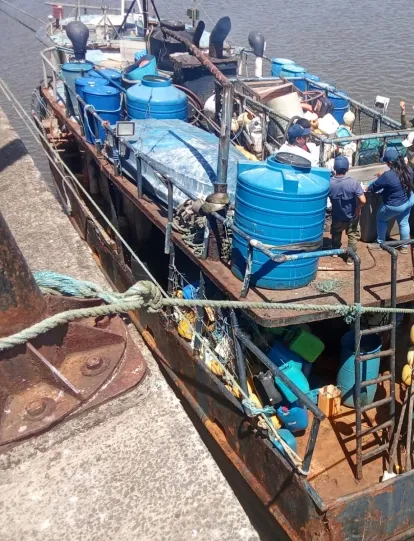
In Buenaventura, Colombia’s principal Pacific port, veteran fishermen share a grim consensus: going out to sea costs more with each passing tide. Trips now demand grueling journeys over ever-greater distances, yet the nets pull up fewer and fewer fish. Simultaneously, fewer young people dare to dream of a livelihood rooted in the artisanal fishing traditions of their ancestors.
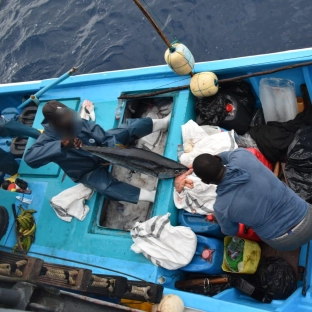
Beyond the deeply entrenched socio-economic inequality and urban insecurity plaguing "Tura," these communities face a less visible threat lurking offshore: unauthorized foreign and domestic vessels slipping into protected marine areas, stripping them of vital resources, and vanishing before law enforcement can intervene.
This crisis exposes a troubling disconnect between ambitious global conservation pledges and the harsh, unpoliced realities of the open ocean.
Main Facts: The Crisis in the Tropical Eastern Pacific
The Eastern Tropical Pacific Marine Corridor (CMAR)—encompassing waters shared by Colombia, Costa Rica, Panama, and Ecuador—is home to more than 2,600 species of marine flora and fauna, including endangered migratory giants like hammerhead sharks, sea turtles, manta rays, and humpback whales. Established in 2004 and expanded over two decades, CMAR now connects 11 core marine protected areas (MPAs), such as the Galapagos, Cocos Island, Coiba, Gorgona, and Malpelo.
However, artisanal fishing leaders, environmental scientists, and naval authorities warn that these zones are increasingly compromised by illegal, unreported, and unregulated (IUU) fishing.

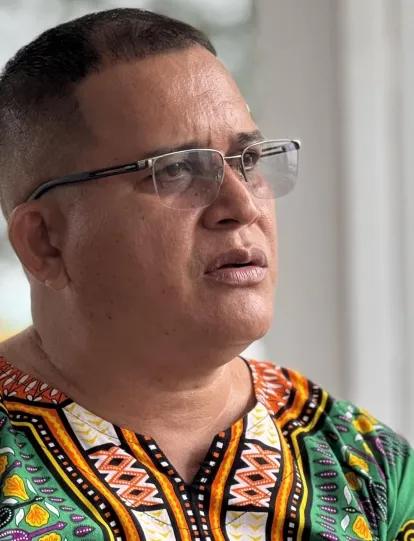
Emiliano Zambrano Rodríguez, a veteran of the fishing sector with 45 years of experience ranging from the Ecuadorian border to Panamanian waters, puts the core frustration plainly:
"Illegal fishing is not primarily driven by Colombia," Zambrano says, distinguishing between formal industrial fleets and local artisanal fishers who must navigate strict permit and departure regulations. Instead, he points to a persistent foreign presence—particularly small vessels originating from Ecuador—that cross maritime boundaries, harvest Colombian resources, and slip away undetected.
César Antonio Reina González, co-founder and president of the Federation of Artisanal Fishers of the Pacific Littoral (Federación de Pescadores Artesanales del Litoral Pacífico), echoes these concerns. According to Reina, foreign boats routinely cross borders, extract marine life, and launder the catch to sell it back locally at prices that legitimate local fishers cannot hope to match.
Compounding this external pressure are internal threats: exorbitant fuel costs, motor and equipment thefts, and incursions by armed groups that hijack catches and gear. While artisanal fishers are heavily policed and bound by rigid restrictions, they feel authorities lack the resources and agility to match the speed of criminal actors.
Chronology of Incursions and Enforcement (2024–2026)
While comprehensive statistics on illegal fishing remain notoriously difficult to pin down, enforcement records across Colombia, Panama, and Ecuador illustrate that unauthorized incursions into protected sanctuaries are a persistent, transnational reality.
- September 2024 (Colombia): The Attorney General’s Office (Fiscalía) reported that three Ecuadorian nationals were intercepted inside the Malpelo Fauna and Flora Sanctuary carrying approximately 40 fish of various genera.
- January 2025 (Panama): Panamanian park rangers and environmental police detained two tourist vessels operating without permits inside Coiba National Park, seizing roughly 50 mollusks, including live octopuses and oysters that were subsequently returned to the sea.
- January 2025 (Panama): In a historic crackdown, the Ministry of Environment (MiAmbiente), the Aquatic Resources Authority (ARAP), and the National Aeronaval Service (Senan) detected 16 commercial longline vessels operating illegally within the Cordillera de Coiba protected area. Six Panamanian-flagged vessels were impounded, while administrative processes were launched against ten others.
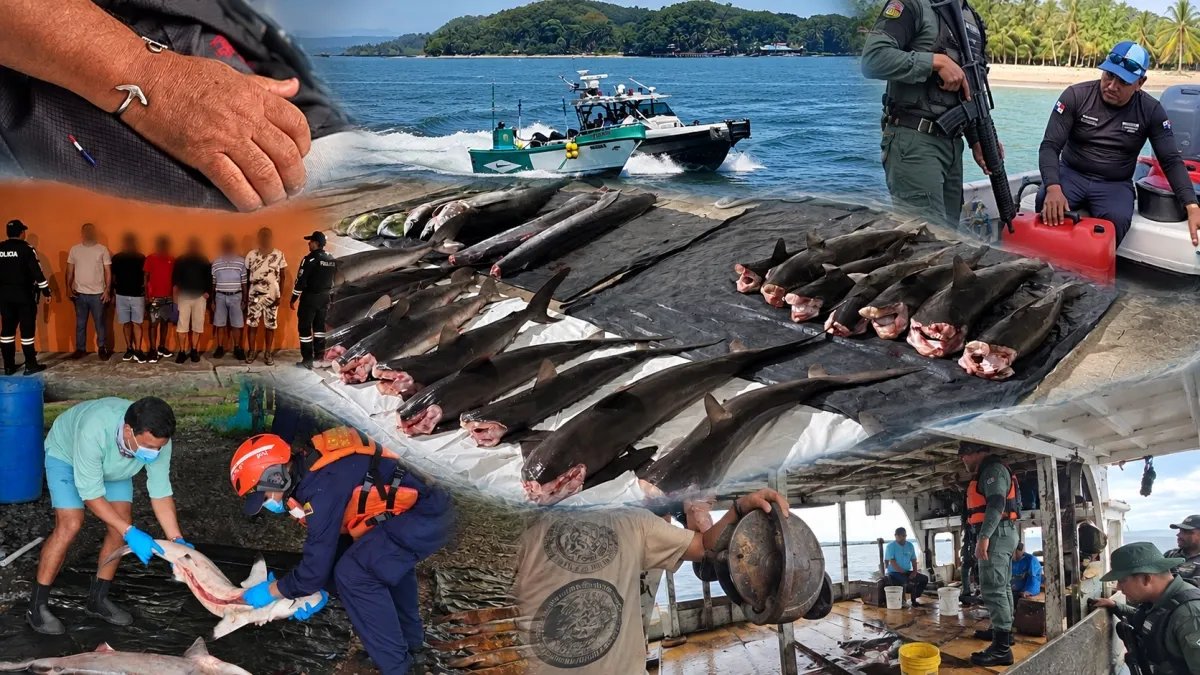
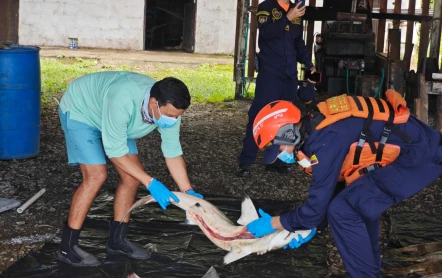
- August 2025 (Colombia): Park rangers, the Navy, and the Police detected four individuals using prohibited longline fishing gear within Isla Gorgona National Natural Park, seizing sharks and rays, including specimens well below permitted size limits.
- August 2025 (Panama): Park radar detected a baited-line vessel operating illegally between Punta Anegada and Isla Jicarón inside Coiba National Park. It was escorted out of the protected zone.
- February 2026 (Panama): MiAmbiente and Senan intercepted a longline vessel originating from Vacamonte that had spent 48 unauthorized hours fishing inside the Cordillera de Coiba protected area.
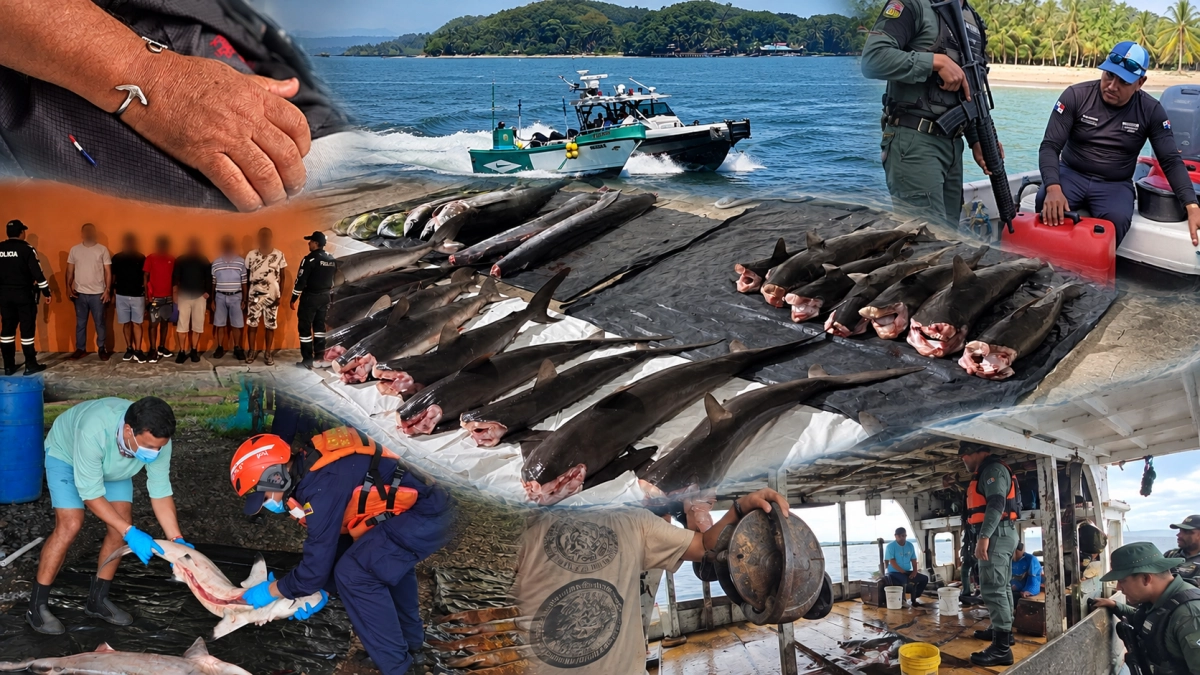
- July 2026 (Colombia): The Buenaventura Coast Guard Station intercepted a vessel in the Malpelo Sanctuary carrying three Ecuadorian nationals and a staggering 779 kilograms of hydrobiological resources. The cargo included 20 silky sharks, nine yellowfin tunas, nine marlins, and shark fins, alongside a longline rig bearing 300 hooks.
- July 2026 (Panama): Authorities intercepted and expelled a sports fishing yacht operating without authorization inside Coiba National Park.
- September 2026 (Ecuador): The Ecuadorian Navy and National Police arrested six men aboard an artisanal vessel inside Machalilla National Park, seizing roughly 417 kilograms of shrimp and multiple fish species, triggering criminal proceedings for environmental crimes.
Supporting Data and the Limits of Maritime Surveillance
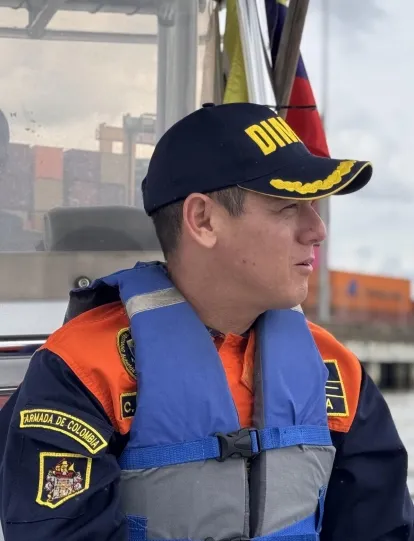
Operating across vast marine territories presents profound logistical challenges. Captain César Humberto Grisales López, Captain of the Port of Buenaventura, explains that while authorities monitor maritime transit—leveraging tools like the Yubarta Monitoring Center—interception is severely constrained by distance and resource limitations.

"Reaching them is what is complex," Captain Grisales notes, explaining that suspect vessels are frequently detected up to 200 kilometers offshore. Deploying naval vessels, crews, and logistics to intercept targets before they slip back across international maritime borders requires a constant, highly expensive presence that cash-strapped states cannot always maintain.
Compounding institutional challenges in Colombia, the Directorate General of Maritime Affairs (Dimar) lost the use of its main headquarters following the powerful 7.2-magnitude earthquake on August 10, 2026, which damaged over 36,000 homes across 500 municipalities nationwide. Despite operating from provisional facilities, maritime intelligence sharing continues, though gaps in rapid response times persist.
Furthermore, statistics provided by Colombia’s Ministry of Environment reveal a stark reality: up to October 9, 2026, the Yubarta Center coordinated the tracking of 1,344 vessels and logged 16 reports of irregular maritime transit, yet these efforts culminated in only four administrative sanctions for illegal fishing.
As the Ministry itself acknowledges, gathering data is not enough: "It is not merely a matter of having information; systems and entities must share data in a timely manner, identify risks, and activate coordinated responses."
Official Responses and Regional Disconnects
When EL TIEMPO reached out to the environmental ministries of all four CMAR member nations—Colombia, Panama, Costa Rica, and Ecuador—only Colombia provided a formal response.
Colombia’s Ministry of Environment candidly admitted that IUU fishing remains a primary threat to marine protected areas, noting that proving management success requires moving beyond tallying hectares under protection to measuring ecological recovery and enforcement response times.
While Panama’s Ministry of Environment did not formally reply to the questionnaire, its Minister, Juan Carlos Navarro, has previously pulled no punches regarding regional realities. In August 2025 statements highlighted by local media (TVN), Navarro warned of systemic corruption:
"There is a local fishing mafia and international mafias. Sometimes, these mafias are backed by States that intend to steal all our fishery resources… condemning artisanal fishers to poverty. There are also tentacles of drug trafficking laundering money through fishing activities. This happens in Panama and in all countries of the region."
Despite such frank assessments by regional leaders, the lack of synchronized, transnational reporting frameworks means that a vessel evading justice in Colombian waters can easily exploit regulatory blind spots in Ecuadorian or Panamanian jurisdictions.
Implications for Marine Conservation and Coastal Communities
Marine scientists warn that paper declarations do not equal biological protection. Dr. Camila Cáceres, a marine scientist, stresses that marine life operates entirely outside human political borders:
"Animals do not know these limits. A whale might feed in Colombia and need Panama to reproduce; if protection fails in one of those places, conservation along its entire migratory route is compromised."
Dr. Cáceres argues that successful MPAs require robust social, economic, and political backing, alongside comprehensive metrics that track species abundance, biomass, and population structures rather than mere species checklists.
Echoing this, Dr. Paulo César Tigreros Benavides, a professor at Universidad Jorge Tadeo Lozano, notes that declaring a park is merely an administrative management action, not proof of ecological preservation: "The geographical continuity of marine protected areas does not guarantee the continuity of effective protection." Without a unified, transnational ecological baseline and standardized monitoring protocols across CMAR, measuring true recovery remains impossible.
For the coastal communities of Buenaventura, these bureaucratic and ecological gaps carry immediate, human consequences. The failure to curb illegal industrial incursions translates directly into longer fishing routes, depleted stocks, prohibitive fuel costs, and generational abandonment of traditional livelihoods.
As global leaders push toward the ambitious 30×30 goal—protecting at least 30% of the planet’s lands and oceans by 2030—experts warn that expanding protected areas without simultaneously bolstering enforcement against illegal fleets will merely build "parks on paper."

Hours after concluding our interviews with Zambrano and Reina, as the Pacific tide retreats from the stilt houses of Buenaventura, a lingering question remains unanswered:
What good is declaring a marine park on paper if, in the end, it protects nothing at all?
This story was produced with the support of Internews’ Earth Journalism Network.