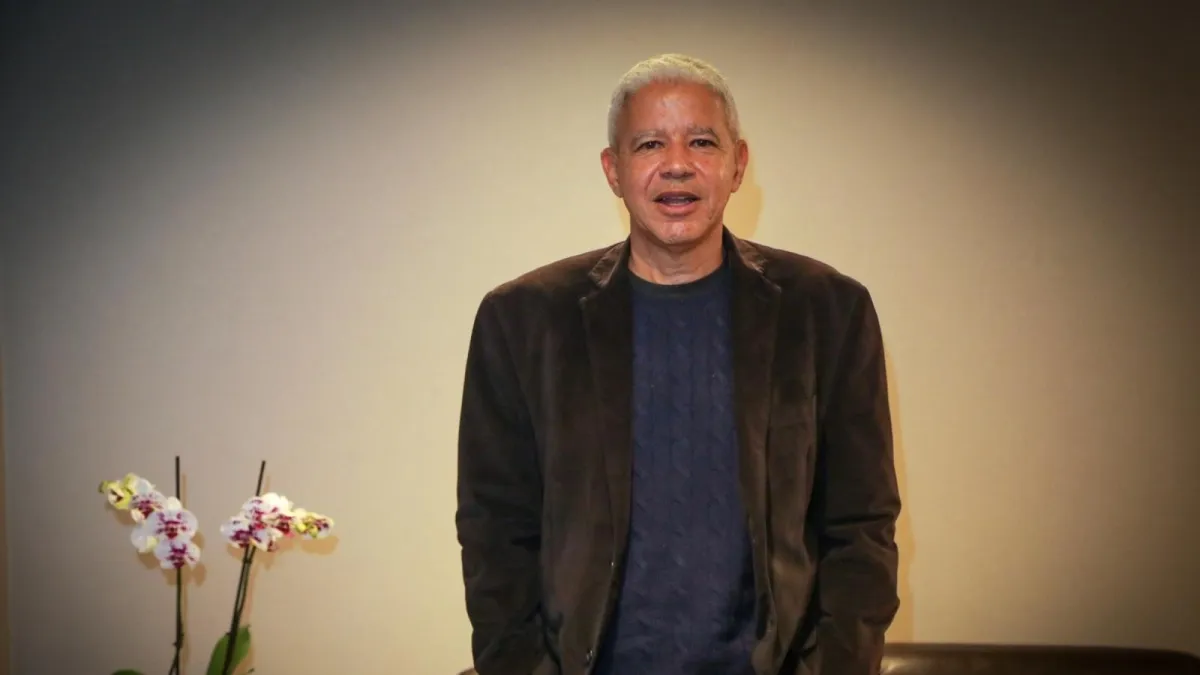
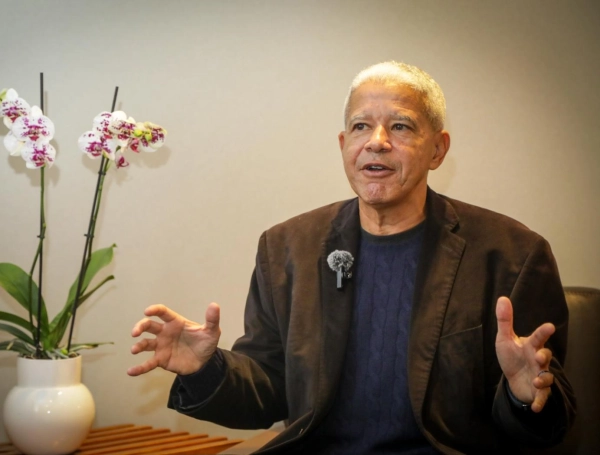
BOGOTÁ, COLOMBIA — As the 82nd General Assembly of the Inter American Press Association (IAPA / SIP) drew to its conclusion in Bogotá, media executives, investigative reporters, and industry leaders grappled with a rapidly transforming information ecosystem. Among the premier voices at the conference was Marc Lacey, Managing Editor of The New York Times, who delivered a masterclass talk titled "The U.S. Heading Toward Elections: Power, Press, and Polarization."
Moderated by Martha Ramos, president of the IAPA’s Committee on Freedom of Information and Press, Lacey’s address and subsequent exclusive interview with EL TIEMPO offered a profound look into how legacy media organizations are surviving — and thriving — amidst unprecedented geopolitical tension, digital disruption, and the meteoric rise of artificial intelligence.
Main Facts
The 82nd General Assembly of the IAPA served as a vital summit for hemispheric press freedom, highlighting the existential challenges currently confronting journalism. At the core of the discussions were three intersecting pressures:
The Digital Transformation: Legacy publications have had to completely restructure their operations, transitioning from static print distribution models to 24/7, mobile-first digital ecosystems.
The Economic Model: Shifting from ad-reliant models to subscription-based frameworks has proven that audiences are willing to pay for rigorous, high-quality journalism.
The Technological Disruption: The emergence of generative artificial intelligence presents both a powerful internal tool for newsrooms and an existential threat regarding copyright infringement, data scraping, and misinformation.
Lacey, whose journalism career spans more than two decades with The New York Times — including stints as national editor and foreign correspondent in Africa, Central America, the Caribbean, and Mexico — emphasized that while the hurdles are massive, the core mission of independent journalism remains unchanged.
Chronology: From the White House Beat to Global Newsroom Leadership
Marc Lacey’s professional journey mirrors the broader structural evolution of modern journalism:
1999: Lacey officially joins The New York Times, initially covering the White House during the twilight of the Bill Clinton administration and the dawn of George W. Bush’s presidency.
Foreign Postings: Over the years, he expands his portfolio, serving as a foreign correspondent in complex geopolitical zones across Africa, Mexico, Central America, and the Caribbean.
Leadership Roles: Transitioning into editorial management, Lacey serves as National Editor before ascending to his current role as Managing Editor, steering the publication through the complexities of the digital age.
October 2026: Lacey travels to Bogotá, Colombia, to participate as a keynote speaker on the second day of the 82nd IAPA General Assembly, where he engages in strategic dialogues regarding press freedom, polarization, and technological adaptation.
Supporting Data and Industry Shifts
The transition of The New York Times from a traditional newspaper into a global digital powerhouse underscores a broader macroeconomic shift in the publishing industry.
The Shift to Subscriptions
When asked about the strategic decision to abandon open, ad-supported models in favor of a paywall, Lacey was direct: it was an absolute necessity for economic survival.
"That was the only way for our economic model to work," Lacey explained. "Now we have more people paying for our content than we ever could have imagined, and we continue to grow."
Rather than locking out readers entirely, the publication implemented a hybrid funnel model, allowing temporary free access so potential subscribers can experience the depth and impact of the journalism firsthand before committing financially.
Confronting Artificial Intelligence
The intersection of generative AI and intellectual property formed a central pillar of Lacey’s discourse at the IAPA assembly. He acknowledged that while AI is a revolutionary technology capable of breakthroughs in medicine and workflow efficiency, it poses severe systemic risks to independent reporting.
The Data Paradox: AI models rely entirely on original, human-generated reporting to function. "The IA doesn’t go out into the world to do reporting, it’s not in any war zone, it doesn’t interview politicians or conduct journalistic investigations," Lacey noted.
Monetization and Legal Action: Because AI scrapes human journalism without compensation, The New York Times has pursued legal avenues, including lawsuits, while other outlets have opted for direct licensing partnerships. Lacey warned that failing to adequately compensate news organizations will inevitably lead to a dry-up of rigorous, independent reporting.
Official Responses and Perspectives
Throughout his dialogue with EL TIEMPO, Lacey addressed several critical socio-political issues, ranging from regional diplomacy to the mechanics of American democracy.
Geopolitical Fractures and Cross-Border Realities
Lacey pointed out that global harmony is increasingly fractured, citing unexpected diplomatic friction even among historic allies — such as recent political rhetoric regarding Canada and the United States. In this volatile environment, he argued, quality journalism acts as an indispensable anchor.
Furthermore, Lacey underscored the necessity of robust Latin American coverage from global newsrooms. He emphasized that nations like Colombia, Mexico, Venezuela, and the United States are deeply interconnected, meaning that major socio-economic and security challenges routinely transcend physical borders.
Navigating the U.S. Electoral Landscape
Addressing the upcoming November 3 legislative and political cycles in the United States, Lacey highlighted the unique structural challenges of covering a decentralized electoral system.
"Elections in the United States are not organized nationally; they are managed by each state," Lacey explained.
Because there is no centralized federal electoral board, disinformation and attempts to manipulate public trust run rampant. Lacey stressed that The New York Times focuses heavily on the civic dimension of reporting: verifying ballot integrity on the ground and cutting through campaign noise to provide voters with objective facts about candidates’ platforms, rather than getting bogged down in partisan spin.
Implications for the Future of Media
As the 82nd IAPA General Assembly concluded, Lacey’s insights painted a realistic yet remarkably optimistic picture of the media landscape.
Combating Misinformation and Deepfakes
With generative AI making sophisticated deepfakes and altered media increasingly accessible, newsrooms are forced to invest heavily in verification technology. Lacey highlighted that The New York Times deploys specialized teams and metadata analysis tools to authenticate images, videos, and agency reports before publication.
"It is very important that we do not fall into the false content that circulates because, if we broadcast it, people will no longer know what to believe," he warned.
A Rebuttal to Generational Stereotypes
Perhaps the most uplifting note of Lacey’s address was his defense of the next generation of journalists. Rejecting the cliché that young people only consume frivolous, short-form content on platforms like TikTok, Lacey expressed profound optimism based on his frequent interactions with university students.
"It is not true that young people today are not serious people and only want to see frivolous content on TikTok," Lacey affirmed. "Those are stereotypes that are not true, because I have spoken with people in their twenties who are serious, committed, and passionate about changing the world through good journalism."
Ultimately, the consensus emerging from the Bogotá assembly is clear: while artificial intelligence, polarization, and shifting economic models present formidable challenges, the fundamental demand for truth, verified facts, and courageous storytelling remains stronger than ever.
By Angie Rodríguez Updated September 11, 2026 Main Facts The landscape of La Guajira, Colombia, is undergoing a profound social and economic transformation. At the heart of this change is Misión La Guajira, a sweeping…
By EL TIEMPO Newsroom (Enriched International Edition) Published: September 18, 2026 1. Main Facts After seven years of visionary leadership marked by major digital transformations, profound inclusivity initiatives, and an unyielding commitment to deep sustainability,…
WASHINGTON — It is a common frustration for home cooks and hospitality professionals alike: you pull a set of knives, forks, and spoons from the dishwasher or dish rack, expecting a pristine, gleaming table setting,…