By Edwin Caicedo | Environmental and Health Journalist
Published: September 22, 2026
Main Facts
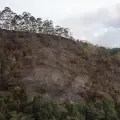
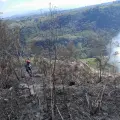
The ferocious wildfires that recently swept through the historic municipality of Villa de Leyva did not merely scorch surface vegetation; they violently breached the borders of the Santuario de Fauna y Flora (SFF) Iguaque, leaving an indelible scar on one of the Eastern Cordillera’s most vital and fragile high-mountain ecosystems.
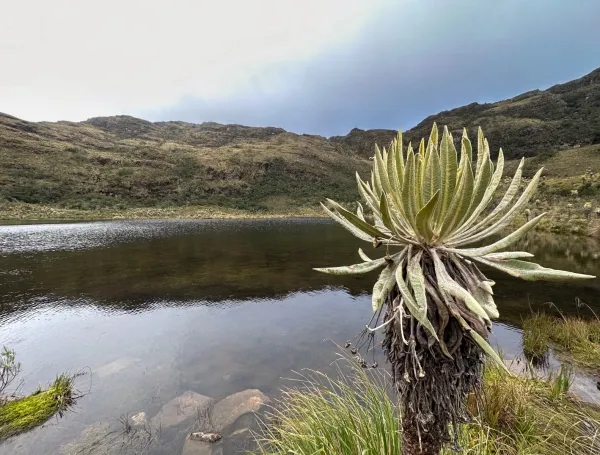
Encompassing 6,889 hectares across the municipalities of Chíquiza, Arcabuco, and Villa de Leyva, the Iguaque Sanctuary is far more than a scenic backdrop. It is an intricate, interdependent matrix of high-altitude Andean páramos, dense cloud forests, and sacred glacial lagoons that serve as evolutionary cradles for dozens of endemic, rare, and threatened species.
According to conservation scientists and local authorities, the recent fires threaten to unravel decades of ecological stability. While emergency response teams have fought tirelessly to contain the flames, the true magnitude of the disaster cannot be measured solely by the thousands of blackened hectares. The destruction cuts deep into the subterranean matrix of the páramo, threatening rare flora like the endangered Espeletia tunjana (tunjano frailejón), destroying critical wildlife corridors for high-altitude mammals, and threatening the water security of more than 30,000 people who depend on the sanctuary’s aquifers.

Chronology of an Environmental Crisis
The disaster did not occur in a vacuum; rather, it is part of an alarming escalation of recurring environmental emergencies plaguing the high Andes of Colombia.
- Early September 2026: Extended periods of drought, compounding deficits in hydrological balance, and severe temperature fluctuations set the stage across Boyacá. Strong mountain winds turn dry underbrush into tinderboxes.
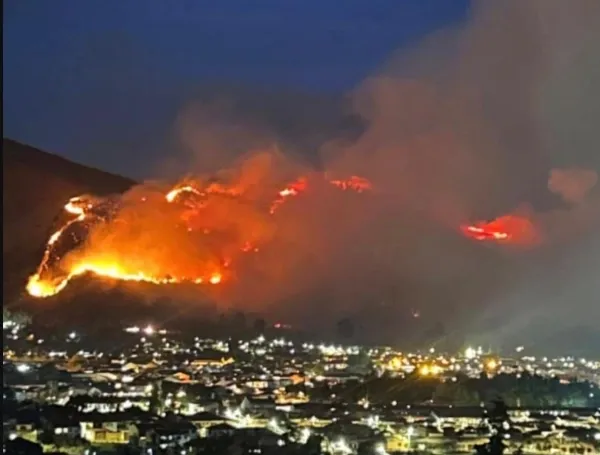
- Mid-September 2026: Fires break out near Villa de Leyva, rapidly intensifying and climbing the rugged terrain toward the Cerro San Marcos and the lower buffers of the Iguaque Sanctuary.
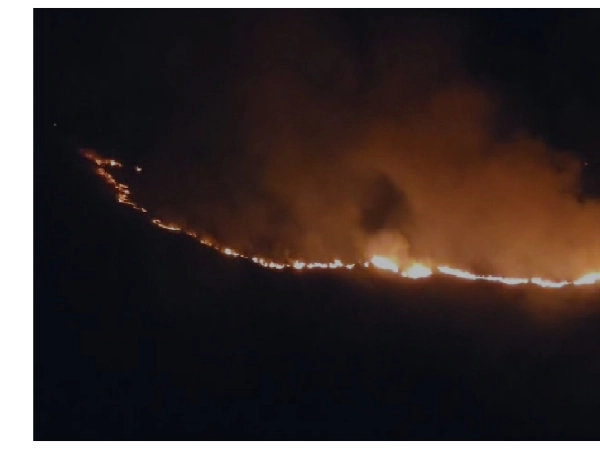
- September 20,–21, 2026: High winds and steep, inaccessible topography hamper firefighting efforts. Plumes of smoke are visible across the department, drawing national alarm as images circulate widely on digital platforms.
- September 22, 2026: The fires breach critical ecological zones within the SFF Iguaque. Environmental authorities and ecological organizations, including World Wide Fund for Nature (WWF) Colombia, begin assessing the catastrophic footprint of the flames on high-mountain vegetation, pointing out that these ecosystems face recurrent fires roughly every one to two years—a frequency far too high for systems unadapted to natural fire regimes.
Supporting Data: Biodiversity Under Siege
To understand the gravity of the Iguaque fires, one must look closely at the extraordinary biodiversity packed into its 6,889 hectares.
Flora: The Vulnerable Giants of the High Mountain
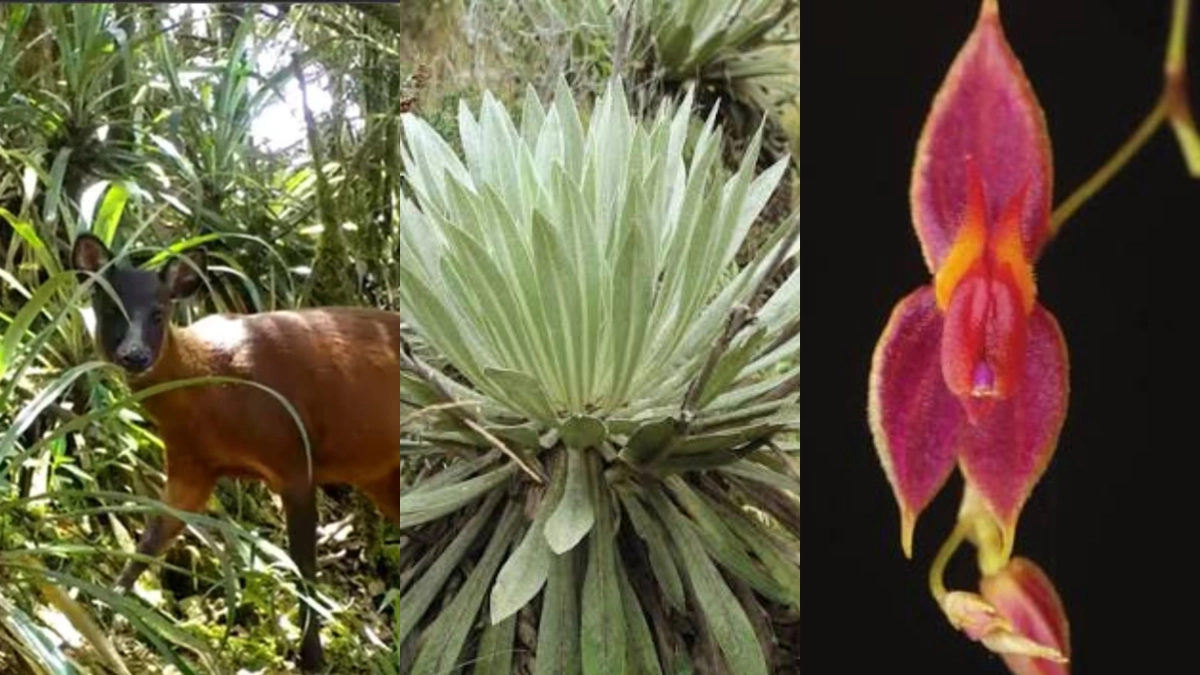
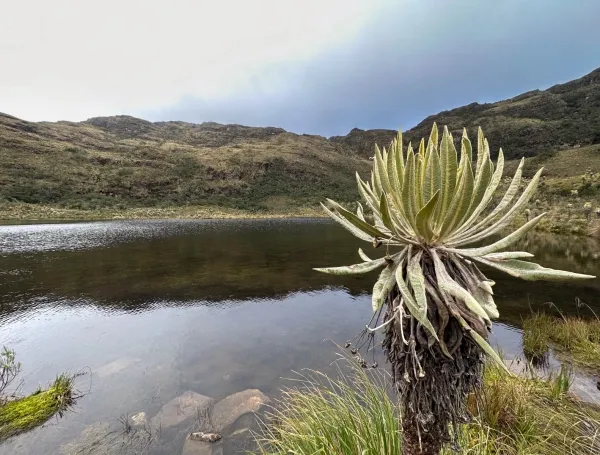
The sanctuary is a stronghold for high-altitude plant adaptation. Parques Nacionales Naturales de Colombia (PNNC) has documented nine distinct species of frailejones (Espeletiopsis and Espeletia genera) within the sanctuary. Among them is the Espeletia tunjana (tunjano frailejón), an endemic plant exclusive to the Eastern Cordillera and officially cataloged as endangered.
Other vital arboreal species populating the high Andean forests include:
- Oak (Roble) and Encenillo, which anchor the steep slopes.
- Pino romerón and Cedro nogal.
- Lepanthes bachue, a remarkably rare orchid species newly described to science, whose habitat is restricted precisely to the SFF Iguaque and immediate areas of Villa de Leyva.
Fauna: Displaced and Trapped Wildlife
Iguaque serves as an irreplaceable sanctuary for regional fauna. Mammalian species inhabiting the dense brush and cloud forests include:
- The Andean white-tailed deer (Odocoileus virginianus goudotii).
- The soche or red brocket deer.
- The tigrillo (oncilla) and the ulama (tayra).
Furthermore, avian life thrives in extraordinary numbers. The sanctuary shelters approximately 173 bird species, including the vulnerable Andean guan (Penabris jacquacu), the paramo eagle, and an astonishing 19 distinct species of hummingbirds. The destruction of upper-elevation habitats places immediate pressure on narrow-range endemic birds and moisture-dependent amphibians.
Official Responses and Expert Analysis
As emergency crews mop up lingering hotspots, environmental scientists have stepped forward to contextualize the systemic nature of the disaster.
Juan Francisco García, an ecological restoration specialist with WWF Colombia, emphasizes that analyzing these fires requires looking far beyond the immediate burn scars.

"These fires have struck high-mountain ecosystems and vegetation types that are exceptionally sensitive to fire," García explains. "The blazes have ravaged both páramo and high Andean forest complexes, fundamentally altering the composition and structural integrity of these habitats and destroying the micro-niches upon which countless species rely."
García points out that unlike Mediterranean or certain savanna ecosystems that have evolved alongside natural fire cycles, the high Andes are fundamentally unequipped for frequent burning. The accumulation of dry biomass, coupled with chronic human pressures, creates a volatile recipe for ecological degradation.
National parks authorities have reiterated that recovery operations cannot merely focus on putting out visible flames. Once a fire is stamped out, interdisciplinary teams must map every affected sector of páramo and high forest, evaluate seed bank viability, and ascertain the natural regeneration capacity of each micro-zone.
Implications: The Invisible Damage to Water and Future Generations
While the loss of charismatic fauna and iconic frailejones captures public attention, the most far-reaching consequence of the Iguaque fire is entirely invisible: the collapse of hydrological regulation.
The Water Towers of the Andes
Iguaque is not just a biological museum; it is a vital hydrological engine. According to Parques Nacionales, the sanctuary’s sponge-like páramo soils and dense cloud forests are responsible for recharging local aquifers that feed numerous rural and municipal aqueducts.
In fact, among all protected areas in Colombia’s National Natural Parks system, Iguaque supplies water to the highest number of municipal aqueducts, directly sustaining the livelihoods and daily needs of more than 30,000 people.
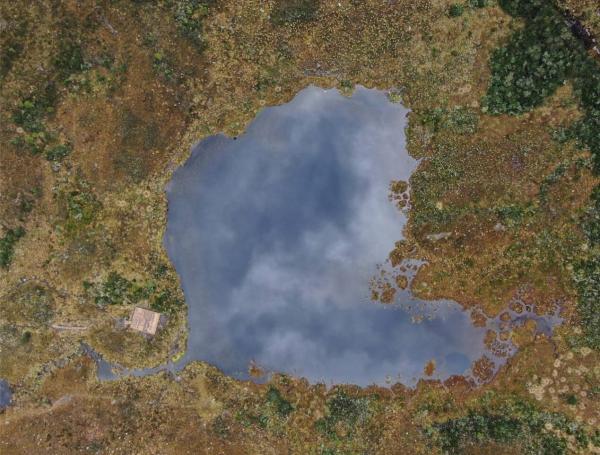
When a páramo burns:
- The Sponge Dies: The organic topsoil—accumulated over centuries and rich in decomposed matter—is incinerated or structurally degraded, destroying its capacity to absorb, filter, and slowly release rainwater.
- Chemical Contamination: Ash, charcoal, and combustion byproducts are washed down by subsequent rains into local streams, glacial lagoons, and water intakes, severely complicating drinking water treatment processes.
- Erosion and Runoff: Stripped of its vegetative cover, the fragile mountain soil is left completely vulnerable to accelerated erosion, landslides, and flash floods during the rainy season.
A Legacy of Recurrence
WWF’s assessments warn that the compounding pressures of climate change—characterized by prolonged droughts, higher average temperatures, and erratic rainfall—exacerbate the vulnerability of these mountain systems. When fires recur every 12 to 24 months, as García notes is happening in parts of Iguaque, the ecosystem never gets a chance to heal. Seed banks are wiped out before new generations of frailejones (which can take decades to mature) can produce viable seeds.

Conclusion
The wildfire emergency at the Iguaque Fauna and Flora Sanctuary stands as a stark reminder of environmental fragility in the Colombian Andes. The ultimate toll of this disaster will not be tallied on the day the smoke clears. Instead, it will be measured in slow motion: in the struggling frailejones trying to push through sterilized ash, in the generational time required for oak and encenillo forests to regenerate, in the displaced fauna searching for unburned corridors, and in the sustained security of the water that flows down to the communities below. Protecting Iguaque requires recognizing that when the high mountain burns, the foundations of regional life burn with it.