By Edwin Caicedo | Environmental and Health Journalist Published: September 16, 2026
1. Main Facts: Breaking the Cycle of Darkness in a Forgotten Territory
For generations, the more than 200 residents of La Victoria—a rural community nestled in the municipality of El Copey, in the northern Colombian department of Cesar—lived entirely disconnected from the modern grid. In this Non-Interconnected Zone (ZNI, by its Spanish acronym), the absence of electrical infrastructure meant that everyday comforts taken for granted elsewhere were nothing more than distant aspirations.
There were no refrigerators to preserve perishable foods, no televisions to keep up with the world, no reliable wall outlets to charge a mobile phone, and no lightbulbs capable of piercing the nocturnal darkness for more than a few fleeting moments.
Electricity, when it existed at all, was a luxury measured in drops of gasoline. Families relied on small, noisy, and highly inefficient fossil-fuel generators. These machines could only be operated intermittently—strictly when households managed to scrape together enough cash to buy fuel. Consequently, illumination was reserved for brief, essential tasks before plunging the community back into shadow.
This bleak status quo began to shift 14 months ago with the arrival of the “Energía Renovable para la Paz” (Renewable Energy for Peace) program. Spearheaded as an impact investment initiative by ISA, SunColombia, and Ecopetrol, the program delivered autonomous solar photovoltaic systems to every household in La Victoria. Providing reliable, 24-hour green electricity, the intervention has done far more than merely turn on the lights; it has rewritten the socioeconomic blueprint of an entire community, unlocking agricultural productivity, expanding micro-enterprises, improving local education, and fundamentally restoring human dignity.
2. Chronology: Fourteen Months of Radical Transformation
To understand the profound impact of the renewable energy rollout in La Victoria, one must examine the timeline of how a community moves from energy poverty to sustainable self-sufficiency.
Before the Project: The Era of Scarcity and Survival
The Routine of Silence and Shadow: For decades, daily life in La Victoria was dictated by the rising and setting of the sun. Food preservation was rudimentary; families stored perishables in wooden boxes or consumed them immediately. Cold water was a rare commodity.
The Cost of Combustion: Residents like Zunilda Torres, a local seamstress, and Marelis Meza, a community leader and agricultural worker, depended entirely on small gasoline generators. For Torres, running her sewing machines meant spending nearly all of her daily earnings just to purchase the fuel required to power her equipment for a meager three hours a day.
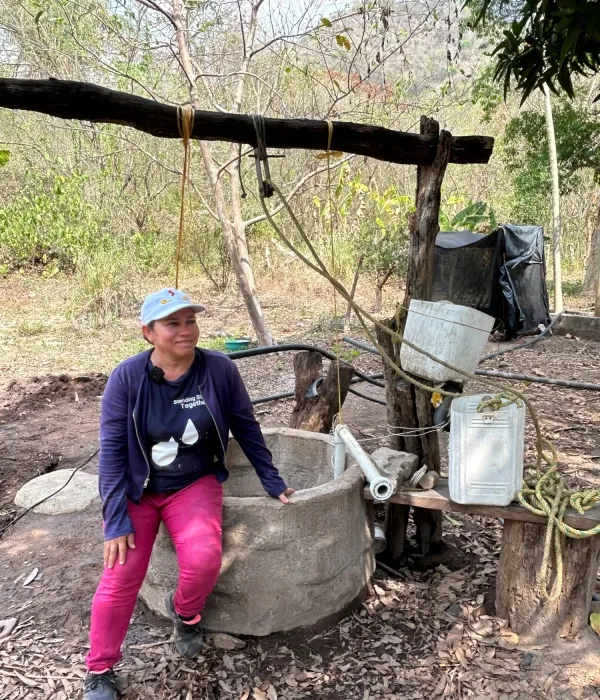
Logistical Nightmares: Basic tasks—such as extracting water from deep wells—required grueling physical labor. Residents hauled water by hand, completely cut off from motorized pumps or automated irrigation.
The Turning Point: Installation and Logistics (Early 2025)
Overcoming Geographical Barriers: Transporting heavy technological hardware to an isolated rural enclave presented a monumental logistical hurdle. Project technicians had to move solar panels, lithium batteries, and inverters across rugged terrain, utilizing mules to haul equipment across swollen streams and steep, unpaved trails.
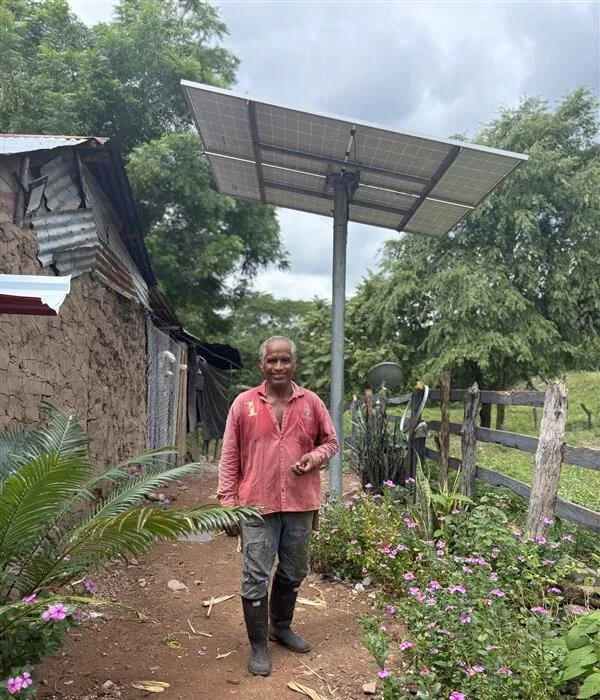
Decentralized Deployment: Rather than attempting to build a sprawling, expensive transmission grid to service a remote hamlet, engineers implemented a modular, decentralized strategy. Every single household received an independent solar system tailored to its structural needs. Internal wiring, wall sockets, energy-efficient LED lighting, and safety breakers were installed inside each home, allowing families to choose strategic points for illumination and appliance use.
The Present: 14 Months of 24/7 Power (Late 2026)
Sustained Operation: Having operated continuously for over a year, the systems have proven their reliability through changing weather patterns, proving that decentralized solar power is a viable, robust solution for Colombia’s most isolated regions.
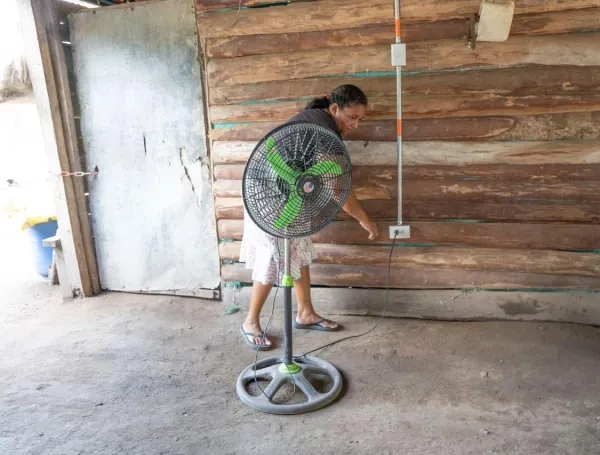
Community Flourishing: Today, homes boast operational refrigerators, cooling fans, and uninterrupted communication channels via charged mobile phones. Children study well into the night, micro-entrepreneurs have doubled their working hours, and automated agricultural irrigation has turned arid soil into thriving productive plots.
3. Supporting Data: The Numbers Behind the Change
The success of the Energía Renovable para la Paz initiative in La Victoria is backed by precise technical specifications and measurable economic indicators:
Technical Architecture per Household:
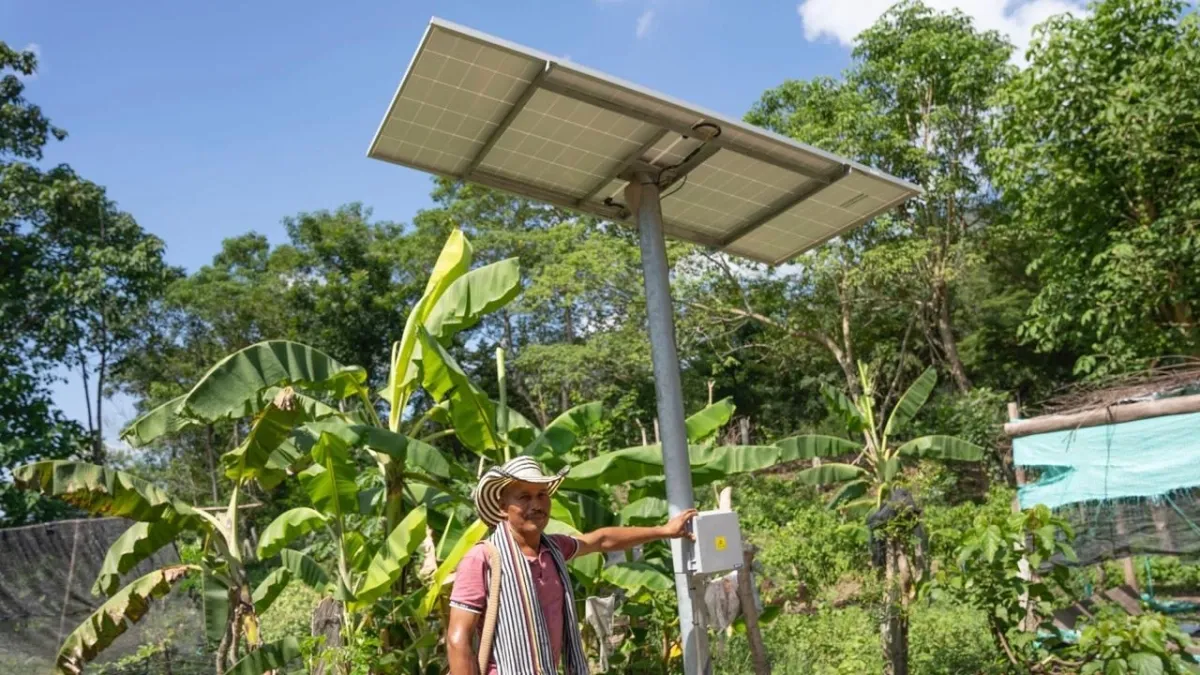
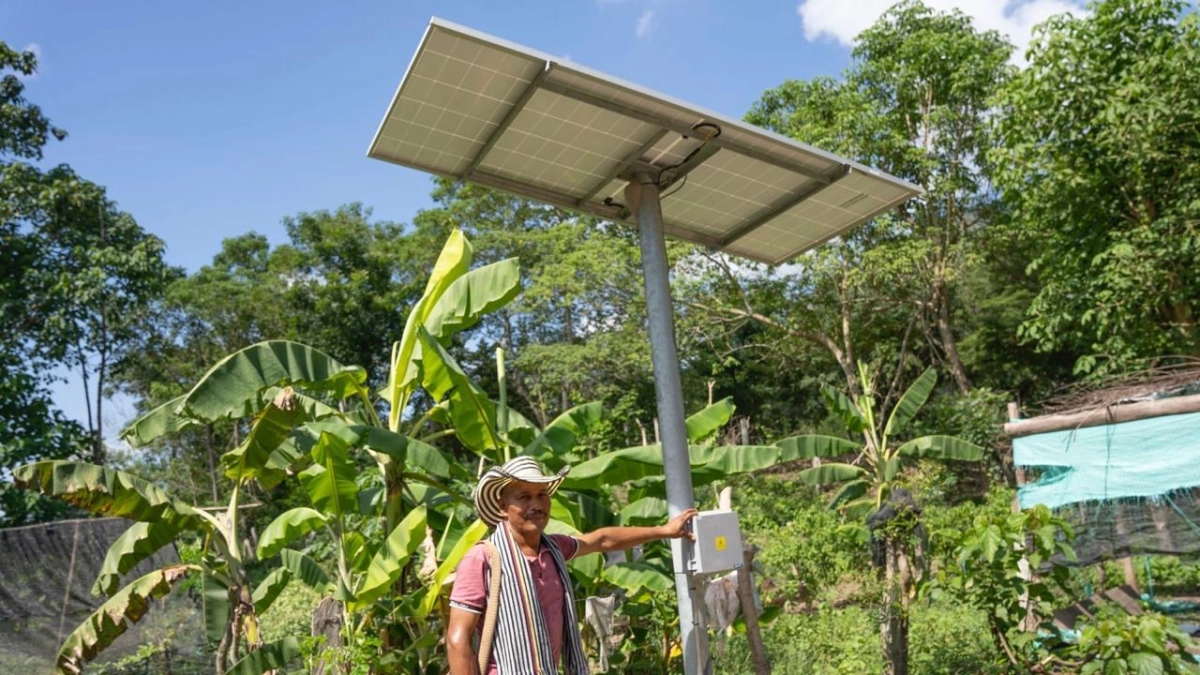
Photovoltaic Capacity: Each home is equipped with a 3-meter outdoor mounting pole supporting two photovoltaic modules with a combined peak capacity of 1,200 watts.
Energy Storage: Integrated with a 3.84 kilowatt-hour (kWh) lithium battery, the systems store excess solar generation during peak daylight hours to guarantee uninterrupted power delivery throughout the night and during periods of low solar irradiation.
Internal Infrastructure: Complete indoor electrical kits, including safety breakers, inverters, charge controllers, and customized outlets.
Economic and Productive Metrics:
Productivity Boost: Seamstress Zunilda Torres increased her daily working capacity from 3 hours to between 6 and 8 hours, directly scaling her client base and output. Her monthly income now stabilizes around 480,000 to 500,000 pesos, with zero overhead spent on fossil-fuel combustion.
Agricultural Expansion: Marelis Meza utilized the newly electrified water pumping systems to install 1,233 meters of irrigation hose, successfully sustaining over 1,600 pepper plants.
Scaling Projections:
La Victoria serves as the pilot proof-of-concept for the initiative. Four additional regional projects are currently under construction.
The overarching goal: The program aims to scale its impact to reach approximately 1,000 beneficiary users by July 2027.
4. Official Responses and Voices from the Field
The human element of the transition is best captured through the perspectives of the community members who lived through the change, alongside the technical and institutional leaders who designed the program.
Community Perspectives
Marelis Meza Contreras, president of the La Victoria Community Action Board (Junta de Acción Comunal) and a primary beneficiary, reflects on the psychological and material shift brought by the sun:
"When the electricity arrived, I thank God for this project that came to our village. It changed things quite a bit. Previously, when there was no electricity, we stored all our farm goods in boxes and makeshift spaces. For instance, we couldn’t enjoy cold water; we didn’t have that facility… Now, with a refrigerator, things change. You keep things fresh and catch a little breeze when it gets hot."
Meza also emphasizes how electrification unlocked her entrepreneurial ambitions. Having empirically learned to cultivate chili peppers, the lack of water was previously an insurmountable bottleneck. Today, powered by solar energy, her automated irrigation system keeps her crops alive and thriving.
Zunilda Torres shares a parallel testimony regarding her textile business:
"What I earned from my income used to be spent entirely on fuel just to keep the generator running… Now, because I work more hours, I generate more, I make more products, I have more clients, and I bring in higher revenue."
Torres also traded physical exhaustion for automation, replacing manual well-water extraction with an electric turbine that fills her storage tanks automatically.
Institutional Insights
Nelson Vivas, Technical Lead for the Energía Renovable para la Paz program, underscores that the true metric of success goes far beyond kilowatt-hours:
"I feel that if you generate quality electrical energy, as in this case, it changes a family’s life. We are talking about basic yet profound changes: sleeping with a fan running, keeping water cold, refrigerating meats, medicines, fruits, and vegetables, or preserving food for longer periods."
Vivas also highlights the educational dividend: "Children and adolescents now have the opportunity to study at night—something that was simply impossible before."
From an administrative standpoint, María Juliana Pérez Vasco, Head of Impact Innovation at ISA, explains the genesis of the model:
"One of the first steps was establishing the regulatory framework that would allow us to develop these types of investments in Non-Interconnected Zones."
Pérez notes that watching rural communities organically discover innovative ways to harness energy—ranging from micro-retail sales of frozen treats to advanced agricultural irrigation—has been the program’s most rewarding learning curve.
5. Implications: Energy as a Catalyst for Peace and Rural Equity
The transformation of La Victoria carries profound geopolitical, social, and environmental implications for Colombia as a whole:
Bridging the Rural-Urban Divide
Colombia has historically struggled with stark developmental disparities between its metropolitan centers and isolated rural peripheries. Many ZNI territories were historically neglected due to the prohibitive costs of extending traditional national grid lines across complex topographical barriers like the Andes and extensive river basins. The success in La Victoria proves that decentralized, modular solar power can bypass these physical hurdles, offering a scalable blueprint for rural electrification across Latin America.
Fostering Economic Resilience and Peacebuilding
Appropriately named Energía Renovable para la Paz, the initiative directly ties infrastructure development to post-conflict reconciliation and rural stability. By transforming subsistence farmers into productive micro-entrepreneurs, the project tackles the root economic vulnerabilities that often drive poverty and displacement in rural regions. Reliable energy generates local wealth, creates jobs, and anchors communities to their native lands.
Environmental Stewardship
By replacing noisy, polluting gasoline generators with silent photovoltaic systems and clean lithium storage, La Victoria has drastically reduced its local carbon footprint. As Colombia pushes toward its national energy transition goals—showcased in platforms like ExpoSolar—initiatives like this demonstrate that clean energy is not merely an urban or industrial luxury, but a vital tool for grassroots social justice and sustainable development.
In a community where daily existence once hinged on the price of a gallon of gasoline, two solar modules and a battery have successfully illuminated the path toward a self-determined, prosperous future for over 200 Colombians.
By Edwin Caicedo | Environmental and Health Journalist Published: September 22, 2026 Main Facts The ferocious wildfires that recently swept through the historic municipality of Villa de Leyva did not merely scorch surface vegetation; they…
By Editorial Staff Updated: July 4, 2026 The month of June 2026 will be etched into history as one of the most punishing meteorological chapters for the European continent. As record-shattering temperatures swept across the…
By Edwin Caicedo | Environmental and Health Correspondent The Amazon rainforest is often described as the "lungs of the planet," a vital carbon sink essential to global climate stability. However, beneath the canopy lies another,…