By Sergio Gómez Maseri Washington Correspondent for EL TIEMPO
Main Facts
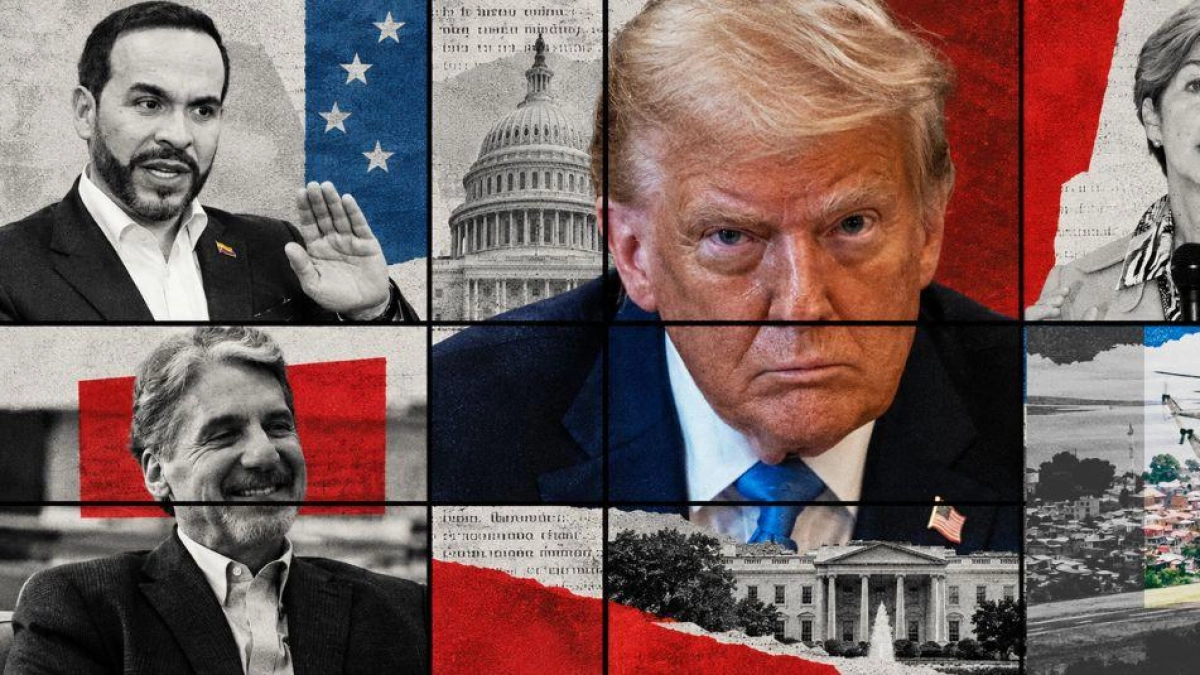
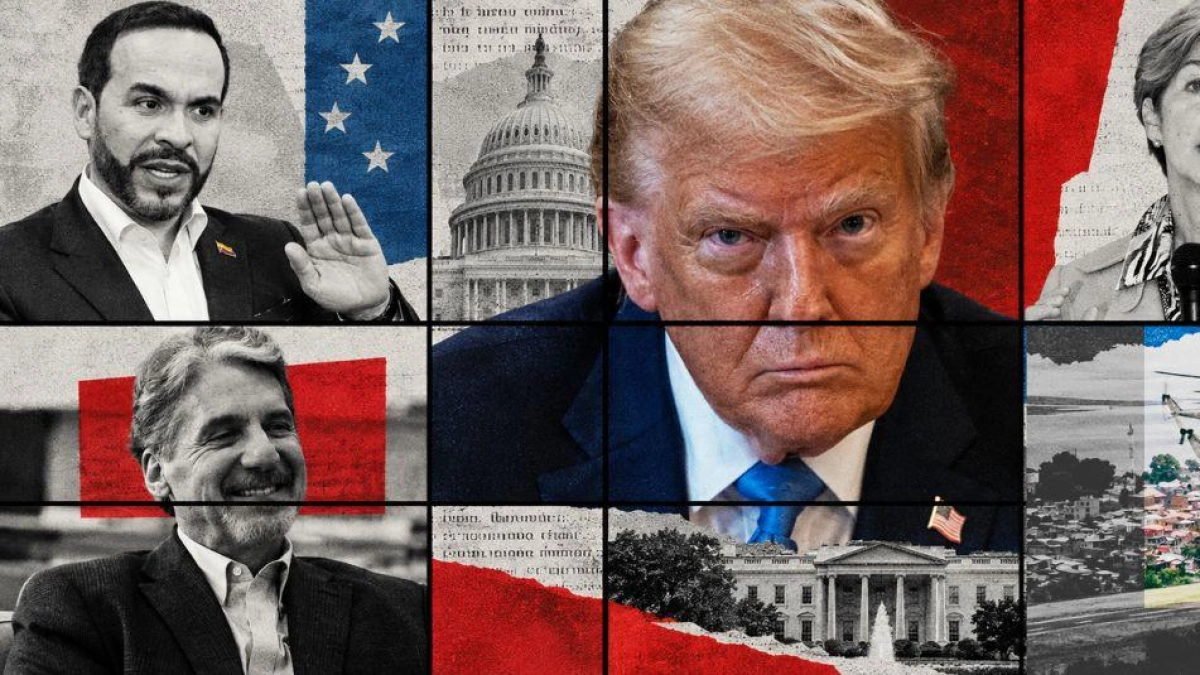
The convergence between the administration of U.S. President Donald Trump and the government of Colombian President Abelardo De La Espriella has established a unique window of opportunity to reset diplomatic, military, and economic ties between Washington and Bogotá. Following a tumultuous six-year period characterized by ideological friction and diplomatic cooling, both nations have found an immediate point of commonality in national security and the fight against transnational crime.
Colombia’s formal integration into the Trump administration’s "Shield of the Americas" and the "Coalition of the Americas Against Cartels" highlights this renewed security alignment. Furthermore, Washington has dangled a significant $1 billion security assistance package to fortify Colombian military and intelligence capabilities.
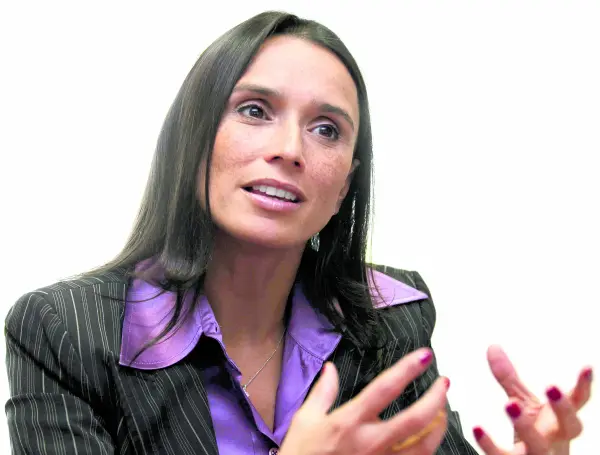
However, according to a recent comprehensive analysis published by the Atlantic Council—co-authored by former Colombian Foreign Minister and Ambassador to Washington Carolina Barco, and former U.S. Ambassador to Bogotá Kevin Whitaker—relying solely on shared security priorities will be insufficient to guarantee a long-lasting partnership. The diplomats caution that true bilateral stability requires moving past transient executive affinities to address systemic socioeconomic challenges, reconstruct a fraying bipartisan consensus in Washington, navigate complex trade and tariff disputes, and foster regional development.
Chronology of Events
August 2026: A devastating natural disaster strikes Colombia, triggering widespread infrastructural damage and forcing the newly established De La Espriella administration to appeal for immediate humanitarian support and targeted economic relief, including temporary tariff exemptions from the United States.
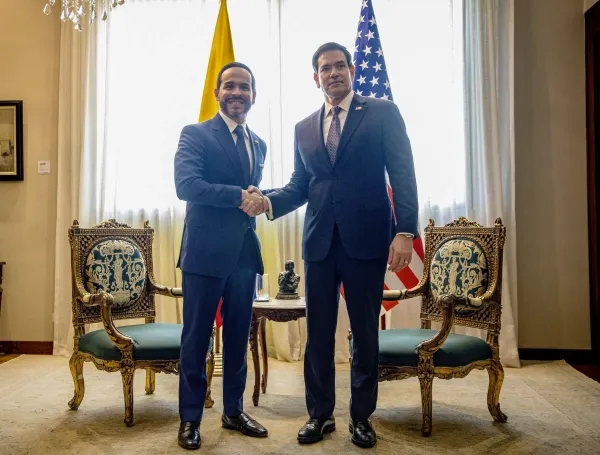
September 8, 2026: U.S. Secretary of State Marco Rubio meets with Colombian President Abelardo De La Espriella in Barranquilla. The high-profile encounter solidifies early commitments regarding cooperative counternarcotics strategies and regional security frameworks.
September 9–11, 2026: Marking the 25th anniversary of the September 11 terrorist attacks, international analysts draw striking parallels between the genesis of the historic Plan Colombia and the emergent security architectures being forged between Trump and De La Espriella to combat modern criminal syndicates.
November 2026 (Upcoming): Midterm and legislative shifts loom on the horizon in the United States. Observers anticipate that a potential resurgence of Democratic influence in Capitol Hill will place increased scrutiny on human rights compliance, regional minority protections, and the transparent allocation of U.S. security funds in Colombia.
Supporting Data & Economic Metrics
The scope of the Colombia-U.S. relationship rests upon deep-seated commercial, demographic, and financial foundations that have evolved significantly over the past two decades:
$53.3 Billion: The total volume of bilateral trade exchanged annually between the two nations, supported by a long-standing free trade agreement that has integrated hundreds of new Colombian commodities into the American marketplace.
$1 Billion: The earmarked sum announced by Washington for upcoming security assistance to Colombia, though exact allocations, resource breakdowns, and disbursement timelines remain under evaluation.
The Evolution of Illicit Economies: Modern armed groups in Colombia have expanded far beyond traditional cocaine trafficking. Intelligence indicates deep integration into multi-billion-dollar illicit enterprises, including illegal gold and mineral mining, human trafficking networks, and the tactical deployment of commercial drones for territorial control.
Nearshoring Potential: Colombia stands as a prime geographic and logistical candidate for the relocation of supply chains (nearshoring) closer to the United States. Yet, this potential is currently bottlenecked by existing U.S. tariff barriers, prompting Bogotá to seek temporary trade mitigations.
Official Responses and Diplomatic Perspectives
The Diplomatic Architects: Carolina Barco and Kevin Whitaker
In their joint Atlantic Council paper, Barco and Whitaker emphasize that while military coordination provides the necessary "center of gravity" for the new administration, force alone cannot eradicate the root causes of violence.
"Under De La Espriella, security will be the center of gravity of the bilateral relationship," Barco and Whitaker write. However, they immediately issue a critical caveat: "Military force by itself will not offer a durable solution… The relationship must be built to withstand future shifts in political priorities."
The former ambassadors explicitly warn against the deployment of active U.S. combat troops inside Colombian territory—a prospect that has sparked domestic anxiety since Bogotá signed onto regional security pacts. Such a move, they argue, lacks historical precedent, risks triggering domestic nationalist backlashes, and is entirely unnecessary given the elite operational capabilities of Colombia’s own Armed Forces. Instead, they advocate for intelligence sharing, specialized training, enhanced mobility, and institutional strengthening.
The Washington Perspective: Navigating the Bipartisan Landscape
Barco and Whitaker pull no punches regarding the state of U.S. congressional support, declaring bluntly that "the traditional bipartisan consensus on Colombia exists primarily in the memory."
To insulate the bilateral agenda from shifting domestic political winds in Washington—particularly with upcoming congressional shifts—Bogotá must proactively re-engage not only with Republican allies but also with skeptical Democrats, corporate leaders, media outlets, and influential think tanks.
Strategic Implications and Future Outlook
The convergence between Donald Trump and Abelardo De La Espriella offers immense tactical advantages, but it also carries distinct structural risks.
1. The Trap of Personalist Diplomacy
Restricting the health of a diplomatic relationship to the personal rapport between two sitting presidents creates systemic vulnerability. When political administrations inevitably change, the alliance risks fracturing. To prevent this, the authors urge the creation of institutional working groups, measurable benchmarks, and robust back-channel diplomacy driven by the respective embassies. Furthermore, history demonstrates that the Trump administration often applies the strictest scrutiny to its closest ideological allies; compliance with U.S. demands must be carefully balanced against Colombian national sovereignty.
2. Decentralizing Cooperation and Empowering the Regions
Historically, U.S.-Colombia cooperation has been hyper-focused on central government machinations in Bogotá and Washington. Barco and Whitaker advocate for a paradigm shift: direct municipal and departmental partnerships. By involving local Colombian regions in energy grids, digital connectivity, agricultural development, and tourism infrastructure, the two governments can effectively shrink the peripheral vacuum exploited by armed groups.
3. The Venezuelan Horizon and Regional Security
The geopolitical puzzle of Venezuela remains a critical convergence point. As democratic transitions and economic stabilization parameters evolve next door, Colombia is uniquely positioned to leverage its geographic proximity, institutional memory, and historical commercial ties to assist. However, because contemporary criminal networks operate fluidly across Colombia, Ecuador, and Venezuela, unilateral counter-strategies are obsolete. The path forward demands a synchronized, multilateral intelligence and maritime framework where Washington provides technological and strategic breadth, while Bogotá executes operational leadership.
Ultimately, the long-term success of the Trump-De La Espriella era will not be measured by rhetorical alignments or ideological symmetry, but by tangible deliverables: measurable reductions in transnational crime, sustainable economic growth in neglected Colombian provinces, institutional resilience, and enduring mutual prosperity.
International Desk Published: September 12, 2026 Main Facts The government of the Islamic Republic of Iran has formally accused the United States of deliberately employing advanced weaponry embedded with chemical agents during a high-precision military…
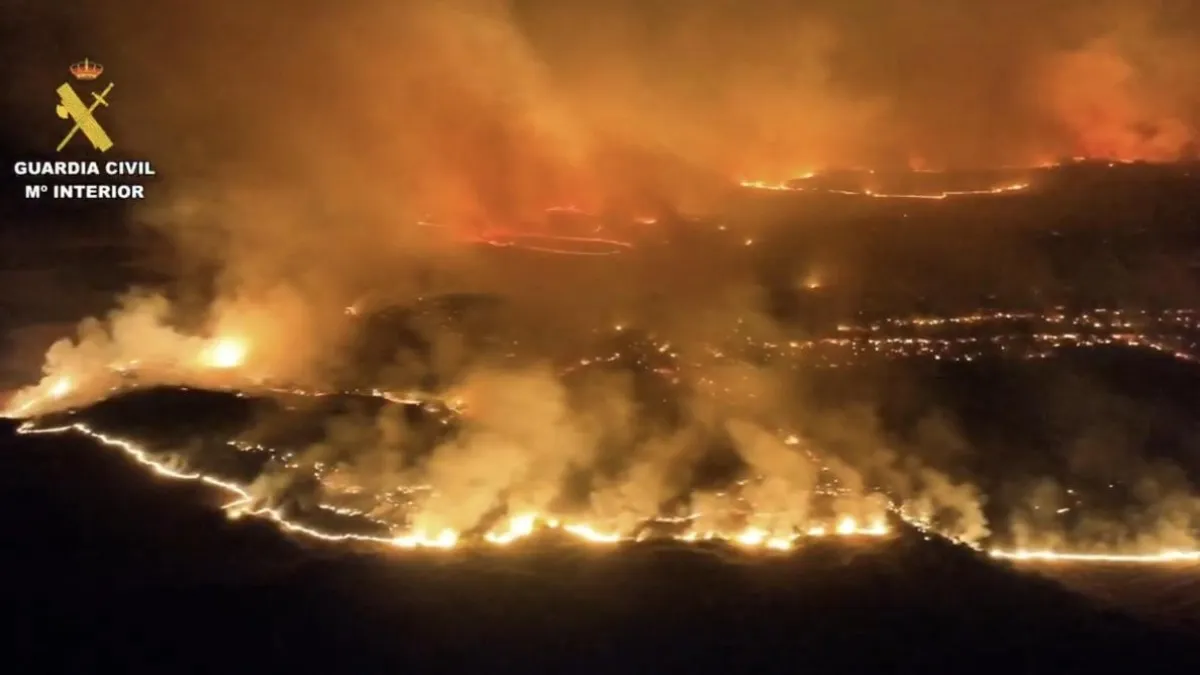
Madrid, Spain – July 19, 2026 – Spain is grappling with a relentless onslaught of wildfires, with two major infernos raging across the country, consuming tens of thousands of hectares and forcing the evacuation of…
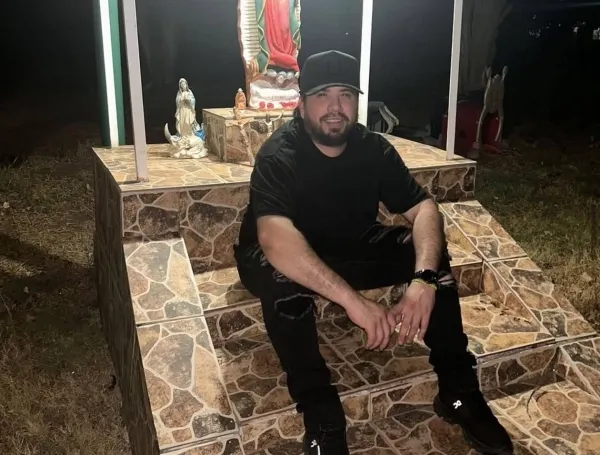
By Pablo Pachón Ramírez Digital Outreach Desk, EL TIEMPO Updated: September 11, 2026 Main Facts: A Community in Mourning Over a Tragic Loss The digital content creation community and the residents of Ciudad Obregón, Sonora,…