By: International Desk Analysis
Published: September 11, 2026
Introduction: The Architecture of a Global Tragedy
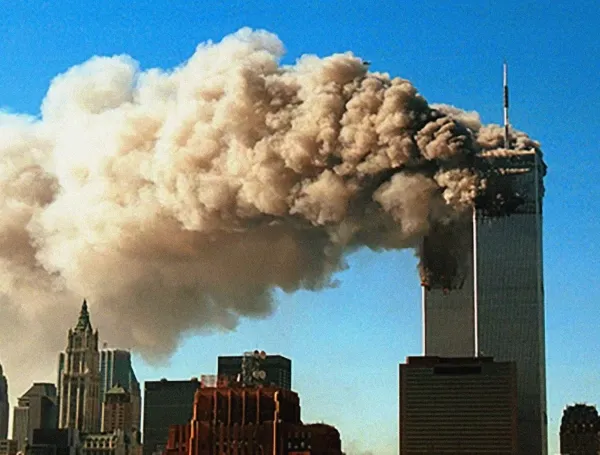
Two decades and a half after the earth-shattering events of September 11, 2001, the world continues to grapple with the profound geopolitical, social, and psychological aftermath of the worst terrorist attack on American soil. While history rightly remembers the 19 operatives who hijacked four commercial airliners, turning them into guided missiles that brought down the Twin Towers, devastated part of the Pentagon, and crashed in a field in Shanksville, Pennsylvania, the machinery of terror required a sophisticated operational brain.

At the center of that machinery sat Khalid Sheikh Mohammed—widely recognized by intelligence agencies, the 9/11 Commission, and the U.S. Department of Justice as the principal architect and operational mastermind of the conspiracy. Known simply by his initials, KSM, Mohammed’s journey from an engineering student in the United States to the inner circle of Osama bin Laden highlights the complex, cross-border networks that enabled modern jihadist terrorism.
This comprehensive review examines Mohammed’s background, his pivotal role in conceiving and orchestrating the attacks, his dramatic capture, and the agonizingly slow, legally fraught path to justice that continues to define his imprisonment at Guantánamo Bay.

1. Main Facts: The Blueprint of Destruction
According to comprehensive investigations by BBC News and the official bipartisan 9/11 Commission Report, the execution of the September 11 attacks was the culmination of years of strategic planning, logistical coordination, and financial maneuvering. While the suicide hijackers served as the tactical instruments of destruction, KSM was the visionary behind the methodology.
Years before commercial airliners were weaponized against Manhattan and Washington, D.C., Mohammed had conceptualized the radical tactic of turning passenger planes into airborne weapons. He eventually carried this blueprint to al-Qaeda leader Osama bin Laden in the mid-1990s. Recognizing the devastating potential of the proposal, bin Laden gave the enterprise his full backing, integrating Mohammed’s ideas into al-Qaeda’s broader global jihadist campaign.
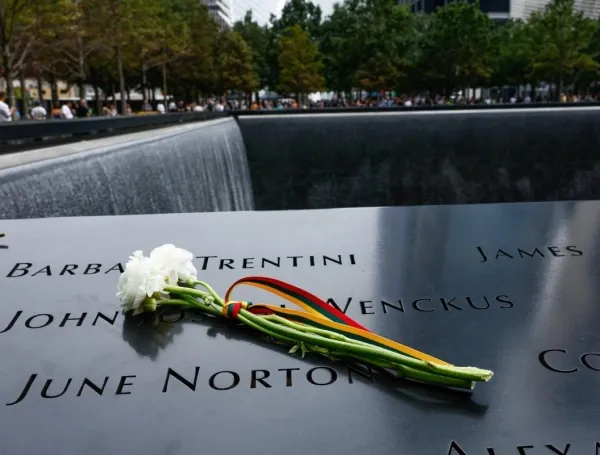
The 9/11 Commission famously designated Mohammed as the "principal architect" of the attacks. Meanwhile, the U.S. Department of Justice formally characterized him in indictments as the "operational leader of the plot," noting that he oversaw every critical phase of the operation, from selecting targets and coordinating financial transfers to vetting operatives and managing communications between the hijackers and al-Qaeda leadership based in the rugged terrain of Afghanistan.
2. Chronology: From Kuwait and Engineering to Global Jihad
To understand how Khalid Sheikh Mohammed ascended to the apex of international terrorism, one must trace a biographical timeline marked by radicalization, global travel, and prior foiled plots.

Early Life and Education
Born in Kuwait to parents of Pakistani descent, Mohammed pursued higher education in the United States, earning a degree in mechanical engineering. This exposure to Western society did not endear him to the West; rather, during the 1980s, he gravitated toward radical Islamist ideologies.
The Anti-Soviet Jihad and Early Conspiracies
In the late 1980s, Mohammed traveled to Afghanistan to participate in the armed jihad against the invading Soviet Union. This crucible introduced him to the wider network of militant extremists who would later form the bedrock of al-Qaeda.
By the mid-1990s, Mohammed’s terror ambitions were already on the radar of Western intelligence agencies. He became heavily implicated in the infamous ‘Bojinka’ plot—a sophisticated conspiracy masterminded alongside his nephew, Ramzi Yousef (who was subsequently convicted for the 1993 World Trade Center bombing). The Bojinka plot aimed to bomb multiple U.S. commercial airliners simultaneously over the Pacific Ocean and, in a chilling precursor to 9/11, crash a plane into the headquarters of the CIA in Langley, Virginia. The plot was uncovered in Manila, Philippines, in 1995, forcing Mohammed into hiding and setting the stage for his eventual full-fledged alliance with Osama bin Laden.
The Evolution of the 9/11 Plot (Late 1990s–2001)
- 1996–1998: Mohammed formally pitches his concept of synchronized plane hijackings to Osama bin Laden in Afghanistan. Initially met with hesitation due to al-Qaeda’s ongoing transition, the concept gains traction as the organization solidifies its infrastructure.
- 1999–2000: The operational phase begins. Mohammed establishes a logistical pipeline, helping funnel money, secure travel documents, and gather airport security information for the operatives who would eventually travel to the United States for flight training.
- September 11, 2001: The synchronized attacks are executed, instantly altering global security paradigms, sparking the "War on Terror," and prompting an unprecedented manhunt for Mohammed and his co-conspirators.
3. Supporting Data and Operational Mechanics
The breadth of Mohammed’s conspiracy required meticulous organization. While the public often focuses on the dramatic images of the collapse of the World Trade Center towers, the mechanics behind the scenes involved a transnational support network.

In federal indictments, the U.S. Department of Justice detailed how Mohammed worked alongside several key co-conspirators to operationalize the 9/11 plot. These individuals were tasked with critical supportive functions:
- Financial Management: Routing funds through obscure hawala networks and international banking channels to cover the living and training expenses of operatives inside the United States.
- Travel Logistics: Facilitating the acquisition of passports, visas, and airline tickets to ensure seamless movement of operatives across international borders.
- Reconnaissance and Security Testing: Gathering insider information regarding airport screening protocols, interior cabin layouts, and security vulnerabilities across various domestic U.S. flight routes.
The financial audit of the attacks, as outlined by the 9/11 Commission, revealed that the entire operation cost roughly between $400,000 and $500,000—a remarkably low sum for an event that permanently crippled global economic markets and triggered decades of military intervention in the Middle East.

4. Official Responses and the Pursuit of Justice
Following the attacks, Khalid Sheikh Mohammed vanished into the clandestine networks of South Asia. The pursuit culminated in a high-stakes intelligence operation in March 2003, when a joint team of Pakistani intelligence operatives and the U.S. Central Intelligence Agency (CIA) raided a safe house in Rawalpindi, Pakistan, capturing Mohammed.
The "Black Sites" and Torture Controversy
Upon his capture, Mohammed was immediately rendered into the CIA’s secret detention network—commonly referred to as ‘black sites’. For approximately three years, he was subjected to harsh interrogation techniques, including waterboarding (reportedly over 180 times), sleep deprivation, stress positions, and physical abuse.

These interrogation methods, authorized under the Bush administration’s post-9/11 legal directives, later became the single biggest hurdle in the American judicial process. Defense attorneys have consistently argued that any confessions or statements extracted from Mohammed during this period were coerced under torture and are therefore legally inadmissible in a fair trial.
Transfer to Guantánamo Bay
In 2006, Mohammed was transferred along with other high-value detainees to the maximum-security military prison at Guantánamo Bay, Cuba, where he remains to this day.

The legal proceedings against him and four other alleged co-conspirators (including Walid bin Attash, Ramzi bin al-Shibh, Ali Abdul Aziz Ali, and Mustafa al-Hawsawi) have been mired in endless pre-trial hearings, procedural delays, and constitutional debates over military commissions versus civilian federal courts. The shadow of torture has transformed what prosecutors hoped would be swift justice into a protracted, agonizingly slow legal quagmire.
5. Implications: A Stained Judicial Legacy and Lasting Geopolitical Echoes
The handling of Khalid Sheikh Mohammed’s case carries profound implications for international law, human rights, and the ethics of counterterrorism.

1. The Compromise of Moral Authority
Human rights organizations and legal scholars have long argued that the use of torture by U.S. operatives severely compromised Washington’s moral authority to champion global human rights and rule of law. By employing "enhanced interrogation techniques," the U.S. government created a constitutional labyrinth that defense lawyers have masterfully used to delay definitive verdicts, denying victims’ families the closure of a fully completed judicial process.
2. The Evolution of Global Counterterrorism
The methodologies pioneered by KSM fundamentally changed global aviation security forever. The introduction of the Transportation Security Administration (TSA), reinforced cockpit doors, strict passenger vetting protocols, and international intelligence-sharing agreements all trace their roots back to the security failures exposed on September 11.

3. The Unfinished Chapter of 9/11 Accountability
As anniversaries pass and generations turn, the detention of Khalid Sheikh Mohammed stands as a stark reminder of an unfinished chapter. While al-Qaeda as a centralized global threat has been heavily degraded—particularly following the death of Osama bin Laden in 2011—the legal limbo surrounding the architects of 9/11 underscores the immense difficulty democratic nations face when trying individuals accused of catastrophic crimes while adhering to, or straying from, constitutional principles.
Ultimately, Khalid Sheikh Mohammed remains a haunting symbol of a day that reshaped modern history—a man whose brutal vision redefined the 21st century, and whose ongoing legal saga reflects the enduring struggle to balance national security with the rule of law.