By Angie Rodríguez (Adapted by Global Travel & Business Desk) October 29, 2026
Main Facts
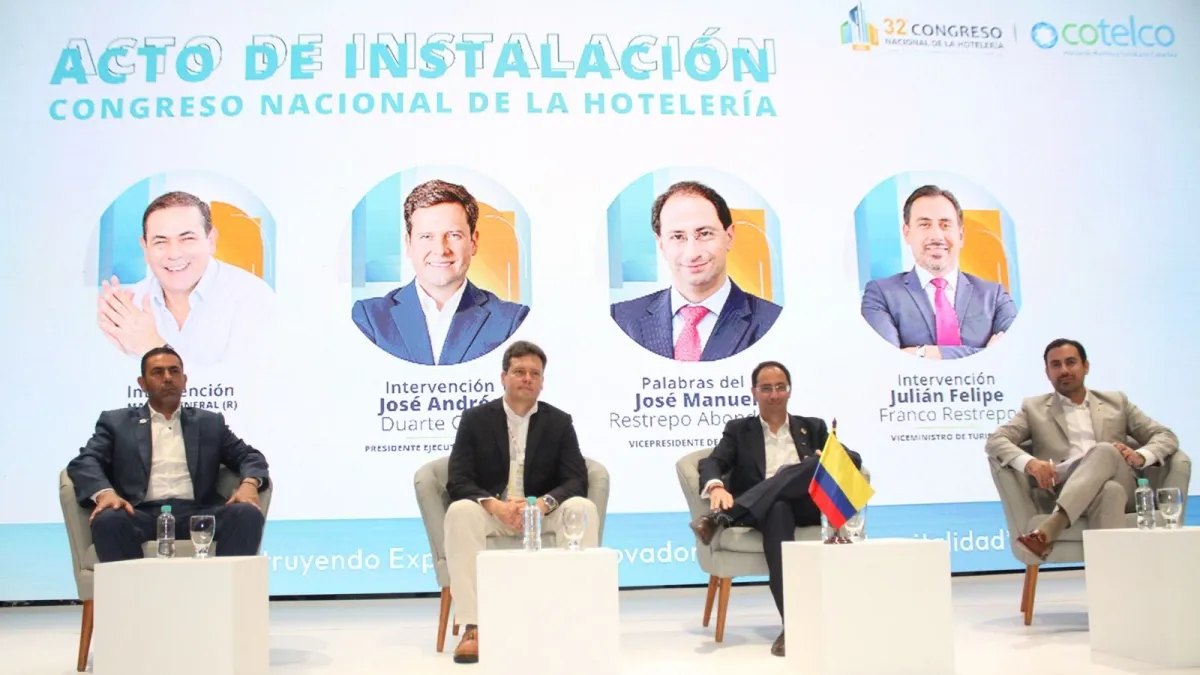
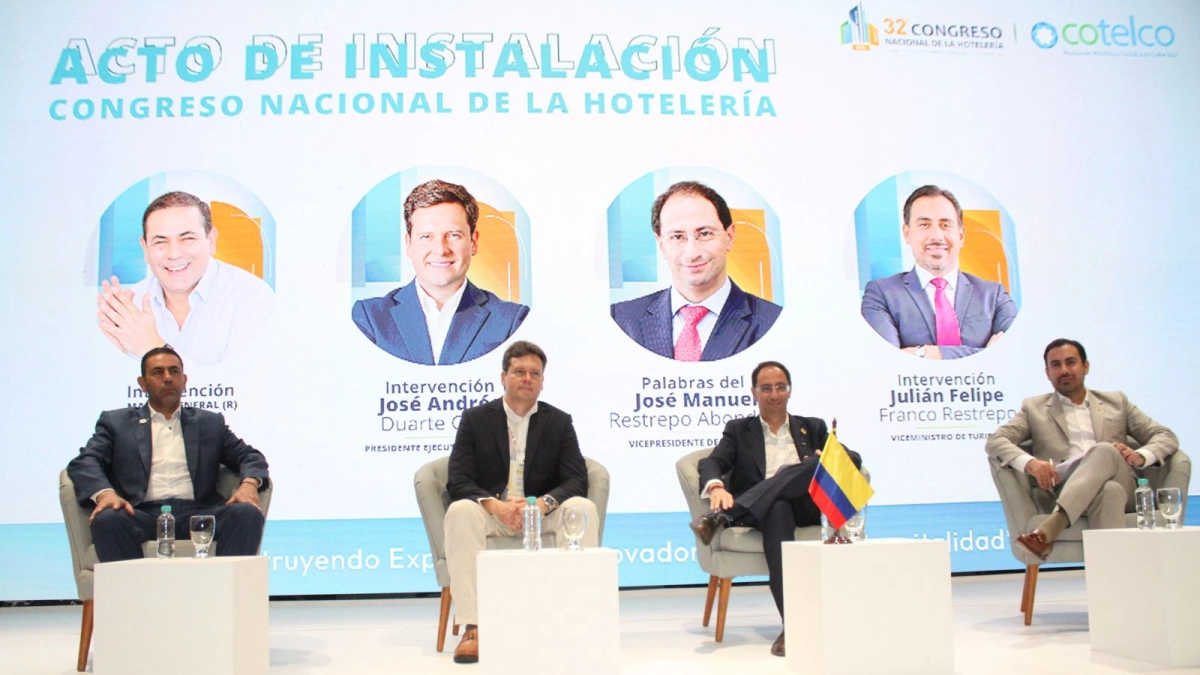
Under the guiding theme "Building Innovative Experiences from Hospitality," the 32nd National Hotel Congress officially kicked off on Thursday, October 29, 2026. Hosted at the Neomundo Convention Center in Bucaramanga, capital of the Santander department, the premier event gathered top industry leaders, hospitality executives, and high-ranking government officials.
The primary objective of this year’s gathering is to confront the multifaceted challenges facing Colombia’s tourism and hotel sectors. Chief among these concerns is a noticeable cooling in foreign visitor arrivals, tighter profit margins, and the persistent burden of industry informalities.
The inauguration drew a high-profile panel of speakers, including Vice President José Manuel Restrepo; the Governor of Santander, retired Major General Juvenal Díaz Mateus; Deputy Minister Julián Felipe Franco Restrepo; and Cotelco’s Executive President, José Andrés Duarte. Together, public and private sector stakeholders laid out a strategic roadmap aimed at pivoting away from mere visitor volume metrics and toward high-impact economic growth, technological adaptation, and aggressive structural modernization.
Chronology of the Event
Morning Sessions: Setting the Stage in Bucaramanga
08:30 AM – Registration and Welcome: Industry leaders, regional authorities, and delegates arrived at the Neomundo Convention Center, setting an atmosphere of cautious optimism mixed with urgency regarding recent market data.
10:00 AM – Opening Remarks: The formal installation ceremony commenced with addresses from regional hosts and national figures, framing the current socio-economic landscape of Colombian tourism.
11:15 AM – Cotelco Presidential Address: José Andrés Duarte took the stage to outline the deep economic roots of the hospitality sector, issuing a direct challenge to the national government regarding regulatory enforcement and market fairness.
Afternoon Sessions: Strategic Roadmaps and Innovation
02:00 PM – Government Vision and Targets: Deputy Minister Julián Felipe Franco Restrepo presented the administration’s medium-term tourism goals, addressing the post-pandemic correction trends and outlining targets through 2030.
03:30 PM – Vice Presidential Keynote: Vice President José Manuel Restrepo unveiled administrative instruments designed to stimulate private investment, touching heavily upon legal stability, tax incentives, and artificial intelligence integration via the "Misión Crecer" (Grow Mission) initiative.
05:00 PM – Closing Plenaries and Networking: The inaugural day wrapped up with specialized panels focusing on regional integration, MICE (Meetings, Incentives, Conferences, and Exhibitions) tourism, and sustainable hospitality models.
Supporting Data: The Current State of Colombian Hospitality
The 32nd Congress takes place against a complex economic backdrop. According to data from the Monthly Accommodation Survey (EMA) compiled by the National Administrative Department of Statistics (DANE), the sector has faced significant friction over the past year.
Occupancy Decline: Between January and August 2026, the national hotel occupancy rate stood at 48.0%, representing a drop compared to the 49.7% recorded during the same eight-month period in 2025.
Revenue and Employment Shrinkage: Real income for the sector fell by 7.5%, while the total personnel employed contracted by 4.7%.
Macroeconomic Context: Industry experts noted that the sector has experienced sequential corrections—following an 11% contraction in previous cycles, current indicators show a stabilizing yet delicate adjustment phase of around a 4% year-over-year decline in specific inbound segments.
Economic Multiplier Effect: Highlighting the systemic importance of the industry, data presented at the conference emphasized that hospitality directly or indirectly interlocks with more than 30 distinct economic activities, positioning it as one of the nation’s most intensive capital-and-labor engines.
Official Responses and Stakeholder Perspectives
Cotelco: The Fight Against Regulatory Arbitrage
José Andrés Duarte, Executive President of the National Hotel Association of Colombia (Cotelco), did not shy away from addressing the systemic structural roadblocks hindering business viability. While praising the sector’s vast reach, Duarte trained his focus heavily on the threat of unmonitored market actors.
"The main challenge for the development of tourism is informality," Duarte asserted during his opening address. "A large-scale and capable informality that we face every day; an informality perfectly capable of complying with the regulations. We do not seek prohibition because that is not our style—we love to compete. What is missing is the enforcement and compliance of already established laws."
Duarte also called for renewed diplomatic and commercial focus on strengthening tourist pipelines from the United States. Furthermore, he emphasized the diversification of domestic and international demand by championing niche markets: "Stimulating tourism in Colombia is vital, with strong campaigns to motivate travel and stimulate more weekend circuits, increasing overnight stays, better spending capacity, and greater economic spillovers for the territories. MICE tourism, nature tourism, cultural tourism, and health and wellness tourism are key bets."
Ministry of Trade, Industry, and Tourism: Quality Over Quantity
Addressing the downward trends in visitor counts, Deputy Minister Julián Felipe Franco Restrepo offered a pragmatic reassessment of national tourism goals, signaling a definitive shift in strategy.
"The reality is that the country is contracting. Last year we contracted by around 11 percent, and this year we are seeing a contraction of close to 4 percent," Franco acknowledged candidly. However, he outlined an ambitious multi-year vision: "In these four years, our objective is to reach ten million tourists, 20 billion dollars in economic impact by 2030, and raise the sector’s contribution to 3.5 percent of the GDP. For us, the economic impact generated by the tourist is much more important than the raw volume."
To achieve these targets, the Ministry outlined tactical assignments, including elevating high-potential regional tourism projects to platforms like Milagro Week to secure robust funding sources.
Vice Presidency: Megaprojects, Tax Incentives, and AI
Vice President José Manuel Restrepo delivered a comprehensive master plan centered on injecting confidence, structural stability, and advanced technology into the tourism ecosystem.
Recognizing that modern travelers expect seamless, tech-enabled journeys, Restrepo stressed the urgent integration of artificial intelligence across hospitality operations. "The next guest is going to arrive powered by artificial intelligence. We must train our workforce for that exact purpose. The ‘Misión Crecer’ has a firm commitment to developing capabilities in the use of artificial intelligence within the hotel sector," he declared.
To foster an environment conducive to large-scale capital investments, the Vice President proposed the establishment of a Unified Guarantee Regime (RUG). This regulatory framework would offer structural tax incentives and guarantee legal stability for long-term investments.
"That means fiscal incentives for the sector and, secondarily, legal stability regarding decisions on tax matters," Restrepo explained. He also issued an open invitation to tourism operators to collaborate on national "megaprojects" designed to stimulate regional economic dynamism.
Implications for the Future of Colombian Tourism
The discussions and policy frameworks established during the opening days of the 32nd National Hotel Congress carry profound implications for the trajectory of Colombia’s visitor economy:
A Paradigm Shift in Metrics: By explicitly pivoting away from chasing sheer headcounts and focusing instead on per-capita spending, economic spillover, and value-added experiences, Colombia is positioning itself as a boutique, high-value destination rather than a mass-market hub.
Regulatory Pressure on Short-Term Rentals: Cotelco’s aggressive stance against unregulated tourist housing signals an impending push for stricter municipal and national enforcement. If successful, this could level the playing field for traditional, tax-paying hoteliers.
Technological Modernization: The incorporation of AI training through government-backed initiatives like Misión Crecer indicates that the future workforce must evolve rapidly. Hotels that fail to adopt digital-first operational models risk falling behind changing consumer behaviors.
Institutional Resilience: The introduction of proposed mechanisms like the Unified Guarantee Regime (RUG) aims to restore investor confidence, proving that the public sector recognizes the need for fiscal predictability in turbulent macroeconomic times.
As the congress continues in Bucaramanga, industry stakeholders leave with a clear mandate: adapt swiftly to digital realities, demand fair marketplace competition, and anchor future growth in sustainable, high-impact experiences that leave visitors with an enduring, positive impression of Colombia’s rich natural and cultural heritage.
WASHINGTON — In what celestial mechanics experts are describing as an astronomical event of rare and profound magnitude, the National Aeronautics and Space Administration (NASA) has announced the discovery of a massive, newly formed crater…
By Gabriel García Published: September 15, 2026 Main Facts: The Evolution of the Family Bed In modern households across Colombia and around the globe, domestic animals have transcended their traditional roles as backyard guardians or…
By Global Science Desk Published: October 28, 2026 Main Facts An international coalition of scientists, historians, and archaeologists has successfully resolved one of geophysics’ most persistent and subtle enigmas: the gradual deceleration of Earth’s rotational…