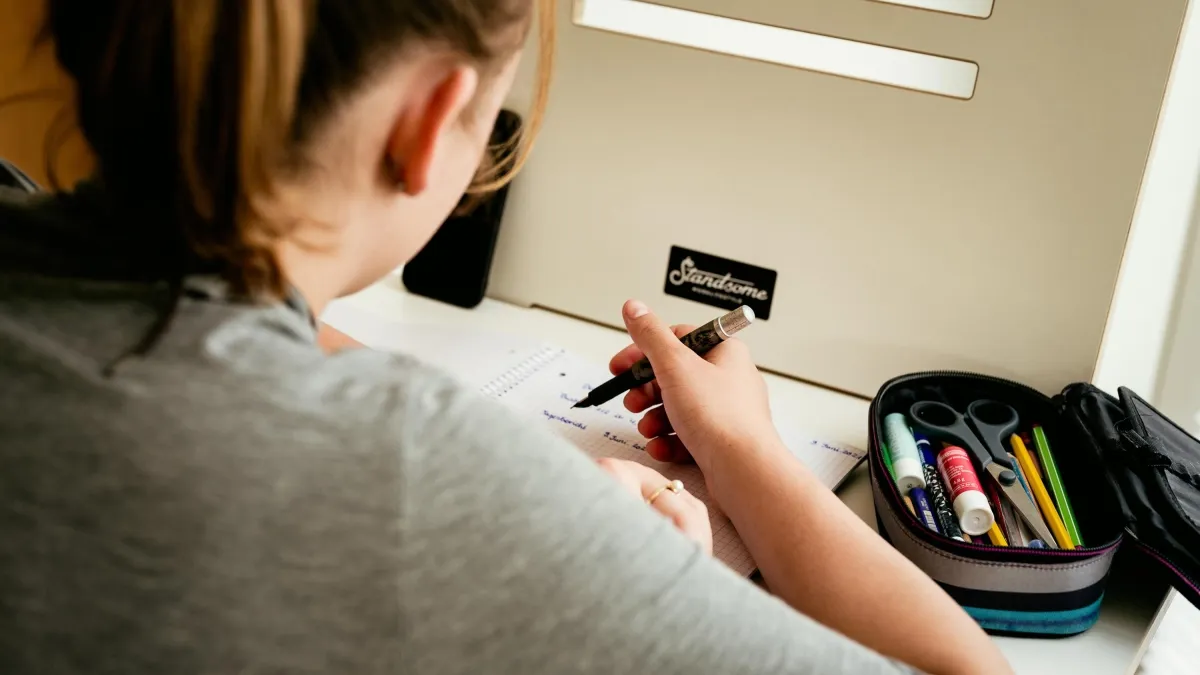
Bogotá — In Colombia, an invisible education revolution is quietly unfolding inside living rooms, kitchen tables, and through digital platforms across the country. Yet, the nation’s educational authorities remain profoundly in the dark about its true scale.
According to a comprehensive new report by the Laboratorio de Economía de la Educación (LEE) of the Pontificia Universidad Javeriana, Colombia lacks a single official statistic tracking how many children and adolescents are being educated at home, where they reside, or the pedagogical methods they employ. Operating in a stark regulatory "gray zone"—neither explicitly prohibited nor formally recognized as an official modality of public service—homeschooling has morphed into a thriving private market while the state watches from the sidelines.
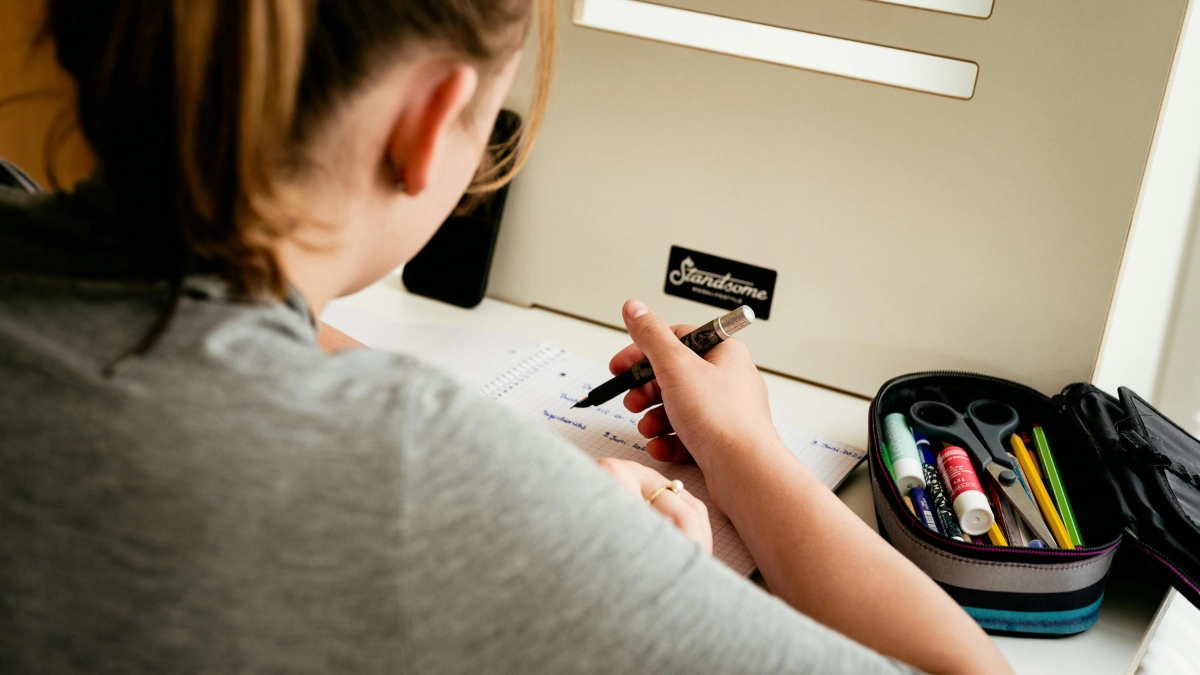
The implications of this vacuum are profound. Without accurate data, policymakers cannot safeguard the fundamental right to education, ensure consistent academic quality, or monitor the socialization and developmental welfare of thousands of children.
Main Facts: A Regulatory Vacuum and a Surging Private Market
The core issue highlighted by the LEE report is the complete absence of institutional visibility regarding home-based education. While traditional schooling still commands the vast majority of the population—accounting for roughly 81.4 percent of students in 2024 according to the Ministry of Education’s Student Enrollment System (SIMAT)—the remaining percentage is largely swallowed up by flexible rural methodologies or slips entirely past official radar.

The Ministry of Education explicitly confirmed to researchers via a formal right-to-petition request that it "does not possess figures or statistics on the homeschooling modality in Colombia." Furthermore, the agency noted that non-traditional education in preschool, primary, and secondary levels is not legally regulated as a formal service modality, save for exceptional provisions for adults or specific social hardships.
For everyday families, this legal blind spot carries direct, real-world consequences. Children educated entirely at home who eventually wish to re-enter the formal system must undergo bureaucratic validation exams to certify their grade levels.
Compounding this regulatory absence is an aggressive expansion of private educational alternatives. Platforms, hybrid schools, tutoring networks, and digital academies have stepped into the void, creating a commercial ecosystem of home-based learning. Gloria Bernal, director of the LEE, notes the paradox: "In Colombia, there is already a thriving private supply of home education, featuring platforms, tutoring, and hybrid schools, yet we remain entirely unaware of its true dimensions."
Chronology of an Emerging Phenomenon
To understand how homeschooling evolved into its current state in Colombia, it is necessary to examine the trajectory of its public perception, data indicators, and institutional response over the past decade and a half:

- 2010–2019 (The Traditional Baseline): SIMAT data shows relative stability in traditional school enrollment, hovering around 80 percent, with flexible public models (such as Escuela Nueva for rural areas) covering the balance. Home education exists almost exclusively as a niche practice among ideological proponents or families with specialized needs, operating entirely outside the policy debate.
- 2020 (The Pandemic Disruption): COVID-19 forces unprecedented global lockdowns. Schools close their physical doors, forcing a sudden, emergency shift to remote learning. While this was distinct from intentional homeschooling, it familiarized thousands of families with home-based instruction and digital learning interfaces.
- 2020–2023 (The First Statistical Approximations): Researchers attempt to trace the post-pandemic ripples. The LEE analyzes transitional jumps in SIMAT data—such as students appearing in sixth grade without a recorded fifth-grade history—estimating roughly 178,000 children annually who might be interacting intermittently with alternative educational pathways. Simultaneously, independent groups like the Colombian Network of Family Education estimate around 8,000 participating families.
- 2025–2026 (Commercial Expansion and Academic Scrutiny): Private entities like Home Schooling Colombia estimate that the number of participating families has surged to roughly 30,000, heavily concentrated in urban epicenters like Medellín. The LEE finalizes its landmark report, exposing the total lack of official metrics and prompting national debate over the need for a voluntary state registry.
Supporting Data: Discrepancies and Global Comparisons
Faced with a complete lack of government tracking, the LEE report attempted to triangulate figures using disparate sources, revealing wide discrepancies that underscore the urgent need for a unified registry:
- SIMAT Tracing Anomalies: By analyzing students missing a prior grade level, researchers found an upper-bound anomaly of roughly 178,000 children per year, though they caution this likely includes administrative errors or identification number changes.
- Saber 11 Exam Metrics: Looking at independent adolescents taking the national high school exit exam outside of a traditional school setting yielded a much smaller pool: between 4,200 and 5,900 students around 2020, though pandemic distortions heavily influenced these numbers.
- Civil Society Estimates: The Senate and family education networks reported about 8,000 families in 2020, a figure that private platforms estimate jumped to 30,000 families by 2025.
- The Cost Barrier: Pricing within the private homeschooling market varies wildly based on institutional support. Some providers scale tuition by socioeconomic strata (ranging from roughly 95,000 to 430,000 Colombian pesos monthly), while "pure" homeschooling services, virtual attendance, and hybrid physical-digital models scale up to millions of pesos annually. Without state subsidies, rigorous home education is effectively monetized and restricted to families with high disposable incomes.
Global Context: How Other Nations Manage Homeschooling
The report contrasts Colombia’s laissez-faire vacuum with structured international frameworks:

- United States: The National Home Education Research Institute estimated roughly 3.4 million students (6.3 percent of the school-age population) engaged in homeschooling during 2024–2025.
- United Kingdom: Educational authorities officially tracked 126,000 home-educated children in the autumn of 2025.
- France: Utilizing strict administrative tracking and mandatory home visits, France recorded nearly 25,000 children in home education by the mid-2010s.
- Regional Neighbors: Ecuador established a formal legal framework in 2013, classifying homeschooling as an exceptional, semi-regular option that must be anchored to an authorized traditional school.
Official Responses and Institutional Positions
The Ministry of Education’s formal stance remains anchored in rigid administrative definitions. Because basic education (preschool through high school) is legally structured around physical, institutional attendance, the state does not recognize home learning as a valid equivalent delivery model.
For institutions like DANE (National Administrative Department of Statistics), standard household surveys like the Gran Encuesta Integrada de Hogares (GEIH) fail to capture the phenomenon because their questionnaires only ask whether an individual attends an educational establishment, leaving no analytical checkbox for structured home-based learning.

Critically, the LEE report emphasizes that international academic literature does not point to home education as inherently superior or inferior to traditional schooling in terms of raw academic outcomes. Once family income, parental educational attainment, and curriculum quality are accounted for, learning performance evens out. However, socialization outcomes remain polarized: children with rich community interactions thrive, while those with limited external exposure face significant risks of social isolation.
Implications and Recommendations for the Future
The expansion of unmonitored home education poses a dual challenge for Colombia: respecting parental autonomy in childrearing while protecting the child’s constitutional right to a comprehensive, high-quality education.
To bridge this dangerous information gap, the LEE has outlined concrete, pragmatic policy recommendations:
- Creation of a Voluntary Registry: Establish a non-punitive, informational registry managed by the Ministry of Education and certified secretariats. Rather than authorizing or restricting homeschooling, this registry would map pedagogical models, territorial distribution, enrollment sizes, and certification pathways on an annual basis.
- Integration of Statistical Variables: Modify SIMAT databases and DANE household surveys to explicitly capture home-based education metrics, transforming an invisible demographic into visible data points.
- Clear Validation Pathways: Streamline legal protocols for academic validation and the recognition of prior learning. This would ensure that children moving between traditional schools and home education do not suffer interrupted educational trajectories or face insurmountable bureaucratic hurdles.
Ultimately, as Gloria Bernal asserts, the debate should not be reduced to partisan ideological camps cheering for or condemning homeschooling. Instead, the focus must shift toward empirical transparency. Without reliable data, Colombia cannot draft intelligent public policy, safeguard academic standards, or guarantee that every child—regardless of where they sit to learn—receives the education they deserve.