By Global Environmental Desk
Published: November 25, 2026
Main Facts
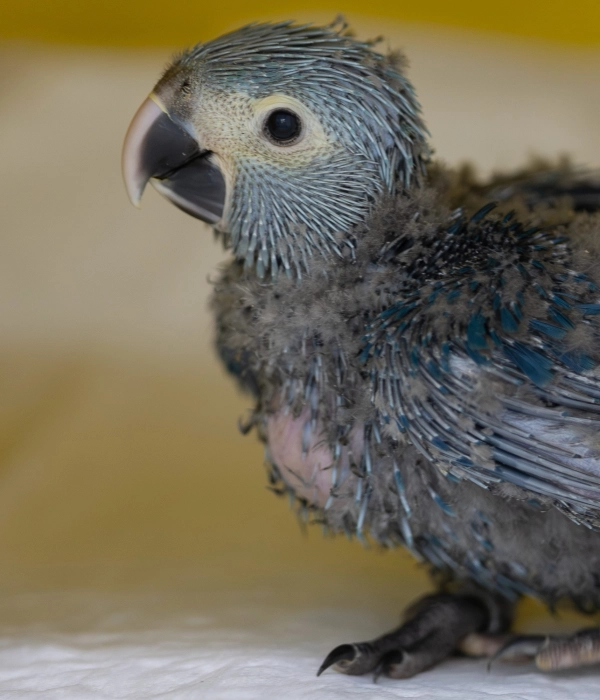
In a landmark achievement for global conservation biology, the Brazilian government announced the successful hatching of a Spix’s macaw (Cyanopsitta spixii) within a national zoological facility for the very first time. The newborn—a female chick appropriately named ‘Hope’—represents a crucial, albeit fragile, milestone in the arduous international efforts to rescue one of the planet’s most endangered avian species from the brink of total extinction.
Currently, the global population of the Spix’s macaw—famously colloquially known in Portuguese as the ararinha azul (little blue macaw)—hovers at approximately 330 individuals worldwide. Every single one of these surviving birds exists exclusively in captivity. Extinct in the wild since the turn of the millennium, the species has relied entirely on sophisticated captive breeding programs, international repatriations, and meticulous scientific intervention to persist.
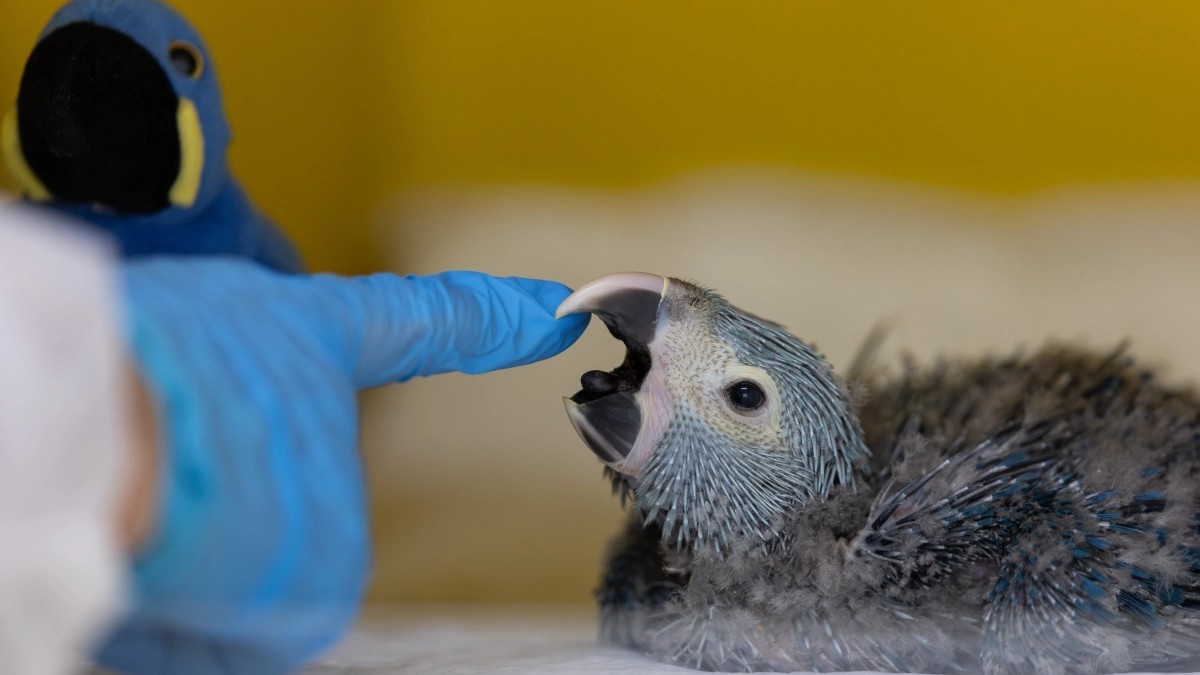
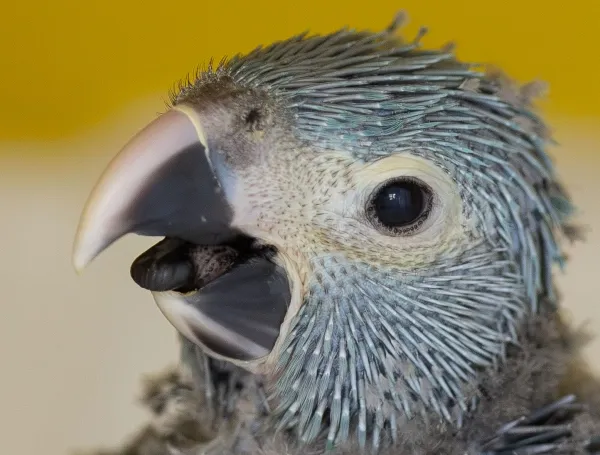
At the São Paulo Zoo, under the watchful eyes of specialized biologists, little Hope spends her days inside a specialized thermal chamber maintained at a steady 35 degrees Celsius (95°F). Having hatched roughly a month ago, the vulnerable polluelo still requires assisted feeding four times daily. However, early signs of biological progress are visible: her downy feathers are beginning to display the unmistakable, striking cobalt-blue hues that characterize her iconic lineage.

"We are deeply moved," shared Fernanda Vaz Guida, the lead avian biologist at the zoo who dedicates her days to monitoring the chick’s developmental milestones. The symbolic name ‘Hope’ was chosen deliberately by the scientific team to embody the immense expectations resting on the tiny bird
‘s shoulders as a beacon for the revival of a species that once vanished from the skies of South America.
Chronology: The Long Road Back from Extinction
The journey of the Spix’s macaw from absolute absence to the birth of ‘Hope’ spans decades of international diplomacy, private-public partnerships, and high-stakes genetic management:
- 2000: The Spix’s macaw is officially declared extinct in the wild, driven by decades of rampant deforestation, agricultural expansion, and relentless trapping for the illegal exotic pet trade. A tiny, scattered population survives solely in private collections across the globe.
- 2023: A foundational cohort of adult Spix’s macaws arrives at the São Paulo Zoo, transferred under a formal agreement orchestrated by the Brazilian federal government to establish a domestic stronghold for the species.
- 2024: The zoo inaugurates a state-of-the-art conservation center designed specifically for the macaws. Spanning 900 square meters, the facility is constructed with a hefty investment of 5 million reals (roughly equivalent to $1 million USD).
- Late 2025: Reproductive trials face severe biological hurdles. Despite the resident adult pairs producing an impressive total of 38 eggs over the breeding cycle, failure strikes: not a single egg is successfully fertilized, underscoring the deep genetic bottlenecks plaguing the captive population.
- October–November 2026: Persistence pays off. Following rigorous adjustments to breeding protocols, thermal regulation, and pairing diagnostics, the historic hatching of ‘Hope’ takes place at the São Paulo facility, marking Brazil’s first-ever successful zoo-born Spix’s macaw.
Supporting Data and Technical Challenges
While the birth of ‘Hope’ has electrified the conservation community, experts emphasize that saving the Spix’s macaw is an uphill battle fraught with profound genetic and ecological barriers.
The Genetic Bottleneck
Because the global population descends from a minuscule number of founding birds, severe inbreeding has created a troubling lack of genetic diversity. This deficiency directly undermines fertility rates and embryonic viability.
"Finding a genetically compatible pair is exceedingly difficult; the process is profoundly complex and demands highly advanced technical expertise," explained biologist Fernanda Vaz Guida. The stark reality of this challenge was starkly illustrated just last year, when 38 eggs were laid by the zoo’s resident birds, all of which proved infertile. Establishing a robust, genetically diverse population is an absolute prerequisite before any large-scale reintroduction to the wild can be responsibly attempted.

Habitat and Health Threats in Bahia
Beyond the controlled environment of the zoo, the bird’s native habitat—an arid, scrubland region in the interior of Bahia state—remains vulnerable. Historic pressures such as illegal logging and poaching continue to cast a shadow over the region.
Compounding these environmental hurdles, conservationists recently encountered an unexpected biological threat: a foreign virus imported into the region from abroad. This outbreak forced Brazilian environmental authorities to temporarily halt planned field release schedules until the epidemiological situation could be comprehensively analyzed and brought under strict quarantine control.

Official Responses and Strategic Vision
During a special press briefing at the São Paulo Zoo, Brazil’s Minister of Environment, João Paulo Capobianco, lauded the achievement as a testament to the sophistication and dedication of national science.
"Captive reproduction is the path forward," Minister Capobianco declared to assembled journalists. To contextualize the long-term feasibility of such recovery efforts, he pointed to the triumphant precedent of the golden lion tamarin (Leontopithecus rosalia). That charismatic primate was once pushed to the absolute precipice of extinction before coordinated breeding and reintroduction programs successfully re-established stable, thriving wild populations in the Atlantic Forest.

Capobianco expressed cautious optimism regarding the future, affirming his belief that the Brazilian government’s ongoing investments will ensure that "in the near future," flocks of Spix’s macaws will once again grace the skies of their ancestral home in Bahia.
Implications and Next Steps
The arrival of ‘Hope’ changes the immediate tactical playbook for the team at the São Paulo Zoo. With the chick steadily gaining strength and developing her adult plumage, researchers are already mapping out her long-term social integration.

The primary objective for ‘Hope’ in the medium term is socialization. Biologists plan to introduce the young female to another compatible juvenile Spix’s macaw once she reaches maturity. The goal is to evaluate behavioral compatibility and, ideally, foster the conditions necessary for her to produce the next generation of captive-bred chicks.
Ultimately, ‘Hope’ is more than just a zoological milestone; she is a living symbol of resilience. While the path to fully restoring the Spix’s macaw to its natural habitat remains laced with scientific, environmental, and geopolitical hurdles, her first tentative steps inside a thermal incubator in São Paulo signal that extinction does not necessarily have to be permanent.