By Editorial Staff
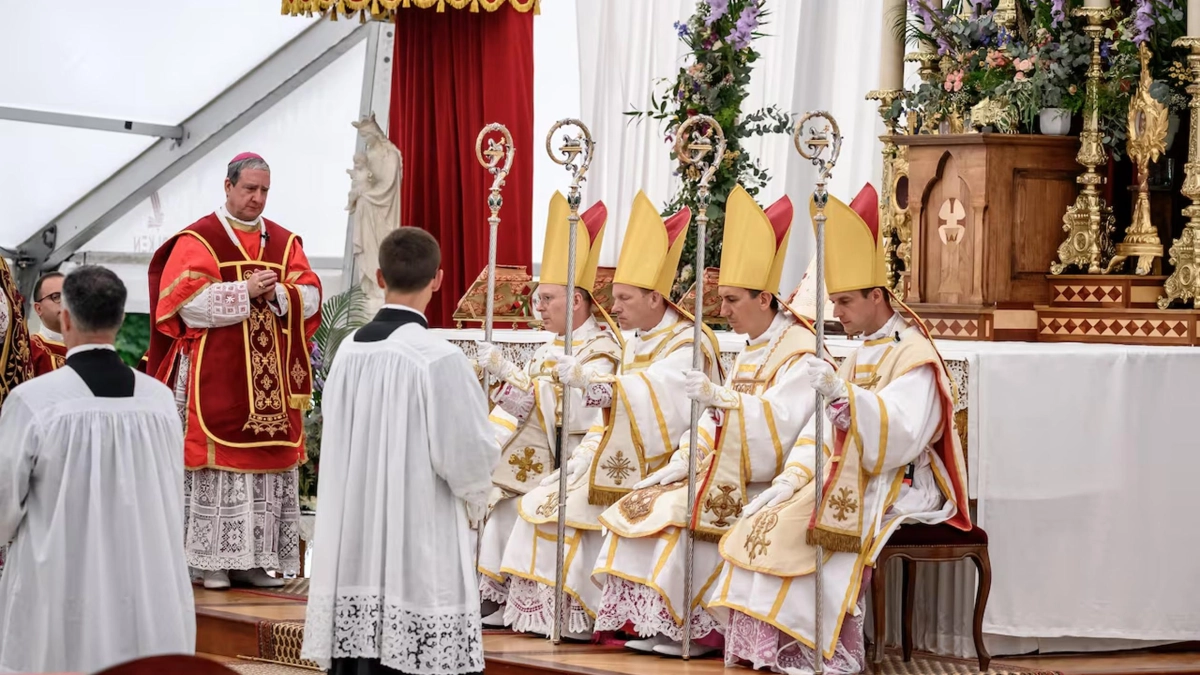
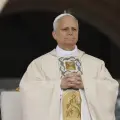
The Catholic Church is facing a renewed ecclesiastical crisis. In a decisive move, the Holy See has excommunicated the leadership and members of the Fraternidad Sacerdotal San Pío X (FSSPX), the ultra-traditionalist group commonly known as the Lefebvrians. The rupture follows a provocative ceremony in Ecône, Switzerland, on July 1, 2026, where the group consecrated four new bishops without the requisite pontifical mandate.
The move by Pope León XIV marks a return to the rigid discipline last seen under John Paul II in 1988. This latest schism has reignited a debate regarding the future of the Church, the legacy of the Second Vatican Council, and the limits of papal authority.
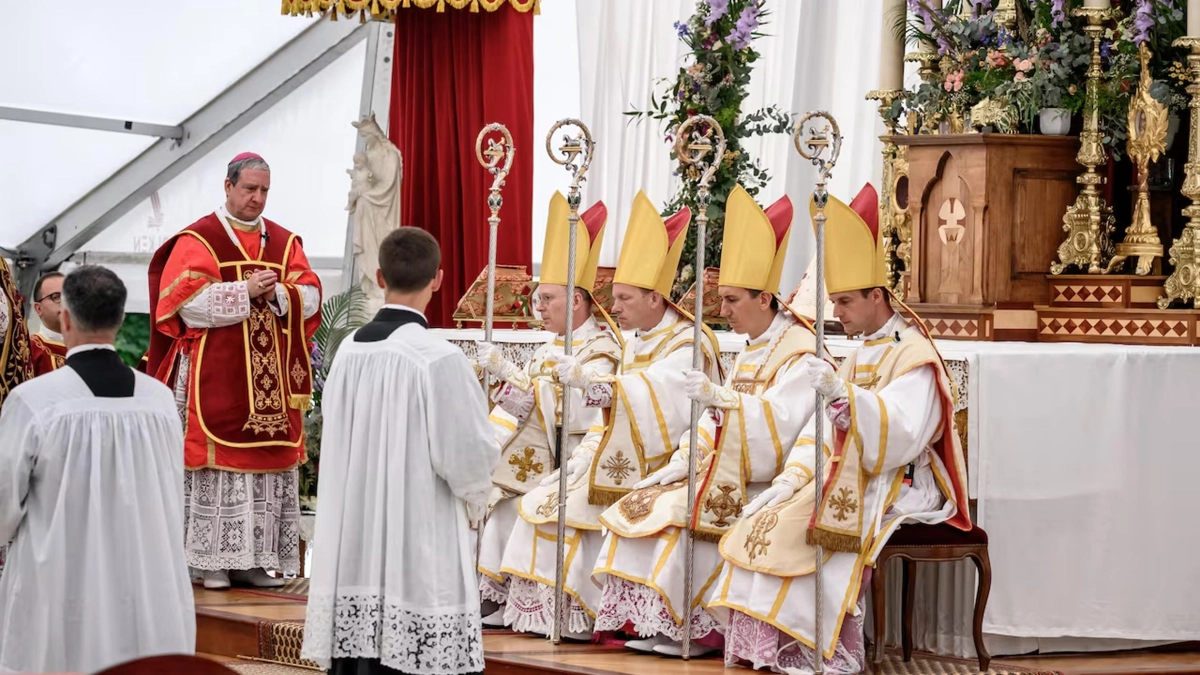
Roberto Regoli, a professor of Church History at the Pontifical Gregorian University and president of the Joseph Ratzinger Vatican Foundation, suggests that the conflict is far deeper than a mere preference for the Latin mass. "The core issue is a fundamental rejection of the teachings of the Second Vatican Council," Regoli explains. "When a schism is not resolved quickly, it risks becoming incurable."
The Core Conflict: Theology vs. Tradition
While public discourse often centers on the "Tridentine Mass"—the ancient Latin liturgy celebrated with the priest facing away from the congregation—Professor Regoli clarifies that this is no longer the primary battlefield.
"The liturgical question was largely desensitized by Benedict XVI in 2007 with the decree Summorum Pontificum," Regoli notes. "The real friction lies in the theological rejection of Vatican II’s core pillars: religious freedom, ecumenism, and the relationship between the Church and the modern state."
The Lefebvrians, who long for a return to a confessional state and reject the modern Church’s approach to inter-religious dialogue, view the reforms of the last 60 years as a departure from the "true" faith. This ideological chasm makes reconciliation increasingly difficult, as the FSSPX views the contemporary Vatican hierarchy as having lost its theological legitimacy.
A Chronology of a Fractured Relationship
The history of the FSSPX is a cycle of tension, temporary bridge-building, and renewed defiance.
- 1970: Archbishop Marcel Lefebvre founds the Society of St. Pius X in response to what he describes as the "abandonment of tradition" following the Second Vatican Council.
- 1988: In an act of open defiance, Lefebvre consecrates four bishops without papal approval. Pope John Paul II responds with immediate excommunication.
- 2009: In a gesture of reconciliation, Pope Benedict XVI lifts the excommunications of the four bishops, attempting to bring the group back into full communion.
- 2016: Pope Francis offers a pastoral olive branch, validating confessions and marriages performed by FSSPX priests during the Jubilee of Mercy.
- 2021: Pope Francis issues Traditionis Custodes, restricting the use of the Latin Mass, which creates fresh friction with traditionalist circles.
- July 2026: The FSSPX consecrates four new bishops in Ecône without a pontifical mandate.
- July 2, 2026: Pope León XIV declares a formal excommunication of the four newly consecrated bishops, as well as the prelates who performed the act and the followers who actively support the schismatic movement.
Analyzing the "Small Schism" with Big Impact
Professor Regoli describes this as a "small schism" in terms of raw numbers, but acknowledges its disproportionate media footprint. In the context of the last 500 years, he notes that major councils—such as Trent, Vatican I, and Vatican II—have consistently sparked breakaway movements.
"Every time the Church takes a significant step toward modernizing its relationship with the world, a reactionary group emerges," Regoli argues. The FSSPX’s specific grievance is the "legitimate development of doctrine." By rejecting the post-conciliar Magisterium, the group has effectively placed itself outside the fold.
When asked if this move by the Lefebvrians was a trap set for Pope León XIV, Regoli dismisses the idea. He distinguishes between "loyalist" traditionalists, who remain faithful to Rome while preferring the old rite, and the FSSPX, who adopt "sedevacantist" rhetoric—the belief that the current hierarchy is illegitimate or apostate.
"They are in a state of deep contradiction," says Regoli. "They claim to recognize the Pope, yet they state that the Church has lost the faith since 1962. You cannot claim to recognize an authority you explicitly call an ‘anti-Christian’ institution."
The Strategic Necessity of Survival
The timing of the July 2026 consecrations was not coincidental. Observers believe the FSSPX’s decision to defy the Vatican was a calculated gamble for institutional survival.
The Society’s previous generation of bishops—including Bernard Fellay and Alfonso de Galarreta—are elderly and in declining health. Without new bishops to ordain priests, the Society’s organizational structure would eventually collapse. By ordaining four new bishops, the FSSPX ensured the continuation of their clerical hierarchy for another generation.
"It was a gamble on their long-term survival," Regoli explains. "They have schools, seminaries, and parishes. To them, these ordinations were a matter of existence."
Official Responses and the Path Forward
The Holy See’s response has been one of "profound sorrow" but firm resolve. Cardinal Pietro Parolin, Secretary of State, has expressed hope for dialogue, but the current atmosphere makes this unlikely.
The Vatican’s latest decree from the Dicastery for the Doctrine of the Faith is not directed at the FSSPX leadership, but rather at their flock. By providing clear protocols for individual priests and laypeople who wish to break from the Society and return to the Church, Rome is attempting to hollow out the schism rather than confront its hardline leadership directly.
Regoli remains pessimistic about a formal reconciliation. "The Lefebvrians celebrated their consecrations with a spirit of festivity, while Rome speaks of a wound. These are two different worlds, two different languages," he says.

The Implications for the Future of the Church
The return to a strict, clear-cut excommunication represents a shift in the Vatican’s diplomatic strategy. Under Pope Francis and Benedict XVI, the strategy was one of "open hands"—concessions, dialogue, and patience. Pope León XIV has moved toward a policy of "clear lines."
The implications are significant:
- Clarification of Status: The Vatican has made it clear that those who adhere to the FSSPX’s schismatic acts are choosing to leave the Catholic Church.
- The Marginalization of Traditionalist Extremism: By separating the FSSPX from the broader body of "traditionalist" Catholics who remain in communion with Rome, the Vatican hopes to contain the influence of the movement.
- The "Incurable" Schism: As Regoli notes, most historical schisms are never healed. If the FSSPX continues to grow its independent network of schools and seminaries, it may cement its status as a permanent, albeit small, parallel church.
As the dust settles in Ecône and the Vatican, the reality remains: the Church has lost a significant segment of its traditionalist base. Whether this creates a more unified Church or simply drives a wedge that will exist for decades to come remains one of the defining challenges of the pontificate of León XIV.

"We are witnessing the hardening of an ideological divide," concludes Regoli. "And in the history of the Church, such hardening is rarely reversed."