By Edwin Caicedo | Environment and Health Journalist
Updated: October 31, 2026
Main Facts
In a decisive move to fortify national biosecurity and public health defenses against infectious diseases, the United States Centers for Disease Control and Prevention (CDC) has announced a strict new travel requirement. Effective for all flights departing at or after 11:59 p.m. Eastern Time on November 3, 2026, every passenger traveling to the United States—or transiting through a U.S. airport toward an international destination—must submit a formal health declaration.

This mandatory certificate requires travelers to prove conclusively that they have not been physically present in the Democratic Republic of the Congo (DRC) during the 21 days preceding their flight. Crucially, the rule applies not only to individuals who visited or stayed overnight in the DRC, but also to anyone who merely transited through a Congolese airport, even if they never left the aircraft or the terminal’s international transit zone.
Major international carriers, including Avianca, have begun issuing urgent advisories to warn their customer bases. Under the CDC guidelines, completing this declaration is an absolute prerequisite for boarding. Airlines are legally barred from allowing any passenger onto a U.S.-bound or connecting flight without verifiable proof that the form has been completed.

Furthermore, the CDC mandates that the form must be filled out individually. Group or family submissions are strictly prohibited; every single passenger—including minors, represented by their guardians—must possess an independent digital or physical confirmation. Failure to comply results in immediate denial of boarding, regardless of whether the traveler holds a valid visa, a confirmed ticket, or other essential travel documents.
Chronology of the New Public Health Directive
The implementation of this sweeping biosecurity measure follows a precise timeline designed to give airlines and international travelers a narrow window for adaptation:

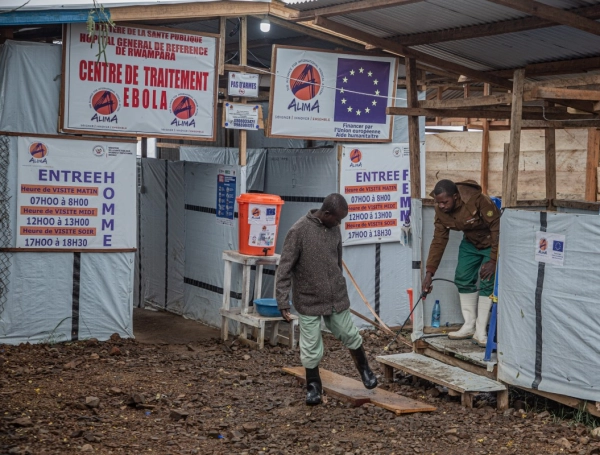
- Late August 2026: Public health monitors and international bodies report concerning epidemiological data regarding outbreaks of the Ebola virus within regions of the Democratic Republic of the Congo, prompting heightened surveillance by global health agencies.
- Mid-October 2026: The CDC drafts emergency administrative guidance aimed at closing potential vectors for importation, zeroing in on international aviation networks connecting Central Africa to North American hubs.
- October 31, 2026: Commercial carriers, including Avianca, issue official statements notifying passengers of the incoming CDC directive. They outline the strict operational parameters and the impending enforcement date.
- November 3, 2026 (11:59 p.m. EST): The official enforcement deadline takes effect. Every flight departing after this threshold must strictly verify passenger compliance prior to gate closure.
Supporting Data and Operational Mechanics
To comply with the CDC’s rigorous standards, travelers must navigate a specific bureaucratic workflow. The regulatory framework leaves no room for ambiguity regarding how the declaration must be completed and presented at the airport.
The 21-Day Window
The 21-day threshold is tied directly to the maximum incubation period of the Ebola virus. By establishing a three-week lookback window, the CDC aims to capture any potential asymptomatic exposure before an individual enters the United States.

Airport Transits Count
A common point of confusion among international flyers is the definition of "presence" in a country. The CDC directive explicitly clarifies that stepping foot inside a Congolese airport terminal—even for a brief layover lasting less than an hour while remaining airside—constitutes a violation of the 21-day rule unless a waiver applies. Passengers whose itineraries feature connections in Kinshasa or other DRC air hubs must fundamentally reroute their journeys to maintain eligibility for entry into or transit through the United States.
Digital vs. Physical Submissions
Travelers have two official avenues to fulfill the mandate:

- Digital Form: Passengers can complete the declaration online via official platforms prior to arriving at the airport. They must retain a digital or printed receipt showing successful submission, which gate agents will scan or inspect during boarding.
- Physical Form: Alternatively, travelers can download the official document directly from the CDC’s web portal, print it out, fill in the required fields manually, and sign it by hand. This physical copy must be presented to airline personnel at the departure gate.
Airlines have strongly advised customers to complete this paperwork well in advance of their departure dates to mitigate the risk of long airport queues, missed check-in windows, and chaotic gate procedures.
Official Responses and Industry Impact
Global aviation alliances and individual commercial airlines have responded to the mandate by mobilizing customer service channels to educate travelers. Because the directive is a legal requirement imposed by the federal government of the United States rather than an optional airline policy, carriers have emphasized that they possess zero discretion to grant exceptions.

"The safety of our crews, our passengers, and the communities we serve remains our highest priority," airline representatives noted in joint operational briefs. "While we understand that additional administrative layers can complicate travel plans, compliance with the CDC’s mandate is mandatory for all carriers operating flights to or through the United States."
Public health experts have largely endorsed the move, noting that proactive border controls are critical when dealing with viral hemorrhagic fevers like Ebola. Given the high fatality rate associated with the disease and its potential for rapid spread in densely populated settings, strict containment at points of origin and transit hubs remains the most effective defense against international dissemination.
At the same time, passenger advocacy groups have urged travelers to carefully audit their flight itineraries. Because the rule applies universally to connections in the U.S., a traveler flying from South America to Europe with a technical stopover or plane change on U.S. soil is legally bound by the declaration, even if they never officially "enter" the country past customs.
Implications for Global Travelers and Logistics
The implementation of the CDC’s Ebola declaration framework introduces profound structural shifts for international mobility, corporate travel, and tourism sectors:

1. Increased Friction in Itinerary Planning
Travel agents and corporate travel managers must now perform rigorous background checks on employee travel histories spanning the preceding three weeks. Any itinerary involving African regional carriers that links through Central African hubs must be vetted to ensure zero exposure to the DRC.
2. Heightened Gate-Side Scrutiny
Boarding processes are expected to experience temporary slowdowns as gate agents take on the added responsibility of verifying health declarations alongside passports and boarding passes. Passengers who show up unprepared—lacking either the digital receipt or the signed physical form—will be systematically offloaded from flights to avoid severe financial penalties and regulatory fines levied against airlines by U.S. authorities.
3. Precedent for Future Biosecurity Measures
Health policy analysts point out that this intervention reflects a broader post-pandemic reality: public health agencies are increasingly willing to leverage the commercial aviation network as an enforcement arm for disease surveillance. By placing the burden of proof squarely on the individual traveler, agencies like the CDC can rapidly deploy containment parameters without enacting complete, broad-brush bans on entire nations, targeting specific epidemiological risks with surgical precision instead.
As the November 3 deadline approaches, all travelers slated to fly to or through the United States are urged to visit the official CDC portal, verify their historical travel logs for the past 21 days, and complete their health declarations to ensure a seamless and uninterrupted journey.