By Global Pet Trends Desk
Published: October 28, 2026
Main Facts
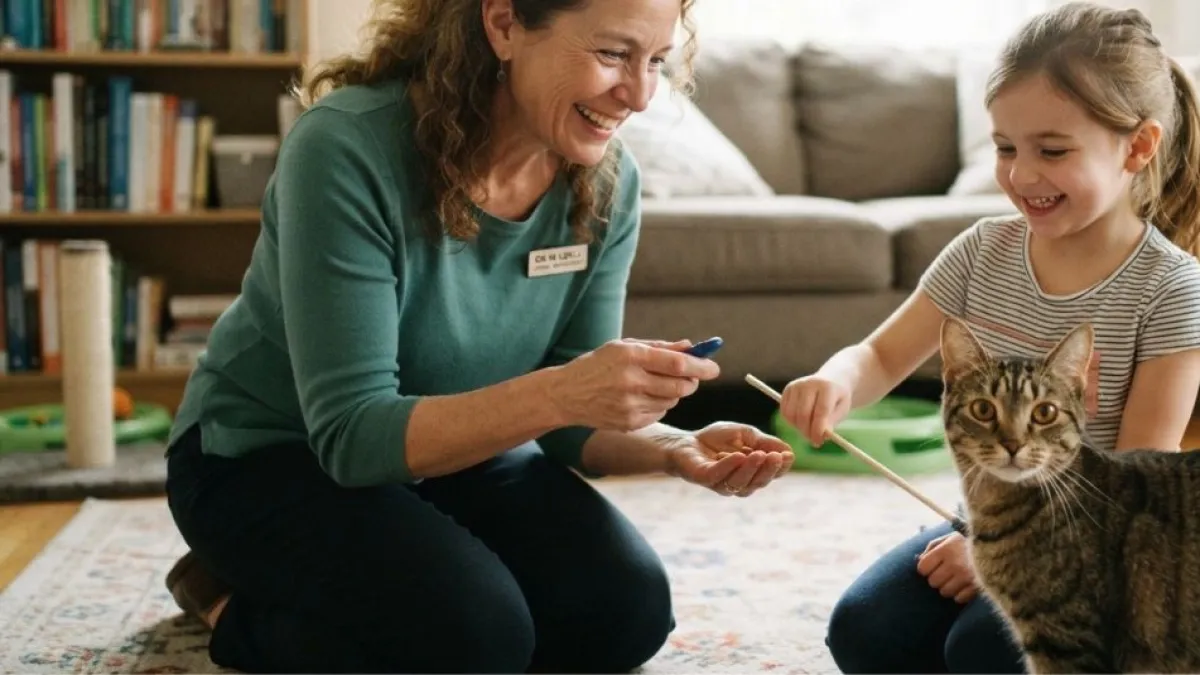
The traditional paradigm of pet ownership often pigeonholes dogs as trainable companions and casts cats as aloof, independent roommates that operate strictly on their own terms. However, contemporary animal behavior science and modern veterinary insights are dismantling this long-held myth. Recent studies reveal that cats—frequently misunderstood creatures—are remarkably receptive to structured, positive-reinforcement training. Far from being a mere novelty trick, feline training serves as a profound catalyst for improving domestic harmony, instilling a deep sense of responsibility in children, and forging a relationship rooted in mutual trust rather than coercion.
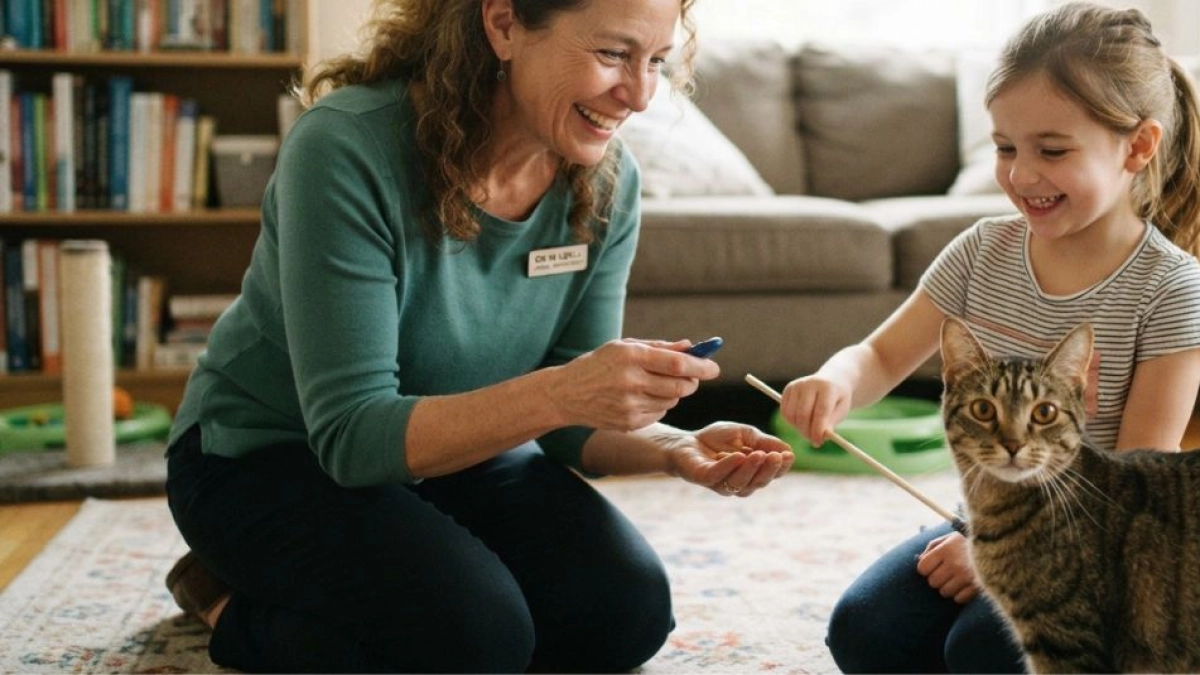
When integrated thoughtfully into family life, short training sessions allow cats to learn basic commands, such as responding to their names, coming when called, or navigating to specific areas like designated resting mats or carriers. Crucially, this evolution in human-feline interaction redefines how children relate to pets. Instead of treating animals as living plush toys or unpredictable playthings, young household members learn to interpret subtle feline body language, respect personal boundaries, and appreciate individual animal temperaments. Ultimately, training bridges the gap between human expectations and feline instincts, cultivating a peaceful and deeply enriched household environment.
Chronology: The Evolution of Feline Behavior Science
To understand how we arrived at today’s progressive approach to cat training, it is helpful to trace the trajectory of how humans have studied and integrated domestic felines into family structures over recent decades:

- The Late 20th Century (The Myth of Untrainability): For generations, animal behaviorists heavily focused on canine cognition. Cats were largely viewed through an evolutionary lens as solitary hunters that could not be easily motivated by human cues. Training was virtually unheard of outside of circus acts or niche professional environments.
- The Early 2000s (The Rise of Environmental Enrichment): As indoor-only cat ownership surged due to urban safety concerns, veterinarians began noticing behavioral issues stemming from boredom and stress. Shelters and behaviorists introduced basic clicker training primarily as a form of mental stimulation to curb destructive habits like scratching furniture or excessive vocalization.
- The Mid-2010s (Recognizing Feline Social Flexibility): Landmark studies from institutions such as Oregon State University began demonstrating that domestic cats possess complex social skills. Researchers proved that cats actively seek human interaction more than previously assumed, laying the groundwork for more advanced behavioral studies involving children and family units.
- Recent Years (The Family-Centric Training Movement): Most recently, structured academic trials—such as specialized university research examining children aged 8 to 17 paired with their household cats—began evaluating the reciprocal psychological benefits of joint training programs. These studies confirmed that structured interaction not only boosts feline sociability but actively teaches children critical life skills like patience, emotional intelligence, and accountability.
Supporting Data and Scientific Insights
The growing movement toward feline education is not merely based on anecdotal success stories from professional pet trainers; it is heavily backed by empirical research into animal behavior and child development.
The Oregon State University Study
A notable investigation highlighted by international media outlets and spearheaded by researchers at Oregon State University examined the dynamics of a structured training program involving 36 children (ranging from 8 to 17 years old) and their domestic cats. The study sought to analyze whether incorporating young family members into the regular training and feeding routines of their pets could yield measurable behavioral changes.

The findings were striking:
- Enhanced Sociability: Cats that participated in consistent, positive-reinforcement training sessions demonstrated higher levels of sociability toward both children and adults, reducing the likelihood of fear-based aggression or hiding.
- Increased Child Participation: Children who were given guided roles in the training process showed a significant increase in sustained engagement with household chores related to pet care, moving beyond fleeting interest to consistent responsibility.
- Stress Reduction: Because the methods relied exclusively on food rewards and clickers rather than punishment, cortisol levels—associated with stress—remained low among the feline participants, proving that learning can occur in a calm, anxiety-free environment.
Understanding Feline Motivation
Unlike dogs, which were domesticated primarily for cooperative working roles requiring high social obedience, cats retain much of the independent predatory mindset of their wild ancestors (Felis lybica). Consequently, human trainers and children cannot rely on dominance or strict hierarchical commands. Data shows that successful feline training relies on three core pillars:
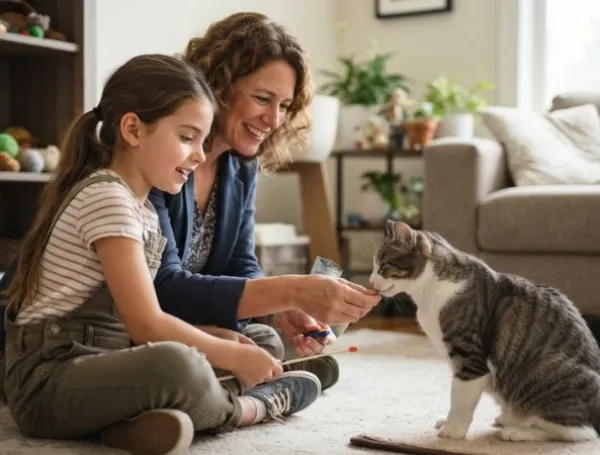
- High-Value Rewards: Utilizing exceptionally enticing treats (such as pureed meat or freeze-dried fish) that are exclusively reserved for training sessions.
- Micro-Sessions: Capitalizing on the natural ultradian rhythms of cats, training sessions must be brief—typically lasting between two to five minutes—to match their natural span of peak alertness.
- Voluntary Participation: Allowing the cat to walk away at any time. When a cat realizes it has the power to terminate a session, its overall confidence and willingness to participate in future exercises dramatically increase.
Official Responses and Expert Recommendations
Leading veterinarians, feline behavior consultants, and child psychologists overwhelmingly endorse structured, humane training as an optimal tool for multi-species households. However, they stress that success depends entirely on adult supervision and education.
Dr. Elena Vance, a prominent feline behaviorist, emphasizes that the primary goal of cat training should never be about creating an obedient "show pet." Instead, it is about communication. "When a child learns to guide a cat to a mat using a target stick and a treat, they are essentially learning a non-verbal language," Dr. Vance explains. "They begin to understand that consent matters in the animal kingdom. If the cat turns its ears backward or swishes its tail, the child learns to pause. That is a masterclass in empathy that translates directly into human social relationships."
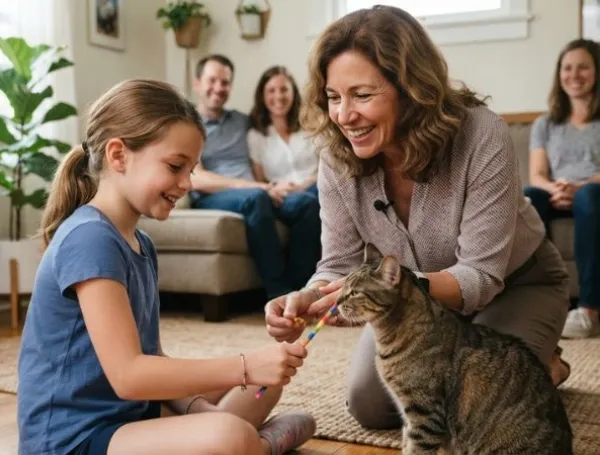
Furthermore, veterinary associations note a sharp decline in behavioral surrender cases when families adopt proactive training methods early on. Many cats are relinquished to shelters simply because families do not know how to channel their natural instincts. By providing constructive outlets—such as puzzle-solving, target training, and recall games—owners drastically reduce unwanted behaviors like counter-surfing, nocturnal yowling, or aggressive play biting.
Child development specialists also weigh in on the systemic benefits. According to family counselor Marcus Bennett, introducing children to pet training under parental guidance instills accountability without the overwhelming pressure of high-maintenance tasks. "A child cannot easily force a cat to do something against its will," Bennett notes. "This forces the child to develop patience, emotional self-regulation, and respect for autonomy—qualities that are exceptionally difficult to teach through lectures alone."
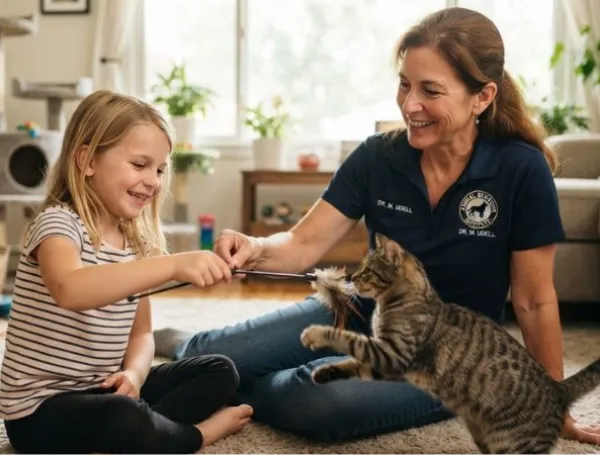
Implications for Modern Households and Future Pet Care
The paradigm shift toward inclusive feline training carries far-reaching implications for domestic life, animal welfare, and the future of pet ownership.
1. Transforming the Human-Animal Bond
As more households realize that cats are capable of learning complex behaviors—such as walking on a harness, sitting on cue, or ringing a bell to request playtime—the cultural perception of felines is permanently changing. No longer viewed as "low-maintenance, boring" pets, cats are increasingly recognized as emotionally complex companions that thrive on intellectual stimulation. This deeper understanding paves the way for higher standards of animal welfare, where mental health is prioritized alongside physical health.

2. Cultivating the Next Generation of Responsible Owners
In an era dominated by digital screens and rapid gratification, teaching children the art of patience through animal training offers a grounding antidote. The lessons learned from a cat—which cannot be rushed, scolded, or manipulated—help shape thoughtful, observant adults. Children who master the art of positive reinforcement with a delicate feline companion carry those skills into broader interpersonal relationships, developing a profound respect for all living creatures.
3. Practical Guidelines for Families Embarking on Feline Training
For families looking to implement these strategies at home, experts recommend keeping a few foundational rules in mind:

- Establish Ground Rules: Children must be explicitly taught never to disturb a sleeping cat, chase it when it tries to retreat, or pull on its tail and whiskers.
- Keep it Positive: Physical punishment or yelling is strictly counterproductive with cats; it triggers fear, ruins trust, and can lead to defensive aggression.
- Embrace Individuality: Every cat possesses a distinct personality. While some felines are outgoing and eager to learn complex routines, others prefer quiet environments and will only tolerate very minimal, low-key interactions. Respecting these boundaries is the ultimate test of a successful training program.
Ultimately, the journey of training a feline is not merely about teaching an animal to perform tricks. It is a collaborative process that builds a resilient foundation of trust, patience, and mutual respect, proving that even the most independent creatures can forge unbreakable bonds with their human families when met with empathy and understanding.